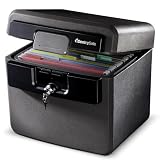
For most RVers, a small bolt-down or cable-anchored safe that fits a cabinet, wardrobe or under-bed locker is the right choice: a compact fire-rated chest such as the SentrySafe HD4100 class for documents, a bolt-down model like the CMI Miniguard for valuables, or a floor-mounted unit such as the Barska floor safe when you can cut into the floor structure. A lightweight portable box is only a deterrent unless it is anchored to the vehicle.
Our top picks


 SentrySafe Fireproof Safe Box with Key Lock
- Lifetime after-fire replacement guarantee
- Fire safe box is UL classified for fire…
- Fire resistant safe has a privacy key lock…

As an Amazon Associate we earn from qualifying purchases at no extra cost to you.
Quick Answer: What to Look For in an RV Safe
An RV has less space, more vibration and different security risks than a house. Safes sold for homes are often too deep, too heavy or too hard to anchor in a thin-walled trailer. Roundups from RV Blogger, RV Lifestyle and an Australian caravan guide share the same advice: pick something compact, anchor it to the structure, and decide first what you are protecting. Cash, passports, spare keys and electronics need theft resistance; paper documents and drives need fire resistance; firearms need locked storage that meets local law.
At a Glance: RV Safe Types Compared
| Option | Type | Best for | Stated spec or note | Limits |
|---|---|---|---|---|
| CMI Miniguard (Size 3) | Bolt-down steel safe | Valuables in a wardrobe or under-bed locker | Cited as the top pick in an Australian caravan guide | Needs a solid mounting point; check local availability |
| Barska floor safe | In-floor safe | Hidden storage for small items | Roughly 0.22 cubic feet reported | Requires cutting into the floor; not for every RV |
| SentrySafe fireproof chest (HD4100 class) | Fire-rated chest | Papers, titles, drives | Maker lists fire and water ratings per model | Weight and size; a theft risk if not anchored |
| Honeywell fireproof filing safe | Fire-rated box | Documents plus small electronics | Described as doubling as a file box | Bulky for small rigs |
| Master Lock 5900D | Portable cable-secured box | Keys, small cash, cards | Can be secured to a fixed object with a cable | Light enclosure; deterrent only |
| Pacsafe Travelsafe | Soft anchor-point safe | Laptops and tablets on trips | Fits up to two 15-inch laptops per the source | Fabric and wire, not a true safe |
| VAULTEK LifePod 10 type | Biometric or keypad pistol safe | Locked firearm storage | Designed for handgun storage by the maker | Follow local law; small capacity |
| Biometric mini safes | Fingerprint portable | Quick access to small items | Several makers list fingerprint entry | Fingerprint reliability varies; keep backup keys |
Source note: much of the RV safe coverage online is from retailer or affiliate roundups rather than independent lab tests, so treat ratings as indicative and read the maker’s manual for exact specifications.
Where an RV Safe Can Go
Wardrobe or closet floor
Often the easiest location. Many RVs have a thick plywood floor or framing under the wardrobe that can take bolts. A safe here is out of sight and shielded from direct sun.
Under the bed or in a storage bay
Bed platforms in larger rigs have open storage. A compact bolt-down safe can sit there, but check the support material first: thin panel board will not hold anchor bolts securely.
Floor installation
A floor safe like the Barska sits flush once installed and is hard to spot. It does require cutting through the floor, which can involve structural parts, insulation, wiring and plumbing. If you are unsure what runs beneath, ask an RV technician before cutting.
Cabinets
Kitchen and overhead cabinets are thin and vibrate while driving. Use them for lightweight lockboxes, not heavy safes.
Anchoring: The Part That Matters Most
A thief can pick up an unanchored portable safe and open it elsewhere. Reviewers repeatedly stress anchoring. Options include bolts through the floor into framing or a metal plate, heavy-duty security cable looped around a frame member, or a through-bolt with a backing plate. Avoid anchoring only into thin wall panels. Before drilling, check for wiring, propane lines, water lines and structural members, and ask a qualified technician if you cannot identify them.
Fire Protection in a Vehicle
Fire-rated safes tested to home standards may list ratings such as one hour at a set temperature. Those ratings come from lab tests under stated conditions, not a vehicle fire, and RV fires can burn fast with limited chance for a response. Treat fire-rated storage as a way to improve the odds for paper and drives, not a guarantee. Keep copies of important documents in secure cloud storage or with a trusted person at home. Never store fuel, batteries or aerosol cans near a safe, and keep smoke and carbon monoxide alarms working.
Locks: Keypad, Key, Combination or Biometric
- Keypad: Fast and common. Use fresh batteries and keep a backup key or override method in a separate place.
- Mechanical combination or key: Slower but not dependent on batteries. Good for long storage periods.
- Biometric: Quick, but reviewers note that fingerprint readers can misread dirty or wet fingers. Do not make a fingerprint your only way in.
- Temperature and moisture: RV interiors swing hot and cold. Check the maker’s operating range for electronics, and use desiccant packs to limit moisture.
Size and Fit Notes
Measure the space and the door opening before buying. Safe dimensions listed by makers are usually external and internal; interior capacity is often much smaller than it looks. A small safe may only hold a passport, a few cards and a tablet. Also check weight: heavier safes are harder to steal but can affect load limits in smaller trailers. Look at the vehicle’s cargo rating before adding a heavy steel box.
Firearm Storage
If you travel with firearms, laws on storage and transport differ by state, province and country, and they change at borders. Use a safe that meets the rules where you are travelling, store ammunition according to local law, and follow the maker’s manual. Do not rely on a quick-access box to keep a firearm away from children without locking it as directed. Check with local authorities if you are unsure of the rules.
Budget Tiers
Budget
Cable-secured lockboxes such as the Master Lock 5900D and soft anchor-point products such as the Pacsafe suit keys, cards and electronics. They deter casual theft, not a determined one.
Mid-range
Fire-rated chests and compact steel bolt-down safes sit here. This is where most RVers find a balance between space, protection and installation effort.
Premium
Heavier steel safes, floor units and biometric pistol safes cost more. They deliver real theft resistance when properly anchored, but they also add weight and installation work.
Pick X If … Decision Table
| If you … | Pick | Why |
|---|---|---|
| Need to protect documents from fire | SentrySafe or Honeywell fire-rated chest | Maker-stated fire and water ratings |
| Want a compact bolt-down safe for valuables | CMI Miniguard type | Fits wardrobe or locker |
| Want it hidden in the floor | Barska floor safe | Flush install, small capacity |
| Only need to lock up keys and cards | Master Lock 5900D | Light, cable-secured |
| Carry a laptop on trips | Pacsafe Travelsafe | Anchor-point bag design |
| Store a handgun lawfully | Handgun safe such as VAULTEK LifePod 10 | Purpose-built for handgun storage |
Alternatives Worth Considering
- Bank safe deposit box: For birth certificates and titles you rarely need on the road.
- Digital copies: Encrypted scans stored away from the RV reduce the need to carry originals.
- Trackers and alarms: A GPS tracker or a door alarm adds a layer without the weight of a safe.
- Secure storage at the campsite: A staffed campground or storage lot with cameras supplements a safe.
Travel Habits That Complement a Safe
A safe is one layer, not the whole plan. Many RVers carry fewer valuables than they think they need, keeping only what a trip demands and leaving the rest at home. Lock doors and windows whenever you leave the rig, park in well-lit areas where you can, and avoid leaving visible electronics or bags on seats. Use a campground with staff or cameras when you can. Record the serial numbers of expensive items and keep them with your off-site document copies. If you are caught in severe weather such as a storm, flash flood or wildfire, you may need to leave quickly, so keep a small grab-bag of documents, medication lists and keys where you can reach it without opening the safe. For a safe with an electronic lock, test it each time before a trip and carry spare batteries. Inspect anchoring bolts after long drives, because road vibration can loosen hardware over time. If you plan to leave the RV in storage for months, remove cash, small electronics and any batteries that could leak, and place a desiccant pack inside to limit moisture.
Insurance Notes
RV insurance and home policies often limit cover for cash, jewellery and electronics in a vehicle. Read your policy and ask your insurer whether a fixed safe changes anything. Keep photographs and serial numbers of valuables stored away from the RV.
Frequently Asked Questions
Is a portable safe good enough for an RV?
Only if you anchor it. Light portable boxes are easy to carry away. Cabling them to the frame or bolting them down raises the effort needed to steal them.
Can a fireproof safe protect valuables in an RV fire?
Fire ratings come from lab tests, not vehicle fires. A rated safe can help protect paper and drives, but it is not a guarantee, so keep backups elsewhere.
Where is the best place to put a safe in a motorhome?
Usually the wardrobe floor, an under-bed locker or a storage bay, because these are hidden and have solid framing. Avoid thin cabinet panels, and check for wiring and lines before drilling.
Will a heavy safe affect my RV weight limit?
It can, particularly in small trailers. Check the vehicle’s cargo rating in the manual and include the safe’s weight with your other gear.
Are biometric safes reliable?
They work for many people, but reviewers note that dirty, wet or cold fingers can cause misreads. Keep a backup key or code and fresh batteries.
Can I store a gun in my RV safe?
Laws differ by location and change when you cross borders. Use a safe designed for firearm storage, follow its manual and check local rules before travelling.