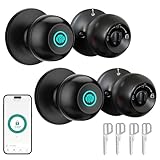
For most households, a UL-classified fireproof document safe with a stated one-hour rating for paper suits important papers, while a fireproof and waterproof model such as those from ioSafe suits owners who also worry about floods, and a fireproof bag only suits low-stakes or temporary storage. The important details are the fire rating, the interior size, the lock type and whether the safe protects digital media, which needs a different, lower temperature rating.
Fire ratings vary in meaning. Paper starts to char at around 450 degrees Fahrenheit, so a rating that keeps the interior below 350 degrees Fahrenheit for a set time, as in UL 72 Class 350, is a common benchmark for documents. Digital media like USB drives, discs and hard drives are damaged at much lower temperatures and need a specific rating. Always read the maker’s rating statement and test standard, because wording like “fire resistant” alone does not tell you the time or temperature.
Our top picks
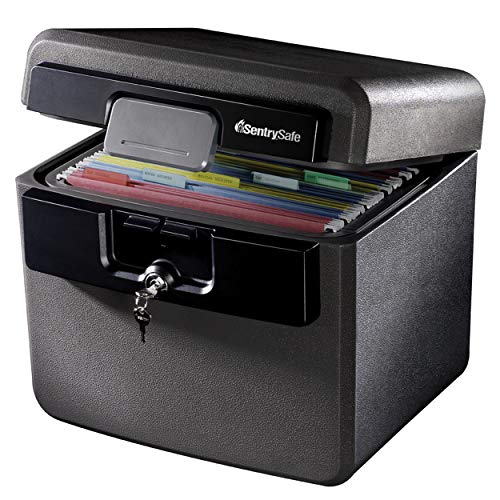 SentrySafe Black Fireproof and Waterproof Safe
- UL Classified to withstand high temperatures for up…
- Spacious interior fits hanging file folders and is…
- Durable key lock helps prevent unauthorized access and…
 SentrySafe Fireproof Safe Box with Key Lock
- Lifetime after-fire replacement guarantee
- Fire safe box is UL classified for fire…
- Fire resistant safe has a privacy key lock…
| Product | Key specs | |
|---|---|---|
| SentrySafe Black Fireproof and Waterproof Safe | UL Classified to withstand high temperatures for up… Spacious interior fits hanging file folders and is… Durable key lock helps prevent unauthorized access and… | Check price |
| SentrySafe Fireproof Safe Box with Key Lock | Lifetime after-fire replacement guarantee Fire safe box is UL classified for fire… Fire resistant safe has a privacy key lock… | Check price |
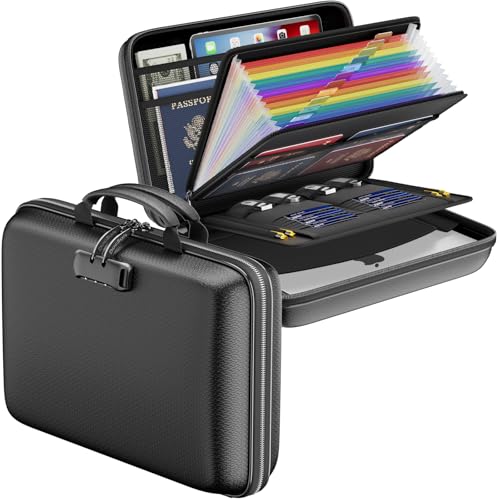 DocSafe Fireproof File Organizer with Lock | Check price | |
 SentrySafe Black Fireproof Document Box with Key | Check price |
As an Amazon Associate we earn from qualifying purchases at no extra cost to you.
Fireproof Document Safes at a Glance
Models and specifications are updated by the makers. Treat the entries below as typical of each family and read the current listing before buying.
| Safe family | Best for | Key stated features | Limits |
|---|---|---|---|
| SentrySafe fire and water safes | General household document storage | UL classified fire rating on many models, water resistance claims, digital or key lock options | Water ratings are for limited conditions; read the test details |
| Honeywell fire safes | Value-focused buyers | Fire ratings on listed models, various sizes, keypad or key lock | Ratings differ by model; confirm which test applies |
| First Alert fire safes | Mainstream home use | Fire rating by model, digital lock options, interior shelf in some sizes | Interior volume smaller than outside size suggests |
| ioSafe fireproof and waterproof safes | Owners with irreplaceable documents and drives | Maker lists fire and flood protection ratings, some models tested for data media | Heavier and more expensive tier |
| Fireproof document bags and pouches | Temporary storage, travel, low-risk papers | Flexible fire-resistant fabric, zip or roll closure | Rating, if any, is limited; no theft protection |
| Fireproof file boxes with handles | Portable storage of key papers | Compact, carry handle, key or combination lock | Easy to carry away; light on theft protection |
Understanding Fire Ratings
- Time and temperature. A rating of 1 hour at a stated external temperature means the interior stayed under a stated limit during that test. Longer times offer more margin in a slow house fire.
- Interior limit. For paper, 350 degrees Fahrenheit is the usual limit. For digital media, makers cite lower interior limits such as 125 degrees Fahrenheit and lower humidity levels.
- Independent testing. Look for UL classification or an equivalent from a recognized laboratory. Some safes are tested by the maker only. Read the label and the test description.
- Impact and explosion. Some ratings include a drop test from a height to simulate a floor collapse in a fire. A fire in a multi-story home can drop a safe to a lower level.
- Water ratings. A water-resistant claim may refer to a short immersion or to sprinkler spray. Read the details if flood is a concern.
What to Look For
Interior size
Fire insulation makes the walls thick, so interior capacity is much less than the external size. Makers list both exterior and interior dimensions. If you need to store folders in letter or legal size, check the interior width and depth rather than the cubic foot headline.
Lock type
Key locks are simple and don’t rely on batteries but keys can be lost. Digital keypads are fast but need batteries and a backup access method. Biometric locks are available on some models. A lock does not make a fireproof safe a burglar-proof safe; most document safes have thin steel doors that thieves can pry open.
Weight and anchoring
Lighter safes are easier to carry away. Some have pre-drilled holes for bolting to a floor or wall. If theft is a concern, anchor the safe as the maker directs.
Placement
Fire safes are often placed in a closet or basement. A basement may be prone to flooding. A top floor may fall in a fire. A ground floor closet in an interior room tends to be a common choice, but follow the maker’s guidance.
Seals and expansion
Many fire safes use a seal that expands with heat to block smoke and flames from entering around the door. Don’t tamper with the seal.
What not to store
Do not store firearms, ammunition or hazardous items in a fire safe unless the maker states it is suitable and local law allows. For firearms, use a gun safe built and rated for that purpose and follow local regulations. Do not store batteries or flammable liquids in a safe.
Budget, Mid-Range and Premium Tiers
Budget: Small SentrySafe, Honeywell and First Alert chests with a basic fire rating and a key or keypad lock. They are suitable for passports, birth certificates and insurance papers.
Mid-range: Larger fire and water safes with higher fire ratings, larger interiors, digital locks and anchoring options. They fit families with many documents and some digital media.
Premium: ioSafe and similar safes built for fire and flood, often with tested data protection. They suit those who store backups, irreplaceable photographs or business records.
Pick X If You Are…
| If this is you | Pick | Why |
|---|---|---|
| Protecting passports and birth certificates | Small UL-classified fire chest | Compact, rated for paper |
| Storing USB drives and discs as well | Safe with a stated digital media rating | Lower interior temperature limit |
| Worried about floods | Fire and waterproof model like ioSafe | Maker lists flood protection |
| Traveling or moving often | Fireproof bag or portable box | Light and portable, with limits |
| Concerned about theft | Heavier safe, anchored to the floor | Harder to carry away or pry open |
| Living in a storm-prone area | Water-resistant safe stored above likely flood level | Helps against water and fire |
Care and Use Notes
- Choose a spot away from heat sources and the kitchen.
- Record the combination or keep a spare key in a separate secure place. Replace digital lock batteries on a schedule.
- Keep a printed list of the contents elsewhere, and keep digital copies of key documents in secure cloud or offsite storage.
- Don’t overfill the safe; the door seal must close properly.
- After a fire, do not open the safe immediately. Let it cool fully, since opening a hot safe can expose papers to oxygen and cause them to ignite. Contact the maker or a professional for guidance.
- Replace the safe after a major fire or if the seal looks damaged, as the maker advises.
Alternatives
- Bank safe deposit box. Offsite and protected, but access is limited to bank hours and contents are not insured by default.
- Digital copies and cloud backup. Scan documents and keep encrypted copies offsite. This protects against loss, though some documents need originals.
- Fireproof bags. Cheap and portable but with limited protection.
- Attorney or trusted family storage. For wills and legal papers, ask an attorney about safe storage and copies.
What to Put Inside
Good candidates include passports, birth and marriage certificates, property deeds, vehicle titles, insurance policies, tax records, wills, and a list of account details. Keep a small envelope of backup digital media only if the safe lists a media rating. Add a printed inventory of what the safe holds and photos of valuable items. Avoid crowding the door seal, and review the contents once a year so outdated papers do not take up room needed for new ones.
Frequently Asked Questions
What does a one-hour fire rating mean?
It means the safe passed a laboratory test in which the interior stayed below a set temperature for one hour under a stated furnace temperature. Real fires differ, so it is a benchmark, not a guarantee. Longer ratings add margin.
Are fireproof safes also waterproof?
Not automatically. Some makers list water resistance or waterproofing with a specific test. Read the details, including depth and duration, and place the safe above likely flood levels.
Can I store hard drives and USB drives in a document safe?
Only if the maker lists a digital media rating. Standard paper ratings allow interior temperatures that can damage electronics and discs. Look for a specific digital media rating.
Will a fireproof safe stop burglars?
Not usually. Many document safes have thin doors and can be pried open or carried away. If theft is a concern, choose a heavier safe with a security rating and anchor it.
Where should I put it?
Choose a place away from the kitchen and heat sources, ideally on a lower floor but above possible flooding. Follow the maker’s advice, and anchor it if the instructions allow.
What happens to the safe after a fire?
Let it cool completely before opening. Contact the maker for guidance, since heat can stress the seal and structure. Replace the safe after a significant fire.