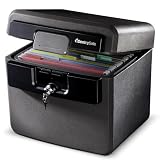
For most households, a fire- and water-rated chest such as the SentrySafe SFW123GDC or the larger SFW205GQC is the best starting point for documents and small valuables, a budget fire chest like the SentrySafe HD4100 or 1210 covers basic paperwork, and a heavier burglary-and-fire safe such as the AMSEC BF series suits people protecting high-value items. The right choice depends on what you store, how much space you have, and whether you can anchor it to the floor.
Our top picks
 SentrySafe 1-Hour Fireproof Safe
- Fireproof safe is UL Classified to endure 1…
- Waterproof safe is ETL Verified for 24 hours…
- Set your own digital combination fire safe with…
 SentrySafe Fireproof Safe Box with Key Lock
- Lifetime after-fire replacement guarantee
- Fire safe box is UL classified for fire…
- Fire resistant safe has a privacy key lock…
| Product | Key specs | |
|---|---|---|
| SentrySafe 1-Hour Fireproof Safe | Fireproof safe is UL Classified to endure 1… Waterproof safe is ETL Verified for 24 hours… Set your own digital combination fire safe with… | Check price |
 Amazon Basics Steel Security Safe and Lock | Check price | |
| SentrySafe Fireproof Safe Box with Key Lock | Lifetime after-fire replacement guarantee Fire safe box is UL classified for fire… Fire resistant safe has a privacy key lock… | Check price |
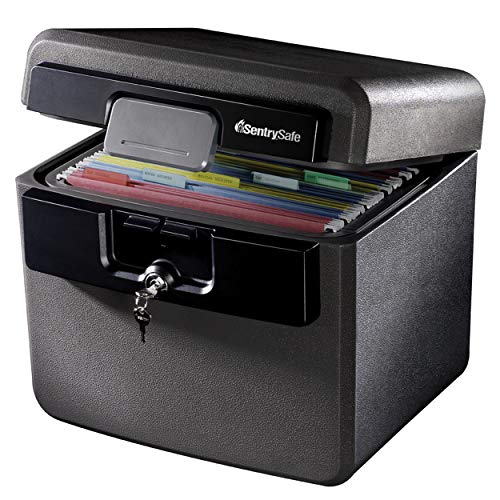 SentrySafe Black Fireproof and Waterproof Safe | UL Classified to withstand high temperatures for up… Spacious interior fits hanging file folders and is… Durable key lock helps prevent unauthorized access and… | Check price |
As an Amazon Associate we earn from qualifying purchases at no extra cost to you.
Quick Answer: Choose by What You Are Protecting
Home safes protect against two different threats: fire and water damage to papers and drives, and theft of cash, jewellery and small valuables. Few products do both well at a low weight. Roundups from Bob Vila, Reviewed and others tend to put SentrySafe at the top for fire and water protection, while a premium tier offers true burglary resistance. For a storm-prone region, flood and fire ratings matter most, because storm events often bring power cuts, fires from damaged wiring, and water in the lower floors.
At a Glance: Home Safes Compared
| Model | Type | Best for | Stated spec or note | Limits |
|---|---|---|---|---|
| SentrySafe SFW123GDC | Fire and water chest | Best overall for documents and small valuables | Reported top pick by Wirecutter and Reviewed | Not a burglary-grade safe |
| SentrySafe SFW205GQC | Fire and water safe with keypad | More capacity | Roundup lists 2.05 cu ft, UL Class 350 one-hour fire at 1700 F, interior light | Heavier, bulkier |
| SentrySafe HD4100 | Fire chest | Value fire protection | Described as a best-value fire safe | Check water rating on the maker page |
| SentrySafe 1210 | Fire document box | Basic budget storage | Named as a budget chest | Small capacity; carry handle makes it easy to take |
| Honeywell 6104 | Safe box | Compact valuables | Bob Vila cites it as a safe box pick | Limited fire or theft rating; read the manual |
| AMSEC BF series | Burglary and fire safe | Premium security | Forbes Home ranks it as top premium pick | Heavy; delivery and anchoring required |
| Large-capacity fire and water safe | Chest style | Value for capacity | Roundups call a 2 cu ft class model best value for space | Heavier ratings vary by maker; read the spec sheet |
Model lineups change, so treat the above as the families reviewers name and read each maker’s current page for exact specs. Several roundup sites are affiliate-driven, so independent test claims carry different weight.
Fire Ratings Explained
A fire rating states how long a safe’s interior stays below a certain temperature when exposed to a furnace in a lab. For paper, the interior should stay below roughly the point at which paper chars; digital media is more sensitive and often needs a separate, specific rating. A rating such as one hour at 1700 F describes a test condition, not every real fire. The UL Class 350 label, mentioned for the SFW205GQC, relates to keeping the interior below a stated temperature for the rated time, as the certifier defines it. If you store USB drives, backup hard drives or photo media, look for a rating that states digital media protection, and keep copies off site.
Water and Flood Ratings
Water ratings vary: some safes are tested for submersion in a set depth for a set time, while others only resist hose spray. Reviewers note that a safe that was submerged and survived in a lab may not keep water out if the gasket is worn or the lid is not fully closed. After any flood, open the safe and dry the contents promptly. If your area floods, store the safe above the likely waterline or on an upper floor.
Burglary Resistance
Fire chests have thin steel and can often be carried away or pried open. A true burglary safe uses thicker steel, a hardened lock and bolts into the floor. If you are protecting cash or jewellery, look for a model with a stated burglary rating, such as a UL RSC listing, and anchor it to concrete or a floor joist as the manual directs. An unanchored safe, however heavy, is easier to tip and move than it looks.
Locks and Access
- Digital keypad: Quick and common. Replace batteries on a schedule and keep the override key in a separate place.
- Key lock: No battery to fail but the key can be lost or copied.
- Mechanical combination: Durable and electronics-free, but slower to open.
- Biometric: Convenient, yet reviewers warn that readers can misread. Always keep a backup method.
Size and Placement Notes
- Interior volume: Fire insulation takes up space, so a box with a large outside may have a small interior. Compare internal dimensions, not the cubic-foot label alone.
- Weight: Heavy safes deter thieves but need a solid floor. Place heavy units on the ground floor or on a reinforced area.
- Location: Closets, basements and utility rooms are common. Avoid places that collect water or sit near the water heater or furnace.
- Documents: Keep a list of what is inside and store copies elsewhere. Do not store firearms with ammunition or in ways that violate local law.
Budget Tiers
Budget
The SentrySafe 1210 and HD4100 fit here. They suit passports, birth certificates and a few drives. Expect limited protection from theft and a lighter build.
Mid-range
The SFW123GDC, SFW205GQC and large-capacity fire and water safes are mid-range. They give a better fire and water rating and a keypad lock, and they are the most common recommendation for families.
Premium
The AMSEC BF series and similar models combine burglary and fire resistance. They weigh much more, may need delivery, and are meant for people with high-value items or insurance requirements.
Pick X If … Decision Table
| If you … | Pick | Why |
|---|---|---|
| Need an all-round pick for papers and small valuables | SentrySafe SFW123GDC | Fire and water rated, widely recommended |
| Want more space and a keypad | SentrySafe SFW205GQC | 2.05 cu ft, interior light |
| Are on a tight budget | SentrySafe 1210 or HD4100 | Basic fire protection |
| Need a compact lock box | Honeywell 6104 | Safe box format |
| Store cash and jewellery of high value | AMSEC BF series | Burglary and fire resistance |
| Live where storms and floods are common | A fire and water rated chest above the flood line | Protects documents from water and fire |
Alternatives Worth Considering
- Bank safe deposit box: Best for items you rarely need; not available in emergencies when banks are closed.
- Digital backups: Encrypted copies stored in the cloud or at a relative’s home protect against loss of originals.
- Waterproof document bags: A grab-and-go option for evacuation, kept alongside the safe.
- Wall safes and floor safes: Hidden options for small items, with their own limits on fire protection.
Storm and Emergency Planning With a Safe
Severe weather tends to expose weaknesses in how people store important items. Power outages can disable electronic locks, floods can reach ground-floor storage, and evacuation orders may leave only minutes to leave. A few simple steps reduce the risk. Keep a mechanical override key for a keypad safe in a separate secure place, not taped to the safe. Place the safe above the likely waterline, such as an upper-floor closet, and not directly against an exterior wall that could leak. Store only what you cannot replace: identity documents, insurance policies, property records, a short list of account details, and irreplaceable photos. Make photographs or scans of everything and keep a protected copy off site or in secure cloud storage. Put a smaller grab-and-go bag with copies of key documents, medication lists and contact numbers where you can reach it quickly, and rehearse where it is. After any fire or flood, do not force a heated or soaked safe open straight away; the maker’s manual and the fire service will advise on safe handling, and a locksmith or the manufacturer can help if the lock is damaged.
Insurance and Records
Some insurers ask what valuables you keep and how they are stored, and they may limit cover for cash and jewellery. Read your policy wording and speak to your insurer about whether a safe with a specific rating changes your cover. Keep receipts and serial numbers with your off-site copies.
Frequently Asked Questions
Is a fireproof safe also waterproof?
Not automatically. Each model has its own fire and water ratings. Look at the maker’s spec sheet for the depth and duration of water testing.
What does a one-hour fire rating mean?
It means the safe kept its interior below a set temperature in a lab furnace for an hour. Real fires differ, so treat it as a guide and keep backups of important records.
Do fire chests protect against theft?
Mostly no. Thin steel and carry handles make them easy to take. If theft is the main concern, choose a heavier burglary-rated safe and anchor it.
Where should I put a home safe?
A closet, basement or utility room away from water and heat sources is typical. Bolt larger safes to the floor following the manual.
Can I keep USB drives in a standard fire safe?
Standard paper ratings do not guarantee that digital media survives. Look for a rating that mentions digital media, and keep an off-site copy.
How often should I change the batteries in a keypad safe?
Follow the maker’s guidance, and change them on a schedule rather than waiting for a low-battery warning. Keep the override key somewhere separate from the safe.