Key takeaways
- Choose a room and wall where you can leave the safe covered, such as behind a framed picture in a bedroom closet. Obvious spots like behind the bed are the first places many burglars look.
- Do not tell visitors, contractors or house cleaners where it is.
- Add silica gel packets or an anti-tarnish strip to protect silver and costume pieces from humidity.
- Photograph and list each piece, with receipts and appraisals kept elsewhere, so an insurance claim is straightforward.
- Test the lock periodically and replace batteries before the low-battery alert.
- Review insurance policy limits, because many home policies cap jewelry coverage unless items are scheduled separately.
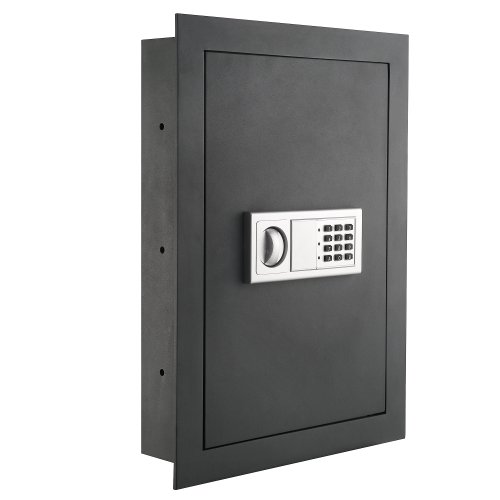
For most households, a between-the-studs wall safe with a digital keypad suits everyday jewelry, while a biometric model suits people who want fast access, and a heavier fire-rated floor or cabinet safe suits anyone whose collection holds high-value or sentimental heirlooms. A wall safe is mainly a concealment and convenience product: it hides in plain sight behind a picture, mirror or closet panel, and it keeps rings, watches and necklaces out of drawers. Its limits matter just as much as its strengths, so this guide explains what to look for and where each style falls short.
Our top picks


As an Amazon Associate we earn from qualifying purchases at no extra cost to you.
Wall Safes for Jewelry at a Glance
| Style | Typical makers | Best for | Key points to compare | Main limit |
|---|---|---|---|---|
| Between-the-studs keypad wall safe | Stack-On, Barska, Honeywell, SentrySafe | Everyday rings, watches, small boxes | Interior depth, door steel, bolt count, override key | Shallow; long necklaces may need coiling |
| Biometric (fingerprint) wall safe | Barska and similar budget brands | Quick access, several users | Number of stored prints, backup code, battery type | Sensor can misread wet or dirty fingers |
| Hidden-in-wall flush safe with mirror or panel cover | Specialty concealment makers | Maximum concealment | Cover design, mounting method, installation effort | Install work and wall damage if removed |
| Fire-rated in-wall or in-floor safe | SentrySafe, First Alert, Liberty | Heirlooms and documents with jewelry | Fire rating stated by the maker, thickness, weight | Heavier, bulkier, professional install suggested |
| Freestanding jewelry safe with lined interior | Various jewelry-focused brands | Large collections, watch winders | Velvet lining, trays, bolt-down holes | Visible, not hidden |
Specific interior dimensions, steel gauges and ratings vary by model and change between production runs, so the maker’s listed numbers on the exact model should always be the reference. The categories above reflect how reviewers and retailers typically group these products.
What a Wall Safe Can and Cannot Do
A wall safe is installed in the cavity between two wall studs, usually 14.5 inches wide in standard North American framing. That standard spacing is why many models are built about 14 inches wide, with depth limited by the wall thickness, often about 3.5 inches for a normal interior wall. The result is a safe that is wide and tall but shallow, which is fine for ring boxes, watch cases and flat jewelry rolls, but awkward for bulky items.
The security value comes from being hard to find, not from being impossible to open. Most budget wall safes use relatively thin steel, and a determined thief with tools and time can pry or cut one. Think of the product as a barrier against opportunistic theft, casual snooping by visitors, and quick grab-and-run burglaries. For items with high financial value, insurers and security professionals commonly suggest a heavier, anchored safe or a bank safe deposit box instead.
Fire protection is another point where wall safes differ widely. Many compact wall safes make no fire claim at all. Where a maker does list a fire rating, it applies to specific conditions such as a set time at a set temperature, and it is usually aimed at paper rather than at jewelry. Gold and gemstones are not paper, and heat can damage settings, pearls and organic gems well below the temperatures a document safe is built to withstand.
Features That Matter for Jewelry
Interior size and layout
Measure the largest item you plan to store, including its box. Ring and earring boxes usually fit easily, but watch boxes, jewelry rolls and thick bracelets may not. Because wall safes are shallow, a vertical layout with a removable shelf can be more useful than one large open space. Some models include a soft or carpeted lining, which reduces scratching and rattling.
Locking method
Electronic keypads are the most common and are quick to use. Biometric locks are convenient when several family members need access, and makers typically also provide a backup code or key. A mechanical key lock needs no batteries but can be picked, so many buyers prefer an electronic lock with a key override held in a separate place. Whatever the lock type, change the default code immediately and avoid birthdays or repeating digits.
Door and body construction
Makers describe construction with terms such as solid steel door, pry-resistant hinges and live-locking bolts. Compare the listed steel thickness and the number and diameter of locking bolts. A heavier door and more bolts generally mean better resistance, although the figures are not directly comparable across brands that measure differently.
Power and low-battery behavior
Most electronic wall safes run on standard alkaline batteries and give a low-battery warning. Replace batteries on a schedule, and keep the override key somewhere other than the same room. Never store spare batteries inside the safe.
Mounting and install
Wall safes are built to be screwed to the studs on both sides, which both secures them and conceals them. Before cutting any drywall, use a stud finder and check for wiring, plumbing and ducts. Cutting into a wall near electrical cable is a safety risk, so if you are unsure, an electrician or a handyman should do the work. Exterior walls with insulation and vapor barriers are generally poor choices.
Picks by Style and Budget Tier
Budget tier: simple keypad wall safes
Brands such as Stack-On, Barska and Honeywell offer entry-level between-the-studs models with electronic keypads. Reviewers generally describe these as adequate for concealment and light protection, with the trade-off of thinner steel and a smaller interior. They suit someone who wants rings and a watch out of a nightstand drawer and who accepts that this is concealment first.
Mid-range tier: heavier doors and biometric options
Mid-range models tend to add thicker doors, more locking bolts, a larger or better-lined interior, and in some cases fingerprint scanners. Barska’s biometric lines are frequently mentioned in roundups of fingerprint-operated home safes. For jewelry, the biggest practical gain at this level is a lined, well-organized interior and a sturdier lock mechanism.
Premium tier: fire-rated and professionally installed safes
SentrySafe and First Alert publish fire-resistance information for some of their safes, and Liberty and other makers sell heavier in-wall or in-floor units. These are for people whose collection includes irreplaceable or high-value pieces. Premium safes are heavier, often need professional installation, and may carry a separate maker listing for burglary protection. Read the exact wording of any rating, as fire and burglary claims are separate.
Decision Table: Pick X If…
| Pick this | If… |
|---|---|
| Basic keypad between-the-studs safe | You want to hide everyday jewelry and watches on a modest budget |
| Biometric wall safe | Several people need fast access and you will also store a backup code |
| Fire-rated in-wall or floor safe | You store heirlooms, documents and jewelry together and want heat protection stated by the maker |
| Freestanding lined jewelry safe | You own a large collection or watches that need trays and do not need concealment |
| Bank safe deposit box | The collection has high value and is rarely worn |
| Hidden-compartment furniture or mirror safe | You rent and cannot cut into the wall |
Placement and Care Tips
- Choose a room and wall where you can leave the safe covered, such as behind a framed picture in a bedroom closet. Obvious spots like behind the bed are the first places many burglars look.
- Do not tell visitors, contractors or house cleaners where it is.
- Add silica gel packets or an anti-tarnish strip to protect silver and costume pieces from humidity.
- Photograph and list each piece, with receipts and appraisals kept elsewhere, so an insurance claim is straightforward.
- Test the lock periodically and replace batteries before the low-battery alert.
- Review insurance policy limits, because many home policies cap jewelry coverage unless items are scheduled separately.
Alternatives to a Wall Safe
Anchored freestanding safe
A small floor safe bolted to the concrete or framing is harder to carry off than a shallow wall unit and typically offers a deeper interior. It is less hidden, but a well-placed closet installation hides it from casual view.
Safe deposit box
Banks offer rented boxes for items you rarely wear. They are not insured by the bank for contents by default, so check what coverage applies and keep your own insurance.
Jewelry armoire or lockable organizer
These are furniture rather than security products. They protect against tangles and dust and discourage casual access, but they should not be treated as theft protection.
Frequently Asked Questions
Are wall safes good for storing jewelry?
They work well for concealment and convenient daily access to rings, watches and smaller pieces. They are not a substitute for a heavy anchored safe or a bank box when the collection is very valuable. Treat them as a layer of protection rather than an absolute barrier.
How deep is a typical wall safe?
Most between-the-studs models are sized for a standard interior wall, with depth often in the range of a few inches. Because makers differ, the listed interior dimensions on the exact model matter more than a general number. Measure your biggest jewelry box before ordering.
Can a wall safe protect jewelry from fire?
Only if the maker lists a fire rating for that model, and even then the rating is usually tested for paper. Heat can damage gemstones, pearls and settings. For heirlooms, look for a model with a stated fire rating and consider off-site storage as well.
Is a fingerprint lock better than a keypad?
Neither is universally better. Biometric locks are fast, but wet, dirty or injured fingers can cause misreads, so a backup code or key is important. Keypads are simple and reliable if you keep fresh batteries and a non-obvious code.
Can I install a wall safe myself?
Many people do, using a stud finder, a drywall saw and the supplied screws. The main risk is cutting into hidden wiring or pipes, so confirm the cavity is clear before cutting, and call an electrician or a professional installer if you are unsure.
Where should I hide a wall safe?
Pick an interior wall in a low-traffic area, covered by a picture, mirror or shelving that you can move easily. Avoid exterior walls and areas close to outlets or switches. Keeping the location private is a large part of the security.