Key takeaways
- Door thickness: Thicker steel resists prying. Reviewers favour the SnapSafe’s reported 8-gauge steel door over lighter models.
- Locking bolts: A 2-point deadbolt, as listed for the Barska, is better than a single bolt. Look for pry-resistant designs.
- Lock type: Biometric is quick but can misread; keypads need batteries; mechanical locks need no power. Keep a backup key.
- Mounting flange: A flange that sits behind the drywall prevents the safe from being pulled out. Check that the maker’s design covers this.
- Hidden placement: Behind a mirror, framed picture or cabinet. Avoid obvious locations like behind a bedroom door.
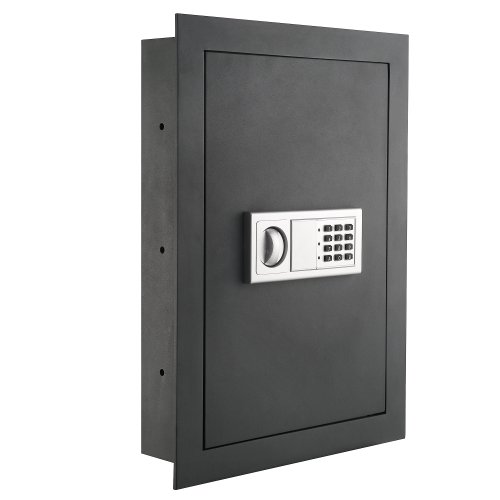
For most buyers, the Barska Biometric Wall Safe AX12038 is the most-cited budget between-the-studs option, the SnapSafe in-wall model suits people who want a thicker steel door, and the Protex PWS-1814E is a fit for standard 16-inch stud spacing; if fire protection matters more than concealment, a freestanding fire-rated safe such as the SentrySafe SFW123GDC is a better answer, because most in-wall safes are not fireproof.
Our top picks



As an Amazon Associate we earn from qualifying purchases at no extra cost to you.
Quick Answer: What a Wall Safe Does and Does Not Do
A wall safe sits between the studs and is hidden behind a picture or panel. It is a concealment tool first. ACFC and other reviewers point out that most in-wall safes use thin steel with no room for fire insulation, so they are not designed to protect paper or drives from fire. For fire and water protection, a freestanding chest is the more usual route. For quick, hidden access to cash, jewellery or a spare key, a wall safe works well.
At a Glance: Wall Safes Compared
| Model | Type | Best for | Stated spec or note | Limits |
|---|---|---|---|---|
| Barska Biometric Wall Safe AX12038 | Fingerprint in-wall safe | Budget between-stud pick | Holds 120 fingerprints, 2-point deadbolt, California DOJ approved; reported 15.4 x 20.75 x 3.73 in | Not fireproof or waterproof; modest interior |
| SnapSafe in-wall model | In-wall safe | Thicker door at a higher tier | Reported 8-gauge steel door, fits between 16 in studs | Costs about double the Barska per one review |
| Protex PWS-1814E | In-wall electronic safe | Standard 16 in stud spacing | Recommended by Safe Smart Living for between-stud fit | Check height and depth against the wall |
| SentrySafe SFW123GDC | Freestanding fire and water safe | Fire and water protection | Top pick in Bob Vila’s roundup | Not an in-wall unit |
| SentrySafe QAP1BE | Biometric quick-access box | Surface-mounted quick access | Not designed for wall mounting per one comparison | Must sit on a horizontal surface |
Many wall safe reviews online come from affiliate or niche sites, so use them to identify models and read the maker’s manual for exact sizes, ratings and installation rules.
Stud Spacing and Wall Fit
Measure first
Standard studs are spaced 16 inches on centre, which leaves about 14.5 inches of clear space between them. Some walls use 24 inches on centre, and older homes can vary. Use a stud finder, then confirm the clear width with a small test hole or by looking from the attic or basement. The safe’s outside width must be smaller than the gap, and the depth must fit within the wall cavity. A standard interior wall is about 3.5 inches deep, which is why many in-wall safes are shallow. The Barska’s reported depth of 3.73 inches means you should confirm the wall thickness and any drywall allowances in the manual.
Check what is inside the wall
Walls can hide wiring, pipes, vents and fire blocking. Before cutting, shut off power to the circuit if you are working near outlets, use a detector for pipes and live wires, and avoid exterior walls where insulation and weather barriers sit. If you are unsure, hire an electrician or contractor. Do not cut into a load-bearing wall or a fire-rated partition.
Security Features to Compare
- Door thickness: Thicker steel resists prying. Reviewers favour the SnapSafe’s reported 8-gauge steel door over lighter models.
- Locking bolts: A 2-point deadbolt, as listed for the Barska, is better than a single bolt. Look for pry-resistant designs.
- Lock type: Biometric is quick but can misread; keypads need batteries; mechanical locks need no power. Keep a backup key.
- Mounting flange: A flange that sits behind the drywall prevents the safe from being pulled out. Check that the maker’s design covers this.
- Hidden placement: Behind a mirror, framed picture or cabinet. Avoid obvious locations like behind a bedroom door.
Fire and Water: The Honest Limits
Because the box lives in a thin cavity, there is no space for insulation. If your priority is protecting documents or drives from fire or flood, choose a fire-rated freestanding safe instead and use the wall safe for cash and jewellery. If you live where storms bring flooding or fires from power faults, keep important papers in a rated safe on an upper floor and keep digital copies elsewhere. Emergency kits should include copies of IDs and insurance details in a waterproof bag.
Installation Notes
- Locate studs and confirm the cavity is clear.
- Mark the cut line using the maker’s template.
- Cut the drywall carefully, avoiding wires.
- Fit the safe, secure the flange to the studs with the supplied hardware and confirm the door opens clear of the wall.
- Test the lock several times before storing valuables.
- Cover the safe with a picture or panel that you can move easily.
Some wall safes mount best when the wall is open, such as during a renovation. If you rent, ask the owner before cutting into a wall.
Firearm Storage
Wall safes are sometimes promoted for firearms. Rules on storage differ by location, and a hidden thin-walled box may not meet them. The Barska’s California DOJ approval is relevant to that state’s rules, but laws change. Check local requirements and follow the maker’s manual. Keep guns out of children’s reach and store ammunition according to local law.
Budget Tiers
Budget
The Barska sits here and is often cited as the best budget wall safe. Expect a lighter door and a modest interior.
Mid-range
The Protex PWS-1814E and similar in-wall models offer sturdier build and standard stud fit.
Premium
The SnapSafe costs about twice as much as the Barska per one review, with a thicker steel door. If you want real burglary resistance, look at floor safes or anchored freestanding safes.
Pick X If … Decision Table
| If you … | Pick | Why |
|---|---|---|
| Want a budget hidden safe | Barska AX12038 | Between-stud fit, biometric entry |
| Want a stronger door | SnapSafe in-wall model | Reported 8-gauge steel |
| Have standard 16 in studs | Protex PWS-1814E | Designed for the gap |
| Need fire and water protection | SentrySafe SFW123GDC | Freestanding, rated |
| Cannot cut into the wall | Surface quick-access box | No installation needed |
Alternatives Worth Considering
- Floor safes: Set into concrete for more resistance, though installation is permanent.
- Freestanding anchored safes: Better for bulk storage and fire protection.
- Diversion safes: Hidden containers shaped like household items, for small objects only.
- Bank deposit box: For rarely needed originals.
Planning the Hiding Spot
The value of a wall safe lies in not being found, so planning the location matters as much as the model. Choose a wall that is not obvious: a hallway or home office is usually less predictable than a master bedroom. Avoid walls that carry plumbing or ducts, avoid exterior walls with insulation, and keep the cover easy to move so you can reach the door without a struggle. Consider what the cover will be: a framed print, a mirror or a hinged panel are common. Tell only the people who need to know, and keep a record of the code and spare key in a separate secure place so a forgotten code does not become an expensive repair. Tidy the area after installing, and fill any gaps with paint or filler so there is no sign of work. If you later move house, remember to empty the safe and patch the wall, and reset the keys or codes for the next owner.
Storm Season Note
Because most wall safes are not fire or water rated, do not treat one as the only home for documents you need after a storm, flood or house fire. Use it for small valuables and keep rated storage for papers. In an evacuation, remember that a hidden safe cannot be opened quickly if you have to leave in minutes, so keep a grab-bag with essentials elsewhere.
Maintenance
Test the lock every few months. Replace batteries on a schedule, wipe the fingerprint reader gently if it is a biometric model, and keep the interior dry with a small desiccant pack. Check the manual for lubrication advice on mechanical parts, and do not use oils that could damage electronics.
Frequently Asked Questions
Are wall safes fireproof?
Most are not. Their thin steel leaves no room for insulation. If you need fire protection, choose a freestanding fire-rated safe.
Will a wall safe fit between standard studs?
Many models are made to fit the roughly 14.5 inch gap between 16 inch on-centre studs. Measure your wall first, and check the safe’s outside width and depth against the cavity.
Can a burglar remove a wall safe?
A well-mounted unit is hard to pull from the wall, but thin doors can be pried. A thicker door and proper fastening to the studs improve resistance.
Is a biometric lock reliable?
It is convenient, but reviewers note misreads can occur. Keep a backup key or code and test the lock regularly.
Do I need a professional to install one?
A confident DIYer can fit most models, but an electrician or contractor should check for wiring and pipes if you are unsure. Follow the manual and local building rules.
What should I store in a wall safe?
Cash, jewellery, spare keys and small items suit it best. Store fire-sensitive papers and drives in a rated safe, and keep copies off site.
More from Amazon
Programs that pair well with the guide above. Offers and eligibility are set by Amazon and may change.
Free shipping on eligible items, Prime Video and more. Eligible new members can start with a free trial.
Start a Prime free trialAudiobooks and podcasts to listen to on the go. Eligible new members can start with a free trial.
Try Audible freeAd-free music streaming. Eligible new subscribers can start with a free trial.
Try Music Unlimited freeA free business account with business pricing and bulk-buying tools for work, shop or home office.
Create a business accountAs an Amazon Associate we earn from qualifying purchases.