Key takeaways
- Interior volume: Cash and checks take little room, but bags of coins and deposit books add up. Pick a safe larger than your first estimate.
- Slot size: Confirm the slot admits the envelopes or bank bags you use.
- Access clearance: Allow room to open the door and to reach the slot comfortably.
- Location: Place it out of public sight, ideally in a back office or secured area, with good lighting and a camera if appropriate.
- Floor load: Heavy safes may need a ground floor or reinforced area.
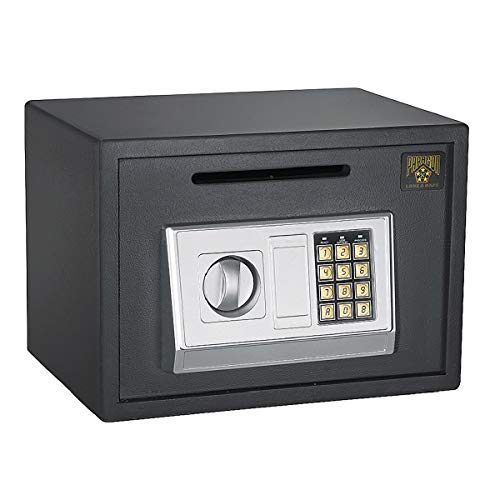
A depository safe is a locked safe with a slot or chute that lets you drop in cash, checks or envelopes without opening the door, so the best choice depends on who uses it: a small business that needs employees to deposit but not retrieve cash, a church or club collecting offerings, or a household that wants a drop slot for envelopes. Brands that sell depository models include Sentry Safe, Barska, AMSEC, Cannon and Stack-On. Specifications differ widely, so match the slot style, lock type and steel thickness to the way you plan to use it, and read each maker’s current sheet.
Our top picks


As an Amazon Associate we earn from qualifying purchases at no extra cost to you.
Depository Safes at a Glance
| Type | Best for | Typical stated features | Limits |
|---|---|---|---|
| Basic slot safe with key lock | Small shops, offices, home envelopes | Top or front slot, key lock, bolt-down holes | Keys can be lost or copied |
| Digital keypad depository safe | Several managers sharing access | Electronic keypad, programmable codes, battery power | Needs battery care; code management |
| Drop box with anti-fish baffle | Retail, churches, front-desk deposits | Internal baffle designed to stop fishing out contents | Heavier and more costly |
| Floor-mounted or in-floor safe | High-use cash handling | Concealed, bolted into concrete | Installation is permanent |
| Rotary hopper depository | Higher-volume business use | Rotating drum deposits into a locked compartment | Premium tier; larger size |
What Makes a Depository Safe Different
An ordinary safe must be opened to add items. A depository safe has a chute or slot, often with an internal baffle or rotating hopper, so you can add deposits while the main compartment stays locked. This reduces exposure of cash during a shift and limits who can retrieve funds. It is not a bank vault. The safe’s main purpose is to control access and deter casual theft, not to survive a determined attack.
Key Features to Compare
Slot type and anti-fishing design
The simplest option is an open slot, which a thief might try to fish through with a tool. Better designs use a baffle, offset chute or rotary mechanism to block that route. If the safe holds substantial cash, choose an anti-fishing design, and ask the maker to describe how it works.
Body and door steel
Thicker steel and solid construction resist prying and drilling. Makers list steel thickness for body and door, often in gauge or inches. Be wary of vague claims; look for measured specifications and any independent rating shown on the maker’s page.
Locks: key, dial or electronic
Key locks are cheap and simple but can be lost. Mechanical dial locks do not need batteries and last a long time. Electronic keypads allow multiple user codes and audit-style convenience, but need fresh batteries and a backup key or override. Whichever you choose, keep codes and keys controlled, and change codes after staff changes.
Fire and security ratings
Most depository safes are rated, if at all, for burglary rather than fire. Look for specific third-party ratings, such as a UL burglary classification, rather than general phrases like “heavy duty.” A fire rating for paper typically describes a time and temperature in a lab test; do not assume that your contents survive a real fire without reading the rating details. If protection of important documents matters, use a separate fire-rated safe.
Anchoring
A light safe can be carried away. Use the pre-drilled holes and bolt it to a concrete floor or a wall structure. For commercial use, ask an installer about proper anchoring and about placing the safe out of public view.
Sizing and Placement
- Interior volume: Cash and checks take little room, but bags of coins and deposit books add up. Pick a safe larger than your first estimate.
- Slot size: Confirm the slot admits the envelopes or bank bags you use.
- Access clearance: Allow room to open the door and to reach the slot comfortably.
- Location: Place it out of public sight, ideally in a back office or secured area, with good lighting and a camera if appropriate.
- Floor load: Heavy safes may need a ground floor or reinforced area.
Insurance and Cash Limits
Many insurers set limits on how much cash is covered based on the safe’s rating. Contact your insurance provider or agent before deciding what to keep on site, and make regular bank deposits. A safe is a delay tool, not a guarantee.
Budget Tiers
Budget: Basic key-lock slot safes from brands such as Barska or Stack-On, adequate for low cash volumes. Mid-range: Thicker-bodied safes with electronic or dial locks and anti-fishing baffles from makers like Sentry Safe or Cannon. Premium: Rated commercial depository safes, rotary hoppers and in-floor models from specialist makers such as AMSEC. Spend to match the risk: higher cash volumes and public exposure justify a higher tier.
Pick X If… Decision Table
| Pick this | If you… |
|---|---|
| Basic key-lock slot safe | Need a low-cost drop box for small amounts and one trusted keyholder |
| Digital keypad depository safe | Have multiple managers and want individual codes |
| Anti-fishing baffle safe | Accept deposits from staff or the public in a visible location |
| Floor-mounted safe | Want a concealed, permanent install for regular cash handling |
| Rotary hopper safe | Handle higher volume and need controlled, quick deposits |
Alternatives to Consider
- Standard fire-rated safe: Better for documents and household valuables when a drop slot is not needed.
- Bank night depository or armored pickup: For large revenue, a bank service may be safer than on-site storage.
- Digital payments: Reducing cash lowers the amount to protect.
Everyday Use Tips
Keep a written procedure for who opens the safe and when. Empty it frequently so a theft would be small. Replace batteries on a schedule on electronic models, and keep a backup key somewhere separate. Never store the combination near the safe. If the lock jams, call a licensed locksmith rather than forcing it.
Who Should Buy One, and Who Should Not
Depository safes make sense wherever several people handle money but only one or two should be able to retrieve it. Typical settings include retail counters, restaurants, small offices, congregations and clubs. They make less sense for a household that simply wants to protect passports and jewelry, where a standard burglary or fire-rated safe fits better. If you collect checks, remember that a safe protects the paper but not the account, so deposit them promptly and keep a log of what went in.
Shopping Checklist
- Decide who needs to deposit and who needs to retrieve, and choose the lock accordingly.
- Measure the item you will drop in, whether a bank bag, envelope or coin roll, and compare it with the slot opening the maker lists.
- Look for a stated anti-fishing feature if the safe sits in a visible or public area.
- Read the maker’s description of steel thickness, hinges and bolts, and look for any independent rating.
- Plan anchoring before purchase: confirm the floor type and bolt hardware.
- Ask your insurer about cash limits tied to the safe’s rating.
Common Mistakes
Buyers often choose a safe that is too small, ignore anchoring, leave it in view of customers, or forget to change codes after a staff member leaves. Another frequent error is treating the slot as an alternative to the bank: the more cash sits inside, the more attractive the target becomes. A simple routine of emptying the safe daily and keeping deposit slips offsite avoids most problems. Finally, do not hide spare keys in obvious places such as desk drawers close to the safe.
Installation and Security Habits
Place the safe where staff can reach the slot without exposing the cash drawer or the keypad to customers. Bolt it down before first use, and photograph the serial number for insurance records. Rotate who holds keys, keep a short written log of each opening, and consider a camera pointed at the safe. If you hire a locksmith, ask about rekeying options and about whether the lock can be changed without replacing the whole door assembly. These small habits matter as much as the steel thickness, because most losses involve poor key control rather than a forced entry.
Frequently Asked Questions
What is a depository safe used for?
It lets people drop cash, checks or envelopes through a slot into a locked compartment without opening the main door. Businesses, churches and offices use it to limit access to funds during the day.
Can thieves fish money out of the slot?
On a plain slot, it is possible. Safes with baffles, offset chutes or rotary hoppers are designed to block that, so choose one if you hold meaningful cash.
Is a depository safe fireproof?
Not necessarily. Many are built for burglary resistance only. If fire protection matters, look for a specific rating and read what it covers, or use a separate fire-rated safe for documents.
Should I bolt the safe down?
Yes. Anchoring prevents it from being carried off. Use the supplied holes and appropriate fasteners, and have a professional help with concrete or commercial installs.
Key lock, dial or keypad?
Key locks are simple, dials need no power, and keypads allow multiple codes. Pick based on how many people need access and how well you can manage keys and batteries.
How much cash can I keep in one?
Your insurance policy and the safe’s rating determine sensible limits. Ask your insurer, and deposit funds at the bank regularly rather than letting cash accumulate.