Key takeaways
- Capacity: Measure the largest items you plan to store, such as a laptop, external drives or folders, and compare with the interior dimensions listed by the maker.
- Weight: Fire safes can weigh dozens of pounds. Make sure the floor and shelf can support the unit.
- Location: Many people place safes in a closet or low shelf. Heat rises, so lower floors and interior walls are often considered more protected in a fire.
- Bolt-down: If the safe includes bolt-down holes and you want theft resistance, anchor it as the manual describes. This usually means drilling into the floor, so check for hidden pipes or wires first.
- Power and locks: Digital locks use batteries. Replace them on schedule and keep a backup key or code where it is safe but retrievable.
For most home offices, a mid-size fire-and-water-resistant document safe from SentrySafe, First Alert or Honeywell is the practical choice for paperwork, a fireproof file cabinet suits people who store many folders, and a small fire chest is enough for passports and a few key documents; buyers who also store drives, backups or cash should look for a separate digital-media rating and a real security lock rather than assuming every fireproof box is a burglary safe.
Our top picks


As an Amazon Associate we earn from qualifying purchases at no extra cost to you.
Understand the ratings before you shop
“Fireproof” on a product page is shorthand. Safes are tested to resist fire for a stated time at a stated temperature, and what is inside has different survival limits. Paper chars at higher temperatures than electronic media like USB drives, hard drives and discs, which can be damaged at much lower internal temperatures. Look for the maker’s stated rating, such as one hour of fire protection at a listed external temperature, and whether the safe is independently researched or certified, for example to a UL 72 class or by another recognized lab, according to what the maker lists. A claim with no named test or certification deserves caution.
Also separate fire resistance from theft resistance. Many fire safes have a thin steel shell and light locks and can be carried away or pried open. If theft is a concern, look for a safe that is bolted to the floor and carries a burglary rating, or consider a different product category. Water resistance is another stated feature on some models, usually for a limited time and depth, and it often depends on the seal staying intact after the unit has been exposed to fire.
At a glance
| Option | Best for | Key stated specs | Limits |
|---|---|---|---|
| SentrySafe fire and water safes (for example the SFW123 family) | General home office documents | Maker lists about one hour of fire protection at a stated temperature and water protection for a stated period; keypad or key lock options | Not a burglary safe; interior space smaller than exterior suggests |
| First Alert fire and waterproof safes | Budget-conscious buyers wanting a known brand | Maker lists fire and water ratings and key, dial or digital lock options | Ratings and lock types vary by model |
| Honeywell fire and water safes | Document and small valuables storage | Maker lists fire ratings, waterproof claims and digital or key locks | Quality varies by line; read specs carefully |
| Fireproof file cabinets (SentrySafe and others) | Offices with many files | Maker lists letter or legal size drawer capacity with fire resistance | Heavy and large; fire rating covers contents, not always the whole cabinet |
| Small fire chests and document boxes | Passports, birth certificates and a few papers | Compact fireproof chests with simple locks | Limited capacity, minimal security |
| Dedicated media safes | Backup drives, discs and USB sticks | Maker lists a lower internal temperature limit for digital media | Costlier per size; paper-only safes may not protect drives |
Document safes
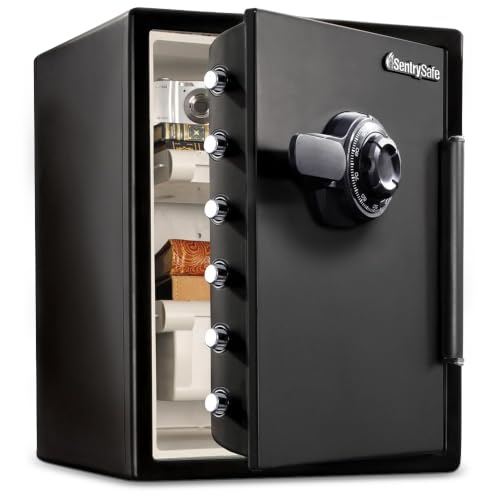
SentrySafe is one of the best-known names in home fire safes. Many of its models in the 1 to 1.2 cubic foot range, such as the SFW123 line, are marketed for home offices, with makers listing about an hour of fire protection and water protection for a stated time, plus digital or key locks. First Alert and Honeywell sell comparable units. When comparing, read the interior dimensions rather than the exterior, because thick insulation reduces usable space. Check whether letter-size folders and a laptop or tablet would fit, and whether the shelf layout is useful.
Fireproof file cabinets
If you keep years of paperwork, a fireproof file cabinet may be more practical than a safe. These hold hanging file folders and open like normal drawers. Makers state the rated fire protection time and whether drawers are tested together or individually. They are heavy and best placed where the floor can handle the weight. Locking mechanisms are usually basic, so think of them as protection against fire first and casual snooping second.
Media protection
Home offices store a lot more than paper: backup drives, SSDs, USB sticks, memory cards and sometimes discs. Paper-rated safes can still let the internal temperature rise above what electronics tolerate. If you rely on a safe for backups, look for a safe explicitly marketed as protecting digital media, with a lower internal temperature limit stated by the maker. Alternatively, keep a backup copy off site or in cloud storage so that fire does not take your only copy. A fire safe is a last line of defense, not a backup strategy.
Size, weight and placement
- Capacity: Measure the largest items you plan to store, such as a laptop, external drives or folders, and compare with the interior dimensions listed by the maker.
- Weight: Fire safes can weigh dozens of pounds. Make sure the floor and shelf can support the unit.
- Location: Many people place safes in a closet or low shelf. Heat rises, so lower floors and interior walls are often considered more protected in a fire.
- Bolt-down: If the safe includes bolt-down holes and you want theft resistance, anchor it as the manual describes. This usually means drilling into the floor, so check for hidden pipes or wires first.
- Power and locks: Digital locks use batteries. Replace them on schedule and keep a backup key or code where it is safe but retrievable.
Fire, water and security trade-offs
A safe designed for fire may not resist burglary, and a burglary-rated safe may not resist fire. Water resistance often needs the safe to be closed and the seals to be intact. Some makers state the safe is waterproof for a limited time at a certain depth. Treat these as complementary protections, and read the fine print, because ratings apply to test conditions and a real fire can be different. If your documents are irreplaceable, consider also making digital copies stored securely off site.
Firearms and sensitive items
Standard document safes are generally not designed for firearms storage, and local laws on firearm storage vary. If you need to store firearms or ammunition, choose a product intended for that purpose and follow your local regulations and the maker’s instructions. For medications or sensitive items, follow the guidance on the label and consult a pharmacist about storage temperatures, since a closed safe can get hot or humid.
Pick X if: decision table
| If you… | Pick | Why |
|---|---|---|
| Store a mix of documents and a few valuables | SentrySafe, First Alert or Honeywell fire and water safe | Balanced capacity and protection |
| Keep many files | Fireproof file cabinet | Drawers sized for folders |
| Only need a place for key documents | Small fire chest | Compact and lighter |
| Store backups and USB drives | Safe with a digital media rating | Lower internal temperature limit |
| Worry about theft more than fire | Burglary-rated safe, bolted down | Fire boxes are easy to carry off |
Budget tiers
Budget: Small fire chests and basic document boxes with key locks. Good for passports and a few papers, but limited in size and security.
Mid-range: Branded fire and water safes in the 1 cubic foot range with digital locks. This is where most home offices land.
Premium: Independently certified fire safes, fireproof file cabinets and media-rated safes with better locks and sturdier construction.
Alternatives
- Bank safe deposit box: Offers strong protection for rarely used originals, but access is limited to bank hours and contents are not insured by the bank by default.
- Digital backups: Scan important documents and store encrypted copies in more than one location.
- Home office organizers: For documents that do not need fire protection, simple locking file cabinets are cheaper and still protect against casual access.
Using the safe day to day
Once the safe is in place, keep a short inventory of what is inside and update it when you add or remove items. Store original documents such as passports, birth certificates, property papers and insurance policies, and keep digital copies elsewhere. Place silica gel packs or a desiccant if the maker allows it to reduce moisture in humid rooms, and avoid storing items that can release moisture or heat. Change digital lock codes if they have been shared, and test the lock and replace batteries on a regular schedule so the safe opens when you need it.
Frequently Asked Questions
What does a one-hour fire rating mean?
It means the safe was tested to keep its interior below a stated temperature for about an hour when exposed to a defined external temperature. Real fires vary, so treat the rating as a guide, and look for the testing standard named by the maker.
Can I store hard drives and USB sticks in a document safe?
Not necessarily. Electronics can be damaged at lower temperatures than paper, so use a safe with a digital media rating if you rely on it, and keep an off-site backup.
Are fireproof safes also burglar proof?
Generally no. Many fire safes have thin steel and light locks. If theft is a concern, choose a burglary-rated safe and anchor it as the manual directs.
How much space do I need?
Measure the folders, laptop or drives you plan to store and compare with the interior dimensions. Interior space is typically much smaller than the outside size because of insulation.
Where should a home office safe go?
Many people choose a low interior closet or a ground-floor spot, away from kitchens and heat sources. Also consider weight, access and whether you can bolt the safe down if it has anchor holes.
Is a fireproof file cabinet better than a safe?
It depends. A file cabinet suits large amounts of paperwork, while a safe offers stronger locks and is better for small valuables. Some offices use both.
More from Amazon
Programs that pair well with the guide above. Offers and eligibility are set by Amazon and may change.
Free shipping on eligible items, Prime Video and more. Eligible new members can start with a free trial.
Start a Prime free trialAudiobooks and podcasts to listen to on the go. Eligible new members can start with a free trial.
Try Audible freeAd-free music streaming. Eligible new subscribers can start with a free trial.
Try Music Unlimited freeA free business account with business pricing and bulk-buying tools for work, shop or home office.
Create a business accountAs an Amazon Associate we earn from qualifying purchases.