For most families with an inground pool, a surface alarm that meets ASTM F2208 and reaches an indoor receiver, such as the PoolGuard PGRM-2, is the sensible core purchase. The Lifebuoy BCone suits households that want phone alerts, and the Safety Turtle suits toddlers around a pool you cannot fit hardware to. No alarm replaces adult supervision, a fence with a self-latching gate, and swimming lessons. Treat any alarm as one layer of protection, not the whole plan.
Our top picks


As an Amazon Associate we earn from qualifying purchases at no extra cost to you.
Pool alarms at a glance
| Model | Type | Best for | Key stated points | Limits |
|---|---|---|---|---|
| PoolGuard PGRM-2 | Floating surface-wave alarm with remote receiver | Inground pools, value-minded buyers | Reviewers report it responds to objects of roughly 18 pounds and up; the Pool Safety Foundation lists a siren near 85 decibels and a remote receiver with up to about 200 feet of range | Placed in the water and removed for swimming; no app |
| Lifebuoy BCone | Floating alarm with Wi-Fi, app and voice-assistant support | Smart-home households | Roundups list a siren near 90 decibels, IP68 water resistance, ASTM F2208 compliance and a weighted design | Relies on a strong Wi-Fi signal reaching the pool |
| Safety Turtle 2.0 | Wristband system with base station | Toddlers, pets, pools that cannot take an installed alarm | Described as one base station plus two wristbands, with no programming | Only protects whoever wears a band |
| Pool Patrol PA-30 | Floating surface alarm | Buyers who prioritize certification | One toddler-focused roundup credits it with certification and a lower detection threshold | Same surface-alarm limits as above |
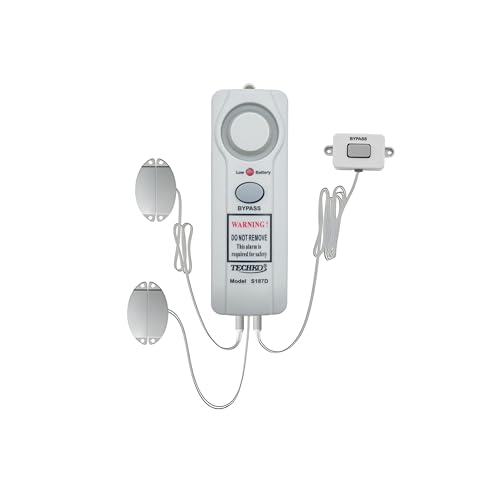
| Techko S187D | Door and gate alarm | Exits and gates leading to the pool | Reviewers suggest it as a perimeter layer | Alerts on opening only; says nothing about someone already in the water |
Understand the alarm types first
Surface or floating alarms
These float on the water and sense the waves created when something falls in. They are the most common choice for inground and many above-ground pools. Because they react to disturbance, strong wind, heavy rain or a pump running can create nuisance alarms on some models, so placement and sensitivity settings matter. Makers generally advise that they be switched on whenever the pool is not in use.
Sub-surface alarms
Mounted on the pool wall, these detect pressure changes below the water line. Reviewers often describe them as less prone to wind-triggered false alarms, but they usually need installation and may involve a professional. Confirm that the model matches your pool wall type.
Wearable alarms
A wristband or clip-on sensor sounds a base station when it becomes submerged. These can be the only workable option at a pool where nothing can be installed, such as a rental property or a relative’s pool. Their major trade-off is that protection depends on the child wearing the band every time.
Door, window and gate alarms
These alert you when a door or gate to the pool area opens. They are inexpensive and effective as an early layer, because the aim is to catch the child before reaching the water. They do not replace a water-entry alarm.
Model notes
PoolGuard PGRM-2
Several roundups, including Swim University, name this the best inground pool alarm. Reviewers describe it as dependable and relatively affordable, with a separate remote receiver that you can carry or place indoors so a siren is heard in the house. Reviewers cite detection of objects around 18 pounds and heavier, which is meant to ignore leaves while catching a child or large pet. Treat the range figure as open-field; walls, distance and interference reduce it in practice.
Lifebuoy BCone
Bob Vila and PoolGuardUSA both put this at or near the top, praising its floating design, detection and the way it pairs with Alexa and Google Assistant. The cost of that convenience is dependence on Wi-Fi. If your router does not reach the pool, alerts may be delayed or fail. Reviewers also note the weighted base makes it harder for children to lift out of the water.
Safety Turtle 2.0
This is the standard wearable suggestion for toddlers. The Pool Safety Foundation describes a kit with a base station and two wristbands. Reviewers rate false-alarm risk as low because the band triggers only when submerged. The main caution is human: bands must be put on every time, fit snugly, and be checked.
Pool Patrol PA-30 and Techko S187D
The Pool Patrol PA-30 is listed by one family-oriented roundup as an overall winner on certification and a lower detection weight. The Techko S187D is a door and gate alarm that reviewers suggest pairing with a water-entry unit. Ratings differ between sources, and many comparison pages are affiliate-driven, so weigh brand-run claims with caution.
What to look for
- ASTM F2208 compliance. This is the standard referenced for pool alarms; the maker should state it plainly.
- Siren volume and receiver. A loud unit at the pool is useless if no one is outside. A remote indoor receiver or phone alert closes that gap.
- Weather and chemical resistance. Look for stated waterproof ratings and guidance on rinsing after chemical shock treatments.
- Battery type and low-battery warning. Alarms only work if powered; many makers advise replacing batteries on a schedule.
- Arming routine. Choose a model you will realistically switch on after every swim.
- Pool compatibility. Some units suit inground pools only, others work with above-ground pools or covers.
Budget tiers
- Budget: basic door and gate alarms, entry-level wristband sets and simple floating units. Fine as an added layer, but read the certification claims carefully.
- Mid-range: certified floating alarms with a remote receiver, led by the PoolGuard PGRM-2 and Pool Patrol class of products. This tier covers most families.
- Premium: Wi-Fi and app-connected systems such as the Lifebuoy BCone, or sub-surface units with professional installation.
Pick X if …
| If you … | Pick | Why |
|---|---|---|
| Have an inground pool and want proven simplicity | PoolGuard PGRM-2 | Remote receiver and widely cited reliability |
| Live in a smart home and want phone alerts | Lifebuoy BCone | App and voice-assistant support, if Wi-Fi reaches the pool |
| Have a toddler or a pool you cannot modify | Safety Turtle 2.0 | Wearable, no installation |
| Want to catch a child before reaching the water | Techko S187D or similar door alarm | Early-warning layer |
| Want fewer wind-triggered alerts | A sub-surface alarm | Reviewers report less surface-wave noise |
Alternatives and added layers
- Four-sided isolation fencing with self-closing, self-latching gates, which safety groups treat as the primary barrier.
- Safety covers that meet the relevant standard when the pool is not in use.
- Camera-based pool monitoring that can detect people near the water, though reviewers note these are newer and less proven.
- Swim lessons and a designated water watcher during gatherings.
Care and setup notes
Follow the manual for placement, test the alarm routinely using the maker’s suggested method, and replace batteries on schedule. Rinse floating units after chemical treatments if the manufacturer advises it, and store them according to the manual during winter. If you have a pool cover, confirm whether your alarm is designed to work with it. Local codes in many areas require specific barriers or alarms on doors leading to a pool, so ask your local building authority what applies to your property.
Layered protection checklist
Safety groups describe pool safety as overlapping layers, and an alarm is only one of them. A practical routine looks like this:
- Barrier: a fence on all four sides, at least as high as local code requires, with a self-closing and self-latching gate that opens away from the pool.
- Door alarms: alarms on any door that opens onto the pool area, set to sound on every opening.
- Water-entry alarm: a floating, sub-surface or wearable alarm armed whenever the pool is not in use.
- Supervision: a named adult who watches the water without phone distractions during any swim time.
- Skills: swim lessons for children and adult CPR training.
- Removal of temptations: pool toys and furniture stored away from the water and fence, so a child is not drawn to the pool or able to climb over.
Installation and everyday use tips
Place a floating alarm where wave energy is most likely to reach it, usually away from return jets and skimmers. Follow the maker’s guidance on how far from the edge to tether it, and attach any anchor or tether exactly as described. Many families create a habit of arming the alarm as the last step when leaving the pool, the same way they close the gate. Keep the remote receiver somewhere you will hear it, and test the signal path from the farthest room. If the siren is only audible outside, add an extra receiver or app alert.
Think about guests, too. Babysitters, grandparents and neighbors should know how the alarm works, where the remote is, and what the siren means. Write brief instructions near the receiver and make sure everyone understands that a sounding alarm means going to the pool immediately, not looking at the phone first.
Common mistakes buyers make
- Choosing the cheapest unit without checking whether it states ASTM F2208 compliance.
- Buying a Wi-Fi alarm for a pool that sits beyond router range.
- Turning an alarm off after repeated false alarms rather than adjusting placement or sensitivity.
- Relying on a wristband that is not worn consistently.
- Forgetting to replace batteries until the unit chirps or fails.
Frequently Asked Questions
Do pool alarms replace a fence?
No. Safety organizations describe alarms as a secondary layer. A fence with a self-latching gate keeps a child from reaching the water at all, while an alarm only tells you after something has entered it.
Why does my alarm go off on windy days?
Surface alarms detect waves, so strong wind or heavy rain can trigger them. Move the unit away from the skimmer or jets if the manual allows, adjust sensitivity where offered, or consider a sub-surface model.
Can a wristband alarm be the only protection?
It is risky to rely on it alone. It protects only the person wearing it and only if worn correctly, so pair it with fencing, supervision and a water-entry alarm where possible.
Do Wi-Fi pool alarms work without internet?
Most still sound the local siren, but app notifications depend on the connection. Read the maker’s specifications on what happens when the signal drops.
How often should I test it?
Many makers suggest a routine test, often before each swim season and periodically after. Follow the manual, and replace batteries as directed.
Do alarms work for above-ground pools?
Some do, but not all. Confirm that the maker lists above-ground compatibility, and make sure ladders and decks are secured when the pool is unattended.
More from Amazon
Programs that pair well with the guide above. Offers and eligibility are set by Amazon and may change.
Free shipping on eligible items, Prime Video and more. Eligible new members can start with a free trial.
Start a Prime free trialAudiobooks and podcasts to listen to on the go. Eligible new members can start with a free trial.
Try Audible freeAd-free music streaming. Eligible new subscribers can start with a free trial.
Try Music Unlimited freeA free business account with business pricing and bulk-buying tools for work, shop or home office.
Create a business accountAs an Amazon Associate we earn from qualifying purchases.