Key takeaways
- Diameter: A 10 to 12 inch dial is usually readable across a standard bedroom. Larger rooms or hallway placement may call for 14 inches or more.
- Dial design: High-contrast numerals read better in dim light. Glow-in-the-dark or backlit options exist on some models, but the light source should be dim and optional.
- Glass versus plastic lens: Glass looks sharper but is heavier and can break; plastic is lighter and quieter if it vibrates less. Check what the maker lists.
- Mounting: Use a solid wall section and the included hook or screw. A clock that sits loosely on a nail can tap against the wall.
- Battery type: Most use a single AA. Alkaline batteries are the usual choice; a low battery can make a quiet movement noisier or stall it.
For most bedrooms, a quartz clock with a continuous “sweep” second hand is the safest choice for silence, a no-second-hand or digital-display model suits people who are bothered by any motion, and an atomic-synced analog clock suits buyers who never want to reset the time after a power cut or storm. Which one fits depends on how sensitive a sleeper is to sound, how bright the room gets at night, and whether the clock needs to survive a long outage without drifting.
Our top picks


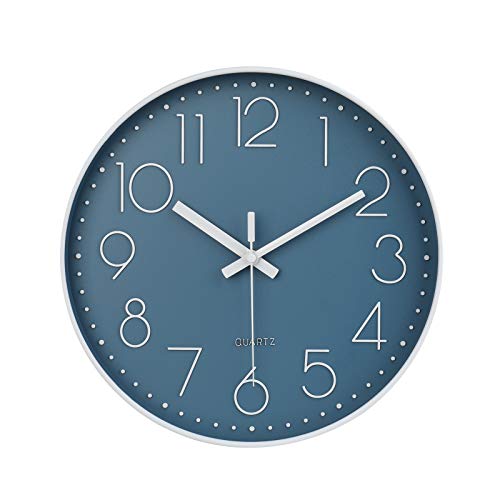

As an Amazon Associate we earn from qualifying purchases at no extra cost to you.
Why “silent” clocks are not all equally silent
A traditional quartz clock moves its second hand once per second with a small stepping motor, and that step produces the familiar tick. Makers of quiet clocks reduce or remove that step in one of three ways. Sweep movements glide the second hand in a smooth continuous motion, so there is no discrete tick to hear. Some makers advertise a “quiet sweep” or “silent” movement that still uses a motor but is engineered to be much quieter. A third approach drops the second hand altogether, leaving only the hour and minute hands, which move so slowly that they make almost no audible sound.
Reviewers consistently note that “silent” on a product page is a marketing claim rather than a measured standard. There is no common decibel rating printed on most clocks, so the practical way to judge is the movement type, the clock’s mounting, and user feedback that mentions a hum, a faint buzz or a ticking that carries through a wall.
At a glance: clock types and makers
| Type / example makers | Best for | Key stated features | Limits |
|---|---|---|---|
| Sweep quartz analog (Seiko quiet sweep lines, Bulova, Howard Miller sweep models) | Light sleepers who still want a classic dial | Makers describe a continuous or quiet second hand; battery powered | Very faint motor hum possible in a silent room; time can drift slightly |
| Atomic analog (La Crosse Technology and similar) | Buyers who want automatic time setting | Maker states radio-signal sync for time and daylight saving adjustments; battery powered | Signal coverage depends on region and location; some models still tick |
| No-second-hand quartz designs (many minimalist and decor brands) | Anyone sensitive to even a smooth sweep | Only hour and minute hands move, which is the quietest option for movement noise | Harder to read exact seconds; quality varies by brand |
| Digital wall clocks and LED displays | Dark rooms and visually impaired users | No moving parts; dimmable or auto-dim displays on some models | Light output can disturb sleep unless dimmable or switchable; usually needs mains power |
| Mechanical or pendulum clocks | Decor and collectors | Real mechanisms, chimes optional | Generally audible; not for light sleepers |
Sweep quartz analog clocks
This is the category most people mean by “silent wall clock.” Seiko lists several wall clocks with a quiet sweep second hand, Bulova offers sweep-movement quartz wall clocks in traditional and modern cases, and Howard Miller, known mainly for furniture-grade clocks, sells quartz wall models with quiet movements as well. The appeal is a familiar analog face without the sharp tick, and most use a single AA battery that lasts many months, according to maker listings.
The trade-off is that a sweep movement is not truly mute. In a very quiet bedroom, some owners report a barely audible whir, especially on models with a thin plastic case or hollow back that amplifies motor vibration. Mounting the clock firmly on the wall rather than a hollow door or thin partition helps, and so does choosing a model with a solid back cover. Reading what buyers say about a specific model matters more than the brand name here, because the same company can offer quiet and noisier movements in one range.
Atomic and radio-controlled clocks
Atomic or radio-controlled clocks, offered by La Crosse Technology and others, synchronize to a time signal so they correct themselves after a battery change and handle daylight saving automatically, according to the makers. For a bedroom, the appeal is convenience: you hang it and never set it again. The caution is that not all of them are silent. Some atomic movements tick, and the periodic sync can briefly move the hands. Look for listings that specifically state a silent or sweep movement and a setting to turn off or limit the nightly sync.
Signal reception also depends on where you live and the building. Steel framing, thick concrete walls and distance from the transmitter can prevent syncing. In that case the clock falls back to normal quartz timekeeping, so it still works, just without the automatic correction.
No-second-hand and minimalist designs
If a smooth sweep still catches your eye at night, a clock with no second hand is the quietest analog option. Many decor brands and independent makers sell wall clocks with only hour and minute hands, often in wood, metal or frameless glass styles. The minute hand moves in small increments that are essentially inaudible. Because there is less to see, these clocks suit minimalist rooms, but they are less useful for taking a pulse or timing something. Construction quality varies widely among brands, so lightweight plastic cases may rattle or hum slightly, while heavier wood or metal bodies tend to be quieter, according to buyer feedback.
Digital and LED options
A digital wall clock has no moving parts, so it makes no mechanical sound at all. The concerns are light and power. A bright display in a dark bedroom can disturb sleep, so look for a clearly stated dimmer, auto-brightness sensor or a screen that can be switched off. Many models need an outlet, and some include a battery backup for the time only. Digital clocks are also helpful for people with low vision because the numerals can be large and high contrast.
Size, readability and room fit
- Diameter: A 10 to 12 inch dial is usually readable across a standard bedroom. Larger rooms or hallway placement may call for 14 inches or more.
- Dial design: High-contrast numerals read better in dim light. Glow-in-the-dark or backlit options exist on some models, but the light source should be dim and optional.
- Glass versus plastic lens: Glass looks sharper but is heavier and can break; plastic is lighter and quieter if it vibrates less. Check what the maker lists.
- Mounting: Use a solid wall section and the included hook or screw. A clock that sits loosely on a nail can tap against the wall.
- Battery type: Most use a single AA. Alkaline batteries are the usual choice; a low battery can make a quiet movement noisier or stall it.
Pick X if: decision table
| If you want… | Pick | Why |
|---|---|---|
| A classic analog look with minimal sound | Sweep quartz from Seiko, Bulova or Howard Miller | No sharp tick, familiar dial |
| The quietest analog option possible | A no-second-hand design | Only slow-moving hands |
| Zero maintenance after outages | Atomic analog with a stated silent movement | Automatic time sync |
| Zero mechanical sound and easy reading in the dark | Dimmable digital clock | No moving parts |
| A decor statement in a nursery or guest room | Wood or metal minimalist clock | Solid body, less vibration |
Budget tiers
Budget: Basic sweep quartz clocks from large manufacturers and generic brands. They keep time well but may have thinner cases, which can increase faint motor noise. Reading buyer feedback on a specific model is especially useful at this level.
Mid-range: Established brands such as Seiko, Bulova and La Crosse Technology, with sturdier cases, glass lenses and more consistent movements. This tier is where most buyers find a good balance of silence and build quality.
Premium: Furniture-grade clocks from Howard Miller and designer pieces from decor makers, chosen as much for appearance as for sound. Premium does not automatically mean quieter, so movement type still matters most.
Care and troubleshooting
- If a quiet clock suddenly ticks louder, replace the battery first.
- If the hands brush the lens or each other, gently contact the maker for support rather than bending them.
- Dust the face with a soft dry cloth; avoid spraying cleaners into the movement.
- Keep batteries fresh and remove them if the clock will be stored for a long time, since leaking cells can damage the movement.
Alternatives to consider
- A small silent desk or shelf clock: A bedside clock may be easier to position away from the wall and gives you more control over placement and brightness.
- A projection or smart display: These show time on the ceiling or wall, but they emit light and may be less suited to sensitive sleepers.
- Removing the clock from the bedroom: Some sleep specialists suggest not watching a clock at night, since checking the time can add stress. A clock in the hallway or outside the room can be a compromise.
Frequently Asked Questions
Are sweep second hand clocks really silent?
They are much quieter than clocks with a ticking second hand, but they are not guaranteed to be perfectly silent. Some produce a faint hum from the motor, which is noticeable only in a very quiet room. Mounting on a solid wall and picking a model with a solid case helps.
Which is quieter, a no-second-hand clock or a sweep clock?
A clock without a second hand is generally the quietest analog option because only the slow-moving minute and hour hands remain. A sweep clock is close, but its second hand still requires a continuously running motor.
Do atomic clocks tick?
Some do. Atomic refers to automatic time synchronization, not to the type of movement. Look for models whose listing states a sweep or silent movement if you want both features.
Why does my quiet clock sound louder at night?
Background noise drops at night, which makes small sounds easier to hear. A weak battery or a loose wall mount can also add noise. Try fresh alkaline batteries and make sure the clock sits flush against the wall.
What size clock is best for a bedroom?
A dial of around 10 to 12 inches is usually easy to read from the bed in an average-sized room. Choose a larger dial if you want to read the time without glasses or from farther away.
Is a digital clock better for sleep?
A digital clock has no moving sound, but a bright display can interfere with sleep. Pick a model with adjustable or automatic dimming, or an option to switch off the display at night.
More from Amazon
Programs that pair well with the guide above. Offers and eligibility are set by Amazon and may change.
Free shipping on eligible items, Prime Video and more. Eligible new members can start with a free trial.
Start a Prime free trialAudiobooks and podcasts to listen to on the go. Eligible new members can start with a free trial.
Try Audible freeAd-free music streaming. Eligible new subscribers can start with a free trial.
Try Music Unlimited freeA free business account with business pricing and bulk-buying tools for work, shop or home office.
Create a business accountAs an Amazon Associate we earn from qualifying purchases.