Key takeaways
- Measure the opening width and height in more than one place, since many openings are not perfectly square, and compare against the maker’s size range.
- Check whether the bars mount inside the frame, on the exterior wall or on the interior side; interior mounting avoids exposed fasteners but may interfere with curtains and window operation.
- Check the wall material. Brick, block, wood and vinyl-sided walls each need different fasteners.
- Look at the finish and any stated corrosion resistance if you live in a coastal or wet climate.
- Confirm the clearance needed to open casement or awning windows behind the bars.
- Check any HOA, landlord or historic-district rules before purchase.
For most households, the best window security bars are hinged or quick-release bars on ground-floor and basement windows, with a fixed-bar or security-screen option only for windows that are not needed as an exit. The right pick depends on the window’s role in an emergency, your local fire and building code, and how much visual deterrence you want. This guide covers the main product types and the trade-offs between them, with budget tiers in place of prices.
Our top picks


As an Amazon Associate we earn from qualifying purchases at no extra cost to you.
Safety first: bars and fire escape
Window bars can keep people out, but they can also keep occupants in during a fire. Many local codes require at least one working emergency escape opening in each sleeping room, and some codes require any bars on those openings to release from the inside without a key, tool or special knowledge. Rules differ by city and country, and rental or HOA properties may add their own limits. Check with your local building or fire department before buying, and consider asking a licensed installer to confirm the product meets code for the specific window.
As a general principle, any bar that covers a bedroom window should open from the inside quickly and without a key. Fixed bars are better kept for basement, storage and utility windows that nobody would use as an exit. Pair any bars with working smoke and carbon monoxide alarms and a household escape plan that everyone has practised.
At a glance: main product types
| Type | Best for | Key traits as stated by makers | Limits |
|---|---|---|---|
| Fixed steel or wrought-iron bars | Basement, garage, utility windows that are not exits | Welded or bolted frame, powder-coat or galvanised finish, custom sizes | No escape route; may not be allowed on bedroom windows; custom fitting often needed |
| Hinged or quick-release bars | Ground-floor bedrooms and living areas | Interior release latch or lever so the grille swings open from inside | Latch hardware needs periodic checks; more moving parts than fixed bars |
| Security screens (stainless-steel mesh), such as Crimsafe | Homeowners who want protection with a lower-profile look | Woven steel mesh in a frame; the maker states it also works as an insect screen | Needs measurement and often professional fitting; less visible deterrent than bars |
| Security window film, such as products from 3M | Glass-break delay and shatter-holding, not forced entry through the frame | Layers of film bonded to glass; makers describe it as holding broken glass together | Does not stop a determined intruder on its own; best combined with other layers |
| Window well covers | Basement egress wells | Steel or polycarbonate covers over the well | Must still allow escape if the window is an egress window |
| Window sensors and locks | Renters and anyone who cannot install bars | Contact sensors or secondary locks that alert or restrict opening | Alert only; they do not physically block entry |
Fixed bars: the simplest and the most restrictive
Fixed bars are the traditional option. Makers typically offer steel or wrought-iron grilles, often with a powder-coated or galvanised finish to resist rust. Some are sold in standard sizes and others are made to measure. Installation commonly involves bolting or fastening into masonry or the framing, and the way the bars are anchored matters as much as the bar material. If the fasteners are weak or exposed on the outside, the grille is only as strong as those fasteners.
Fixed bars suit basement windows, small bathrooms that have another exit, garages and workshops. They are generally the budget to mid-range choice. Their downside is the escape issue described above. Do not install them over any window that someone might need in an emergency unless your local authority has confirmed it is permitted and a separate exit is available.
Hinged and quick-release bars: the practical default
Hinged grilles open from the inside using a latch, lever or release mechanism. Makers describe them as allowing the grille to swing clear so the window can be used as an exit. This is the type most often discussed for ground-floor bedrooms. When comparing models, look at how the release works, whether it can be operated by a child or an older adult, and whether it needs a key. A key-operated lock can be a problem in a fire if the key is not where you expect it to be.
Because they have moving parts, check hinges and latches a couple of times a year, keep them clean and lightly lubricated as the manufacturer advises, and test the release with everyone in the household. Expect mid-range to premium pricing tiers for the better-engineered units, especially when professional installation is added.
Security screens: protection with a softer look
Stainless-steel mesh security screens are marketed as a lower-profile alternative to bars. Crimsafe is one of the better-known brands, and the maker describes its products as tested against impact and cutting. Independent comparisons usually note that the mesh is less visible than bars from the street, and that it can double as an insect screen, which is useful in warmer climates. The trade-offs are the need for accurate measurement, the often-professional installation, and the fact that screens may not be treated the same as bars by every local code. If you are replacing existing screens, ask the supplier how the frame opens from inside for emergencies.
Security film, glass and alarms: other layers
Window film and laminated glass address a different weakness. They aim to hold glass together after impact, which buys time and reduces the chance of a quick smash-and-grab. Makers such as 3M describe their films this way, and professional installation is usually recommended for a clean, edge-to-edge fit. Film is not a replacement for bars if you want to resist forced entry through the frame, but it can be a sensible choice for upper-floor windows where bars are neither practical nor safe.
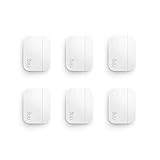
If bars are not allowed or not possible, such as in a rental, consider window contact sensors and secondary locks as part of a broader alarm system. They do not physically block entry, but they can alert you and may deter an attempt.
Fit, size and installation notes
- Measure the opening width and height in more than one place, since many openings are not perfectly square, and compare against the maker’s size range.
- Check whether the bars mount inside the frame, on the exterior wall or on the interior side; interior mounting avoids exposed fasteners but may interfere with curtains and window operation.
- Check the wall material. Brick, block, wood and vinyl-sided walls each need different fasteners.
- Look at the finish and any stated corrosion resistance if you live in a coastal or wet climate.
- Confirm the clearance needed to open casement or awning windows behind the bars.
- Check any HOA, landlord or historic-district rules before purchase.
Pick X if…
| Pick this | If you… |
|---|---|
| Hinged or quick-release bars | need protection on a ground-floor bedroom or living space and want the window to remain usable as an exit |
| Fixed bars | are securing a basement, garage or utility window that is never used as an exit, on a tight budget |
| Stainless-steel security screens | want protection without the look of bars and are comfortable with professional fitting |
| Security film | mainly want to slow glass-break entry on higher or hard-to-reach windows |
| Window sensors and secondary locks | rent your home or cannot alter the exterior |
| A local professional installer | have unusual windows, historic masonry or code questions |
Budget tiers
Budget: Standard-size fixed bars and basic secondary locks suit non-exit windows. Expect simpler finishes and more DIY effort.
Mid-range: Hinged grilles with an interior release and better coatings, plus window film on selected panes, strike the balance most homeowners need.
Premium: Made-to-measure security screens or custom quick-release grilles with professional installation give the cleanest look and the most reliable fit.
Alternatives to consider
- Reinforced locks and laminated glass: Raise resistance without changing the exterior look.
- Exterior lighting and cameras: Visibility deters many opportunistic attempts and complements any physical barrier.
- Landscaping: Thorny shrubs under ground-floor windows can add friction, as long as they do not hide the approach from view.
- Monitored alarm systems: Add detection and a response layer that bars alone do not provide.
Frequently Asked Questions
Are window security bars legal?
It depends on where you live. Many jurisdictions allow bars but require that any bars on sleeping-room windows can be opened from the inside without a key or tool. Contact your local building or fire department before buying.
Can bars be a fire hazard?
Fixed bars on an escape window can block the exit during a fire. That is why quick-release designs exist and why fixed bars are generally kept for windows nobody would use to escape. Smoke alarms and a practised escape plan are essential either way.
Are quick-release bars as strong as fixed bars?
Makers generally design them to resist forced entry from outside while opening from inside, but strength varies by model and by how well they are anchored. Compare the stated materials, hinge and latch construction, and installation method rather than assuming equivalence.
Can I install window bars myself?
Many standard-size products are designed for DIY fitting, but the anchoring into masonry or framing is what determines real strength. If you are unsure about the wall type or the tools, a licensed installer is a sensible choice.
Do bars work on upper-floor windows?
They are less common there because upper windows are harder to reach and may be needed for escape. Window film, better locks and an alarm are often more appropriate for those windows.
Do I still need an alarm if I have bars?
Bars delay or discourage entry through the window, but they do not alert anyone. An alarm with door and window sensors adds detection and, if monitored, a response, so the two work well together.