Key takeaways
- Use the supplied power adapter and follow the maker’s manual.
- Do not stare directly at bright lights. If you have an eye condition or take medication that increases light sensitivity, ask a doctor before using bright light devices.
- If you share a room, test the brightness and sound levels at low settings first.
- Persistent tiredness, trouble sleeping or low mood deserve a conversation with a health professional rather than a gadget fix.
- Keep the device away from water and heat sources.
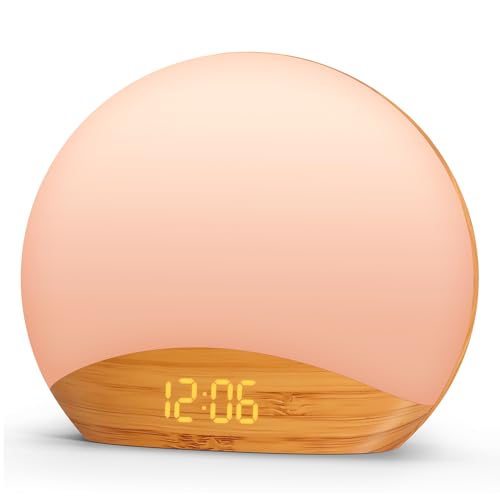
If you want a gentle light-based wake-up that also works as a bedside light and sound machine, the Hatch Restore line is the feature-rich choice; if you want a simple, proven sunrise simulator without an app, a Philips SmartSleep Wake-up Light or a Lumie Bodyclock is the better fit. The best sunrise alarm clock for you depends on how much you want an app, how bright the light gets, and whether you need extras like sounds or a reading light.
Our top picks



As an Amazon Associate we earn from qualifying purchases at no extra cost to you.
What a Sunrise Alarm Clock Does
A sunrise alarm clock, also called a wake-up light, gradually raises its brightness over a set period before your alarm time, typically 15 to 45 minutes, to imitate dawn. Many then add a sound alarm at the end. Makers describe the idea as a gentler alternative to a sudden buzzer. Whether it helps you personally varies; some people find it makes mornings easier, others notice little change.
These devices are not medical treatments. If you struggle with persistent low mood, sleep problems or seasonal changes in how you feel, speak with a doctor or qualified health professional. A wake-up light is a bedroom convenience, and the dedicated light therapy lamps used for medical purposes are a separate product category.
At a Glance: Sunrise Alarm Clocks Compared
| Model | Best for | Key traits the maker lists | Limits |
|---|---|---|---|
| Hatch Restore (2 / 3) | Bedtime routine plus wake-up | Sunrise light, sound library, app control, night-light and reading light modes | App-driven, some content may need a paid membership |
| Philips SmartSleep Wake-up Light (HF3500 series) | Simple, proven sunrise simulation | Gradual light increase, selectable wake sounds, bedside lamp mode, FM radio on some models | Fewer smart features |
| Philips SmartSleep Sleep and Wake-Up Light (HF3650 class) | Sunrise plus sunset wind-down | Sunset simulation, more sound options, relaxation features on selected models | Bigger footprint, higher cost tier |
| Lumie Bodyclock (Active / Shine / Luxe) | Natural light-style alarm with a long sunrise | Gradual sunrise, different models for brightness and sound options | Availability differs by region |
| Loftie Clock | Phone-free bedside routine | Sunrise light, sounds and a wind-down routine in a minimal design | Specific feature set tied to its own app and subscriptions |
| Budget wake-up lamps | Basic sunrise on a tight budget | Gradual light, simple alarm tones | Lower light quality, variable build |
Hatch Restore: The Smart Choice
The Hatch Restore is widely reviewed as a combined sunrise light, sound machine and night-light controlled by a phone app. The maker describes routines for winding down, sleeping and waking, with a library of sounds and light colors. Reviewers like that it replaces several bedside devices, and also note that some content libraries sit behind an optional subscription. It needs Wi-Fi setup, and some people dislike the dependence on an app. Check the maker’s page for the differences between the versions available.
Philips SmartSleep: The Established Name
Philips has sold wake-up lights for years. The lineup includes simpler models with a sunrise light, alarm sounds and a bedside lamp function, and higher-tier models that add a sunset mode to dim the light as you fall asleep. The maker lists adjustable brightness and several wake-up sounds. Reviewers tend to appreciate that these work without an app, which suits anyone who wants a fuss-free device. The lower-tier models are plain in styling and have fewer sound options.
Lumie Bodyclock: UK-Based Specialist
Lumie focuses on light products and offers several Bodyclock models, from basic sunrise alarm clocks to ones with multiple sound options and longer sunrise settings. Reviewers often mention the long sunrise range and straightforward controls. Availability and pricing vary by country, so confirm which models are sold where you live.
Loftie Clock and Minimalist Alternatives
The Loftie Clock is designed as a phone-free bedside device, with sunrise light, sounds and a wind-down feature. It suits people who want to keep their phone out of the bedroom. Check the maker’s details on app requirements and any subscription options.
What to Look For
Sunrise length and brightness
Most devices let you choose the sunrise duration, such as 20, 30 or 40 minutes. Higher peak brightness makes a more noticeable effect, but a very bright light may bother a partner. Makers list maximum brightness in lux or by levels, and the reading may be taken at a certain distance.
Sound options
Look for gentle tones, nature sounds, radio or your own music if that matters. A snooze function and a backup alarm are useful for heavy sleepers.
App versus physical controls
Apps give flexibility and more settings, while physical buttons and dials are faster in the dark. Some people prefer devices that work fully without a phone.
Night-light and sunset modes
A dimmable warm light for evening reading and a sunset wind-down mode can make the device useful all night, not just in the morning.
Size and placement
Place the light on a bedside table facing your face from about arm’s length, as the maker’s guide suggests. Larger lamps need more space. Check dimensions if your table is small.
Power and backup
Most plug into the wall. If there is a power outage, some models keep time with a backup battery while others reset, so look at the manual if reliability matters.
Budget Tiers
| Tier | What to expect | Examples |
|---|---|---|
| Budget | Basic sunrise and tone alarm, simple controls | Generic wake-up lamps, entry Philips models |
| Mid-range | Better light quality, multiple sounds, bedside lamp mode | Philips SmartSleep, Lumie Bodyclock |
| Premium | App control, sound library, routines, sunset mode | Hatch Restore, higher Philips models, Loftie |
Safety and Sleep Notes
- Use the supplied power adapter and follow the maker’s manual.
- Do not stare directly at bright lights. If you have an eye condition or take medication that increases light sensitivity, ask a doctor before using bright light devices.
- If you share a room, test the brightness and sound levels at low settings first.
- Persistent tiredness, trouble sleeping or low mood deserve a conversation with a health professional rather than a gadget fix.
- Keep the device away from water and heat sources.
Pick X If… Decision Table
| Pick this | If you… |
|---|---|
| Hatch Restore | Want a sound machine, night-light and sunrise in one app-based device |
| Philips SmartSleep (basic) | Want a simple sunrise lamp with no app |
| Philips SmartSleep (sunset model) | Want a wind-down feature as well as a wake-up |
| Lumie Bodyclock | Prefer a specialist light brand with a long sunrise setting |
| Loftie Clock | Want to keep your phone out of the bedroom |
| Budget wake-up lamp | Just want to try the idea with minimal outlay |
Alternatives
- Smart bulbs with a wake-up schedule: if you already own smart lighting, a routine that brightens a lamp can imitate sunrise.
- Vibrating alarm bands or wearables: useful if sound disturbs a partner.
- Curtain openers: let real daylight in on a timer, though they depend on the season and window direction.
Tips for Getting the Most From a Wake-Up Light
Placement and timing make a noticeable difference. Position the lamp where the light reaches your face, ideally with the bedroom otherwise dark, and set the sunrise to begin about half an hour before your alarm. If it feels too slow or too fast, adjust in small steps over a week rather than changing everything at once.
Keep a consistent wake time. Sleep specialists commonly note that regular schedules matter more than any single gadget, and a wake-up light works best as part of a steady routine. Dim the room lights in the evening and avoid bright screens just before bed if you find it hard to fall asleep.
If you share a bed, try lower brightness first and consider a model with a separate volume and light control, so the sound can be turned off while the light still rises. Some couples prefer a small lamp on one side only.
Also think about travel. Compact models and phone-controlled lights are easier to pack, while larger lamps are better left at home. Whatever you choose, read the maker’s instructions on cleaning, since dust on a diffuser can dull the glow over time. If sleep problems persist despite good habits, speak with a doctor rather than adding more devices.
Frequently Asked Questions
Do sunrise alarm clocks really work?
Many users find a gradual light more pleasant than a sudden alarm, though the effect is personal and results vary. Research on wake-up lights is limited and mixed, and they should not be treated as a cure for any condition. Try one with a good return policy if you are unsure.
How bright should a sunrise alarm clock be?
Brighter is not always better. The maker’s lux figure helps compare devices, but comfort matters. Choose a model with adjustable brightness so you can find a level that wakes you without being harsh.
Is a sunrise alarm clock the same as a light therapy lamp?
No. Light therapy lamps are designed to deliver specific brightness for set periods, often for people with seasonal mood changes. Wake-up lights are meant to simulate dawn at bedtime or morning. If you think you may have seasonal affective disorder, ask a doctor.
Do I need an app to use one?
Not always. Philips and Lumie models generally work with onboard controls, while the Hatch Restore and Loftie rely more on apps. Choose by how you like to set alarms.
Will it wake me if the light fails?
Most models include a sound alarm as backup, but you should confirm in the manual. If you must wake at a certain time, set a secondary alarm on your phone as well.
Can I use it as a regular bedside lamp?
Many can. Models with a lamp or night-light mode let you dim a warm light for reading. Check the maker’s description to see which brightness and color options are available.