Our Top Picks
 Westinghouse 12500 Watt Dual Fuel Home Backup PortableWGen9500DF27.2 x 26.1 x 26.5 inchesCheck on Amazon
 Westinghouse 13500 Peak Watt Dual Fuel Home Backup27.2 x 26.1 x 26.5 inches230 PoundsCheck on Amazon
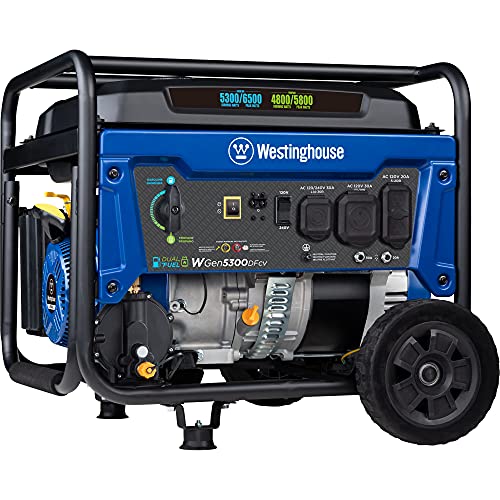 Westinghouse 6500 Watt Dual Fuel Home Backup Portable21 x 18 x 19.09 inches135.6 poundsCheck on Amazon
 Westinghouse 14500 Peak Watt Dual Fuel Home Backup28.9 x 29.6 x 26.9 inches230 poundsCheck on Amazon
 Westinghouse 6600 Watt Dual Fuel Home Backup Portable23.43 x 20.63 x 19.48 inches135.6 PoundsCheck on Amazon
For hurricane home backup, a dual fuel generator makes sense because it can run on gasoline or propane, so you are not at the mercy of a single fuel supply when stations are closed and roads are flooded. Among the eight models below, the Westinghouse 6500 and 6600 watt units suit an essentials-only plan, while the 12,500 to 18,000 watt class is aimed at larger loads and whole-home setups with a professionally installed transfer switch.
This is a safety-heavy product category, so the guide starts with a load worksheet and a fuel estimate before it reaches any model. Generators kill people every storm season through carbon monoxide, backfeeding and refueling accidents, and no listing title can protect you from those. Read the manufacturer’s manual for any unit you buy, and use the safety section as a checklist, not a substitute.
Size the load before you shop
Westinghouse 12500 Watt Dual Fuel Home Backup Portable Generator, Remote Electric Start, Transfer Switch Ready, Gas and Propane Powered


As an Amazon Associate we earn from qualifying purchases. Product prices and availability are accurate as of the date/time indicated.
Westinghouse 13500 Peak Watt Dual Fuel Home Backup Portable Generator, Remote Electric Start, Transfer Switch Ready, Gas and Propane Powered


As an Amazon Associate we earn from qualifying purchases. Product prices and availability are accurate as of the date/time indicated.
Westinghouse 6500 Watt Dual Fuel Home Backup Portable Generator, Transfer Switch Ready 30A Outlet, RV Ready 30A Outlet, CO Sensor


As an Amazon Associate we earn from qualifying purchases. Product prices and availability are accurate as of the date/time indicated.

DuroStar DS13000MX 13,000-Watt 500cc Dual Fuel Portable Generator - Gas and Propane, Remote Electric Start, Whole Home Power Backup, Transfer Switch Ready, RV & Emergency Ready


As an Amazon Associate we earn from qualifying purchases. Product prices and availability are accurate as of the date/time indicated.
Westinghouse 14500 Peak Watt Dual Fuel Home Backup Portable Generator, Remote Electric Start, Transfer Switch Ready, Gas and Propane Powered


As an Amazon Associate we earn from qualifying purchases. Product prices and availability are accurate as of the date/time indicated.
Westinghouse 6600 Watt Dual Fuel Home Backup Portable Generator, Remote Electric Start, Transfer Switch Ready, RV Ready, CO Sensor


As an Amazon Associate we earn from qualifying purchases. Product prices and availability are accurate as of the date/time indicated.

DuroMax XP13000EH 13,000-Watt Dual Fuel Portable Generator - Gas & Propane, Electric Start, Whole Home Backup Power, Transfer Switch Ready, RV & Emergency Ready


As an Amazon Associate we earn from qualifying purchases. Product prices and availability are accurate as of the date/time indicated.
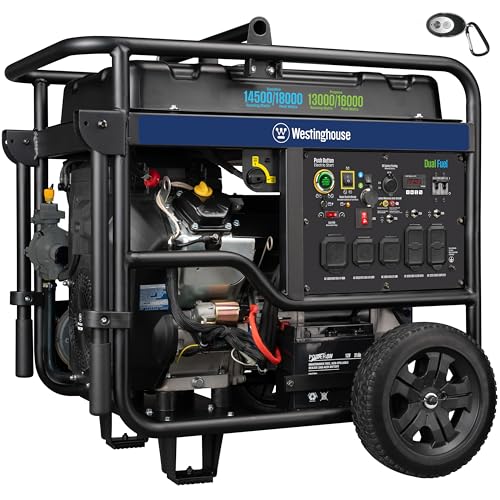
Westinghouse 18000 Peak Watt Dual Fuel Home Backup Portable Generator, Remote Electric Start, Transfer Switch Ready, Gas & Propane Powered, CO Sensor


As an Amazon Associate we earn from qualifying purchases. Product prices and availability are accurate as of the date/time indicated.
Generators are rated in running watts, which they can supply continuously, and starting watts, which they can deliver for a few seconds when motors start. Many titles list only one number, and some list “peak” watts, which is the starting figure. The titles here include “12500 Watt,” “13500 Peak Watt,” “13,000-Watt,” and so on, so check each listing for both the running and starting rating, and for the rating on propane versus gasoline.
Here is a worked example with estimated figures. The wattages below are typical ranges for common household equipment and are our assumptions, not values for your appliances. Check the nameplate on each device.
| Load | Running watts (estimate) | Extra starting surge (estimate) |
|---|---|---|
| Refrigerator | 150 to 250 | Up to about 800 |
| Chest freezer | 100 to 200 | Up to about 600 |
| Sump pump (1/3 to 1/2 hp) | 400 to 800 | Up to about 1,500 |
| Furnace or air handler blower | 500 to 800 | Up to about 1,000 |
| Ten LED bulbs | About 100 | None |
| Router, modem, phone chargers | About 50 | None |
| Window air conditioner | 900 to 1,500 | Up to about 2,500 |
| Well pump (1 hp) | 800 to 1,200 | Up to about 2,500 |
Scenario A, essentials: refrigerator, freezer, sump pump, blower, lights and router. Running total is roughly 1,400 to 2,300 watts. Starting surges do not all happen at once, so a common approach is to add the single largest surge on top of the running total, which gives a planning number around 3,000 to 4,000 watts. A 6,500 watt class generator covers this with margin.
Scenario B, essentials plus a window air conditioner and a well pump: add roughly 1,700 to 2,700 running watts and a larger starting surge, and the planning number climbs to the range of 6,000 to 8,000 watts. That is where the 12,000-plus watt class comes in. Whole-home plans with 240 volt loads need an electrician to calculate the load and install the transfer equipment.
These are estimates for planning. They do not replace an electrician’s calculation, and they do not account for your appliances’ actual nameplates.
How much fuel does a storm week take?
Fuel is the part buyers underestimate. The numbers below are estimates with assumptions stated, because the titles give no run-time data.
- Assumed average load: 1,200 watts over 24 hours, because the refrigerator and pumps cycle on and off. That is 28.8 kilowatt-hours per day.
- Gasoline: assume 3.5 to 5 kilowatt-hours of electricity per gallon in a typical portable generator at partial load. That is roughly 6 to 8 gallons per day.
- Propane: assume about three quarters of gasoline’s energy per gallon, so roughly 2.7 to 3.9 kilowatt-hours per gallon. A 20-pound cylinder holds roughly 4.7 gallons, so about 13 to 18 kilowatt-hours per cylinder. That is about 1.6 to 2.3 cylinders per day.
| Outage length | Gasoline (estimate) | 20-lb propane cylinders (estimate) |
|---|---|---|
| 1 day | 6 to 8 gallons | 2 cylinders |
| 3 days | 18 to 24 gallons | 5 to 7 cylinders |
| 7 days | 42 to 56 gallons | 11 to 16 cylinders |
Seven days of continuous running is unrealistic for most households, because you can cycle the generator on for a few hours at a time to keep food cold. Running it in blocks, say four hours on and four hours off with the freezer packed, can cut fuel use significantly. The numbers still show why dual fuel flexibility and a fuel plan matter more than a few extra watts.
Fuel storage is regulated in many places. Ask your local fire department or authority about legal quantities, approved containers and where you can keep them. Never store gasoline or propane cylinders inside living spaces.
All eight at a glance
“Price tier” compares models within this set only. The range is wide, with one model far above the rest, so the tiers separate small, mid-sized and top-end units.
| Model | Key facts from the title | Price tier | Best for |
|---|---|---|---|
| Westinghouse 6500 Watt Dual Fuel | Transfer switch ready 30A outlet, RV ready 30A outlet, CO sensor | Budget | Essentials-only plans |
| Westinghouse 6600 Watt Dual Fuel | Remote electric start, transfer switch ready, RV ready, CO sensor | Budget | Essentials with easier starting |
| DuroStar DS13000MX 13,000-Watt 500cc | Remote electric start, transfer switch ready, RV and emergency ready | Budget | Larger loads on a tighter budget |
| Westinghouse 12500 Watt Dual Fuel | Remote electric start, transfer switch ready | Mid-range | Larger-home backup |
| Westinghouse 13500 Peak Watt Dual Fuel | Remote electric start, transfer switch ready | Mid-range | Larger-home backup, higher peak |
| DuroMax XP13000EH 13,000-Watt Dual Fuel | Electric start, whole home backup, transfer switch ready | Mid-range | Heavy-load households |
| Westinghouse 14500 Peak Watt Dual Fuel | Remote electric start, transfer switch ready | Premium | Peak-demand households |
| Westinghouse 18000 Peak Watt Dual Fuel | Remote electric start, transfer switch ready, CO sensor | Premium | The largest loads in this set |
The eight generators, one at a time
Westinghouse 6500 Watt Dual Fuel Home Backup: the sized-for-essentials model
This is the lowest-priced unit in the set. The title lists a 6500 watt rating, dual fuel gas and propane, a transfer switch ready 30 amp outlet, an RV ready 30 amp outlet, and a built-in carbon monoxide sensor. It does not mention remote start, so check whether it uses a recoil or push-button start.
The CO sensor is the standout safety item. Some modern generators monitor carbon monoxide in the exhaust area and shut down if levels rise. That is a helpful backup, but it does not make indoor operation safe and does not replace home CO alarms. Treat it as an extra layer, and read the manual to see how it works and what it detects.
For Scenario A in the worksheet, a 6500 watt class generator is a logical fit. It covers refrigerator, freezer, sump pump, blower and lights with margin for starting surges, and leaves room for a window air conditioner if you manage the loads. For well pumps and central air, you need more capacity and an electrician’s input.
“Transfer switch ready” means the 30 amp outlet is the type commonly used with a transfer switch inlet. It does not mean a transfer switch is included or installed. Have a licensed electrician install the equipment and confirm compatibility.
Walk through your starting routine before the season: where the generator sits, how long the cords run, and where you will store fuel. Rehearsing once in dry weather exposes problems you would otherwise meet in the dark.
Pros
- Lowest price tier in the set
- Built-in carbon monoxide sensor named in the title
- 30 amp transfer switch ready and RV outlets
- Right-sized for an essentials plan
Cons
- Remote start is not mentioned in the title
- Running versus peak watts and propane output are not stated; check the listing
- Too small for whole-home loads
Who it’s for: households that plan to run the fridge, freezer, sump pump and lights in an outage.
Westinghouse 6600 Watt Dual Fuel Home Backup: the remote-start sibling
This 6600 watt listing sits right beside the 6500, and a quick comparison shows how thin the differences can be. The title adds remote electric start and keeps transfer switch ready, RV ready and CO sensor. It does not mention the 30 amp outlet labeling, so check that the outlet configuration matches what you need.
Remote start matters at 2 a.m. in a storm. Being able to start the generator from a key fob or switch, instead of pulling a cord in the rain, can be a real convenience. Still, the generator must be outside and positioned correctly before you start it, which means setup takes place before the weather turns. Never move a running unit.
The 100 watt difference between the 6500 and 6600 is trivial in practice. The title does not say whether those figures are running or starting watts, so check the listing. What matters more is which of the two units has the outlets and start method you want.
Price-wise, the two sit close together in the budget tier. Compare the two product pages line by line before choosing, because small spec differences like the outlet type are easy to miss.
Whichever you pick, read the manual’s propane section. Output on propane is normally below the gasoline figure, and the manual explains how to connect the cylinder safely and check for leaks.
Both small Westinghouse listings mention a CO sensor, which is worth noting if you want that feature at a lower price.
Pros
- Remote electric start named in the title
- Carbon monoxide sensor named in the title
- Transfer switch ready and RV ready
- Budget tier
Cons
- Nearly identical to the 6500; differences need careful reading
- Running and starting watts are not clearly separated in the title
- Not sized for whole-home loads
Who it’s for: essentials-only households that want the easier start at a similar price.
DuroStar DS13000MX 13,000-Watt 500cc Dual Fuel: the large-engine budget option
DuroStar’s model is the least expensive of the 13,000 watt class. The title names a 500cc engine, dual fuel, remote electric start, whole home power backup, transfer switch ready, and RV and emergency ready. The “whole home” claim is a marketing phrase, and whole-home backup depends on your loads and on a properly installed transfer switch.
A large engine means more noise, more fuel use, and more weight. The title does not state weight, run time or noise level, so check the listing and plan how you will move and position the unit. A 13,000 watt generator is heavy and typically needs wheels and two people to handle safely.
Fuel burn is the practical issue. Larger engines burn more fuel at the same load than smaller ones, because they are less efficient at low load. If your actual needs are essentials only, a smaller unit uses less fuel. If you plan to power a well pump and air conditioner, this size becomes useful.
The title does not mention a carbon monoxide sensor, so do not assume one exists. Check the listing, and use battery-powered CO alarms in the home regardless. Treat any claim of 13,000 watts as a maximum and verify the running figure on both fuels.
Ask where you will store it. A heavy 13,000 watt unit does not roll easily over gravel or steps, so plan a clear, level path to its operating spot well before a storm arrives.
Pros
- Lowest price tier among the 13,000 watt class
- 500cc engine and remote electric start named in the title
- Transfer switch ready and RV ready
- Room for larger loads such as a well pump
Cons
- A CO sensor is not mentioned in the title
- Weight, noise and run time are not stated
- Likely to use more fuel than a smaller unit at light loads
Who it’s for: households with larger loads that want the lowest entry price in the 13,000 watt class.
Westinghouse 12500 Watt Dual Fuel Home Backup: the first step into the large class
The 12500 watt Westinghouse is a mid-tier model with remote electric start, transfer switch ready, and gas and propane operation per the title. It does not mention a CO sensor, in contrast to the smaller Westinghouse units, so check the listing.
The title says “12500 Watt,” while the next model up says “13500 Peak Watt.” That wording difference is a reminder to check what the number means. Peak and running ratings can differ by thousands of watts, and the running figure is what you should use to size your loads. Ask whether the figure is on gasoline or propane, because propane output is typically lower.
This size is a good match for Scenario B in the worksheet: essentials plus well pump plus air conditioning. It also suits a household with 240 volt loads that are connected through a transfer switch by an electrician. If your load list is shorter, a 6500 watt unit will burn less fuel and cost less.
Siting a big generator is its own project. It should sit outdoors on level ground, well away from windows and doors, with a plan for rain protection that does not enclose the unit. In flood-prone areas, think about elevation. Water and electricity do not mix, and a generator that gets flooded is both useless and dangerous.
Pros
- Remote electric start and transfer switch ready
- Large capacity for well pump and air conditioner loads
- Mid-range tier
- Gas and propane operation
Cons
- CO sensor is not mentioned in the title
- Running versus starting watts are not distinguished in the title
- Heavy and fuel-hungry compared with the 6500 class
Who it’s for: larger households that want to cover well, cooling and 240 volt loads through a professionally installed switch.
Westinghouse 13500 Peak Watt Dual Fuel Home Backup: the peak-rated step up
This model’s title uses “13500 Peak Watt,” which tells you the headline number is the peak rating. It also lists remote electric start, transfer switch ready, and gas and propane power. It does not state running watts, which is the number you actually size by. Check the listing.
When two models are separated only by a peak figure, the practical difference may be small. A 1,000 watt step in peak rating means a bit more headroom for startup surges, not a huge change in continuous capacity. Compare the running watts for each fuel on the product pages before spending the extra.
The mid-range tier places it just above the 12500 model. For that gap, you are paying for a slightly higher rating and possibly a larger engine. If the running ratings are close, the cheaper unit may do the same job. If you have an air conditioner and a well pump, the extra surge capacity could help.
A practical tip: write down your biggest motor loads and their starting watts, then see whether peak ratings clear them with margin. Starting a well pump and an air conditioner at the same time is the sort of event that stalls a generator, so stagger the starts.
Staggering motor starts is free insurance. Start the pump first, let it settle, then bring on the next load, and the generator never sees both surges at once.
Pros
- Higher peak rating than the 12500 model, per the title
- Remote electric start and transfer switch ready
- Gas and propane operation
- Mid-range tier
Cons
- Title gives only a peak figure, not running watts
- CO sensor is not mentioned in the title
- Fuel use at light loads will be higher than for smaller units
Who it’s for: households with high surge demands from motors that want extra headroom.
DuroMax XP13000EH 13,000-Watt Dual Fuel: the electric-start heavy hitter
DuroMax’s model is described as a 13,000 watt dual fuel portable generator, gas and propane, with electric start, whole home backup power, transfer switch ready, and RV and emergency ready. The listing says electric start, not remote start, so check whether it has a key or push-button start.
The “EH” in the model name is not explained in the title, so avoid guessing. DuroMax and DuroStar are separate brands in this set with similar 13,000 watt claims. Price is the main visible difference in this set: the DuroMax is clearly above the DuroStar. The title does not tell you what the extra cost buys, so compare the specification sheets for engine size, warranty and outlet layout.
For hurricane planning, think about what you will actually plug in. A 13,000 watt unit with a proper transfer switch can power many of a home’s circuits, but you must manage the loads to avoid overloading the unit. A load management plan, such as skipping the electric oven and dryer, is part of safe operation.
Weight and fuel tank size are also missing from the title. Heavy equipment is harder to position correctly, and you want to place it before the storm arrives. Make sure the path from storage to the siting spot is clear, and keep the machine dry in storage.
Pros
- 13,000 watt rating, dual fuel and electric start named in the title
- Transfer switch ready and RV ready
- Whole home backup positioning (with proper installation)
- Mid-range tier
Cons
- Costs more than the similarly rated DuroStar with no stated reason in the title
- Remote start is not mentioned, only electric start
- CO sensor, weight and run time are not stated
Who it’s for: households that want a heavy-duty 13,000 watt unit and are willing to check the spec sheet for what the price premium delivers.
Westinghouse 14500 Peak Watt Dual Fuel Home Backup: the high-peak premium option
The 14500 peak watt Westinghouse is the second most expensive unit in the set. The title lists dual fuel, remote electric start, and transfer switch ready operation, and uses a peak rating. It does not state running watts or a CO sensor.
At this level, your decision should be driven by load. Few households need more than 10,000 running watts for emergency backup, and many need much less. A bigger generator is not automatically better, because it costs more to buy, weighs more, and burns more fuel at a given load. If your load worksheet lands at 4,000 watts, a 14,500 peak watt unit is more than you need.
The premium tier makes sense only if you have a large load or want headroom for future additions, such as a bigger air conditioner or a workshop. Think carefully about maintenance too. Large engines need oil changes, fresh fuel, and a periodic test run, and the manual will specify intervals.
Propane is a major advantage at this size because it stores well. Gas left in a tank or can for months can go stale and gum up the carburetor. If you plan to keep the generator ready for years between storms, run propane and keep cylinders on hand, then use gasoline when the storm is long.
Ask an electrician what the home’s panel and transfer equipment can actually use. Capacity that the wiring cannot deliver is money spent on numbers that never leave the spec sheet.
Pros
- High peak rating in the title
- Remote electric start and dual fuel operation
- Transfer switch ready
- Room for future load growth
Cons
- Premium tier; likely more capacity than most homes need
- Only the peak rating is in the title; running watts are not
- CO sensor is not mentioned
Who it’s for: large homes with several heavy loads, or buyers who want long-term headroom.
Westinghouse 18000 Peak Watt Dual Fuel Home Backup: the top-end outlier
The 18000 peak watt Westinghouse is the most expensive item in the set, at nearly double the next model. The title lists dual fuel, remote electric start, transfer switch ready, and a CO sensor. That is a large machine for a large job.
It is worth stating plainly that this is rarely the right choice for a typical home. The high price, weight and fuel consumption make sense only if you have a large house, multiple 240 volt loads, a well, and a workshop. For most households, a unit in the 6,500 to 13,000 watt class covers essentials and some comfort loads. Compare with the worksheet: if your planning number is under 8,000 watts, you are paying for capacity you will not use.
If you do need it, the CO sensor named in the title is a welcome safety feature at this size. Large generators produce a lot of exhaust, and more exhaust means more CO risk. The sensor does not change the rules: operate it outdoors, far from the house, with battery-powered CO alarms inside.
Plan siting, transport and fueling with care. A heavy unit that is hard to move may end up placed too close to the house, which is the opposite of what you want. Consider asking an electrician and a local supplier about the practicalities before you commit.
Before buying at this level, price the supporting items too: heavy-duty cords, a professionally installed transfer switch, fuel containers and extra oil. They add meaningful cost beyond the generator itself.
Pros
- Highest peak rating in the set
- CO sensor, remote electric start and dual fuel in the title
- Transfer switch ready
- Suits very large loads
Cons
- Highest price tier by a wide margin
- Overkill for most households
- Heavy and fuel-hungry; weight and run time are not in the title
Who it’s for: large homes with multiple heavy loads and an electrician-designed backup plan.
How we picked these
Nobody on the team used or measured these units. The author line is “Editorial team,” and our testbench is published specifications, manufacturer documentation and buyer reviews. All product facts come from the listing titles, and anything missing is flagged with “check the listing.”
We included all eight models supplied for this keyword. Several come from the same Westinghouse line and differ mainly by wattage and feature mentions, so we say where the title leaves a gap, such as running watts, CO sensors and weight. We avoided buyer scores and tallies because they shift quickly and do not tell you whether a generator suits your loads.
The numbers in the load worksheet and fuel tables are labeled estimates with stated assumptions. They are not measurements of any listed model. For storm alerts before the power goes out, a battery-backed receiver is worth having, and our guide to NOAA weather radios with battery backup covers that side of preparation.
Safety rules that matter more than any spec
Carbon monoxide
Generators produce carbon monoxide, which cannot be seen or smelled. Run the unit outdoors only, never in a garage, basement, crawlspace or near an open window, and follow the minimum distance in the manual from doors, windows and vents. Install battery-powered CO alarms on every level of the home and test them before the storm.
No backfeeding
Never plug a generator into a wall outlet using a male-to-male cord. It can energize utility lines and injure line workers, and it can start fires. Use a professionally installed transfer switch or interlock, or plug appliances directly into the generator with heavy-duty outdoor-rated extension cords. Permits and inspections may apply, so ask a licensed electrician.
Fuel handling
Turn the generator off and let it cool before refueling. Use approved fuel containers, store them outside living spaces, and keep them away from ignition sources. Handle propane cylinders upright, secure them, and check connections for leaks with soapy water as the manual directs. Never smoke near fuel.
Water and electricity
Keep the generator dry, but never enclose it. A vented canopy designed for generators, or a spot with overhead cover that leaves open sides and keeps exhaust away from the house, is better than a closed shed. Do not operate it while standing in water or with wet hands. In a flood zone, keep the unit elevated.
Load discipline
Start the largest motor loads one at a time, and turn off non-essential items. Overloading shortens generator life and can trip protection.
Maintenance
Run the unit periodically according to the manual, rotate fuel, and keep spare oil and spark plugs. Our look at water-powered backup sump pumps shows one way to protect a basement without depending on electricity.
Mistakes buyers make
Buying by peak watts
Peak numbers sound impressive and can mislead. Size by running watts for your loads, plus the largest startup surge.
Assuming “transfer switch ready” means installed
It means the outlet is the right type. A licensed electrician must install and inspect any transfer equipment.
Ignoring fuel logistics
A generator without fuel is a heavy ornament. Plan for how much fuel you can legally and safely store, and for how you will resupply.
Waiting until the storm
Stores sell out. Buy the generator, cords, CO alarms and fuel containers well before the season, then test the unit.
Skipping the first run
Many failures are simple: wrong oil level, stale fuel, a loose connection. Run the unit once when it arrives, following the manual.
Verdict
For essentials, the Westinghouse 6500 and 6600 watt units are the right-sized and lowest-cost options, with the 6600 adding remote start. For larger loads on a budget, the DuroStar DS13000MX is the least expensive of the 13,000 watt class, while the Westinghouse 12500 and 13500 and the DuroMax XP13000EH fill the middle.
The 14500 and 18000 peak watt Westinghouse models are premium choices for very large loads. Size by your own load worksheet, not by the biggest number, and always confirm running watts, propane output and CO features on the product page. Install any transfer equipment with a licensed electrician.
Frequently asked questions
Why choose a dual fuel generator for hurricane backup?
Dual fuel models can run on gasoline or propane, so you can use whichever fuel you can find or store. After a storm, gas stations may be closed or without power, while propane cylinders stored beforehand keep for years. Propane also burns cleaner and stores without the shelf-life concerns of gasoline. The trade-off is that a given engine usually produces somewhat less power on propane than on gasoline, so check the listing for both ratings.
Is it safe to run a portable generator in a garage or on a porch?
No. Portable generators produce carbon monoxide, an odorless gas that can kill within minutes in enclosed or partly enclosed spaces. Run the unit outdoors, well away from doors, windows and vents, with the exhaust pointed away from the house, and follow the distance guidance in the manufacturer’s manual. Use battery-powered carbon monoxide alarms inside the home, and never rely on opening a window or door to make a garage safe.
Can I plug a generator into a house outlet to power the home?
No. Plugging a generator into a wall outlet can send power back onto utility lines, endangering line workers and neighbors, and it can overload household wiring. Use a properly installed transfer switch or interlock set up by a licensed electrician, or run appliances directly from the generator with outdoor-rated cords. Several models here are described as transfer switch ready, but that only means the right outlet is present, not that anything is installed.
How much generator wattage does a home need during an outage?
It depends on what you power. Essentials such as a refrigerator, freezer, sump pump, a few lights, a router and phone chargers may total roughly two to four thousand running watts once startup surges are considered, which is why six to seven thousand watt models fit many essentials-only plans. Whole-home backup with well pumps or air conditioning needs more. List your loads and have an electrician size the system for your home.
How much fuel will I need for several days without power?
As a rough planning estimate with stated assumptions, an average load of about 1,200 watts over a day uses around 29 kilowatt-hours, which could mean on the order of six to eight gallons of gasoline or about two 20-pound propane cylinders per day. Real consumption varies with load, engine and conditions. Check each model’s published run-time chart, and ask local authorities about legal fuel storage quantities.