Key takeaways
- Pro: Lowest single-unit price in this roundup makes it an easy impulse purchase for a first extinguisher.
- Pro: Recognizable Kidde build quality with widely available replacement parts.
- Con: No mounting bracket included, so you’ll spend an extra few dollars or improvise a hook.
A small kitchen fire can become a room-engulfing disaster in under ninety seconds, and the difference between calling 911 from the driveway and walking back inside with a sore thumb from pulling a safety pin usually comes down to whether you own an extinguisher that matches the threat. The best ABC dry chemical models—named for their coverage of ordinary combustibles, flammable liquids, and energized electrical equipment—give you a single tool that handles most household fires without needing to guess which class you’re dealing with in the smoke.
What separates a worthwhile unit from a frustrating wall ornament comes down to three things: a rating high enough to knock down the fire you’re most likely to encounter, a grip and nozzle design that works when your hands are shaking and the room is filling with smoke, and a price that lets you place one in every risk zone (kitchen, garage, vehicle) without blowing your emergency-prep budget. Below we compared published specs, listed prices, and verified owner feedback across eight models to find which ones actually earn their spot on your bracket.
Our top picks


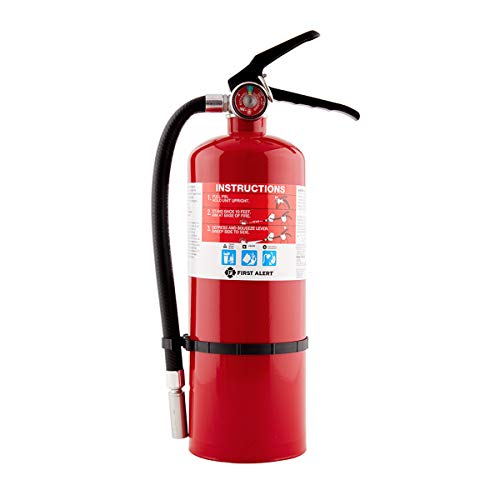


As an Amazon Associate we earn from qualifying purchases at no extra cost to you.
Quick Picks
| Product | Best For | Price |
|---|---|---|
| Kidde FA110G 1 Pack | First-time buyers testing coverage | $19.97 |
| Kidde FA110G 2 Pack | Kitchen plus garage combo | $35.95 |
| Kidde 4 Pack with Bracket | Whole-home placement on a budget | $71.89 |
| Ougist 2.5 lb FF1KG | Vehicle and boat mounting | $31.67 |
| Ougist 5 lb FF2KG | Office or larger kitchen area | $54.99 |
| First Alert Heavy Duty | Commercial or workshop use | $42.98 |
| Amerex B500 2-Pack | Maximum discharge capacity at home | $135.35 |
| Kidde KD176-340ABC | Garage or full-floor coverage | $49.94 |
How We Picked
We narrowed this list on four criteria that consistently drive owner satisfaction and real-world usefulness. First, the UL fire rating: a 1-A:10-B:C unit handles a wastebasket blaze but will look pathetic against a five-gallon gasoline spill in the garage, so rating adequacy relative to the placement zone matters more than brand loyalty. Second, deployment ergonomics—pull-pin accessibility, gauge visibility at a glance, and whether the nozzle stays oriented toward the fire base when you’re squinting through smoke. Third, value per location covered, since a single extinguisher in the wrong room is functionally the same as having none. Fourth, mounting options; a unit that ships with a bracket or includes a vehicle-compatible form factor saves you from buying a separate accessory and from the all-too-common habit of stowing the extinguisher in a junk drawer.
The 8 Best Abc Fire Extinguisher in 2026
Kidde Basic 110 FA110G 1 Pack
The entry-level choice for someone who wants one extinguisher on the wall near the stove and nothing more. At roughly twenty dollars it clears the “will I actually buy this” hurdle that keeps many households completely unprotected. The 1-A:10-B:C rating covers trash-can and small-appliance fires, which accounts for the majority of kitchen incidents reported by the National Fire Protection Association.
- Pro: Lowest single-unit price in this roundup makes it an easy impulse purchase for a first extinguisher.
- Pro: Recognizable Kidde build quality with widely available replacement parts.
- Con: No mounting bracket included, so you’ll spend an extra few dollars or improvise a hook.
Skip this if your garage or workshop houses flammable liquids—the 10-B rating is the bare minimum and you’ll want more agent on hand.
Kidde Basic 110 FA110G 2 Pack
Two identical FA110G units at a combined price that undercuts buying singles twice. The obvious use case is kitchen plus garage, covering two risk zones from one order. Owner feedback highlights the convenience of not needing separate trips to hardware stores, though the same bracket omission applies.
- Pro: Per-unit cost drops versus the 1-pack, making dual-zone coverage nearly as cheap as buying one at retail markup.
- Pro: Identical units simplify inspection and recharging logistics since both share the same model number and service intervals.
- Con: Still no bracket, and the 1-A:10-B:C ceiling means neither unit handles a serious garage fire well.
Skip this if you need three or more locations; the 4-pack variant below gives you better economics per placement point.
Kidde Fire Extinguisher 4 Pack with Bracket
The volume play for whole-home coverage: four dry chemical units, each with a mounting bracket included. At just over eighteen dollars per bracketed unit the per-location cost is the lowest here, which matters because fire-safety guidance consistently recommends an extinguisher on every level of the home. Owners praise the bracket’s pre-drilled spacing and the uniform red finish that stays visible in dimly lit hallways.
- Pro: Brackets included eliminate the accessory cost and encourage wall-mounting over drawer-stowing.
- Pro: Lowest effective per-location price in the list for a four-point coverage plan.
- Con: The 1-A:10-B:C rating is identical to the cheaper singles, so you’re buying breadth, not depth.
Skip this if you only need one high-capacity unit in a single room; the Kidde KD176 below offers far more firepower per wall space.
Ougist 2.5 lb FF1KG
A compact unit designed to live in a car, RV, or boat where space is at a premium and temperature swings stress cheap components. At 2.5 pounds and a 1-A:10-B:C rating it matches the Kidde singles in suppression power while adding a quick-release handle that owners specifically mention as easier to grab with cold hands. Certified for kitchen, vehicle, and marine use.
- Pro: Quick-release handle mechanism saves the one-second fumble a traditional clamp can cause when you’re already scrambling.
- Pro: Compact footprint fits under a seat or in a boat locker without becoming a trip hazard.
- Con: Higher per-unit cost than Kidde equivalents for the same rating, paying for the convenience form factor.
Skip this for home-wall mounting where a larger 5-pound unit gives more discharge time and the size penalty disappears.
Ougist 5 lb FF2KG
Steps up to a 2-A:10-B:C rating, doubling the Class A suppression relative to the 2.5-pound sibling and making it suitable for an office kitchen, a larger garage bay, or the living room where a couch or mattress fire could develop. The easy-grip handle and quick-release design carry over, and owners note the unit feels noticeably more substantial without being unwieldy for a one-handed grip.
- Pro: Double the Class A rating of most units in this price band, meaning more time to knock down a spreading fire.
- Pro: Easy-grip handle with quick release stays intuitive for first-time users under stress.
- Con: The B rating stays at 10, matching smaller units—so flammable-liquid incidents still test its limits.
Skip this if your primary risk is Class B fuel storage in a workshop; look at the Amerex B500 instead.
First Alert Heavy Duty for Home & Commercial
Positioned between consumer and commercial-grade hardware, this unit targets users who want heavier-duty construction without the bulk of a full industrial extinguisher. Owner feedback highlights the robust handle assembly and the sense of durability when you grip it, though published spec detail on exact ratings is less prominent than Kidde’s labeling.
- Pro: Heavier-gauge construction resists denting and corrosion better than thin-shell budget models, important for garage or barn storage.
- Pro: Recognized brand with accessible recharge service networks across most U.S. regions.
- Con: Pricing sits above the Kidde and Ougist options without a clearly higher published rating to justify the gap.
Skip this if you want the best rating-per-dollar; the Kidde KD176 delivers significantly more Class A and B capacity for less money.
Amerex B500 5 lb 2-Pack
Amerex is the name commercial kitchen and industrial buyers trust, and this 5-pound ABC dry chemical model carries a 2-A:10-B:C rating. Sold here in a two-pack, it’s the priciest entry on the list but also the one owners most frequently describe as “pro-grade feeling.” The B500’s valve assembly and pressure gauge use commercial-spec components that tolerate frequent inspection and recharge cycles.
- Pro: Commercial-grade valve and gauge construction built for years of repeated handling and servicing.
- Pro: Amerex brand carries strong recognition among fire-marshal inspectors and workplace safety auditors.
- Con: At over $135 for two units, it costs more than five times the Kidde 4-pack for a modest rating increase.
Skip this if you need coverage in five locations rather than raw per-unit quality in two.
Kidde Full Home KD176-340ABC
The highest-rated single unit here: 3-A:40-B:C. That’s triple the Class A and four times the Class B capacity of the Kidde 110, making this the go-to for a detached garage, a woodshop, or a rural home where fire-department response times stretch past ten minutes. Owner reviews consistently call it “the one that actually puts things out” and note the discharge time is roughly double that of smaller units.
- Pro: 3-A:40-B:C rating dominates every other unit in this roundup, giving you meaningful margin when a fire has already grown beyond a wastebasket.
- Pro: Mid-range price per dollar of suppression capacity—it delivers the most extinguishing power under $50.
- Con: Bulkier and heavier than compact models, so vehicle mounting or tight-cabinet storage becomes impractical.
Skip this if you’re equipping multiple small zones; the Ougist 2.5-pound or Kidde 4-pack will cover more rooms for the same budget.
Buying Guide
Understanding the Rating Numbers
The “A” portion of a rating measures the volume of ordinary combustible material—wood, paper, cloth—the unit can extinguish. The “B” portion is the square-foot coverage of a flammable-liquid spill. The “C” simply means the agent is non-conductive and safe on energized electrical equipment, which is a pass/fail checkbox rather than a graduated scale. A 1-A:10-B:C extinguisher will handle a small kitchen fire but will stall against a gasoline-drenched garage floor. Match the rating to your worst-case scenario in each placement zone.
Mounting and Accessibility Under Stress
Research into real fire incidents consistently shows that response time matters more than agent type, and response time is dictated by where the extinguisher lives. A wall-mounted unit in a kitchen hallway that you can grab in three seconds beats a more powerful model stowed in the basement. Look for units that ship with a bracket or that come in a vehicle-compatible form factor with a secure-mount base, because a loose extinguisher becomes a projectile in a car or simply gets buried under garage clutter within a week.
Dry Chemical Versus Alternatives
ABC dry chemical (monoammonium phosphate) is the only single-agent solution that addresses all three common residential fire classes, which is why it dominates the consumer market. The tradeoff is corrosive residue that damages electronics and is difficult to fully clean from porous surfaces. If your primary concern is a server rack, a studio with expensive gear, or a kitchen with open flame under high-value cookware, a CO₂ or clean-agent unit may deserve a secondary spot on the wall alongside your ABC model.
Our Verdict
Top pick: Kidde KD176-340ABC. At $49.94 it delivers a 3-A:40-B:C rating that no other unit in this list approaches, making it the extinguisher you’ll be glad you own when a fire has grown beyond a quick knock-down. Place one on every level or in every high-risk room and you’ve solved the category problem comprehensively.
Budget pick: Kidde 4 Pack with Bracket. At under eighteen dollars per bracketed unit, nothing else in this roundup covers more ground for less money. The ratings are modest but the placement strategy they enable—kitchen, garage, hallway, basement—gives you four shots at catching a fire while it’s still small.
Condition where another wins: If your priority is vehicle and marine protection, the Ougist 2.5 lb FF1KG is the only unit here with a form factor, quick-release handle, and certification that make it genuinely usable from a car seat or boat console without becoming a loose hazard.
FAQ
How often should I check an ABC dry chemical extinguisher?
Monthly, glance at the pressure gauge to confirm the needle sits in the green zone and the seal or pin is intact. Annually, inspect for dents, corrosion, or nozzle blockage. The dry chemical can settle and compact over years of sitting on a wall, so some owners gently invert and shake the unit every few months to keep the agent loose.
Can I use an ABC extinguisher on a cooking-oil (Class K) fire?
ABC dry chemical can knock down a small grease fire, but it does not cool the oil the way a Class K wet-chemical agent does, meaning re-ignition is a real risk. For a deep fryer or a pan that’s actively engulfed, get out, close the door, and call the fire department rather than relying on your ABC unit as a primary solution.
Do extinguishers expire, and what happens if they sit unused for years?
The pressurized agent and the internal seals both degrade. A typical consumer ABC extinguisher has a service life of around twelve years before the cylinder itself should be retired, with recharge or replacement recommended every six to twelve years depending on inspection findings. An expired unit may still discharge, but often at reduced pressure or with clogged agent, turning a fifteen-second job into a dangerous gamble.
Is the 2026 model year meaningfully different from older units?
No manufacturer introduced a fundamentally new agent or valve design that changed the category since the prior generation. What you’ll see reflected in current owner feedback is incremental improvement in grip ergonomics, bracket material, and gauge legibility—changes that matter for one-handed use under stress but don’t alter the UL rating numbers on the label.