Key takeaways
- Looking for the best NOAA weather radios with battery backup? Compare six S.A.M.E. home and crank models by alerts, power and portability.
The Midland WR400 Deluxe is the best overall choice among these six NOAA weather radios with battery backup. It pairs S.A.M.E. county programming, an expanded list of more than 80 alert types and a battery compartment that keeps the unit listening when the grid drops, which makes it the most complete bedside or kitchen-counter alert radio here. If you want a simpler, alert-only box, the Midland WR120B is the straightforward alternative, and the crank-and-solar models suit people who care more about portability than county filtering. A “NOAA weather radio” is a receiver tuned to the seven National Weather Service broadcast channels that can sound an alarm when a warning is issued.
Quick List
- Midland WR120B – best for a no-frills bedside S.A.M.E. alert radio
- Mesqool 12000mAh Crank Radio – best for a go-bag radio that doubles as a phone charger
- Raynic Solar Crank Radio – best for multi-band listening (AM, FM, shortwave and NOAA)
- 23-County S.A.M.E. Home Alert Radio – best for a plug-in home unit with localized programming
- RunningSnail S.A.M.E. Weather Radio – best for 80+ alert types with county-code filtering
- Midland WR400 Deluxe – best for the fullest home feature set from a long-established brand
Which One Is Right for You?
| If you… | Choose |
|---|---|
| want one radio to sit beside the bed and wake you for local warnings only | Midland WR400 Deluxe |
| want the simplest S.A.M.E. radio with a trilingual display | Midland WR120B |
| need a radio that can also top up a phone when the power is out | Mesqool 12000mAh Crank Radio |
| want to listen to AM, FM and shortwave as well as NOAA | Raynic Solar Crank Radio |
| want a mains-powered home radio with county codes and a battery fallback | 23-County S.A.M.E. Home Alert Radio |
| want a broad alert list and a selectable alert tone | RunningSnail S.A.M.E. Weather Radio |
The deciding question is whether the radio lives in one room or travels with you. Home units use S.A.M.E. (Specific Area Message Encoding) so they alarm only for the counties you program, while crank-and-solar radios trade that filtering for portability and a built-in power bank. Many households end up with one of each: a plug-in S.A.M.E. radio for the bedroom and a crank model in the emergency kit.
All 6 Picks in Detail
1. Midland WR120B – Best for a no-frills bedside S.A.M.E. alert radio
As an Amazon Associate we earn from qualifying purchases at no extra cost to you.

The WR120B is Midland’s compact tabletop alert radio, and the listing leads with exactly what matters: localized programming, a trilingual display, 60-plus emergency alert types, an alarm and a selectable alert tone. It does one job, which is to listen to the National Weather Service and wake you when something relevant to your county happens. It is a good fit for renters, older relatives and anyone who wants a radio that is easy to set up and then forgotten until it matters.
- S.A.M.E. localized programming so only your chosen counties trigger an alarm
- Trilingual display for English, Spanish and French readers
- 60-plus alert types, including weather and civil emergency messages
- Selectable alert tone and an alarm function
- Plug-in operation with a battery compartment for outages (confirm battery type and count on the product page)
- No AM/FM listening noted in the listing; confirm on the product page
Pros:
- Straightforward setup and a focused feature set
- Language options help multilingual households
Cons:
- Fewer alert types than the WR400 and the 80-plus models
- Not designed to be carried around or to charge devices
In practice, this is the radio to buy for a parent, a college student or a first-time owner who wants a clear tone, a readable screen and no learning curve. Setup comes down to entering your county code, choosing which alert categories should sound, and placing it where you can hear it from the bedroom. Because it is plug-in first, treat the batteries as insurance for outages rather than as a way to carry it around the house.
Compared with the WR400 Deluxe, it gives up the larger alert list and extra convenience features in exchange for simplicity.
2. Mesqool 12000mAh Crank Radio – Best for a go-bag radio that doubles as a phone charger

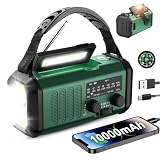
The Mesqool is a different animal from the tabletop alert radios. It is a portable emergency radio with a 12000mAh internal battery, a solar panel, a hand crank, an AM/FM tuner, NOAA weather reception, an LED flashlight and a USB output for charging a phone. It belongs in a grab bag, glove box or camping kit, where having one device that covers light, news and a small power reserve is more useful than county-level alarm filtering.
- 12000mAh rechargeable battery that serves as backup power
- Solar panel and hand crank as slow, last-resort charging methods
- AM/FM tuner plus NOAA weather channel reception
- LED flashlight built in
- USB output for charging a cell phone
- S.A.M.E. county programming not stated in the listing name; confirm on the product page
Pros:
- Large internal battery for a radio of this type
- Works away from a wall outlet
Cons:
- Crank and solar charging are slow, so keep it topped up from a wall adapter
- May not filter alerts by county the way a S.A.M.E. radio does
Think of this model as a three-in-one: a bad-weather receiver, a flashlight and a small power reserve. It makes the most sense for drivers, campers and anyone building a kit for a hurricane or winter-storm season, where a single compact device is easier to stash than three separate ones. Check the listing for the charging port type and output, since phone-charging speed varies a lot between radios of this style.
Next to the Raynic, it offers more battery capacity but, from the listing name, fewer listed bands.
3. Raynic Solar Crank Radio – Best for multi-band listening (AM, FM, shortwave and NOAA)

The Raynic NOAA radio is built around the same portable philosophy, with a 5000mAh (18500mWh) battery, a solar panel and a hand crank. Its distinguishing detail is the band list in the listing: AM, FM, shortwave and NOAA. Shortwave is useful for hobbyists and for people who want to hear international broadcasts when local stations are down. It is a sensible choice for a camping kit or a car emergency bag.
- 5000mAh (18500mWh) battery as listed
- Solar charging and hand-crank generator
- AM, FM, shortwave and NOAA weather bands
- Cell phone charging output (confirm port type on the listing)
- Portable, battery-powered design for outages and travel
- County-level S.A.M.E. filtering not stated; confirm before relying on it for bedside alarms
Pros:
- Shortwave adds listening options the others lack
- Smaller and lighter than larger-battery radios
Cons:
- Smaller battery than the Mesqool
- Not a substitute for a programmed S.A.M.E. radio at night
Shortwave reception is the headline here, though it needs patience: signals depend on time of day, antenna length and location, and results indoors can be weak. If you simply want warnings, the NOAA band is what counts, and it works the same way as on the other models. For people who enjoy tuning around during an extended outage, the extra bands make waiting out a storm less dull.
It is the pick if band variety matters more than raw battery size, which is where the Mesqool pulls ahead.
4. 23-County S.A.M.E. Home Alert Radio – Best for a plug-in home unit with localized programming

This listing is for a home NOAA alert radio that advertises S.A.M.E. localized programming with 23 county codes and 75-plus emergency alert types, plus a battery for backup. The listing name does not lead with a clear brand, so treat the product page as the source of truth for the manufacturer, support details and exact power arrangement. On paper it is a close cousin of the RunningSnail and sits between the WR120B and WR400 in alert coverage.
- S.A.M.E. localized programming with 23 county codes
- 75-plus emergency alert types
- Battery backup noted in the listing (confirm battery type and runtime)
- Designed for home use rather than travel
- Alert tone and display options (confirm on the product page)
- Brand and support details not in the listing name; confirm before buying
Pros:
- Generous county-code allowance for people who care about neighboring counties
- Focused on home alerting
Cons:
- Less brand transparency in the listing name
- Fewer alert types than the 80-plus models
Because the listing name is generic, do a little homework before ordering: look up the seller name, read the included manual if it is posted, and confirm how the unit handles county-code entry, since menus differ between brands. Once set up, it is a reasonable bedside choice for households that want an alert-only radio with more county slots than a basic model.
Relative to the RunningSnail, it lists a slightly shorter alert catalog but the same 23-county capacity.
5. RunningSnail S.A.M.E. Weather Radio – Best for 80+ alert types with county-code filtering
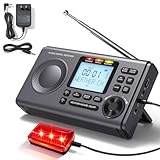
The RunningSnail listing promises 80-plus emergency alerts, 23 S.A.M.E. county codes, a battery backup, an alarm and a selectable alert tone. Of the non-Midland home radios it has the longest alert list in its name, which helps if you want warnings beyond ordinary tornado and flood messaging, such as evacuation and civil danger notices. It is a reasonable alternative to the WR400 for shoppers who prefer a different brand.
- 80-plus emergency alert types as listed
- S.A.M.E. localized programming with 23 county codes
- Battery backup noted in the listing; confirm the battery type
- Built-in alarm and selectable alert tone
- Home-oriented tabletop design
- Check the product page for AM/FM and charging features
Pros:
- Long alert list with county filtering
- Selectable alert tone for different sleepers
Cons:
- Newer brand with a shorter track record in this category
- Extra features such as USB charging are not stated in the listing name
The selectable alert tone is a small but real advantage: a deep sleeper may need a louder or different sound than a light sleeper, and being able to change it means you can find a pattern that actually wakes you. Verify the display, the size of the buttons and whether the unit retains county codes when power is cut, because those details matter more at 2 a.m. than the headline alert count.
Against the WR400, the alert coverage looks similar but the Midland has the stronger name and support documentation.
6. Midland WR400 Deluxe – Best for the fullest home feature set from a long-established brand

The WR400 Deluxe is Midland’s step-up home alert radio. The listing highlights local county programming, more than 80 emergency alert types and a battery backup, and Midland’s own support guide describes four AA batteries to keep the clock, memory and alert function alive in an outage. Midland’s documentation also covers alert-type settings such as voice, text, tone and siren, plus color-coded alert levels, which makes it the easiest of these six to understand once it is on the nightstand.
- Local county programming with S.A.M.E. (confirm the county limit on the product page)
- More than 80 emergency alert types
- Battery backup; Midland’s guide describes four AA batteries
- Color-coded alert levels and selectable alert behavior
- AM/FM listening and a USB charging port are described in Midland’s materials; confirm on the listing
- Seven NOAA weather channels, as with any NWR receiver
Pros:
- Strong documentation and recognizable brand
- Multiple ways to be alerted, from siren to text only
Cons:
- Tabletop size, so not a go-bag radio
- More menu options than the WR120B, which some people will not want
Choose it when you want one radio that can cover a whole household with minimal fuss, especially if you value having a manufacturer support site and manuals you can download. It is also a good gift for someone who lives in tornado or hurricane territory and has no weather alert system besides a phone, since it keeps working when cell networks are congested.
It sits above the WR120B in features and above the unbranded home radios in documented support.
Specs Compared
| Radio | Type | S.A.M.E. / county codes | Alert types | Backup power | Extras |
|---|---|---|---|---|---|
| Midland WR120B | Home tabletop | Localized programming (confirm county limit) | 60+ | Battery backup (confirm type) | Trilingual display, alarm, selectable tone |
| Mesqool 12000mAh | Portable crank/solar | Confirm on listing | Confirm on listing | 12000mAh battery | AM/FM, LED flashlight, phone charging |
| Raynic Solar Crank | Portable crank/solar | Confirm on listing | Confirm on listing | 5000mAh (18500mWh) battery | AM/FM/SW/NOAA, phone charging |
| 23-County S.A.M.E. Home Radio | Home tabletop | 23 county codes | 75+ | Battery backup (confirm type) | Confirm on listing |
| RunningSnail | Home tabletop | 23 county codes | 80+ | Battery backup (confirm type) | Alarm, selectable alert tone |
| Midland WR400 Deluxe | Home tabletop | Local county programming (confirm limit) | 80+ | Battery backup (4 AA per Midland guide) | Color-coded alerts, AM/FM and USB per Midland materials |
How We Chose These
This guide is built from desk research on product listings. We started with the product set drawn from current catalog listings and compared what each listing name states about county programming, alert count, battery backup and portability. Where a listing name was silent, we marked the item “confirm on listing” instead of assuming. We then cross-checked the Midland models against the manufacturer’s published support material and ranked the radios by how well their stated features match the job of waking you for a local warning during a power outage: S.A.M.E. filtering, alert variety, backup power, and ease of setup. Portable crank radios are judged separately as emergency-kit devices rather than as bedside alarms.
What to Look For
S.A.M.E. programming and county codes
Specific Area Message Encoding lets a radio ignore alerts for places you do not care about. Each county has a six-digit code (a FIPS-based number) that you enter during setup, and the radio then sounds only when a message tags one of those codes. Without S.A.M.E., a basic weather radio alarms for every warning across the whole broadcast area, which can mean a tornado warning for a county 60 miles away waking you at 3 a.m. For most people, three to five codes is plenty: your home county, the neighbors upwind, and the county where a family member lives.
Alert types and the 60 versus 80 question
The National Weather Service transmits many message types beyond severe weather, including civil emergency messages, evacuation immediate, hazardous materials warnings and 911 telephone outage alerts. Radios advertising 60-plus types versus 80-plus types differ mainly in how many of these they decode by name. A shorter list is not unsafe, because core warnings such as tornado, flash flood and severe thunderstorm are covered by every unit, but a longer list gives you finer control over which categories sound a siren and which merely light a display.
Battery backup and power planning
Backup batteries keep the clock, programmed county codes and alert function alive when the wall adapter loses power. AA alkaline cells are common for home units because they store well, and some models list their battery type only in the manual, so check the product page. A practical rule: replace backup batteries once a year, for example when you change your smoke alarm batteries, and test the radio monthly. Rechargeable crank radios use an internal lithium pack instead. A 5000mAh pack stores roughly 18.5 Wh, while 12000mAh stores roughly 44 Wh at the same nominal 3.7 volts, which is enough for several full phone top-ups but not for powering anything large.
Crank, solar and portable radios
Crank and solar charging exist to give you a few minutes of radio or a small phone boost when everything else has failed. They are not a primary power source. Keep the internal battery charged from a wall adapter or USB source every few months, because lithium packs slowly self-discharge. Choose a portable radio when you travel, camp or want a kit item; choose a home S.A.M.E. radio when you want reliable overnight alarms.
Reception and placement
NOAA Weather Radio broadcasts on seven channels from 162.400 to 162.550 MHz, and signal range is limited by terrain and distance from the transmitter, typically a few dozen miles. Place the radio near a window, away from computers, routers and chargers, and extend the antenna fully. If reception is weak in a basement or interior room, move the unit upstairs before blaming the radio. Worked example: a household with a bedroom on the second floor and a transmitter 25 miles away should try the radio on a nightstand first, run a station scan, and only then consider an outdoor antenna.
Testing and maintenance habits. Every NWR radio should be tested after setup and then on a regular schedule. Most units include a test or monitor button, and the National Weather Service sends a weekly required test, typically on Wednesdays, which lets you confirm that your county code is working. Write the county codes you programmed on a card kept with the radio, so you can re-enter them quickly after a battery change. If your unit loses its settings during a full power failure, that is a sign the backup cells are weak or missing, and you should replace them before storm season.
Questions
Do I need S.A.M.E. on a weather radio?
For a bedside or home radio, yes, because it limits alarms to the counties you choose. Without it, you may hear every warning in the broadcast area, which leads many people to switch the radio off. Portable emergency radios can work without it, since you usually monitor them while awake.
Will a NOAA radio work during a power outage?
Yes, if it has working backup batteries or an internal rechargeable pack, because the National Weather Service broadcasts independently of your home power. It also depends on the transmitter having power, which is generally backed up at NWS sites. Test the backup by unplugging the radio for a few minutes.
How often should I replace the backup batteries?
Once a year is a sensible rule for alkaline cells in a home radio, and sooner if the low-battery indicator appears. Lithium crank radios should be charged every three to six months. Always check the manual for model-specific guidance.
Is a hand-crank radio enough on its own?
For a go-bag or car kit it is a useful fallback, but cranking gives only brief playback and a small phone charge. Pair it with a plugged-in S.A.M.E. radio at home so that alerts wake you automatically.
Can these radios receive Wireless Emergency Alerts like a phone?
No. A weather radio receives NWS broadcasts, while Wireless Emergency Alerts are sent through cell networks to phones. They are separate systems, which is why many safety guides recommend having both.
Where should I place the radio in my home?
Near a window, away from electronics, and within earshot of where you sleep. A second-floor nightstand often gives better reception than a basement shelf. Run the initial station scan from the final location.
Update History
- October 20, 2026 – Initial publication; product set drawn from current catalog listings.
- Check the product page for current specifications and availability before buying.
Sources
- Manufacturer product and support pages for Midland weather radios
- Retailer listing titles and specification fields for each radio
- Retailer and review-site summaries of the Midland WR120B and WR400 features, including battery and county-programming details