Key takeaways
- Best single-unit starting point: Kidde Basic 110 Fire Extinguisher, FA110G, 1 Pack — A straightforward 1-A:10-B:C dry-chemical option for buyers who need one general-purpose unit.
- Best for covering two locations: Kidde Basic 110 Fire Extinguisher, FA110G, 2 Pack — Provides two matching 1-A:10-B:C extinguishers for separate rooms or floors.
- Best kitchen-and-home pairing: Kidde Kitchen + Home Fire Extinguisher Set, 711A and RESSP+FA110G — Combines a kitchen-rated extinguisher with a 1-A:10-B:C general-purpose unit.
- Best compact option for mixed locations: Ougist ABC Fire Extinguisher, FF1KG — A 2.5-pound, 1-A:10-B:C dry-chemical extinguisher with a quick-release handle and stated kitchen, car, and boat applications.
- Best for whole-home quantity: Kidde Fire Extinguisher, 1-A:10-B:C, 4 Pack — A four-unit bundle for buyers planning coverage across multiple rooms or levels.
- Best heavy-duty candidate: First Alert Fire Extinguisher, Heavy Duty for Home & Commercial Use — Worth considering when a heavier-duty home or workshop-oriented product is the priority; confirm the exact rating and specifications before ordering.
- Best spray-format candidate: AmzBoom 2-Pack Fire Extinguisher — A two-pack marketed for home, kitchen, car, and grill use with an extinguishing spray and stated A, B, C, and K coverage.
- Best compact water-based candidate: Water-Based Compact Fire Extinguisher, 1 Pack — A compact product marketed for kitchen, car, and grill use with stated A, B, C, and K coverage and a six-year warranty.
The best home fire extinguisher is not necessarily the largest, most expensive, or most heavily marketed option. It is the unit whose fire-class rating matches the hazards in your home, whose handle and safety mechanism you can understand quickly, and whose storage location keeps it accessible without placing you in danger. For many homes, that means looking first at an ABC-rated extinguisher for ordinary combustibles, flammable liquids, and energized electrical equipment. Kitchens may deserve additional consideration because cooking-related fires can require a product specifically identified for that environment.
Coverage matters just as much as the extinguisher itself. A single unit hidden in a basement does little for a small fire in an upstairs bedroom or near the stove. Two-packs and four-packs can make it easier to place units in separate areas, while a kitchen-and-home set offers a more specialized combination. Compact products may also make sense for vehicles, boats, garages, or other locations where storage space is limited. Before buying, verify the listed fire classes, capacity and rating, included mounting hardware, operating instructions, warranty information, and any certification or compliance details shown by the manufacturer or retailer.
Our top picks




As an Amazon Associate we earn from qualifying purchases at no extra cost to you.
Quick answer: the top home fire extinguisher picks
- Best single-unit starting point: Kidde Basic 110 Fire Extinguisher, FA110G, 1 Pack — A straightforward 1-A:10-B:C dry-chemical option for buyers who need one general-purpose unit.
- Best for covering two locations: Kidde Basic 110 Fire Extinguisher, FA110G, 2 Pack — Provides two matching 1-A:10-B:C extinguishers for separate rooms or floors.
- Best kitchen-and-home pairing: Kidde Kitchen + Home Fire Extinguisher Set, 711A and RESSP+FA110G — Combines a kitchen-rated extinguisher with a 1-A:10-B:C general-purpose unit.
- Best compact option for mixed locations: Ougist ABC Fire Extinguisher, FF1KG — A 2.5-pound, 1-A:10-B:C dry-chemical extinguisher with a quick-release handle and stated kitchen, car, and boat applications.
- Best for whole-home quantity: Kidde Fire Extinguisher, 1-A:10-B:C, 4 Pack — A four-unit bundle for buyers planning coverage across multiple rooms or levels.
- Best heavy-duty candidate: First Alert Fire Extinguisher, Heavy Duty for Home & Commercial Use — Worth considering when a heavier-duty home or workshop-oriented product is the priority; confirm the exact rating and specifications before ordering.
- Best spray-format candidate: AmzBoom 2-Pack Fire Extinguisher — A two-pack marketed for home, kitchen, car, and grill use with an extinguishing spray and stated A, B, C, and K coverage.
- Best compact water-based candidate: Water-Based Compact Fire Extinguisher, 1 Pack — A compact product marketed for kitchen, car, and grill use with stated A, B, C, and K coverage and a six-year warranty.
How we researched this guide
This guide is a research-based comparison of the product information on each listing. We focused on the fire-class markings and ratings stated in the product names, the intended locations or uses identified by the listings, the number of units in each package, and notable design details such as mounting brackets, quick-release handles, dry-chemical contents, spray format, water-based construction, and warranty language. Where a listing did not provide enough information to verify a specification, we do not treat that detail as established.
The recommendations are therefore about fit rather than a claim that one extinguisher is universally superior. A two-pack can be more useful than a single unit when a home has multiple floors, while a kitchen-focused set may be a better match for a household that wants separate kitchen and general-purpose coverage. A product marketed for a car or boat may be convenient for those locations, but shoppers should still confirm its exact rating, storage instructions, operating method, and suitability for the intended hazard.
Owner feedback can help identify recurring questions about storage, handling, or readability, but online reviews are not a substitute for the manufacturer’s label or official documentation. Before relying on any extinguisher, read the instructions, confirm that the gauge or status indicator is in the proper condition when applicable, and follow local fire-safety guidance. An extinguisher should only be used when the fire is small, there is a clear escape route, and calling emergency services and evacuating remain the priority.
1. Start with the fire-class rating
The letters on an extinguisher are among the most important facts on the label. They describe the types of fire the product is designed to address. Class A generally refers to ordinary combustible materials such as wood, paper, cloth, and many household furnishings. Class B applies to flammable liquids, while Class C relates to energized electrical equipment. The products in this roundup with a 1-A:10-B:C marking are positioned as general-purpose ABC extinguishers.
That rating is a useful starting point for many residential areas, including hallways, bedrooms, living areas, garages, and workshops. It does not mean that every ABC unit is equally suitable for every situation, however. Compare the complete label, not just the letters in a product title. The numerical rating, agent type, operating instructions, certification information, and limitations all matter.
Cooking areas deserve special attention. Some products in this list are explicitly presented as kitchen options or include a kitchen-specific extinguisher. Others are marketed with A, B, C, and K coverage or as kitchen and grill products. Check what the manufacturer means by those claims and confirm that the listed product is intended for the cooking hazard you are trying to address. A common mistake is buying a general-purpose unit without considering the particular risks created by cooking oils, grease, appliances, and open flames.
2. Understand what the numerical rating tells you
Letters identify broad fire categories, while the numbers provide additional information about rated performance. In the 1-A:10-B:C products listed here, “1-A” and “10-B” are part of the published rating; “C” appears without a numerical value in the product names. Use the complete marking as a comparison point rather than assuming that a larger-looking canister automatically has a higher rating.
Typical residential shopping begins with a general-purpose rating that covers the hazards likely to occur in the intended room. If the extinguisher is for a kitchen, compare the kitchen-specific rating or classification stated on the label. The Kidde kitchen-and-home set, for example, identifies a 711A kitchen extinguisher alongside a separate FA110G unit carrying a 1-A:10-B:C rating. That pairing is different from buying two identical general-purpose extinguishers.
Do not remove or obscure the label after installation. You should be able to identify the classes, instructions, warnings, and status information without taking the unit down. If the product page does not make a rating clear, check the manufacturer’s documentation or contact the seller before purchasing rather than guessing from the product’s color, size, or intended-use wording.
3. Compare dry chemical, spray, and water-based designs
Agent type affects both suitability and cleanup. The Kidde FA110G products and the Ougist FF1KG are identified as dry-chemical extinguishers. Dry chemical is a common format for general-purpose ABC coverage, but residue can spread across nearby surfaces and may require cleanup after discharge. The product label and instructions should determine where and how the unit may be used.
Other listings use different descriptions. The AmzBoom product is described as an extinguishing spray with stated A, B, C, and K coverage, while the compact one-pack product is described as water-based and also marketed with A, B, C, and K coverage. Those formats should not be treated as interchangeable with a conventional dry-chemical unit without checking the manufacturer’s directions. Look for clear information about the fire classes, limitations, storage conditions, discharge duration, and whether the product is intended for the specific location.
Avoid choosing solely because one agent sounds cleaner or more environmentally friendly. A clean-looking discharge is not helpful if the product is not appropriate for the fire. Conversely, a dry-chemical extinguisher may be a practical general-purpose choice but could create more cleanup work. Match the agent to the hazard first, then consider residue, storage, and disposal.
4. Plan coverage before choosing the package size
The number of extinguishers you need depends on the home’s layout, occupants, likely hazards, and local guidance. A single-unit purchase can work as a starting point for a small space, but it may not provide convenient access throughout a larger home. Multi-packs make it easier to place units in different areas without buying each one separately.
The two-pack FA110G listing is suited to a simple two-location plan, such as separate floors or a kitchen and another high-use area. The four-pack Kidde listing is aimed at broader coverage across multiple rooms, levels, or an attached garage. A kitchen-and-home set takes a different approach by combining two types of coverage rather than supplying identical units.
Placement should support a clear escape route. Do not store an extinguisher so close to a likely fire source that you would have to reach through flames or smoke to retrieve it. It should be visible, accessible, and protected from conditions that could damage it. Follow the manufacturer’s mounting guidance and local fire-safety recommendations.
Avoid putting every extinguisher in one cabinet or closet. A quantity plan only helps if people can find and reach the units quickly. After installation, make sure household members know where each extinguisher is located and understand that evacuation and emergency notification take priority over attempting to fight a growing fire.
5. Check size, weight, and operating controls
Fire extinguishers must be usable by the person who may need to carry and operate them. Product pages do not always provide complete weight, dimensions, or handle details, so verify those specifications before buying. The Ougist listing identifies a 2.5-pound model and a quick-release handle, making those details particularly relevant for buyers considering car, boat, garage, or kitchen storage.
Look for an operating sequence that is clearly printed and easy to understand. A pull pin, safety seal, handle, hose, nozzle, or trigger should not be confusing when viewed in the storage position. If a product uses a spray format or a different control arrangement, read the instructions before installation. A compact body may save space, but compactness should not come at the expense of a clear grip or readable directions.
Do not select a unit only by the smallest dimensions. A product that is difficult to remove, too heavy for the intended user, or awkward to aim may be a poor practical choice even if its rating appears suitable. Conversely, do not assume that a heavier-duty listing is automatically better for every room. Balance rating, location, accessibility, and the abilities of the people who may need to use it.
6. Verify the bracket and storage details
Mounting hardware can determine whether an extinguisher is stored properly or left on a floor, shelf, or inside an obstructed cabinet. The Ougist listing states that a mounting bracket is included, as does the Kidde four-pack listing. The AmzBoom product is also described with a mounting bracket. The listings do not identify mounting hardware for every product, so confirm the package contents before ordering.
Check whether the bracket is designed for the extinguisher’s weight and shape, whether the mounting position is allowed by the instructions, and whether the unit can be removed quickly. Do not mount it behind clutter, inside a locked area, or directly beside the hazard it is meant to address. The ideal location is easy to see and reach while still allowing the user to move away from the fire.
Storage conditions also matter. Verify the manufacturer’s guidance for temperature, moisture, sunlight, and vehicle use. A product marketed for a car or boat may have different storage considerations from one intended for an indoor hallway. Never assume that a mounting bracket alone makes any location suitable.
7. Review maintenance, replacement, and warranty information
A fire extinguisher is safety equipment, not a set-and-forget purchase. After installation, periodically inspect the unit according to the manufacturer’s instructions. Check that it remains in its designated place, that the label is readable, that the safety seal and pin appear intact, and that any gauge or status indicator shows the appropriate condition. Damage, corrosion, leakage, missing parts, or an abnormal indicator warrants attention before the extinguisher is needed.
Some listings provide additional ownership information. The compact water-based one-pack product states a six-year warranty, but shoppers should read the actual warranty terms, exclusions, registration requirements, and replacement conditions. For other products, verify the expected service life, whether the unit is rechargeable or disposable, and how it should be replaced after use.
Avoid buying a multipack without planning where the units will go and how their condition will be checked. Several extinguishers spread around a home can improve access, but they also create more inspection points. Keep purchase records and instructions together, and follow local requirements for disposal or servicing rather than placing a discharged or damaged unit in ordinary household waste without checking first.
8. Avoid common buying mistakes
- Choosing by appearance: Color and compact shape do not establish the fire classes or numerical rating. Read the label and product documentation.
- Assuming ABC covers every kitchen situation: Confirm the product’s stated suitability for cooking-related hazards, especially when grease or cooking oil is a concern.
- Buying one unit for a large layout: Plan locations first so an extinguisher is not far away or blocked by the fire.
- Ignoring package contents: Check whether a bracket, hose, mounting hardware, warranty information, or other accessories are actually included.
- Overlooking user capability: Compare the listed weight, dimensions, grip, and operating method with the people who may need to use it.
- Storing it in the wrong place: Avoid inaccessible cabinets, extreme temperatures, damp areas, and locations that require approaching the fire.
- Treating a product title as a complete specification: If the page does not state the rating, agent, certification, or storage requirements clearly, verify those details before relying on the product.
For most shoppers, the decision comes down to three questions: Which fire classes must the extinguisher cover, where will it be stored, and how many locations need direct access? The Kidde FA110G products provide a clearly identified 1-A:10-B:C format in one-, two-, and four-unit configurations. The Kidde kitchen-and-home set adds a separate kitchen-rated component. The Ougist option emphasizes a compact 2.5-pound format, quick-release handle, and included bracket, while the remaining spray and water-based products require especially careful review of their complete labels and instructions. Once those details match your home’s hazards and layout, choose the product that household members can locate, remove, and understand without delay.
Detailed product breakdowns
Kidde Basic 110 Fire Extinguisher for Home, 1-A:10-B:C, FA110G, 1 Pack
The Kidde Basic 110 FA110G is a single home fire extinguisher intended for buyers who want one general-purpose unit rather than a multipack or specialized set. Its listed 1-A:10-B:C classification identifies coverage for common residential fire categories: Class A ordinary combustibles, Class B flammable liquids, and Class C energized electrical equipment. The model name also identifies it as the FA110G version in Kidde’s Basic 110 line.
Because no additional feature sheet is provided for this listing, buyers should verify the exact cylinder size, total weight, pressure-gauge design, mounting hardware, certification markings, and manufacturing or replacement guidance on the product page. Those details affect where the extinguisher can be stored and whether every household member can handle it comfortably.
Strengths:
- The 1-A:10-B:C rating is aimed at several common household fire categories rather than only ordinary combustibles.
- A single-unit format is simple for a bedroom, hallway, apartment, or other location that needs dedicated nearby coverage.
- The Kidde FA110G model number makes it easier to compare the listing against the manufacturer’s documentation and replacement recommendations.
Trade-offs: One unit provides limited coverage for a larger home, detached garage, or multilevel layout. Its listed ABC rating should not be treated as proof that it is appropriate for every specialized hazard. Buyers with a cooking-oil risk should verify whether this model is recommended for that application instead of assuming that a general ABC rating covers all kitchen fires. The listing also does not confirm whether a wall bracket or other mounting hardware is included.
Best for: A buyer starting with one general-purpose extinguisher, or someone adding a clearly identified ABC unit to a location that currently has none.
Skip it if: You need coverage in several rooms, require a dedicated kitchen-fire product, or specifically want mounting hardware included and cannot confirm that it comes in the package.
Check the Kidde Basic 110 FA110G 1-pack
Kidde Basic 110 Fire Extinguisher for Home, 1-A:10-B:C, FA110G, 2 Pack
This listing contains two Kidde Basic 110 FA110G extinguishers, each identified with the same 1-A:10-B:C rating. The central advantage over the one-pack is placement flexibility: two matching units can be assigned to separate floors, rooms, or exits without mixing product types. The two-pack format can also make it easier to create a basic coverage plan for a small home or apartment with more than one likely access point.
The available data does not provide separate specifications for each unit beyond the shared model description. Confirm whether the package contains two complete FA110G extinguishers, whether both have the same labeling and production information, and whether any brackets, straps, or other storage accessories are included. Buyers should also check the listed dimensions and weight before deciding whether a particular cabinet, shelf, or wall location is suitable.
Strengths:
- Two units support more practical placement than a single extinguisher.
- Both products are identified as the same FA110G model, reducing differences in operation and labeling between locations.
- The 1-A:10-B:C classification covers ordinary combustibles, flammable liquids, and energized electrical equipment according to the listed rating.
Trade-offs: This remains a general-purpose ABC option rather than a listed kitchen-specific set. Two extinguishers may still be insufficient for a large home, workshop, outbuilding, or garage with separate hazards. The listing does not state whether mounting hardware is included, so buyers should not assume that the units are ready for wall installation. It is also important to compare the package contents rather than relying only on the “2 Pack” label.
Best for: Renters, apartment residents, and homeowners who want matching general-purpose units in two accessible locations.
Skip it if: Your main concern is cooking oil or grease, you need a larger whole-home quantity, or a mounting bracket is a firm requirement that the listing does not confirm.
Check the Kidde Basic 110 FA110G 2-pack
Kidde Kitchen + Home Fire Extinguisher Set, 711A | 1-A:10-B:C, RESSP+FA110G
The Kidde Kitchen + Home set combines two differently identified extinguishers: an RESSP kitchen unit with a 711A rating and an FA110G general-purpose unit rated 1-A:10-B:C. That pairing is designed around two separate placement decisions. The kitchen product is the specialized component to investigate for cooking-related hazards, while the FA110G is labeled for ordinary combustibles, flammable liquids, and energized electrical equipment.
The provided title does not state the extinguishing agent, dimensions, weight, discharge duration, mounting method, or whether either product has a pressure gauge. Those details should be checked before purchase, especially if the kitchen has limited cabinet or wall space. Buyers should also read the label for the precise fire classes covered by the RESSP unit and confirm that its 711A designation matches their intended cooking application.
Strengths:
- It separates kitchen coverage from general home coverage instead of relying on one identical extinguisher everywhere.
- The RESSP component is identified with a 711A rating, while the FA110G carries a 1-A:10-B:C rating.
- The two-product format can simplify placement: one near the kitchen and one near another higher-risk or frequently occupied area.
Trade-offs: The two units are not interchangeable by default; the labels and intended applications should be reviewed independently. The set may require more careful storage planning than two identical compact extinguishers, particularly if the kitchen model has different dimensions. The available data also does not confirm brackets or other installation hardware. Buyers should avoid placing either unit behind an appliance, inside a drawer that may be blocked, or so close to a cooking surface that flames would prevent access.
Best for: Homes where cooking is a primary concern but a separate general-purpose extinguisher is also needed elsewhere.
Skip it if: You already have a suitable kitchen extinguisher, need multiple identical ABC units, or cannot verify the RESSP product’s exact use instructions and included accessories.
Check the Kidde Kitchen + Home Fire Extinguisher Set
Ougist ABC Fire Extinguisher for Home & Vehicle, 2.5 lb, 1-A:10-B:C, Model FF1KG
The Ougist FF1KG is identified as a 2.5 lb ABC fire extinguisher for home and vehicle use. Its listed 1-A:10-B:C rating covers the same broad fire categories shown for the Kidde general-purpose models: ordinary combustibles, flammable liquids, and energized electrical equipment. The title also names a dry-chemical design, quick-release handle, and intended use in kitchens, cars, and boats.
The product title says that the extinguisher has a quick-release handle and is certified for kitchen, car, and boat use, but it does not identify the certifying organization or provide the certification number. Buyers should verify those markings on the label and confirm whether “kitchen use” means general nearby coverage or a specific cooking-oil classification. The listed 2.5 lb figure should also be checked against the complete ready-to-use weight, since cylinder and agent weight may not be the same thing.
Strengths:
- The 1-A:10-B:C rating is broad enough to address several common residential and vehicle fire categories.
- The 2.5 lb specification gives buyers a starting point for comparing portability and storage requirements.
- The title specifically identifies a dry-chemical agent and quick-release handle.
- Home, vehicle, and boat use are all stated in the listing, making it a candidate for more than one setting.
Trade-offs: Dry chemical residue can create cleanup concerns, so buyers should understand the agent and post-discharge instructions before choosing it for an indoor location. The listing does not provide the discharge time, dimensions, bracket details, gauge information, service guidance, or replacement interval. “Certified” should be verified rather than treated as a substitute for reading the extinguisher label and local safety requirements.
Best for: Buyers seeking one portable ABC model for a home, vehicle, garage, boat, or similar location, provided the stated certifications and storage accessories meet their needs.
Skip it if: You specifically need a cooking-oil-rated kitchen extinguisher, want a known package of multiple units, or require detailed service and mounting information that the listing does not supply.
Check the Ougist FF1KG ABC extinguisher
Kidde Fire Extinguisher for Home, 1-A:10-B:C, Dry Chemical, Red, Mounting Bracket Included, 4 Pack
This Kidde listing contains four red dry-chemical fire extinguishers, each identified with a 1-A:10-B:C rating. The product title explicitly says that a mounting bracket is included, and the four-pack format is intended for buyers planning coverage across several locations. Potential placements could include separate floors, a kitchen-adjacent area, a garage, or a route leading toward an exit, subject to the manufacturer’s instructions and the home’s layout.
The available information does not state the size or weight of each extinguisher, the number of brackets included, or whether every individual unit receives its own bracket. That distinction matters in a four-pack. Verify the package contents, bracket quantity, fasteners, certification markings, pressure-monitoring method, and replacement guidance before choosing permanent installation points.
Strengths:
- Four units make it easier to prioritize proximity instead of relying on one extinguisher for the entire home.
- Every unit is identified with the same 1-A:10-B:C rating, simplifying label review and household instruction.
- The dry-chemical construction is stated in the title.
- A mounting bracket is explicitly included, which supports planned storage rather than leaving units loose in cabinets or on floors.
Trade-offs: A four-pack of the same general-purpose rating does not replace a specialized product where a particular hazard calls for one. The title does not confirm that the ABC rating is intended for cooking-oil fires, so a kitchen-specific option may still be necessary. Buyers must also determine whether four extinguishers fit the home’s actual layout and whether the included brackets can be securely installed at accessible heights.
Best for: Homeowners outfitting multiple rooms, floors, or outbuildings who want matching dry-chemical ABC units and included bracket hardware.
Skip it if: You live in a small space that needs only one unit, need a dedicated kitchen rating, or cannot use the included mounting system safely in your walls or storage locations.
Check the Kidde four-pack with mounting brackets
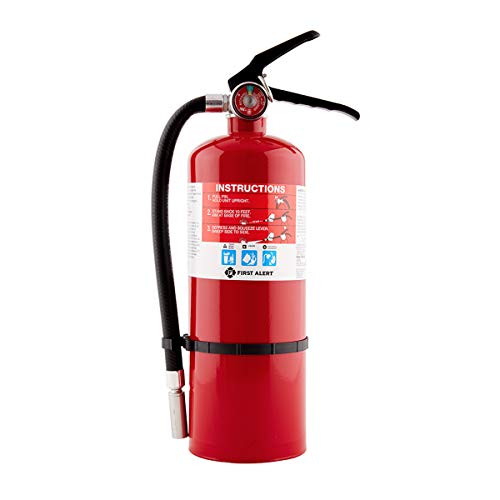
First Alert Fire Extinguisher, Heavy Duty for Home & Commercial Use
The First Alert listing is described as a heavy-duty fire extinguisher for home and commercial use. Unlike several products in this roundup, the listing does not provide a model number, fire-class rating, agent type, capacity, pack count, or included accessories. “Heavy duty” is therefore a description of intended positioning, not enough information to determine whether the unit is appropriate for a kitchen, garage, vehicle, office, or commercial space.
Before buying, verify the exact fire classes on the cylinder label. Check whether it is rated for ordinary combustibles, flammable liquids, electrical equipment, cooking oils, or another combination. Also confirm the unit’s weight, dimensions, pressure indicator, mounting bracket, certification, inspection instructions, and replacement expectations. Commercial-use wording does not automatically mean that the extinguisher matches local workplace requirements or a particular business hazard.
Strengths:
- The listing positions the product for both home and commercial environments.
- Its heavy-duty description may appeal to buyers looking for a more substantial option than a compact household unit.
- First Alert is the identified manufacturer, giving buyers a specific brand and product listing to research further.
Trade-offs: The missing rating is the most important limitation in the available data. Without it, buyers cannot responsibly match the extinguisher to a fire class or compare it directly with the ABC-rated products above. The unspecified size may also affect handling, wall placement, and accessibility. A larger unit is not automatically a better choice if household members cannot operate or reach it safely.
Best for: Buyers who are specifically considering a First Alert heavy-duty unit and are prepared to verify its complete label and installation requirements before ordering.
Skip it if: You need to make a purchase decision based on a clearly stated fire classification, capacity, or included mounting hardware and those details are not visible in the listing.
Check the First Alert heavy-duty extinguisher
AmzBoom 2-Pack Fire Extinguisher for Home, Kitchen, Car, and Grill
The AmzBoom listing is a two-pack of compact extinguishing sprays for home, kitchen, car, and grill use. Its title identifies coverage across A, B, C, and K categories, an eco-friendly formulation, a mounting bracket, and a claim that it prevents reignition. Those are meaningful differences from the conventional dry-chemical products in this roundup, but the available information does not explain the agent, container capacity, certification, discharge method, or exact conditions behind those claims.
Buyers should verify what the A, B, C, and K designations mean on the actual label and whether the product is formally tested or certified for each class. Confirm whether the two-pack includes one bracket or two, whether the bracket is suitable for the intended surface, and whether the compact format provides enough agent for the hazards being considered. “Prevents reignition” should be read alongside the manufacturer’s instructions rather than treated as a guarantee for every fire scenario.
Strengths:
- The two-pack supports placement in separate areas, such as a kitchen and vehicle.
- The compact description may suit buyers with limited storage space.
- The title identifies A, B, C, and K coverage, including a cooking-related class that is not stated for every product here.
- An included mounting bracket is identified in the listing title.
- The product is described as eco-friendly and designed to prevent reignition.
Trade-offs: Spray-based products can have different operating procedures, storage limits, cleanup characteristics, and service expectations than pressurized dry-chemical extinguishers. The title does not state the agent or the precise certification behind the class claims. Buyers should not choose it solely because it is compact; reachable placement, instructions, shelf life, and adequate capacity remain essential. Verify whether the bracket quantity matches the two units.
Best for: Buyers interested in a compact two-pack for kitchen, vehicle, grill, or general household placement who want to investigate an alternative to dry chemical.
Skip it if: You require a conventional extinguisher with clearly published capacity and certification details, or if the listing cannot verify the K-class claim and included hardware.
Fire Extinguisher for Home, Kitchen, Car, and Grill, Compact Water-Based A, B, C, K, 1 Pack
This one-pack extinguisher is described as a compact, water-based product for home, kitchen, car, and grill use. The title identifies A, B, C, and K coverage, easy storage, and a six-year warranty. It is therefore positioned as a small, broad-application option, but buyers should treat the stated class coverage as something to verify on the product label and certification documentation before relying on it for a specific hazard.
The water-based description is especially important. Water-based extinguishing agents can have application limits that differ from dry chemical, and a broad marketing label does not remove the need to understand the exact instructions for energized electrical equipment, flammable liquids, and cooking media. The listing does not state the capacity, dimensions, total weight, discharge duration, mounting hardware, certification body, or warranty terms. Check all of those details, including what the six-year warranty covers and when the unit must be replaced.
Strengths:
- The compact format may be convenient for storage in a home, vehicle, kitchen-adjacent location, or grill area.
- The listing identifies A, B, C, and K categories, including a cooking-related class.
- The water-based formulation may appeal to buyers comparing alternatives to dry-chemical residue.
- A six-year warranty is stated in the product title, subject to the manufacturer’s terms.
- Easy storage is an explicit part of the listing description.
Trade-offs: Buyers must reconcile the water-based agent with the stated B and C coverage by reviewing the exact label and instructions. Compact size may also mean less agent capacity, although the available data does not provide a number. The listing does not confirm a bracket, pressure indicator, certification, or service procedure. A warranty is not the same as an assurance that the extinguisher remains suitable after storage in a hot vehicle or near cooking equipment.
Best for: Buyers seeking a compact one-unit option and willing to verify the water-based product’s certifications, class limitations, storage conditions, and warranty coverage.
Skip it if: You need a clearly documented conventional ABC extinguisher, require included wall hardware, or cannot confirm that the water-based unit is approved for the specific electrical, vehicle, grill, or cooking hazards in question.
Check the compact water-based extinguisher
Home Fire Extinguisher Comparison
The products below differ mainly in fire-class information, pack size, intended placement, extinguishing medium, and included hardware. The listings do not confirm several details, including certification, dimensions, weight, shelf life, gauge design, warranty terms, and whether mounting hardware is included on every model. Check the current listing and the extinguisher label before buying, especially if you need protection for cooking oil, a vehicle, a boat, or a workshop.
| Product | Pack size | Published rating or coverage | Extinguishing medium | Named use | Mounting hardware | What to verify |
|---|---|---|---|---|---|---|
| Kidde Basic 110 FA110G, 1 Pack | 1 | 1-A:10-B:C | Dry chemical; check listing for the specific agent | Home use | Check listing | Dimensions, weight, certification, gauge, mounting options, and expiration or replacement guidance |
| Kidde Basic 110 FA110G, 2 Pack | 2 | 1-A:10-B:C | Dry chemical; check listing for the specific agent | Home use | Check listing | Whether both units have identical contents and included accessories, plus dimensions and replacement guidance |
| Kidde Kitchen + Home Fire Extinguisher Set, RESSP + FA110G | 2 | RESSP: 711A; FA110G: 1-A:10-B:C | Check listing for each unit | Kitchen and general home coverage | Check listing | Which unit is intended for cooking fires, dimensions of both units, brackets, operating instructions, and certification details |
| Ougist ABC FF1KG | 1 | 1-A:10-B:C | Dry chemical | Home, vehicle, kitchen, and boat use | Quick-release handle and mounting bracket are stated in the product name and data | Certification, dimensions, pressure indication, service life, mounting instructions, and suitability for the exact vehicle or boat location |
| Kidde Fire Extinguisher, 4 Pack | 4 | 1-A:10-B:C | Dry chemical | Home use | Mounting bracket included | Bracket quantity, dimensions, weight, certification, gauge details, and replacement schedule |
| First Alert Heavy Duty Fire Extinguisher | Check listing | Check listing | Check listing | Home and commercial use | Check listing | Fire classes, agent, capacity, dimensions, weight, certification, bracket, and inspection requirements |
| AmzBoom Extinguishing Spray, 2 Pack | 2 | Product name states A, B, C, and K coverage | Water-based extinguishing spray; product name states eco-friendly and designed to prevent reignition | Home, kitchen, car, and grill use | Mounting bracket included | Capacity, certification, operating distance, storage temperature, expiration, and precise limitations for grease or grill fires |
| Compact Water-Based Fire Extinguisher, 1 Pack | 1 | Product name states A, B, C, and K coverage | Water-based | Home, kitchen, car, and grill use | Easy storage stated; mounting hardware is not confirmed | Capacity, certification, storage method, operating instructions, exact warranty terms, and suitability for cooking-oil fires |
Best Pick by Need
Best for one-room coverage
The Kidde Basic 110 FA110G, 1 Pack is the straightforward choice when you need one 1-A:10-B:C unit for a particular location. Its published rating covers Class A, B, and C fire categories, but the listing does not provide enough information to confirm its size, bracket, or other installation details. Verify that it can be mounted or stored where it will remain visible and accessible.
Best for covering two separate areas
The Kidde Basic 110 FA110G, 2 Pack provides two units with the same published 1-A:10-B:C rating. It suits buyers who want one extinguisher in each of two locations, such as separate floors or a living area and garage. The listing does not confirm included brackets, so check the package contents before deciding where each unit will go.
Best for a kitchen plus general home coverage
The Kidde Kitchen + Home Fire Extinguisher Set is the most purpose-specific pairing in the list. It combines a RESSP unit with a 711A rating and an FA110G rated 1-A:10-B:C. Place the unit intended for kitchen use according to its label and keep the general-purpose extinguisher in another accessible location. Confirm the exact fire classes and mounting provisions for both products before installation.
Best for a vehicle, boat, or compact secondary location
The Ougist ABC FF1KG is explicitly described for home, vehicle, kitchen, and boat use. Its published 1-A:10-B:C rating and dry-chemical description make it a candidate for buyers seeking one multipurpose unit, while the listed 2.5-pound specification and mounting bracket may simplify placement. Confirm that its dimensions, mounting system, and storage requirements suit the exact vehicle or boat compartment.
Best for multiple rooms in one purchase
The Kidde 4 Pack is the most direct option for distributing units throughout a home. All four are identified as 1-A:10-B:C dry-chemical extinguishers, and mounting brackets are included according to the listing. The important planning question is placement: four units are useful only if each is mounted along a practical escape route and remains unobstructed.
Best for buyers seeking a heavy-duty option
The First Alert Heavy Duty Fire Extinguisher is identified for home and commercial use. However, the listing does not confirm its rating, agent, capacity, pack size, or included hardware. Treat “heavy duty” as a product description rather than a substitute for a fire-class rating. Check the label and listing before choosing it for a garage, workshop, or other higher-risk area.
Best for buyers prioritizing a water-based spray format
The AmzBoom 2-Pack is described as a water-based extinguishing spray with A, B, C, and K coverage. It is also named for home, kitchen, car, and grill use, and a mounting bracket is included. Before relying on it for cooking or grill incidents, verify the label’s precise instructions, capacity, operating range, certification, and storage limits. A broad product-name claim should not replace reading the fire-class and use limitations on the container.
Care and Setup Tips
- Match the label to the hazard. Class ratings are more useful than general words such as “home,” “heavy duty,” or “all-purpose.” Check whether the extinguisher is specifically labeled for the fire types you may encounter.
- Prioritize access over concealment. Keep the unit visible, easy to reach, and away from clutter. A unit stored behind boxes or inside a difficult-to-open cabinet may be unavailable during a fast-moving fire.
- Choose a location near an exit path. Do not position an extinguisher where you would need to move toward a fire or pass through smoke to retrieve it. The exact location should reflect the room layout and the manufacturer’s instructions.
- Use the included bracket correctly. If a bracket is included, confirm that the mounting surface and fasteners can support the extinguisher. If no bracket is listed, check the manufacturer’s approved storage method instead of improvising a restraint.
- Read the instructions before an emergency. Learn how the safety seal, pin, handle, and discharge mechanism work. Do not remove the pin or test the unit casually unless the manufacturer specifically provides instructions for doing so.
- Inspect regularly. Look for visible damage, leakage, corrosion, a missing pin or seal, blocked instructions, and pressure or status indicators that do not show the expected condition. Follow the manufacturer’s inspection and replacement guidance.
- Keep it within its approved temperature range. Vehicle, boat, garage, and outdoor storage can expose an extinguisher to heat, freezing conditions, moisture, or vibration. Check the listing and label for storage limits before placing it in those locations.
- Replace or service after use. Even a brief discharge can reduce the contents and pressure. Follow the manufacturer’s directions for recharge, inspection, or replacement rather than returning a partially used unit to its bracket.
- Do not use an extinguisher when conditions are unsafe. Evacuate and call emergency services when the fire is spreading, producing dangerous smoke, blocking an exit, or larger than a small incipient fire. Everyone in the home should know the escape plan.
- Verify local requirements. Building, rental, commercial, insurance, and marine rules may specify approved ratings, mounting methods, inspection intervals, or certification marks. Product listings may not contain every requirement that applies to your property.
Home Fire Extinguisher FAQ
What fire extinguisher rating should I look for in a home?
Start by identifying the likely hazards and then compare them with the rating printed on the extinguisher. Several products here list a 1-A:10-B:C rating, while the Kidde kitchen set includes a unit identified with a 711A rating. The meaning and suitability of a rating depend on the exact label and fire type, so do not choose based only on pack size or brand. If your home has a particular risk such as cooking oil, a vehicle, or a workshop, verify that the selected unit is labeled for that use.
Is one extinguisher enough for an entire house?
One unit may leave other rooms or floors without nearby coverage. The better approach is to map likely hazards and escape routes, then place appropriately rated extinguishers where they can be reached without approaching a fire. The Kidde 2 Pack and 4 Pack are designed for buyers who want multiple units, but the right number depends on the layout, occupants, local requirements, and manufacturer or fire-safety guidance.
Should I choose a dry-chemical or water-based extinguisher?
Neither description alone answers every use case. The products in this comparison include dry-chemical models and water-based sprays, with different stated ratings and intended uses. Compare the fire classes, exact agent, limitations, storage requirements, and cleanup considerations on the label. In particular, verify the instructions for cooking, electrical, vehicle, and grill hazards before selecting a water-based product.
Can I use a general ABC extinguisher on a kitchen grease fire?
Do not assume that a general ABC rating is interchangeable with a product specifically labeled for cooking-oil hazards. The Kidde Kitchen + Home set includes a separate RESSP unit identified with a 711A rating, while several other products are identified as 1-A:10-B:C. Read the specific label and instructions. Never use a method that the manufacturer does not approve for the burning material.
Where should a home extinguisher be mounted?
Choose a visible, accessible location along a practical escape route and away from the immediate hazard. For example, placement should not require reaching over a stove or moving toward a fire. Use the included bracket when one is included and follow its mounting instructions. For products where hardware is not confirmed, check the listing and manufacturer guidance before buying separate hardware.
Are mounting brackets included with these products?
The listings specifically identify a mounting bracket for the Ougist FF1KG, the Kidde 4 Pack, and the AmzBoom 2-Pack. The compact water-based product mentions easy storage but does not confirm a bracket. Brackets are not confirmed for the Kidde single pack, Kidde 2 Pack, Kidde Kitchen + Home set, or First Alert model. Check the current package contents before ordering.
How long does a fire extinguisher last?
The available listings do not provide service-life or expiration information for these models. Check the label and manufacturer instructions for inspection, replacement, recharge, and warranty guidance. Storage conditions, damage, corrosion, pressure status, and any discharge can affect whether a unit remains usable. A unit should not be kept solely because it looks intact.
What should I check before buying an extinguisher for my car or boat?
Confirm the fire classes, dimensions, weight, mounting method, storage-temperature limits, corrosion resistance, and any vehicle or marine certification that may apply. The Ougist FF1KG and both water-based products are named for vehicle use, while the Ougist is also named for boat use. Those descriptions do not confirm that every installation requirement is met, so compare the label with the conditions and rules for your specific vehicle or vessel.
Final Verdict
The best overall choice depends on whether your priority is one-room coverage, multi-room placement, kitchen-specific protection, or portability. For a single general-purpose location, the Kidde Basic 110 FA110G 1 Pack offers a clearly stated 1-A:10-B:C rating. The Kidde 2 Pack extends that same rating to two locations, while the 4 Pack is the most practical fit for buyers planning coverage across several rooms and includes mounting brackets.
The Kidde Kitchen + Home set is the most differentiated option because it pairs a 711A RESSP unit with a 1-A:10-B:C FA110G rather than supplying two identical general-purpose extinguishers. The Ougist FF1KG stands out for its stated 2.5-pound size, quick-release handle, mounting bracket, and named home, vehicle, kitchen, and boat applications. The AmzBoom 2-Pack and compact water-based unit may appeal to buyers seeking spray formats, but their stated coverage should be checked carefully against the precise hazard and manufacturer instructions.
Before completing any purchase, verify the fire-class label, agent, capacity, dimensions, certification, mounting hardware, storage limits, and replacement guidance. A correctly rated extinguisher that is mounted within reach is more useful than a larger or more heavily marketed product that is stored out of sight or mismatched to the fire risk.