When a storm knocks out the grid, the difference between a fridge full of spoiled food and a functioning kitchen comes down to stored energy. Whole home battery backup systems have moved from niche prepper gear to a practical necessity for anyone in hurricane, wildfire, or ice-storm territory. But the category spans wildly different machines—everything from a $240 UPS that keeps your router and modem alive to a $6,000 stack that can run a refrigerator, well pump, and HVAC circuit for hours.
What separates a worthwhile purchase from a waste of money in 2026 is matching capacity and output to your actual emergency load. A 2,010Wh unit cannot carry a central air conditioner, and a 12kWh station is overkill if you only need to keep a freezer and a few lights on overnight. This guide compares published specifications, owner-reported reliability, and price-to-runtime ratios so you can skip the guessing and buy the right system for your household’s real draw.
Our top picks


 Jackery HomePower 3600 Plus & 2x200W Solar
- Essential Home Backup: The Jackery HomePower 3600 Plus…
- Safe Power That Lasts: Built with high-temp resistant…
- Plug-and-Play: With its easy plug-and-play design, the Jackery…


As an Amazon Associate we earn from qualifying purchases at no extra cost to you.
Quick Picks
| Product | Best For | Price |
|---|---|---|
| Anker SOLIX S2000 | Apartment dwellers and light-duty outage coverage | $649.99 |
| EF ECOFLOW DELTA Pro Ultra + Extra Battery | Full-home backup with extended runtime | $5999 |
| Jackery HomePower 3600 Plus | Portable backup for RVs and essential circuits | $1709 |
| CyberPower CP1500PFCLCD | Desktop and router continuity during brief blips | $239.95 |
| ABOK Ark3600 | High-capacity LiFePO4 at a mid-range price | $1199 |
| Jackery HomePower 3600 Plus + Solar | Preppers who want off-grid charging capability | $2289 |
| EF ECOFLOW DELTA Pro Ultra | 240V appliances and serious whole-home coverage | $4199 |
| Anker SOLIX F3800 | Whole-home backup with fast recharge and expandability | $1999.99 |
How We Picked
We evaluated each unit on four criteria: usable capacity measured in watt-hours, continuous and peak output wattage (with 120V versus 240V support noted), chemistry and cycle-life expectations from manufacturer data and owner reports, and price per kilowatt-hour of stored energy. Systems that lack a pure sine wave inverter were noted as unsuitable for sensitive electronics or motors.
The 8 Best Whole Home Battery Backup in 2026
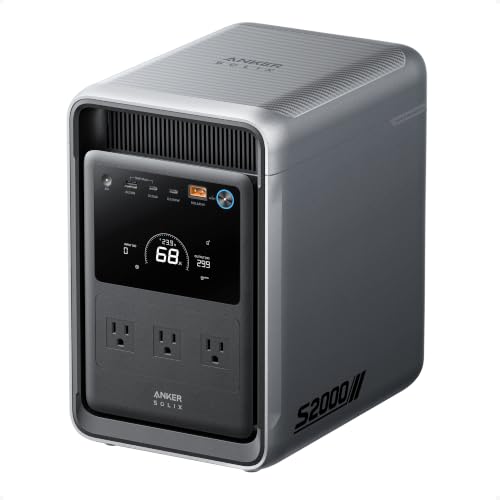
Anker SOLIX S2000 Portable Power Station
This 2,010Wh station with 3,000W peak output is the entry-level option that still feels genuinely useful during an outage. It will run a refrigerator, charge laptops, and power a space heater on a low setting for a meaningful stretch. Owners praise its compact form factor and the fact that Anker rates its LiFePO4 cells for thousands of cycles.
- Pros: Underwhelming weight for its capacity; pure sine wave output safe for electronics.
- Con: 2,010Wh depletes quickly if you plug in multiple high-draw appliances at once.
Skip this if you need to run a well pump, HVAC blower, or anything above roughly 1,500W continuously—it will not sustain those loads.
EF ECOFLOW DELTA Pro Ultra with Extra Battery
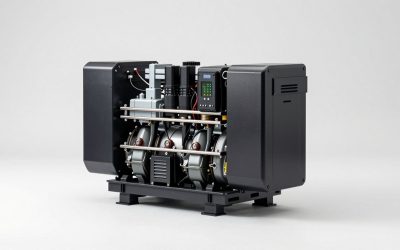
At a total stored capacity of 12kWh, this is the most powerful single-unit solution on our list. The extra battery module brings runtime into whole-home territory for essential circuits—refrigerator, sump pump, a few lights, and a window AC—without a second charge cycle. EF ECOFLOW’s proprietary inverter handles 120/240V loads, and the system supports home transfer integration.
- Pros: 12kWh of usable energy in one stack; native 240V output for heavy appliances.
- Con: The $5,999 price tag places it out of reach for budget-conscious buyers.
Consider skipping this if your emergency needs are limited to a router and fridge—smaller units deliver better value for light loads.
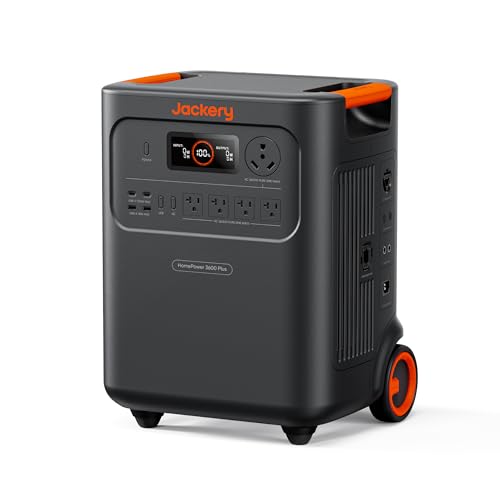
Jackery HomePower 3600 Plus
With 3,584Wh of capacity and 3,600W of AC output, this unit threads the needle between portability and serious backup power. It can handle a refrigerator plus a microwave simultaneously, which covers most basic outage scenarios for a small household. Jackery’s ecosystem is well-supported, and the unit pairs with the company’s solar panels for recharging without grid access.
- Pros: Strong output-to-weight ratio for a portable form; trusted brand with responsive support.
- Con: No native 240V output, limiting it to single-leg loads only.
Skip it if you need to power 240V equipment like a well pump or electric water heater.
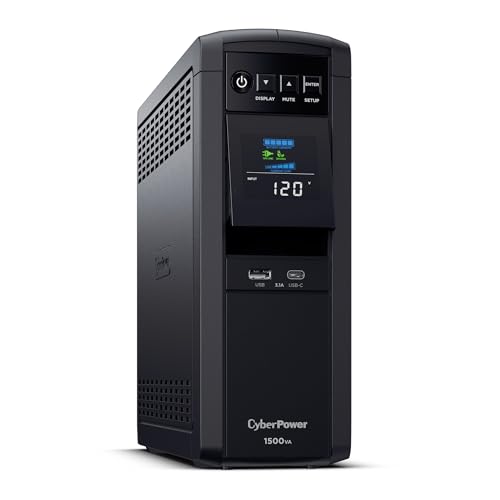
CyberPower CP1500PFCLCD PFC Sinewave UPS
This is not a whole-home system by any capacity measure, but it is the only line-interactive UPS on our list, and it solves a specific problem: keeping computers, routers, and modems online during voltage sags and short outages without a jarring shutdown. The 1500VA/1000W rating, twelve outlets, and AVR make it ideal for a home office corner.
- Pros: Automatic voltage regulation protects hardware from brownouts; near-instant switchover.
- Con: Runtime for even a single desktop is measured in minutes, not hours.
Do not buy this expecting to run appliances or tools—it is strictly for electronics that need graceful shutdown or continuous network uptime.
ABOK Ark3600 Portable Power Station
The Ark3600 delivers 3,600W output and 3,840Wh of LiFePO4 storage at $1,199, giving it one of the best capacity-per-dollar ratios on this list. ABOK is a lesser-known brand, but owner feedback highlights solid build quality and a clean sine wave output. For homeowners who want meaningful backup without paying a premium brand tax, this checks the right boxes.
- Pros: Excellent price per watt-hour; LiFePO4 chemistry rated for long cycle life.
- Con: Smaller support network and fewer published third-party reviews than established brands.
Skip this if you value brand reputation and extensive community forums above raw specs per dollar.
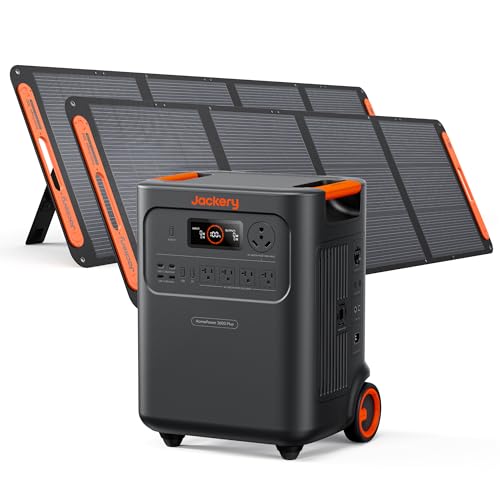
Jackery HomePower 3600 Plus with 2x200W Solar Panels
This bundle pairs the same capable 3,584Wh station with two 200W panels, creating a self-recharging kit for extended outages. During multi-day storm events, you can top up the battery during daylight even when the grid is down—a genuine survivability upgrade. The total package at $2,289 is reasonable compared to buying components separately.
- Pros: Solar recharging eliminates dependence on a functioning grid for input power; well-designed panels with a kickstand.
- Con: 200W of solar will not fully recharge the unit quickly; a large home draws far more than the panels produce.
Skip the bundle if you have a garage or basement where you can plug into a generator or wall outlet for faster recharging.
EF ECOFLOW DELTA Pro Ultra 6144Wh
Without the extra battery, the DELTA Pro Ultra still stores 6,144Wh and delivers 7,200W of 120/240V output. This is the sweet spot for buyers who want whole-home coverage on essential circuits without the $5,999 full-stack price. The native 240V output means you can run heavier equipment that single-leg portables cannot touch, and it supports home integration via an optional transfer switch.
- Pros: True 240V capability at 7,200W; scalable architecture if you add more batteries later.
- Con: 6,144Wh is meaningful but still won’t run a central AC for a full night on its own.
Skip this if your maximum load stays under 120V—smaller units from ABOK or Jackery cover that range at lower cost.
Anker SOLIX F3800 Portable Power Station
At 3,840Wh and $1,999.99, the F3800 slots between Jackery’s 3600 Plus and EF ECOFLOW’s full stack. Anker’s Infinity power technology manages output intelligently, and the unit supports expansion modules for additional storage. Owners report fast AC recharging, which matters when a storm passes and you need to top back up before the next one hits.
- Pros: Expandable capacity via Anker’s module ecosystem; competitive pricing for nearly 4kWh of storage.
- Con: Single-unit 120V output limits appliance compatibility compared to 240V-capable rivals.
Skip this if you require 240V output for pumps or heaters—look at the EF ECOFLOW models instead.
Buying Guide
Capacity Versus Real Runtime
Watt-hours tell you how much energy a battery stores, but runtime depends on total simultaneous load. A 3,584Wh unit running a 700W refrigerator plus a 1,500W space heater drains in under two hours. Before buying, audit your essential circuits—fridge, sump pump, internet equipment, a few lights—and add their startup wattages. Manufacturers list continuous output, but compressors and pumps have surge currents that can exceed ratings by three to five times.
Inverter Type and Voltage Output
Pure sine wave is non-negotiable for motors, medical devices, and sensitive electronics. Modified sine wave units can damage compressor motors over time and cause buzz in audio equipment. Beyond waveform, check whether the unit provides 120V only or native 120/240V. Whole-home systems that power well pumps, electric water heaters, or window AC units on 240V circuits require the dual-voltage inverter. Portable units without 240V output simply cannot feed those loads regardless of their watt-hour rating.
Chemistry, Cycle Life, and Expansion Path
LiFePO4 cells dominate this category because they tolerate deeper discharge and offer thousands of charge cycles versus a few hundred for older NMC lithium packs. When comparing units, look at stated cycle life to a percentage threshold—80% retention at 3,000 cycles is a common benchmark. Also consider whether the platform supports expansion modules. A 2,010Wh base unit that grows to 6kWh with add-on batteries may cost less upfront while keeping future upgrade paths open.
Our Verdict
Top pick: The EF ECOFLOW DELTA Pro Ultra 6144Wh offers the best balance of whole-home capacity, true 240V output, and scalability at $4,199. Budget pick: The ABOK Ark3600 at $1,199 delivers the strongest watt-hour-per-dollar ratio for anyone who needs portable backup without a premium brand markup. Condition where another wins: If your outage profile involves multi-day grid failures with no generator access, the Jackery HomePower 3600 Plus with solar panels at $2,289 gives you indefinite partial recharge that no other bundle here matches.
FAQ
Can a portable power station actually serve as a whole home battery backup?
Yes, but with important caveats. Units in the 3,500Wh-and-above range with 3,000W-plus continuous output can cover essential circuits—refrigeration, lighting, a furnace blower, and communication equipment. They will not run a central air conditioner, electric oven, or whole-home electric water heater for meaningful durations.
What is the difference between a UPS and a battery backup station?
A UPS switches to battery in milliseconds to protect computer hardware from sudden loss of power, but its runtime is typically minutes. A portable battery station has no switchover gap—it is already running off stored energy—but takes seconds to plug in loads and lacks the voltage conditioning a line-interactive UPS provides.
How long will a 3,840Wh battery run a standard refrigerator?
A typical household refrigerator averages 150 to 200 watts of sustained draw when the compressor cycles, meaning a 3,840Wh battery can theoretically support it for roughly 18 to 24 hours before losses and compressor startup surges reduce that figure to closer to 14 to 18 hours of real-world operation.
Do I need a transfer switch to connect a battery station to home wiring?
Not strictly. Most owners run extension cords from the unit to the appliances they need during an outage. However, if you want to power hardwired circuits like a well pump or furnace blower, a transfer switch or inlet kit is required, and you should verify the battery’s output voltage and frequency compatibility before making that connection.