Key takeaways
- The stated range is measured in open air. Hills, trees, metal buildings, and thick walls reduce it, sometimes sharply.
- Place the indoor receiver near the room where you will hear the chime, and away from large metal appliances.
- For a long driveway, mount the sensor at the entry and use an extender or repeater if the maker offers one.
- Mount PIR sensors at the height the manual specifies, usually a few feet off the ground, angled across rather than toward the driveway.
- Avoid pointing a PIR sensor at tree branches, tall grass or a road with passing traffic.
For most homeowners, a wireless driveway alarm with a weatherproof outdoor sensor and an indoor receiver, such as those from Dakota Alert, Guardline or Mighty Mule, is the right choice; buyers with a long driveway should favor a long-range sensor with a clear line of sight, while buyers who already own smart cameras may prefer to rely on camera motion alerts. The best system is the one whose detection method matches your driveway and whose false alerts you can tolerate.
Our top picks


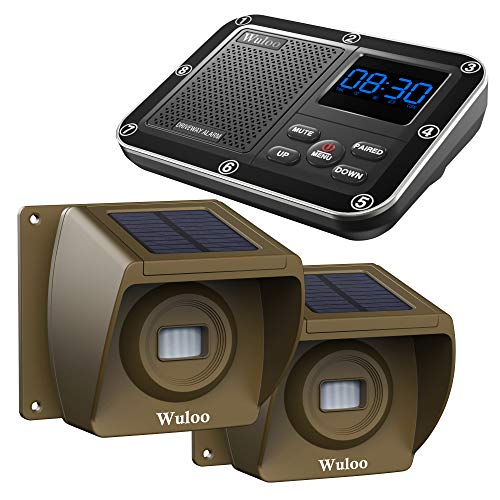
As an Amazon Associate we earn from qualifying purchases at no extra cost to you.
Driveway Alarm Systems at a Glance
| Option | Best for | Key stated traits | Limits |
|---|---|---|---|
| Dakota Alert wireless motion and vehicle sensors | Long driveways and rural properties | The maker lists several wireless sensor types, including passive infrared and metal-detecting probe models, with extended-range receivers | Range depends on terrain and obstructions; multiple parts to buy |
| Guardline wireless driveway alarm | Buyers wanting a long-range, expandable kit | The maker lists solar-assisted or battery sensors with a base receiver and optional add-on sensors | Passive infrared sensors can react to animals and wind-blown vegetation |
| Mighty Mule wireless driveway alarm | Budget to mid-range buyers wanting a simple kit | The maker lists a motion sensor with an indoor receiver and adjustable sensitivity | Shorter range and fewer expansion options |
| Buried vehicle probe or magnetic sensor | Gates and long private roads | Detects the metal mass of a vehicle rather than people or animals | Installation is more involved; buried cable or probe placement matters |
| Camera-based alerts from a smart security camera | Buyers who want video, not just a chime | Cameras from makers such as Reolink or Ring can send motion and person alerts | Needs Wi-Fi coverage or a cellular link to the driveway; subscription features vary |
How Driveway Alarms Detect Arrivals
Most consumer driveway alarms use one of three methods. Passive infrared (PIR) sensors detect heat and motion in a cone-shaped zone, which suits people and vehicles but may also pick up animals. Magnetic probes sense the disturbance created by a large piece of metal, such as a car, and ignore most small animals. Break-beam or infrared beam sensors send a beam across the drive and chime when it is interrupted. Each has strengths and weaknesses, and several kits combine two methods. Reviewers who cover these devices usually point out that sensor placement and sensitivity adjustment determine the real-world false-alert rate more than the brand name.
Range, Terrain and Receiver Placement
- The stated range is measured in open air. Hills, trees, metal buildings, and thick walls reduce it, sometimes sharply.
- Place the indoor receiver near the room where you will hear the chime, and away from large metal appliances.
- For a long driveway, mount the sensor at the entry and use an extender or repeater if the maker offers one.
- Mount PIR sensors at the height the manual specifies, usually a few feet off the ground, angled across rather than toward the driveway.
- Avoid pointing a PIR sensor at tree branches, tall grass or a road with passing traffic.
Dakota Alert
Dakota Alert is a frequently named brand for rural and long-driveway use. The maker lists a family of wireless sensors that work with a range of receivers, including motion detectors, vehicle probes and gate monitors. Its systems let you add transmitters and receivers to build a larger network. The trade-off is that you must pick the correct sensor and receiver combination, and some of the more capable setups are in the mid-range to premium tier. Pick it if you have a long or complex property and want flexibility.
Guardline
Guardline offers wireless driveway alarm kits that reviewers often describe as long-range and easy to expand. According to the maker, sensors can be paired with a base receiver and extra sensors added later. Because PIR sensors detect heat and motion, expect occasional alerts from wildlife or windy days unless you adjust sensitivity and aim. This is a strong choice for buyers who want a ready-to-use kit with room to grow.
Mighty Mule
Mighty Mule is best known for gate openers, and it also sells a wireless driveway alarm kit. The maker describes a motion sensor and an indoor receiver with adjustable settings. This is a reasonable entry-level system for a shorter driveway or a smaller property. The limits are shorter range and less expandability than the more specialized systems.
Vehicle Probes and Magnetic Sensors
If your concern is vehicles rather than people or animals, a buried probe or magnetic sensor can reduce false alerts. These sensors respond to the metal mass of a car or truck and are largely unaffected by weather and wildlife. They require burying the probe near the drive’s edge and running a cable to a transmitter, so installation takes more effort. Follow the manual closely, and call utility locating services before digging.
Camera-Based Alerts
Outdoor cameras with motion and person detection can notify your phone and record video, which an audible chime cannot do. They need power and a reliable network, which can be difficult at the far end of a long driveway. Solar-powered or cellular cameras exist but vary by maker. Cameras and simple alarms are often used together: the alarm provides a loud, local alert, and the camera provides video.
Budget Tier Trade-offs
- Budget: Simple PIR kit with a short-range receiver. Fine for a short driveway.
- Mid-range: Expandable wireless kits from Guardline or Dakota Alert with better range and add-on sensors.
- Premium: Multi-sensor systems with extended-range receivers, vehicle probes or integrated cameras.
Power, Weather and Installation Notes
- Check the operating temperature range of the outdoor sensor, particularly in cold climates.
- Battery life varies; some sensors offer solar assistance, but this depends on sunlight.
- Use the weather-resistance rating stated by the maker, and place sensors so rain does not pool around them.
- Mount sensors on a sturdy post or fence so wind does not move them.
- Keep batteries fresh and test the alarm regularly by walking through the zone.
- Any wired power or underground cable should follow local electrical rules; hire a licensed electrician if unsure.
Reducing False Alerts
The most common complaint about driveway alarms is nuisance triggering. To reduce it, start with the lowest sensitivity setting and increase it only if the sensor misses vehicles. Aim the sensor across the drive instead of straight down its length, so it sees movement crossing the zone. Trim branches that sway in wind, and avoid pointing the sensor toward a public road. Some receivers offer different chime tones or a delay setting, which helps you tell a vehicle from a passing animal. If your property sees a lot of wildlife, a vehicle probe or a combination of two sensor types is usually calmer than a single PIR unit. Keep a log for the first week to see when false alerts happen and adjust accordingly.
Pick X If …
| If you want … | Pick | Why |
|---|---|---|
| A long driveway or rural property | Dakota Alert | Flexible sensor and receiver combinations |
| An expandable ready-made kit | Guardline | Base receiver with add-on sensors |
| A simple low-cost alert | Mighty Mule | Straightforward motion sensor and receiver |
| Fewer false alerts from animals | Vehicle probe sensor | Responds to metal mass |
| Video of arrivals | Smart outdoor camera | Records and sends phone alerts |
Alternatives to Consider
- Motion-activated lighting. Lights deter some visitors and help you see who is there.
- Gate or driveway chime with a wired sensor. A wired system avoids wireless range issues but needs cable.
- Professional monitoring. A monitored security service can respond if an alert goes unanswered.
Frequently Asked Questions
Will a driveway alarm go off for animals?
PIR sensors can trigger from deer, dogs and other warm-blooded animals, especially at higher sensitivity. Magnetic probes ignore most animals. Adjust aim and sensitivity according to the maker’s manual to cut down on false alerts.
How far can a wireless driveway alarm reach?
Makers publish open-air ranges, but trees, hills and buildings reduce this. Long-range kits and repeaters help. Plan for less than the stated range and test the setup before permanent mounting.
Do driveway alarms work in snow and rain?
Outdoor sensors are built to handle weather within the maker’s stated limits. Heavy snow can block a PIR sensor or cover a probe area. Check the temperature range in the specification.
Can I use a driveway alarm with a smart home system?
Some systems offer contact outputs or compatible hubs, but many are standalone. If smart integration is important, consider a camera or sensor that connects to your home platform.
Is it legal to put a sensor at the edge of my property?
Alarms that only sound inside your home generally raise few issues, but cameras that record neighbors or public roads can face privacy rules. Follow local laws and homeowner association rules.
Should I rely on a driveway alarm for security?
It is an early-warning tool, not a barrier. Combine it with locks, lighting and, if appropriate, a monitored system. If you feel unsafe, call emergency services rather than investigating alone.