Our Short List of 3

- Best for: Keeping phones, a router and lights alive through a single cold night when the refrigerator can wait.
- 288Wh LiFePO4 battery
- 300W output, DC-only design with no AC outlets
- 120W car socket
- USB-C and USB-A outputs for phones and tablets

- Best for: A household that wants a mid-size station now with the option to double its capacity before the next storm season.
- 1,024Wh LiFePO4 battery
- 1,800W AC output
- 100W USB-C output
- Expandable to 2,048Wh with a Smart Extra Battery

- Best for: A family that needs to run a refrigerator plus lights, a router and chargers at the same time during a winter outage.
- 1,152Wh LiFePO4 battery
- 1,800W AC output, 2,700W peak
- Four AC outlets
- 0 to 80 percent charge in about 45 minutes
All 4 Picks at a Glance
| Product | Specs | Action |
|---|---|---|
| Anker SOLIX C300 DC |
| Check price on Amazon |
| EF ECOFLOW DELTA 2 |
| Check price on Amazon |
| BLUETTI AC180 |
| Check price on Amazon |
 EF ECOFLOW DELTA 3 Classic |
| Check price on Amazon |
Our Top Picks
- BLUETTI AC180 Portable Power Station 1152Wh 1800W LiFePO413.39 x 9.72 x 12.48 inches37.4 poundsCheck on Amazon
A winter outage is a different problem from a summer one. The lights go out when the house is already cold, the refrigerator is full, phones become the only link to outage updates, and every hour without power makes the next hour harder. A station bought for weekend camping may keep a phone alive, yet fail the moment a refrigerator compressor or a medical device asks for real power. Sizing for winter means planning for the coldest night of the storm, not the easiest hour of it.
This guide is for homeowners in snow and ice-storm regions, renters who need a plan that fits in a closet, and families who must keep a refrigerator, a router or powered medical gear running until the grid returns. Each station below was chosen from the capacity, output and charging figures printed on its Amazon listing, so the numbers here come from the listing itself rather than from guesswork.
Quick Picks
As an Amazon Associate we earn from qualifying purchases
| Product | Best for | Key spec from title |
|---|---|---|
| Anker SOLIX C300 DC | Phones, lights and a router through one cold night | 288Wh LiFePO4 battery, 300W, DC-only design |
| EF ECOFLOW DELTA 2 | A mid-size station that can grow with an extra battery | 1,024Wh LiFePO4 battery, 1,800W AC, 100W USB-C |
| BLUETTI AC180 | Running several household plugs at once | 1,152Wh LiFePO4 battery, 1,800W, four AC outlets |
| EF ECOFLOW DELTA 3 Classic | The strongest surge for a refrigerator compressor | 1,024Wh LiFePO4 battery, 1,800W AC, 3,600W surge |
How to Choose
Size for the coldest night, not the average one
Winter outages rarely end on schedule, so size the station for a long, cold night rather than a two-hour flicker. Start with the loads that cannot wait: a refrigerator cycling through the night, a router and phones for outage updates, lights, and any powered medical gear. A 300Wh station covers the small loads for an evening, while a 1,000Wh station can carry a refrigerator and the small loads together for hours. Cold also trims usable energy, since conversion losses rise and batteries deliver less in low temperatures, so leave a margin above the number your arithmetic produces.
Check how the station charges in cold weather
Lithium batteries charge slowly, or not at all, when their cells are near freezing, which is exactly when a winter outage leaves a station sitting in a cold garage. The practical answer is to charge the station indoors before the storm arrives and to keep it inside while it works, rather than expecting a fast recharge from a freezing car. If the listing states a charging temperature range, read it before buying, and never assume a station can refill quickly from a solar panel on a short, grey winter day. A full battery before the storm matters more than any charging speed claim.
Output watts decide what stays on
Capacity decides duration, but output watts decide which appliances can switch on at all. A refrigerator needs only modest running watts yet demands a large startup surge when its compressor kicks in, so the surge figure matters as much as the continuous figure. Space heaters, kettles and hair dryers draw 1,000W or more and will empty a mid-size station in under an hour, which makes them poor loads during an outage. Match each appliance against the continuous output first, then check the surge figure against the highest startup draw in the house.
Plan how you recharge when the grid stays down
A station that cannot recharge is a one-night solution to a three-day problem. Wall charging is fastest when the grid returns between storm cells, so a station that refills in about an hour earns its place in a winter kit. Solar charging helps during a long outage, but winter sun is weak and brief, so treat a panel as a slow top-up rather than a full refill. Car charging is a useful fallback for small stations, yet it is slow and ties up the vehicle. Decide the recharge plan before the storm, not during it.
The 4 Best Options
Anker SOLIX C300 DC
- Best for: Keeping phones, a router and lights alive through a single cold night when the refrigerator can wait.
- 288Wh LiFePO4 battery
- 300W output, DC-only design with no AC outlets
- 120W car socket
- USB-C and USB-A outputs for phones and tablets
Keeping phones, a router and lights alive through a single cold night when the refrigerator can wait.
This model has no AC outlets, so anything with a household plug cannot connect to it, and the wall charger is not included, so confirm the charging accessories in the box before ordering.
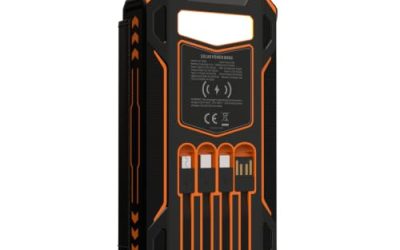
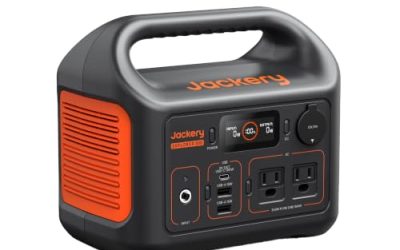
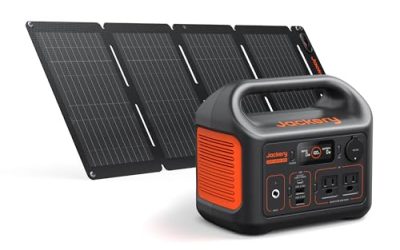
The C300 DC is the smallest station in this group, and it earns its place by doing the quiet jobs well. Its listing names a 288Wh LiFePO4 battery with 300W of output in a DC-only design, which means it powers phones, tablets, lights, a router and 12V gear without wasting energy on an inverter. At a listed 6.2 lb it is easy to carry from room to room during an outage, and the 120W car socket suits a portable cooler or a car-charged device. It is a one-night bridge for communication and light, not a whole-house answer.
Watch out for: This model has no AC outlets, so anything with a household plug cannot connect to it, and the wall charger is not included, so confirm the charging accessories in the box before ordering.
EF ECOFLOW DELTA 2
- Best for: A household that wants a mid-size station now with the option to double its capacity before the next storm season.
- 1,024Wh LiFePO4 battery
- 1,800W AC output
- 100W USB-C output
- Expandable to 2,048Wh with a Smart Extra Battery
A household that wants a mid-size station now with the option to double its capacity before the next storm season.
The extra battery is a separate purchase, so the 2,048Wh figure applies only with that accessory, and the solar panel is optional rather than included in the base listing.
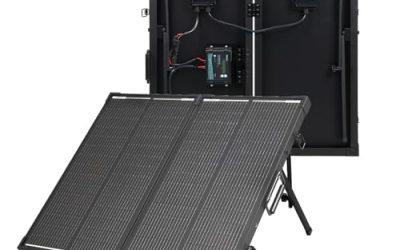
The DELTA 2 is the flexible middle of this group, because its capacity can grow when one night turns into three. Its listing names a 1,024Wh LiFePO4 battery with 1,800W of AC output and a 100W USB-C port, aimed at home backup, camping and RV use, with the solar panel optional. A Smart Extra Battery can expand the capacity to 2,048Wh, which is the feature that separates it from fixed-capacity rivals when an outage drags on. Fast wall charging brings it back to full between storm cells.
Watch out for: The extra battery is a separate purchase, so the 2,048Wh figure applies only with that accessory, and the solar panel is optional rather than included in the base listing.
BLUETTI AC180
- Best for: A family that needs to run a refrigerator plus lights, a router and chargers at the same time during a winter outage.
- 1,152Wh LiFePO4 battery
- 1,800W AC output, 2,700W peak
- Four AC outlets
- 0 to 80 percent charge in about 45 minutes
A family that needs to run a refrigerator plus lights, a router and chargers at the same time during a winter outage.
The listing title counts four AC outlets, so confirm the full port list and the solar input limits on the product page, since bundles with a panel carry a different listing.
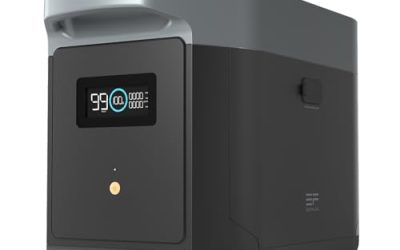
The AC180 suits a household that needs several things plugged in at once during an outage. Its listing names a 1,152Wh LiFePO4 battery with 1,800W of AC output, a 2,700W peak and four AC outlets, plus a 0 to 80 percent charge in 45 minutes. Four outlets mean a refrigerator, a lamp, a router and a phone charger can run together without a power strip, and the 1,152Wh capacity is the largest in this group. The fast recharge matters when the grid returns for only a few hours between storm cells.
Watch out for: The listing title counts four AC outlets, so confirm the full port list and the solar input limits on the product page, since bundles with a panel carry a different listing.
EF ECOFLOW DELTA 3 Classic
- Best for: A household whose priority is starting and running a refrigerator through a winter outage without tripping the station.
- 1,024Wh LiFePO4 battery
- 1,800W AC output, 3,600W surge
- X-Boost for devices rated up to 2,600W
- 100W USB-C output
A household whose priority is starting and running a refrigerator through a winter outage without tripping the station.
X-Boost adjusts the output waveform to drive larger resistive loads, so confirm on the listing whether a specific appliance, such as a compressor fridge, is supported before relying on it.
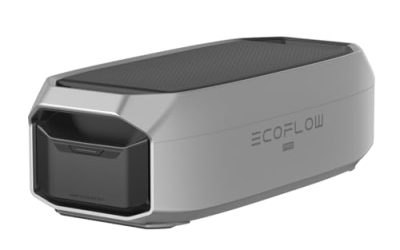
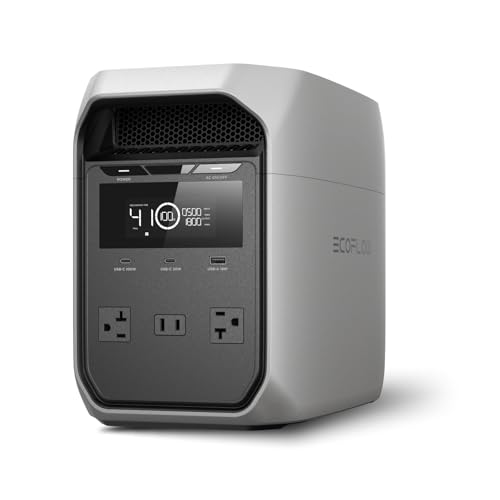
The DELTA 3 Classic is the surge specialist of this group, built for the appliance that trips weaker stations. Its listing names a 1,024Wh LiFePO4 battery with 1,800W of AC output, a 3,600W surge and X-Boost that can drive devices rated up to 2,600W, plus a 100W USB-C port and a one-hour fast charge. A 10ms UPS switchover keeps a refrigerator or a desktop running when the grid drops, and fifteen outlets cover a full shelf of small loads. The five-year manufacturer warranty is stated on the listing.
Watch out for: X-Boost adjusts the output waveform to drive larger resistive loads, so confirm on the listing whether a specific appliance, such as a compressor fridge, is supported before relying on it.
Which One Fits Your Situation
You only need phones, lights and a router overnight
Choose the Anker SOLIX C300 DC. Its 288Wh battery is enough for communication and light through one night, and its DC-only design wastes no energy converting power for plugs you will not use. Keep the refrigerator closed and the house will stay cold enough until morning, when a larger plan can take over.
You want a mid-size station that can grow
Choose the EF ECOFLOW DELTA 2. Its 1,024Wh battery covers a refrigerator and the small loads for hours during a winter outage, and the Smart Extra Battery doubles the capacity to 2,048Wh when a storm stretches past a day. Fast wall charging means it can refill during a brief return of grid power.
You need to run several household plugs at once
Choose the BLUETTI AC180. Four AC outlets let a refrigerator, a lamp, a router and a charger run side by side, and its 1,152Wh battery is the largest in this group. The 45-minute charge to 80 percent helps it recover quickly when the grid flickers back on during a winter storm.
You need the strongest surge for a refrigerator
Choose the EF ECOFLOW DELTA 3 Classic. Its 3,600W surge and X-Boost handle the startup draw that stops weaker stations, while the 10ms UPS switchover bridges the gap before you even notice the grid is gone. Fifteen outlets leave room for every small load the house depends on during a winter outage.
Winter Power Safety
Use the station indoors in a dry, ventilated place and keep its vents clear while it charges or runs a load. Never run a fuel generator inside a house or garage, and never plug a power station into a wall outlet to feed the house wiring. Add up the rated watts of everything connected and keep the total below the output printed on the listing. Charge the station fully before a storm is forecast, keep it where children cannot reach the outlets, and let a station that has been sitting in the cold reach room temperature before charging it. Check extension cords for damage before use and keep the station away from water, snow and heaters.
Common Mistakes
- Sizing a station for a summer evening instead of a long, cold winter night.
- Expecting a space heater to run from a mid-size station for hours.
- Leaving the station in a freezing garage and expecting it to charge quickly.
- Forgetting that a refrigerator needs a large startup surge, not just modest running watts.
- Buying the station after the storm warning instead of charging it beforehand.
Frequently Asked Questions
How long will a 1,000Wh station run a refrigerator in winter?
A refrigerator draws power in cycles, so a 1,000Wh station often runs a modern full-size fridge for several hours, sometimes through a night if the door stays closed and the room is cool. The exact time depends on the fridge size, its age and how often the compressor starts. Check the fridge label for running watts, allow for the startup surge, and keep the door closed to stretch every watt-hour.
Can I leave a power station in a cold garage?
A station can sit in a cold garage for storage, but charging a lithium battery while its cells are near freezing can be slow or blocked by the battery management system. Bring the station indoors before charging and let it warm to room temperature first. For use during an outage, keep the station inside the living space where it stays warmer and its vents stay clear of snow.
Can a power station run a space heater?
Most portable stations cannot run a space heater for long, because a typical heater draws 1,000W or more and would empty a 1,000Wh battery in under an hour. A station can run a heated blanket or a small personal warmer far longer, since those draw far less power. For heat during a winter outage, layer clothing and blankets and save the station for lights, phones and the refrigerator.
How do I recharge a station during a multi-day outage?
Wall charging is fastest whenever the grid returns, so keep the charging cable ready and top up at every chance. A solar panel adds charge slowly on short winter days, so place it where the sun hits longest and treat it as a supplement. Car charging works for stations but is slow, and a second battery or a larger station is the surest way to stretch coverage across several days.
More from Amazon
Programs that pair well with the guide above. Offers and eligibility are set by Amazon and may change.
Free shipping on eligible items, Prime Video and more. Eligible new members can start with a free trial.
Start a Prime free trialAudiobooks and podcasts to listen to on the go. Eligible new members can start with a free trial.
Try Audible freeAd-free music streaming. Eligible new subscribers can start with a free trial.
Try Music Unlimited freeA free business account with business pricing and bulk-buying tools for work, shop or home office.
Create a business accountAs an Amazon Associate we earn from qualifying purchases.