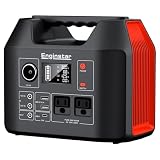
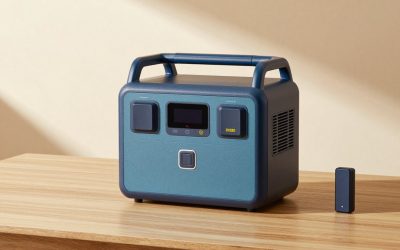
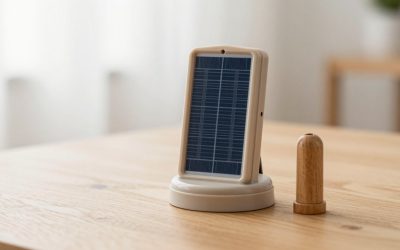
The best power station for most storm outages is a 1,000 Wh class unit such as the Anker SOLIX C1000 Gen 2, EcoFlow DELTA 3 Plus or Jackery Explorer 1000 v2, because it runs a refrigerator for several hours, keeps phones and a router alive for days, and still fits in a closet. Step down to about 300 Wh for a CPAP and phones, or up to 2,000 Wh and beyond for sump pumps and multi-appliance backup. Capacity in watt-hours decides how long you run; output in watts decides what you can plug in.
Our top picks




As an Amazon Associate we earn from qualifying purchases at no extra cost to you.
Quick comparison of power station picks by capacity
| Pick | Best for | Capacity | AC output | Price range |
|---|---|---|---|---|
| Jackery Explorer 300 Plus | Phones, router, CPAP overnight | 288 Wh | 300 W | Budget |
| Anker SOLIX C1000 Gen 2 | All-round outage backup | 1,024 Wh | 2,000 W | Mid-range |
| EcoFlow DELTA 3 Plus | Expandable backup, fast charging | 1,024 Wh (expandable to 2,048 Wh) | 1,800 W | Mid to upper-mid |
| Jackery Explorer 1000 v2 | High surge rating, simple use | 1,070 Wh | 1,500 W | Mid-range |
| Jackery Explorer 2000 v2 | Fridge plus extras for a day | 2,042 Wh | 2,200 W | Upper-mid |
| Anker SOLIX C2000 Gen 2 | Expandable large capacity | 2,048 Wh (expandable to 4 kWh) | 2,400 W | Upper-mid |
| EcoFlow DELTA Pro 3 | Home backup, 240 V loads | 4,096 Wh | 4,000 W | Premium |
Specs come from the manufacturers’ published spec sheets. Real usable energy is lower than the label because of inverter losses, so plan on about 80 to 90 percent of rated capacity.
Best for light backup: Jackery Explorer 300 Plus
At 288 Wh and around 8 pounds, this is the grab-and-go option. It charges phones many times over, runs an LED lantern for days and can keep a CPAP going for a night if humidifier and heater are turned off. It will not run a full-size refrigerator for long and its 300 W output rules out microwaves and kettles. Pick it when budget and portability matter more than runtime.
Best overall: Anker SOLIX C1000 Gen 2
The C1000 Gen 2 pairs 1,024 Wh with 2,000 W of output and a quick recharge claimed at under an hour from a wall outlet. That output headroom lets it start loads a 1,500 W unit may refuse, such as a small space heater on low or a coffee maker. The trade-off is that capacity, not wattage, is the constraint: a refrigerator will drain it in roughly a day.
Best expandable mid-size: EcoFlow DELTA 3 Plus
EcoFlow’s unit starts at 1,024 Wh with 1,800 W output and can be paired with a smart extra battery to reach 2,048 Wh. It charges quickly and supports solar input, which suits hurricane-season buyers who want to start small and grow. The extra battery costs more, so budget for the full system before you buy.
Best simple 1 kWh unit: Jackery Explorer 1000 v2
With 1,070 Wh and a high surge rating for motor starts, the Explorer 1000 v2 is a straightforward choice with a clear display. It has no expansion port, so you cannot add batteries later. If 1 kWh is enough, that is no loss.
Best for a day of fridge power: Jackery Explorer 2000 v2
At roughly 2,042 Wh, this model carries a refrigerator through a full day with room for lights, a router and charging. Independent reviewers have measured usable energy somewhat below the rated figure, which is normal. It is heavy for one person, so plan where it lives.
Best expandable large unit: Anker SOLIX C2000 Gen 2
The C2000 Gen 2 offers 2,048 Wh and 2,400 W, with expansion up to about 4 kWh according to Anker. It is a good middle ground between a 1 kWh unit and a whole-home system.
Best for home backup: EcoFlow DELTA Pro 3
With 4,096 Wh and 4,000 W, the DELTA Pro 3 can run 240 V appliances and tie into a home panel with the right accessories. It weighs over 100 pounds and sits at the premium end, so it is a household investment rather than a camping accessory.
Runtime math: what a power station actually runs
Runtime in hours is roughly usable watt-hours divided by the load in watts. Use 85 percent of rated capacity for usable energy.
| Device | Typical draw | 288 Wh unit | 1,024 Wh unit | 2,042 Wh unit |
|---|---|---|---|---|
| Phone charging (15 W) | 15 W | about 16 hours | about 58 hours | about 115 hours |
| Wi-Fi router and modem | 20 W | about 12 hours | about 43 hours | about 87 hours |
| CPAP without heater | 30 W | about 8 hours | about 29 hours | about 58 hours |
| Efficient refrigerator (averaged) | 60 W | about 4 hours | about 14 hours | about 29 hours |
| Window AC, 5,000 BTU | 450 W | not recommended | about 2 hours | about 4 hours |
Example: a refrigerator averaging 60 W, a router at 20 W and 30 W of phone and light charging add up to about 110 W. A 1,024 Wh unit gives roughly 1,024 x 0.85 / 110 = about 8 hours of continuous use, so pairing it with solar panels or a generator matters for multi-day outages.
Choosing and owning a power station
- Check the continuous watt rating against your largest appliance, not just capacity.
- LiFePO4 batteries, used in most current models, are rated for roughly 3,000 charge cycles per manufacturer figures, far more than older lithium-ion chemistry.
- Keep it charged to about 50 to 80 percent in storage and top it up every few months.
- Solar input lets you recharge during multi-day outages; check the maximum input wattage and connector type.
- Do not use for life-support medical equipment without discussing a backup plan with your physician or device provider.
Frequently Asked Questions
How many watt-hours do I need for a power outage?
For phones, router and lights, 300 Wh is enough for a night or two. To cover a refrigerator plus essentials for a day, plan on 1,000 to 2,000 Wh. Add the daily watt-hours of each device to find your number.
Power station or portable generator for storms?
A power station is silent, safe indoors and needs no fuel, but offers limited energy. A gas generator provides unlimited runtime if you have fuel, but is loud and must run outdoors. Many households use both.
Can a power station run a refrigerator?
Yes, if the AC output covers the starting surge, which is usually under 1,200 W for home models. A 1,000 Wh unit runs an efficient fridge for roughly 8 to 14 hours depending on other loads.
How long does a power station take to recharge?
Wall charging for current 1 kWh models ranges from about one to two hours according to maker claims. Solar charging depends on panel wattage and sun, often 4 to 8 hours of good sun for a full charge with several hundred watts of panels.
Are power stations safe to use indoors?
They produce no exhaust, so they can be used indoors, unlike gas generators. Keep them ventilated, away from water and heat sources, and follow the manual.