Key takeaways
- Van life squeezes every power decision into a few cubic feet. There is no garage shelf.
Van life squeezes every power decision into a few cubic feet. There is no garage shelf, no spare outlet and often no sunshine under a tree-lined pull-off, yet the laptop still needs charging for remote work, the fridge still hums, and the satellite dish or hotspot has to stay alive. Picking a power station for a van is less about the biggest number on the box and more about finding the capacity you will actually use and a footprint you can live around.
This guide sorts seven options from pocket-sized banks to roomy home-class units, using only what each listing title states. If you work from the road, sleep in the van most nights, or just want a quiet backup for weekend trips, the spread below shows where small, mid and large batteries make sense. Heading into 2026, lithium iron phosphate chemistry appears in nearly every model here, which is good news for anyone cycling a battery daily.
Quick Picks
Our top picks


As an Amazon Associate we earn from qualifying purchases at no extra cost to you.
| Product | Best for | Key spec from the title |
|---|---|---|
| DARAN 288Wh | Compact daily laptop and fan use | 288Wh LiFePO4, 350W (600W peak) |
| MARBERO 237Wh | Budget-minded weekenders | 237Wh, 300W, pure sine wave AC |
| GENDOME 288Wh | Powering a Starlink Mini kit | 288Wh, 90000mAh, up to 8 hrs runtime |
| BLUETTI Elite 400 | Full-time vanlifers with solar | 3840Wh, 2600W AC, 2x200W panels included |
| 192Wh 200W LiFePO4 station | Phone and light charging | 192Wh, 200W (400W peak) |
| BLUETTI Apex 300 | Heavy loads and a hub-based setup | 2764.8Wh, 3840W AC, 7680W surge |
| BALDR 90Wh | Minimalist overnight charging | 90Wh LiFePO4, 28000mAh |
How to Choose
Start with your daily watt-hour budget
A laptop that draws 60 watts for five hours uses about 300Wh. A small fan, phone charging and lights might add another 100Wh. So a van with remote work wants at least 500Wh of usable capacity before panels contribute, while a 90Wh to 300Wh unit only covers a weekend of phones, lights and light computing. Add a compressor fridge or an induction burner and you move into the 2,000Wh-plus range.
Mind the AC wattage for what you plug in
Small units list 150W to 350W of AC output, enough for a laptop brick, camera chargers or a router, but not a kettle or blender. Mid and large models list 2,600W and above, which can handle a hair dryer or cooking appliance. Check the plug type and continuous rating, not the peak figure, before depending on a device.
Plan the charging chain
Vans have two big advantages: an alternator and a roof. Look for models that list vehicle input and solar input, and note whether the title states a fast wall-charge time. Two-way fast charging, such as a 100W USB-C route, lets a small bank refill from a laptop charger as well.
Space, safety and what to skip
Ignore giant port counts you will never fill, and avoid placing any battery near a heat source or in a sealed cabinet without airflow. Never run a gas generator in or near the cabin; it produces carbon monoxide, which can accumulate quickly in a small enclosed space. Budget models cut corners on output, port variety and expandability, so decide which of those you can live without.
The 7 Best Options
DARAN 288Wh Power Station
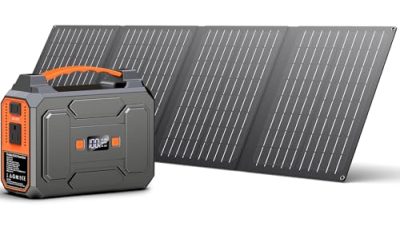
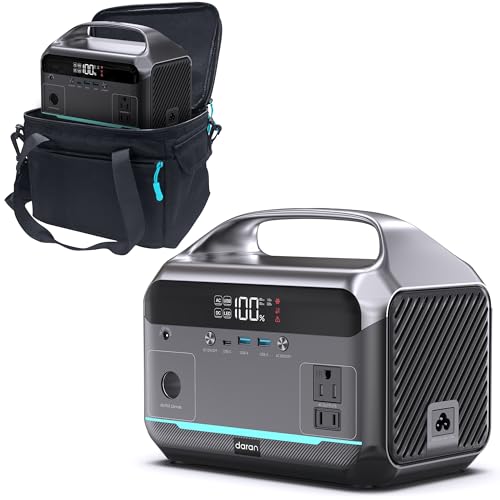
The title lists a 288Wh LiFePO4 battery, 350W output with a 600W peak, an AC outlet and a seven-port design. It reads as a good everyday companion for a solo traveler who needs to keep a laptop, a fan and a few devices running without taking up much shelf space. The mini form and fast-charge note in the title also hint that it is built to be topped up quickly between drives. With 350W of output it can also cover a modest laptop charger plus a USB fan at the same time, which is the typical daytime load for someone working from a parked van.
- Strength: LiFePO4 chemistry suits daily cycling.
- Strength: seven outputs let several small devices charge together.
- Trade-off: 288Wh runs out fast if you power anything above a laptop.
Skip it if you plan to run a fridge or cooking gear, because the capacity is simply too small.
MARBERO 237Wh Power Station
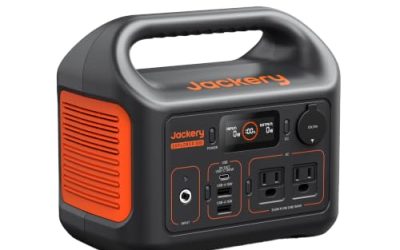
This unit lists 237Wh, 300W and a pure sine wave 110V AC outlet, along with USB-C, USB-A and DC ports. The pure sine wave detail matters for laptops, camera chargers and anything with a sensitive power supply. It targets weekend campers and part-time van owners who want a straightforward, low-commitment battery rather than a full system. The 300W rating gives a little more breathing room than the smallest banks, so a laptop and a small appliance such as a mini fan can run side by side. Buyers who just want a dependable backup in the cargo area will find the layout easy to understand.
- Strength: pure sine wave AC is gentler on electronics.
- Strength: a mix of USB-C, USB-A, DC and AC covers most small gear.
- Trade-off: 237Wh is the smaller end of the usable range for a working day.
Skip it if you need full-time power for remote work, as it will need frequent recharging.
GENDOME 288Wh Power Bank Station
Built around Starlink Mini use, this one lists a 288Wh LiFePO4 battery, 90000mAh, an all-in-one kit with carrying case and up to 8 hours of runtime. It is aimed at travelers whose main need is steady connectivity on the road, such as remote workers parked off-grid who need a router or dish running through the workday. The power-bank style and case suggest it is meant to be tossed in a bag rather than bolted down, so it fits people who set up camp in a different spot every evening and want a quick, tidy way to get online.
- Strength: the Starlink Mini kit angle makes setup simple for connectivity.
- Strength: LiFePO4 cells and a carrying case suit travel life.
- Trade-off: its capacity ceiling means it is not a whole-van power source.
Skip it if you want one battery to handle the fridge, laptop and cooking together.
BLUETTI Solar Generator Elite 400
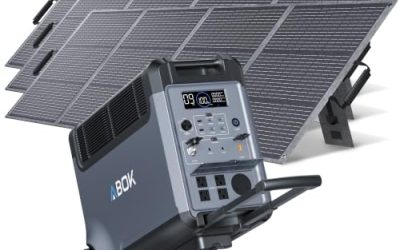
The most complete system in the lineup, with 3840Wh, 2600W AC outlets (3900W power lifting), a LiFePO4 battery and two 200W solar panels included in the version listed. It is for full-time vanlifers who want to cook, work and cool the cabin without worrying about every device. The included panels mean the recharge path is part of the package. At this scale, the title’s 2600W AC rating leaves room for a kettle or induction plate, which small banks cannot touch, so it replaces a patchwork of little batteries with one central source for the whole build.
- Strength: 3840Wh capacity provides multi-day autonomy for typical van loads.
- Strength: panels are bundled, simplifying the solar setup.
- Trade-off: a unit this large demands real space and weight capacity in the van.
Skip it if your van is small or you rarely draw more than a laptop and lights.
192Wh 200W LiFePO4 Power Station
An unbranded-style listing with 192Wh, 200W (400W peak), 100W two-way fast charging, and 110V AC, DC, USB and LED light outputs. The integrated light makes it handy for tent or van-interior use. It suits someone who wants to keep phones, a tablet and a light alive overnight, nothing more. The lack of a brand name in the listing title means you should read the specification page closely, confirming ports and certifications, before you trust it with expensive electronics in a van you sleep in.
- Strength: 100W two-way charging lets it refill from a USB-C charger.
- Strength: the built-in LED light adds simple utility.
- Trade-off: 192Wh is too little for sustained laptop work.
Skip it if you need AC power for anything above a small device.
BLUETTI Apex 300
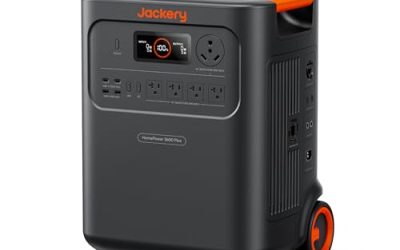
The title lists a 2764.8Wh LFP battery, a Hub D1, six AC outlets at 3840W with a 7680W surge, and RV-optimized DC ports. It is aimed at buyers who want a flexible, expandable home-class setup in a van, particularly if they carry power tools or want to run multiple appliances at once. The hub adds connection options beyond what a plain power station offers. For a van with a planned electrical layout, the DC ports labeled for RV use may simplify tying it into existing vehicle-style equipment, though you should confirm connector types with the maker before purchase.
- Strength: 3840W output and six AC outlets handle several appliances together.
- Strength: RV-optimized DC ports fit vehicle-style wiring.
- Trade-off: its size and capability are overkill for a casual weekender.
Skip it if you only need to charge a laptop and a phone.
BALDR 90Wh Power Station
The smallest unit here, listing 28000mAh, a 90Wh LiFePO4 battery, an AC outlet and 150W peak power. It is essentially a rugged power bank for people who want an AC outlet for a laptop brick or camera charger and nothing more. It suits minimalist travelers who stash it in a bag or a seat pocket. Treat it as a stopgap for a dead phone or a short laptop session rather than a primary battery. The 150W peak figure in the title also tells you not to expect anything power-hungry to start from it.
- Strength: small enough to carry anywhere.
- Strength: LiFePO4 cells in a pocket-friendly format.
- Trade-off: 90Wh gives limited runtime for anything beyond phones and small gadgets.
Skip it if your van work depends on all-day laptop power.
Which One Fits Your Situation
Remote worker parked off-grid
Pair the GENDOME 288Wh with your laptop plan if connectivity is the priority. If you also cook and keep a fridge cold, step up to the BLUETTI Elite 400 for sustained capacity.
Weekend van with basic gear
The MARBERO 237Wh or DARAN 288Wh handle lights, phones and a laptop, and each fits in a corner of the van without trouble.
Full conversion with power tools
The BLUETTI Apex 300 covers heavier outlets and a hub-based layout, which suits a build that includes tools or larger appliances.
Ultra-light backup
The BALDR 90Wh and the 192Wh 200W unit work as emergency or secondary batteries when you want something tiny in the glove box.
Common Mistakes
- Buying a tiny power bank and expecting it to run a fridge overnight.
- Ignoring continuous AC watts and only reading the peak number.
- Mounting a battery in a closed cabinet with no ventilation.
- Skipping a way to recharge while driving or from panels, then relying on campgrounds.
- Using a gas generator inside the van; carbon monoxide can build up and cause serious harm.
Which One Should You Buy?
| If you… | Choose |
|---|---|
| Only need a phone and a small light on a short overnight stop | BALDR 90Wh Power Station |
| Want a compact LiFePO4 option for a laptop and a fan | 192Wh 200W LiFePO4 Power Station |
| Want a small, simple unit that tucks under a bench | MARBERO 237Wh Power Station |
| Want a step up in size for remote work days | DARAN 288Wh Power Station or GENDOME 288Wh Power Bank Station |
| Are living in the van and want a larger system with solar in mind | BLUETTI Solar Generator Elite 400 |
| Run power tools or a fuller conversion | BLUETTI Apex 300 |
Setup and Care Tips
Mind the temperature swings
A closed van can climb far above outdoor air in summer and fall below freezing in winter. Many lithium packs refuse or limit charging when frozen, and lasting heat shortens life. Check the operating range on the spec sheet and move the unit to the cabin side in extreme weather.
Fix it in place
Heavy units slide during braking. Use a tie-down strap, a fitted tray or a cleat, and keep it away from loose items that could press on ports.
Provide airflow
Fans pull air through side vents. Leave a hand’s width of space and never bury the unit under bedding or gear.
Protect the wiring
If you add a fused DC connection or panel cable, route it away from sharp edges and use the cable gauge the manufacturer specifies.
Who Should Skip These
Skip the smallest units here if you plan to run a cooking appliance, a space heater or a compressor fridge all day. Skip portable stations altogether if you want a permanently wired system tied to the vehicle’s charging, since a fixed battery with a dedicated charger may suit a full-time build better.
Sizing and Compatibility Checklist
- Add up the daily draw: laptop chargers commonly list 45 to 100 watts, and a compressor fridge cycles on and off rather than running constantly, so use its daily watt-hour figure, not its peak.
- Check the 12V car-style socket rating if you plan to run a fridge directly from DC, which wastes less energy than converting to AC.
- Measure the cabinet or bench where the unit will live, including ventilation gaps.
- Count roof or ground space for panels. Wattage that does not fit, or sits in shade, will not refill the battery.
- Confirm whether the unit can charge from the vehicle while driving, and how slowly a car socket delivers power compared with a wall outlet.
Related guides
- Portable Power Stations For Cpap During Power Outages
- How Long Does A Portable Generator Run On A Tank Of Fuel
- How To Prepare For A Power Outage Checklist And Gear
Frequently Asked Questions
How many watt-hours does a van need?
A minimalist setup with phones and a laptop can live on 300Wh to 500Wh per day. Add a small fridge and cooking, and 2,000Wh or more is more realistic.
Is LiFePO4 better than other lithium chemistries?
It is generally valued for long cycle life and stable behavior, which suits daily cycling in a van. Several listings here state LiFePO4 or LFP in the title.
Can I run a Starlink off a power station?
Some small units are marketed for Starlink Mini use, such as the GENDOME listing. Check the dish’s power draw against the station’s output and runtime claim.
Are portable power stations safe inside a van?
They produce no exhaust, unlike fuel generators, but they still need ventilation and a secure mount. Keep them away from heaters and never leave them in direct sun on a hot dashboard.