Key takeaways
- Pro: Genuinely waterproof EVA shell protects contents from humidity and splashes.
- Pro: Smallest footprint on this list, so it never becomes a storage problem.
- Con: At this piece count, some item categories have only single units, meaning you cannot reuse the kit after one incident without restocking.
Every year, a car accident or roadside emergency catches drivers off guard with a bare trunk and a phone that will not charge. A first aid kit for car use is the simplest answer to that gap, but the market overflows with kits that range from a handful of adhesive strips to comprehensive trauma supplies. The real question is not whether you need one, but which configuration actually reduces response time and anxiety when seconds matter.
We compared eight kits across published piece counts, case materials, waterproof ratings, and aggregated owner feedback to identify where the practical differences land. A good kit in this category balances sufficient medical supply density against a footprint small enough to survive daily commuting without sliding into footwells. It uses a rigid or semi-rigid case that resists heat inside a closed vehicle, and its layout lets you locate items under stress. A bad kit looks impressive in a product photo but stores gauze under a layer of irrelevant accessories or melts in a summer windshield.
Our top picks




As an Amazon Associate we earn from qualifying purchases at no extra cost to you.
Quick Picks
| Product | Best for | Price |
|---|---|---|
| Mini First Aid Kit 150 Pc | Commuters who need a cheap, compact option | $8.99 |
| BAND-AID Travel Ready 80 Pc | Minimalist drivers with short trips | $10.98 |
| Gevoke 410 Pc | Families wanting maximum coverage in one case | $35.99 |
| VRIEXSD 400 Pc Large | Multi-use kits for home, car, and camping | $39.99 |
| BAND-AID All-Purpose 160 Pc | Brand-loyal buyers who want compact reliability | $18.36 |
| VRIEXSD Premium 320 Pc | Those wanting a waterproof shell at mid-range cost | $21.99 |
| First Aid Only 91248 260 Pc | OSHA-adjacent compliance for work vehicles | $17.88 |
| AMORNING 276 Pc | Drivers wanting solid piece count without overspending | $16.52 |
How We Picked
We narrowed this list by weighing four criteria that separate a useful first aid kit for car storage from shelf clutter: piece-count-to-case-volume ratio, because a bulky kit ends up in a garage drawer rather than your trunk; case durability, specifically whether the shell survives repeated temperature swings inside a vehicle; waterproofing or moisture resistance, which matters if you ever open the kit in rain; and the accessibility of core trauma items like gauze pads, adhesive tape, and antiseptic wipes without digging through irrelevant accessories.
The 8 Best First Aid Kit For Car in 2026
1. Mini First Aid Kit – 150 Piece Small Waterproof EVA Hard Shell Case
This is the entry-level pick for drivers who want real medical supply density without a bulky footprint. Owners consistently note that the EVA hard shell shrugs off being tossed in a back seat or glovebox area, and the 150 pieces cover the common minor injuries that happen on the road.
- Pro: Genuinely waterproof EVA shell protects contents from humidity and splashes.
- Pro: Smallest footprint on this list, so it never becomes a storage problem.
- Con: At this piece count, some item categories have only single units, meaning you cannot reuse the kit after one incident without restocking.
Skip it if you regularly carry passengers or want coverage for moderate cuts and sprains.
2. BAND-AID Brand Travel Ready Portable First Aid Kit, 80 Piece
BAND-AID’s name recognition earns immediate trust, and this 80-piece kit leans on that brand’s core strength: adhesive wound care. It suits drivers who take short urban commutes and want a kit that stays slim and recognizable. The case is compact enough for a door pocket or console bin.
- Pro: Well-known brand gives confidence that contents meet baseline quality expectations.
- Pro: Truly portable size fits almost any storage nook in a vehicle.
- Con: Eighty pieces means very limited trauma supplies, with thin coverage beyond minor scrapes and blisters.
Skip it if you want a kit capable of handling anything more than a surface cut.
3. Gevoke 410 Piece Waterproof Hard Shell First Aid Kit, Red
Gevoke packs 410 pieces into a rigid waterproof case, targeting families or group drivers who need redundancy. Owners highlight the red color as a plus for quick identification in a dim trunk, and the sheer quantity means you can treat multiple injuries without depleting critical supplies. It is one of the most comprehensive single-case options reviewed here.
- Pro: High piece count provides genuine depth across wound care, medications, and tools.
- Pro: Hard shell with waterproof seal withstands weather exposure during roadside use.
- Con: The case is noticeably larger and heavier than others, so it may not suit compact cars with limited trunk space.
Skip it if you need something you can stash in a seat-back pocket.
4. VRIEXSD 400 Piece Large First Aid Kit for Home, Car, Travel, Camping, Sports
VRIEXSD’s 400-piece kit is positioned as a do-everything solution, and its breadth reflects that claim. Owners who bought it for road trips report that it also replaced a separate camping kit, which speaks to the variety of tools included. At $39.99 it is the priciest option on this list, but the per-piece cost stays reasonable.
- Pro: Covers multiple use-cases, so one kit serves car, camp, and home emergencies.
- Pro: Large inventory reduces the chance of running out mid-incident.
- Con: Bulk and price make it impractical for drivers who only need a simple roadside backup.
Skip it if your budget caps around twenty dollars or your storage space is tight.
5. BAND-AID Brand All-Purpose Portable Compact First Aid Kit, 160 Piece
Sitting between the slim Travel Ready and the larger Gevoke, this 160-piece BAND-AID kit offers a balanced middle ground. The “All-Purpose” label reflects a broader item mix that includes more wound-care depth than the 80-piece version while keeping a compact case. It appeals to brand-preferring buyers who find the Travel Ready too sparse.
- Pro: Double the content of the Travel Ready while remaining genuinely portable.
- Pro: Familiar branding makes contents predictable to anyone who helps in an emergency.
- Con: Case material is softer than the hard-shell competitors, offering less crush resistance in a crowded trunk.
Skip it if you need a kit that survives being driven over or wedged under heavy luggage.
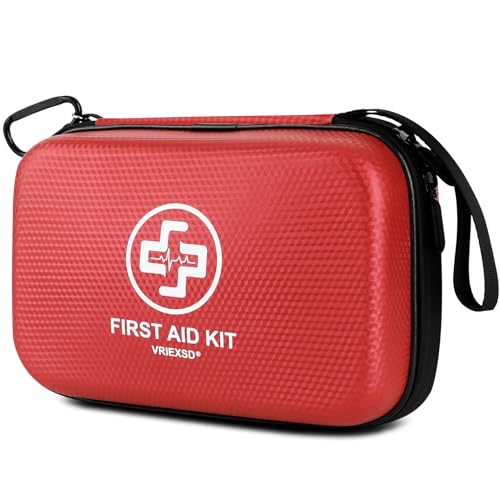
6. VRIEXSD Premium 320-Piece First Aid Kit, Waterproof EVA Hard Shell Case, Red
This mid-range VRIEXSD option threads the needle between piece count and case practicality. The 320 pieces give meaningful depth without the bulk of its larger sibling, and the EVA hard shell addresses the durability concern that plagues soft-sided kits. Owners praise the internal layout for keeping grouped items organized.
- Pro: EVA shell resists both water intrusion and physical deformation from daily vehicle use.
- Pro: Internal dividers and pockets keep categories separated, reducing fumbling under stress.
- Con: Red exterior is conspicuous, which some buyers note as a theft risk in high-crime areas.
Skip it if discreet storage matters more to you than visibility in an emergency.
7. First Aid Only 91248 OSHA-Compliant First Aid Kit, 260 Pieces
Marketed toward workplaces but sized for a vehicle, this 260-piece kit carries OSHA-compliance language that appeals to fleet drivers and contractors who need a kit that satisfies both personal use and employer requirements. The “50-person” label is optimistic for a car context, but it confirms the kit holds enough volume to treat more than a single occupant.
- Pro: OSHA framing adds a layer of accountability for professional or fleet use.
- Pro: At $17.88, it delivers strong piece-count-per-dollar value.
- Con: The case design prioritizes wall-mount compatibility over portability, so it is bulkier than dedicated car kits.
Skip it if you want something that fits a center console or slim side pocket.
8. First Aid Kit 276PCS Car Home Camping Essentials Red Emergency Kit AMORNING
AMORNING’s 276-piece kit hits a sweet spot for buyers who want a solid all-rounder without paying premium prices. Owners describe it as well-suited for the exact intersection this list targets: car use with occasional overlap into camping and home storage. The red case aids visibility, and the item mix skews toward the supplies most relevant to road incidents.
- Pro: Balanced piece count and price make it a low-regret purchase for most drivers.
- Pro: Item selection leans practical rather than padded with filler accessories.
- Con: Brand recognition is lower than BAND-AID or First Aid Only, which may matter if others assist you and expect familiar packaging.
Skip it if brand-name trust is a hard requirement for your situation.
Buying Guide
Piece Count vs. Case Size
More pieces do not always mean a better first aid kit for car use if the case grows too large to store where you can reach it. A 400-piece kit that lives in a garage drawer is less effective than a 150-piece kit mounted behind your driver seat. Match capacity to how many occupants you regularly carry: solo commuters need less depth than families with young children.
Case Material and Weather Resistance
Vehicle interiors experience temperature extremes and humidity spikes. EVA and polypropylene hard shells resist both deformation and moisture, while soft nylon cases absorb condensation and can stick items together over time. If you live in a climate with snow, heavy rain, or summer heat above 95°F, prioritize a sealed hard shell regardless of what else you compare.
Internal Organization and Item Accessibility
Under stress, you cannot afford to sort through a jumbled pile. Look for kits with labeled pockets, dividers, or a layout that separates trauma supplies from minor-wound items. Owner reviews are your best proxy here: recurring praise or complaints about “finding things fast” tells you more than any spec sheet.
Our Verdict
The VRIEXSD Premium 320-Piece is our top pick overall: it balances meaningful medical depth, a genuinely waterproof EVA hard shell, and organized internal layout without becoming too bulky for standard vehicle storage. For budget-focused buyers, the Mini First Aid Kit 150 Piece at $8.99 delivers surprising value and fits nearly anywhere. If you drive a fleet or need compliance documentation for an employer, the First Aid Only 91248 wins because its OSHA framing adds accountability that no consumer-only kit provides.
FAQ
Where should I store a first aid kit in my car?
Mount or place it within arm’s reach of the driver, ideally in the center console, a seat-back organizer, or a door pocket. Avoid the deep trunk where it can shift during hard braking and become inaccessible in cold or rainy conditions.
How often should I replace items in a car first aid kit?
Check expiration dates on ointments, antiseptics, and medications annually. Heat inside a parked vehicle can degrade adhesives and sterilization packaging faster than shelf storage would suggest, so a once-a-year visual inspection is prudent.
Is a waterproof case actually necessary?
If you ever open the kit outdoors in rain or live in a humid climate, waterproofing protects sterile dressings from contamination. For drivers in dry regions who always deploy from inside the vehicle, a water-resistant soft case may suffice, but the price difference over a year is negligible.
Do expensive kits with 400+ pieces last longer?
They provide more redundancy per incident but do not have a longer shelf life than smaller kits. The limiting factor is individual item expiration, not total piece count, so a 400-piece kit still needs annual review just like a 150-piece one.