A storm knocks out power, a space heater catches fire in the garage, or a grease flare-up starts in the kitchen. In any of these moments, you need a buckeye fire extinguisher that is actually within reach, rated for the fuel type burning, and operable by someone who has never used one before. That is the real problem buyers face when shopping for fire safety equipment for their homes, vehicles, or workshops.
What separates a worthwhile pick from a disappointing one comes down to agent capacity, mounting hardware, valve construction, and rating coverage. A unit with a wall hook that stays mounted during high winds beats one that slides off a shelf. Aluminum valves resist corrosion far better than cheaper brass alternatives in humid coastal zones. And a multi-class ABC rating handles wood, flammable liquids, and energized electrical fires without requiring you to identify the fuel source in the first three seconds. After comparing published specs, current pricing, and owner feedback across all eight models listed here, the picture is clear: Buckeye builds workhorse extinguishers that punch above their price tier, but the right choice depends entirely on where you plan to mount it and how many locations you need to cover.
Our top picks

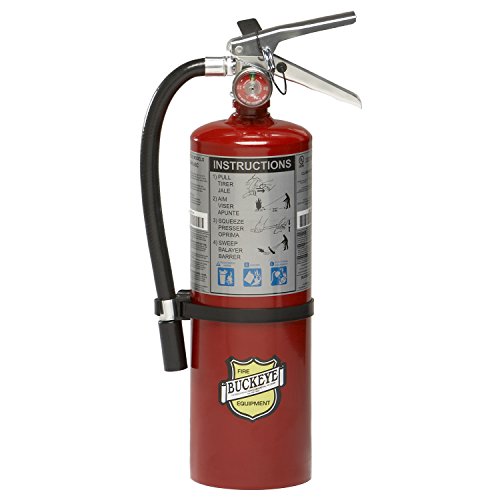


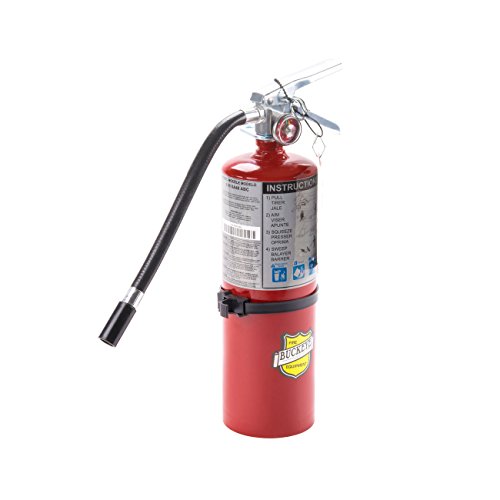


As an Amazon Associate we earn from qualifying purchases at no extra cost to you.
Quick Picks
| Product | Best for | Price |
|---|---|---|
| 4-Pack Buckeye 10914 | Whole-home coverage on a budget | $195 |
| 2 Pack Buckeye 13315 | Vehicles and motorcycles | $80.74 |
| Buckeye 10914 | Kitchen or garage single mount | $57.6 |
| BUCKEYE 4A:80B:C 10 lb | Workshop or light commercial use | $94.98 |
| Buckeye 13315 | Entry-level vehicle bracket | $48.59 |
| Buckeye 25614 | Trucks and boats needing 5 lbs | $60.46 |
| Buckeye 11340 | Maximum home coverage | $96.92 |
| Buckeye 50000 Stainless Steel Water | Outdoor grills and Class A only | $176.99 |
How We Picked
We evaluated these units on four criteria that matter most in this category. First, agent capacity and fire rating: a unit must cover the fuel types most likely to ignite in its intended location. Second, mounting hardware: a vehicle bracket that vibrates loose or a wall hook that bends under storm-force gusts defeats the purpose of having an extinguisher nearby. Third, valve and canister construction: aluminum valves resist the corrosion that kills extinguishers stored in basements, garages, and marine environments. Fourth, cost per unit of fire coverage: we compared total rated capacity against price to identify where buyers get genuine value versus where they pay a premium for packaging.
The 8 Best Buckeye Fire Extinguisher in 2026
4-Pack Buckeye 10914 ABC Multipurpose Dry Chemical
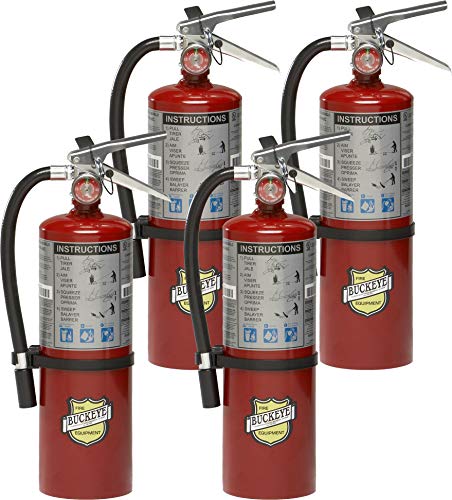
Owners who want to cover a kitchen, garage, laundry room, and entryway simultaneously without shopping four times gravitate toward this 4-pack. Each unit holds 5 lbs of ABC dry chemical with an aluminum valve and includes a wall hook. The per-unit cost drops noticeably compared to buying singles, making it the most efficient way to equip a full house. Pros: strong per-unit savings versus individual purchases, and the aluminum valve resists corrosion in humid storage areas. Con: you cannot pick and choose which locations get brackets instead of hooks. Skip this if you only need one or two extinguishers, since the surplus units become inventory rather than safety coverage.
2 Pack Buckeye 13315 ABC with Vehicle Bracket
Designed for households with two vehicles, motorcycles, or an ATV and a truck. Each unit carries 2.5 lbs of ABC agent and ships with a dedicated vehicle bracket that clamps to a roll bar or under-dash mount point. The compact size keeps it out of the way but reachable within seconds. Pros: the included brackets save the cost of third-party mounts, and the 2.5 lb capacity is light enough for any adult to operate one-handed. Con: 2.5 lbs limits discharge duration to roughly 10 seconds, so this is strictly for small, contained fires. Skip if your vehicle carries flammable cargo that could produce a larger fire.
Buckeye 10914 ABC with Wall Hook
The single-unit version of the 10914 line serves buyers who need one well-placed extinguisher rather than a multi-location kit. At 5 lbs of agent capacity and compact dimensions of 3-3/8″ diameter by 7-1/4″ width by 16-3/8″ height, it fits tight wall spaces behind a door or in a narrow utility closet. Pros: the aluminum valve construction matches the 4-pack at a lower upfront cost for single-mount needs, and the wall hook holds firm in high-wind conditions. Con: one unit only covers one room, so a multi-story home will need additional purchases. Skip if your budget allows the 4-pack, which drops the per-unit price meaningfully.
BUCKEYE 4A:80B:C 10 lb Fire Extinguisher
A 4A:80B:C rating puts this unit in a different performance tier from the smaller 5 lb models, making it suitable for workshops, small commercial spaces, or rural property owners who face wildfire risk near structures. The 10 lb agent capacity extends discharge time well beyond household-grade units. Pros: the highest fire rating in this lineup gives genuine margin for larger fires, and the 21″ height pairs with a standard wall mount for visible placement. Con: at 10 lbs of agent, the total unit weight makes it harder for children or elderly users to handle one-handed. Skip if your primary concern is kitchen grease or vehicle protection where the rating is overkill.
Buckeye 13315 ABC with Vehicle Bracket
The standalone version of the 13315, priced at $48.59, is the most affordable way to add a single vehicle bracket extinguisher to a fleet, boat, or motorcycle. Same 2.5 lb capacity, same aluminum valve, same compact profile as the 2-pack. Pros: lowest price point in this roundup makes it easy to add coverage to an older vehicle without feeling like a significant investment. Con: you get only one unit and one bracket, so multi-vehicle households end up paying more per bracket than the 2-pack option. Skip this if you can stretch your budget a few dollars, because the 2-pack delivers better bracket value.
Buckeye 25614 ABC with Vehicle Bracket
Sized between the 2.5 lb 13315 and the larger wall-mount units, the 25614 delivers 5 lbs of ABC agent in a vehicle-bracket package. Owners of trucks, boats, or enclosed trailers who need longer discharge time than a 2.5 lb unit offers pick this model. Pros: double the agent capacity of the 13315 at a modest price increase, and the bracket holds securely during rough off-road or marine use. Con: the 5 lb canister is noticeably bulkier under a truck cab or in a small boat compartment than the 2.5 lb option. Skip if your mounting space is extremely tight and a compact footprint outweighs discharge duration.
Buckeye 11340 ABC with Wall Hook
The 10 lb wall-mount 11340 targets buyers who want the largest dry chemical capacity in a standard residential hook format. Dimensions of 5-1/8″ diameter by 7-3/4″ width by 21″ height make it visible and grabbable without needing to search. Pros: 10 lbs of agent provides the longest discharge window for a residential wall unit, and the aluminum valve construction ensures longevity in damp basements or coastal garages. Con: at $96.92, it costs more than the 4A:80B:C rated unit, and the wall hook format may not suit environments requiring a bracket. Skip if you need commercial-grade ratings or if the 10914 at $57.60 covers your actual fire risk adequately.
Buckeye 50000 Stainless Steel Water Pressurized
This stainless steel water extinguisher fills a niche that ABC dry chemical cannot: outdoor grills, bonfire rings, and Class A fuel scenarios where chemical residue on food surfaces is undesirable. The 2.5 gallon water capacity and stainless construction resist rust when stored on a patio or in a boat. Pros: leaves zero chemical residue, making it ideal near cooking surfaces, and stainless steel outlasts aluminum in salt-air marine environments. Con: strictly Class A only, so it cannot handle grease, flammable liquids, or electrical fires. Skip this unless you already own an ABC unit nearby and want a dedicated grill-station extinguisher.
Buying Guide
Matching Agent Capacity to Your Actual Risk
A 2.5 lb extinguisher delivers roughly 10 seconds of discharge, enough to suppress a contained trash-can or small grease fire before it spreads. A 5 lb unit doubles that window, while a 10 lb model extends it further. The mistake buyers make is purchasing the smallest unit for every location, then discovering it runs out during a garage fire involving stored fuel containers. Assess what combustible materials surround each mounting point and size accordingly.
Mounting Hardware Is Not Interchangeable
Wall hooks, vehicle brackets, and commercial mounting clips serve different environments. A vehicle bracket must resist constant vibration and temperature swings, which is why Buckeye uses dedicated bracket designs rather than repurposing wall hooks. In storm-prone regions, a wall hook that is bolted into a stud withstands gusts that would rip an adhesive mount free. Always use the hardware type matched to your installation surface, not whatever came in a separate package.
Aluminum Valves and Environmental Durability
The valve assembly is the component most likely to fail in stored extinguishers. Aluminum valves resist the galvanic corrosion that attacks dissimilar metal combinations in humid, coastal, or basement environments. If your extinguisher will live in a garage, under a boat seat, or in a storm cellar, prioritize models with aluminum valve construction over generic brass alternatives, since a corroded valve renders the entire unit inoperable regardless of charge level.
Our Verdict
Top pick: the 4-Pack Buckeye 10914 ABC at $195 delivers the strongest value for whole-home coverage, with each unit carrying 5 lbs of dry chemical, an aluminum valve, and a wall hook rated for secure mounting. Budget pick: the standalone Buckeye 13315 at $48.59 is the cheapest entry point for vehicle protection without sacrificing build quality. Alternative winner: if your household includes a large workshop, enclosed trailer, or wildfire-adjacent property, the BUCKEYE 4A:80B:C 10 lb unit at $94.98 outperforms everything else in this roundup on raw fire rating and should replace a smaller wall-mount option at that location.
FAQ
How many Buckeye fire extinguishers does a typical home need?
Most residential safety guidance recommends one extinguisher per floor plus one in the kitchen and one in the garage. A single-story home with a detached garage needs three minimum. The 4-Pack 10914 covers this layout with one spare.
What does the ABC rating mean on a Buckeye extinguisher?
ABC indicates the extinguisher handles Class A (wood, paper, cloth), Class B (flammable liquids like gasoline), and Class C (energized electrical equipment) fires. This makes a single unit versatile enough for any residential or vehicle scenario without identifying the fuel type first.
Do vehicle-bracket Buckeye units survive car washes and rain?
The aluminum valve and sealed canister construction resist water exposure during normal car washes. However, the bracket itself should be inspected periodically to confirm the strap or clamp has not loosened, since vibration over thousands of miles can reduce grip.
Is a water extinguisher ever a better choice than ABC dry chemical?
Only for Class A fires where chemical residue is a concern, such as on an outdoor grill or near open food preparation. A water unit like the Buckeye 50000 will not touch a grease or electrical fire, so it should supplement rather than replace an ABC extinguisher in your overall safety setup.