Key takeaways
- Heat is the enemy: storage below about 70 degrees Fahrenheit lasts far longer than a hot garage or attic.
- Keep food off concrete floors and away from moisture; plastic buckets protect against pests.
- Pouches need water, so store at least a gallon per person per day beyond your food supply.
- Try each meal at home before an emergency; flavors you dislike become waste, and stress eating is unforgiving.
- Rotate in a first-in, first-out order and mark purchase dates on the lid.
- Plan for dietary needs: allergies, diabetes, infants and older relatives may need specific foods. Ask a healthcare professional about special dietary needs.
- Add a manual can opener, a camp stove with fuel, utensils and salt and spices.
The best survival food kit is the one that supplies about 2,000 calories per person per day for the number of days you need, with a shelf life of at least 20 years, simple preparation using only boiling water, and foods your family will actually eat. Freeze-dried kits from Mountain House, ReadyWise, Legacy Food Storage and Augason Farms cover that need; no-cook ration bars and canned goods fill the gap if you have no stove or fuel.
Our top picks


As an Amazon Associate we earn from qualifying purchases at no extra cost to you.
Quick comparison of survival food kit types and brands
| Pick | Best for | Preparation | Stated shelf life | Format | Price range |
|---|---|---|---|---|---|
| Mountain House Classic Bucket | Taste and variety | Add boiling water, wait about 9 minutes | Up to 30 years (maker claim) | Pouches in a bucket | Upper-mid |
| ReadyWise Emergency Food Supply | Low cost per calorie | Boiling water or cold soak for some items | Up to 25 years (maker claim) | Pouches in a bucket or tote | Mid-range |
| Legacy Food Storage | Family-sized variety | Boiling water | Up to 25 years (maker claim) | Pouches in a tote or bucket | Mid-range |
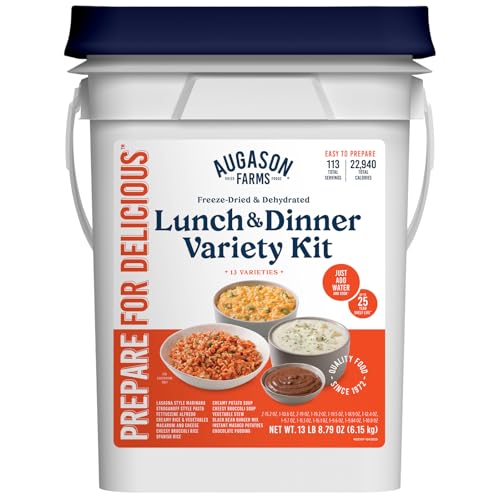
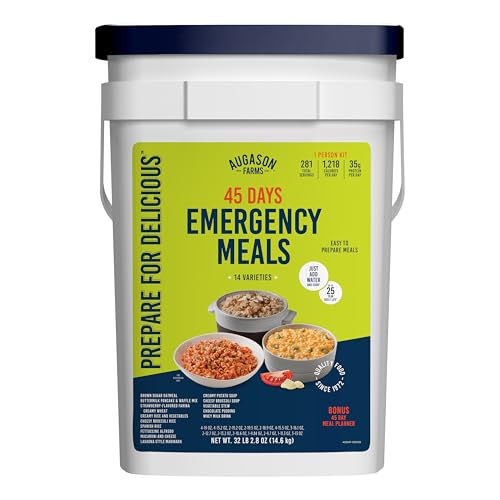
| Augason Farms Emergency Food Supply | Budget bulk staples | Mix with water, some need cooking | Up to 25 years (maker claim) | Cans and pails | Budget to mid |
| Peak Refuel Meal Kits | High-protein, backpack-light | Boiling water | Up to 20 years (maker claim) | Pouches | Mid-range |
| SOS Food Lab emergency ration bars | No-cook, go-bag | None | Up to 5 years (maker claim) | Compressed bars | Budget |
Shelf life and serving counts are manufacturer claims and assume cool, dry storage; heat shortens life considerably.
Best for taste: Mountain House Classic Bucket
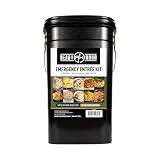
Mountain House is the best-known name in freeze-dried meals, and its Classic bucket gives a mix of pasta, rice and egg-based dishes with a long stated shelf life. Flavor is the brand’s main selling point. Its trade-offs are a higher cost per calorie than bulk-staple kits and fairly high sodium. Plan on a stove and 2 cups of boiling water per pouch.
Best value: ReadyWise Emergency Food Supply
ReadyWise, the brand formerly sold as Wise Company, packages a large number of servings at a lower price. Expect many breakfast and entree pouches that use rice, pasta and potato bases. The trade-off is lower protein variety and portion sizes that often count as servings smaller than a full meal, so check calories per day rather than the servings headline.
Best family variety: Legacy Food Storage
Legacy sells totes and buckets of mixed breakfast, lunch and dinner items. It suits households that want some variety, with a wider range of ingredients, and it comes in sizes from a week to a year. Check the allergen list, as many kits contain milk, wheat or soy.
Best budget staples: Augason Farms
Augason Farms offers cans and pails of staples such as rice, oats, beans and dehydrated vegetables, which stretch farthest per dollar. They require water, time and often a pot, so they reward cooks. The trade-off is more work and less convenience than add-water pouches.
Best lightweight and protein-rich: Peak Refuel
Peak Refuel focuses on higher-protein backpacking-style meals that suit an evacuation bag. It costs more per calorie than bulk kits, so use it for the go-bag rather than the whole pantry.
Best no-cook backup: SOS emergency ration bars
Compressed ration bars need no water or fuel and are designed for lifeboat-style situations. They are bland and shorter-lived than freeze-dried food, and they are a backup, not a meal plan. Keep a few in the car and go-bag.
Calorie math: how much food do you need?
Use 2,000 calories per adult per day as a baseline, adjusting for children, athletes and cold weather. For two adults and two children over 14 days, a rough target is 2 x 2,000 + 2 x 1,500 = 7,000 calories per day, or about 98,000 calories. If a bucket lists 1,800 calories per day for one person over 30 days, a household of four needs several. Compare calories per dollar and calories per pound, not the headline servings.
| Household | Days | Rough total calories | What that means |
|---|---|---|---|
| 1 adult | 7 | 14,000 | One week-sized pail or bucket |
| 2 adults | 14 | 56,000 | Two to three 30-day-per-person-class buckets |
| 2 adults, 2 children | 14 | About 98,000 | A mix of buckets plus bulk staples |
| 4 adults | 30 | 240,000 | Bulk staples plus freeze-dried meals |
Storage and ownership realities
- Heat is the enemy: storage below about 70 degrees Fahrenheit lasts far longer than a hot garage or attic.
- Keep food off concrete floors and away from moisture; plastic buckets protect against pests.
- Pouches need water, so store at least a gallon per person per day beyond your food supply.
- Try each meal at home before an emergency; flavors you dislike become waste, and stress eating is unforgiving.
- Rotate in a first-in, first-out order and mark purchase dates on the lid.
- Plan for dietary needs: allergies, diabetes, infants and older relatives may need specific foods. Ask a healthcare professional about special dietary needs.
- Add a manual can opener, a camp stove with fuel, utensils and salt and spices.
Which kit fits which situation
For a hurricane or ice storm where you expect to shelter at home for one to two weeks, a mixed approach works best: a freeze-dried bucket for convenience, a few cans of ready-to-eat food that need no heating, and bulk rice and oats for the long run. For an evacuation bag, weight matters more than price, so choose lightweight pouches or ration bars and pack a small stove. For a household with picky eaters or young children, spend a little more on a kit with familiar flavors such as mac and cheese, pancakes and rice dishes, because uneaten food gives you no calories.
Budget buyers should compare cost per 1,000 calories. A bulk-staple kit can cost a fraction of a freeze-dried bucket, though it asks for more water, fuel and cooking time. If you rent or have little storage, stackable totes with a flat profile fit under a bed or in a closet better than round buckets.
Mistakes to avoid
The most common mistake is buying a large, cheap kit without checking the calories per day. Some kits advertise a huge number of servings, but each serving is only 200 to 250 calories, so a so-called 30-day kit may only feed one person for about two weeks. The second is storing the kit in a hot garage. The third is forgetting water: a pouch of freeze-dried pasta uses about two cups, so a week of three meals a day for four people adds many gallons beyond your drinking water. Finally, avoid putting everything in one place; split supplies between the house, the car and a go-bag in case you must leave.
Frequently Asked Questions
How many calories should a survival food kit provide per day?
Plan on about 2,000 calories per adult per day, with more in cold weather or for heavy work and less for small children. Check the calories per day, not just the number of servings.
How long does survival food last?
Freeze-dried pouches commonly claim 20 to 30 years when stored cool and dry, while ration bars typically claim about five years. Actual life depends on temperature and packaging integrity.
Do I need a stove for survival food?
Most freeze-dried meals need boiling water, so a small camp stove, fuel and a pot are wise. No-cook bars and canned foods cover situations where you cannot heat anything.
What is the cheapest way to store emergency food?
Bulk staples such as rice, beans, oats and canned goods cost the least per calorie. Freeze-dried kits cost more but are lighter and easier to prepare.
Is freeze-dried food healthy?
It can be balanced, but many meals are high in sodium. Read the nutrition panel and supplement with fruit, vegetables and protein sources where possible.