Our Top Picks


The MARBERO 155Wh solar generator kit is the best overall choice here for an emergency kit, because it is the only listing that bundles a real solar panel (30W) with a battery big enough to run more than a phone. If you only need to keep phones and a radio alive, the Mesqool crank radio or the BLAVOR solar power bank are lighter, cheaper-to-store options. A “solar charger” for an emergency kit is any device that can take sunlight as an input, but they differ enormously: tiny panels on power banks only trickle-charge, while a separate panel feeding a battery pack can make a genuine daily top-up.
Quick List
- Leaton Hand Crank Emergency Radio – best for a crank radio with a 10000mAh pack and USB-C
- SOLPERK Solar Panel Kit – runner-up accessory for maintaining 12V batteries, not a phone charger
- FEELLE 50000mAh Solar Power Bank – best for sheer stored capacity with a magnetic and crank backup
- Mesqool 12000mAh Crank Radio – best for weather alerts plus a phone-charging reserve
- BLAVOR 10,000mAh Solar Power Bank – best for a compact, water-resistant bank with wireless and USB-C charging
- MARBERO 155Wh Solar Generator with Panel – best for a real panel-plus-battery kit that can run small AC devices
Which One Is Right for You?
| If you… | Choose |
|---|---|
| want to recharge a battery from sunlight at a useful rate and run small AC devices | MARBERO 155Wh Solar Generator with Panel |
| want a compact power bank that lives in a go-bag and tolerates splashes | BLAVOR 10,000mAh Solar Power Bank |
| want a radio with NOAA alerts as well as phone charging | Mesqool 12000mAh Crank Radio |
| prefer a NOAA and AM/FM radio with USB-C charging | Leaton Hand Crank Emergency Radio |
| want the largest claimed storage in a single bank | FEELLE 50000mAh Solar Power Bank |
| need to keep a car, boat or stored vehicle battery from going flat | SOLPERK Solar Panel Kit |
The honest takeaway is that most “solar” features on small power banks and radios are emergency top-ups, not day-to-day charging. If sunlight is your plan A, buy a separate panel feeding a battery. If sunlight is plan C, a good bank charged from a wall outlet before the storm is the better investment.
All 6 Picks in Detail
1. Leaton Hand Crank Emergency Radio – Best for a crank radio with a 10000mAh pack and USB-C
As an Amazon Associate we earn from qualifying purchases at no extra cost to you.

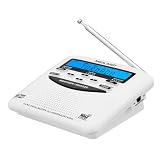
The Leaton is a hand-crank emergency radio that receives AM/FM and NOAA weather stations, charges by solar or crank, and carries a 10000mAh rechargeable battery with a USB-C charging port, according to the listing. It also includes a flashlight. In an emergency kit it earns its place by doing three jobs at once: warnings, light and a modest phone top-up.
- 10000mAh rechargeable battery
- Solar and hand-crank charging as backup methods
- AM/FM and NOAA weather radio
- USB-C charging port noted in the listing (confirm input and output roles)
- Built-in flashlight
- Solar panel size not stated in the listing name; confirm on the product page
Pros:
- Combines alerts, light and charging in one device
- USB-C support for modern phones
Cons:
- Built-in solar panel is typically small and slow
- May not support S.A.M.E. county filtering; confirm on the product page
It is close to the Mesqool in function, with slightly less listed battery capacity.
The biggest advantage is simplicity: one device, three jobs, and almost nothing to configure. Charge it fully from a wall adapter before storm season, then use the crank only when you have no other option. Expect the crank to deliver minutes of radio rather than a full phone charge per minute of effort.
2. SOLPERK Solar Panel Kit – Runner-up accessory for maintaining 12V batteries, not a phone charger

The SOLPERK is a waterproof solar panel kit designed as a trickle charger and maintainer for batteries such as those in a car or boat, with a smart MPPT controller and an adjustable mount bracket. It is not a power bank and has no battery of its own, so it does not belong beside the other devices as a direct competitor. It earns its place here as a runner-up for emergency preparedness: if your plan involves keeping a vehicle or marine battery topped up so you can start the engine or run 12V gear, it is a sensible accessory.
- Solar panel with an MPPT charge controller, per the listing
- Designed as a trickle charger and maintainer for 12V batteries
- Waterproof construction
- Adjustable mounting bracket
- Panel wattage and connectors not fully stated in the listing name; confirm on the product page
- No built-in battery and no phone charging port
Pros:
- Keeps a vehicle or boat battery from slowly draining while parked
- Weather-resistant for outdoor use
Cons:
- Does not charge phones or radios without extra equipment
- Maintenance panels deliver little power in dim light
Unlike the other five picks, it has no storage of its own, so treat it as an accessory rather than a stand-alone emergency charger.
Because a vehicle’s 12V system can in turn run a USB car charger or an inverter, a maintained battery is a genuine backup in some situations. Still, run engines and charge systems outdoors, and read the controller’s instructions before connecting it to any battery type other than the ones it lists.
3. FEELLE 50000mAh Solar Power Bank – Best for sheer stored capacity with a magnetic and crank backup

The FEELLE is listed as a 50000mAh solar power bank with a magnetic design and a hand crank. On paper, 50000mAh is five times the capacity of a typical 10000mAh bank, enough to recharge a modern phone many times. The solar and crank features are best seen as emergency trickle options, since a bank this large would take days of direct sun through a small built-in panel to refill.
- 50000mAh stated capacity
- Magnetic design for attaching accessories or mounting (confirm details on the product page)
- Hand crank for emergency charging
- Solar charging input from the built-in panel
- Output ports and wattage not stated in the listing name; confirm on the product page
- Check airline rules before travel: very large banks can exceed carry-on limits
Pros:
- Very large stated capacity for multi-day phone and device use
- Multiple charging methods for last-resort situations
Cons:
- Large, heavy and slow to recharge from its own panel
- High-capacity banks can face airline restrictions
Compared with the BLAVOR, it stores about five times as much but is far less portable.
Capacity figures on very large banks are often quoted at the cell level, so real usable energy to your phone is lower than the headline suggests. Even so, a big bank like this can handle a long weekend of phone use for a family if you charge it fully beforehand.
4. Mesqool 12000mAh Crank Radio – Best for weather alerts plus a phone-charging reserve

The Mesqool is an emergency weather radio with NOAA alert reception, a 12000mAh battery backup, a solar panel and a hand crank, plus AM/FM, an LED flashlight and cell phone charging. In a kit built around communications, this is often the single most useful item, because it combines the information source (the radio) with the power reserve (the bank).
- 12000mAh internal battery
- Solar and hand-crank charging
- NOAA alert reception, AM/FM
- LED flashlight
- USB output for charging phones
- County-level S.A.M.E. filtering not stated; confirm on the product page
Pros:
- Larger battery than most crank radios
- Gives weather alerts when networks are down
Cons:
- Solar panel is small, so it is mainly a top-up method
- Not a replacement for a plug-in S.A.M.E. radio at night
It edges the Leaton on listed battery size, while the Leaton lists USB-C more prominently.
Because radios in this class are often left in a drawer, set a calendar reminder to charge it every few months. A discharged lithium pack can lose capacity if it sits empty for a long time.
5. BLAVOR 10,000mAh Solar Power Bank – Best for a compact, water-resistant bank with wireless and USB-C charging
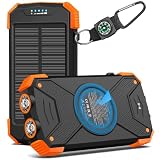
The BLAVOR is a 10,000mAh solar power bank with wireless charging, a 20W USB-C port, an IPX5 water-resistance rating and two flashlights, according to its listing. It is the most conventional bank of the group: compact enough for a coat pocket or bag, with enough capacity for two to three phone charges. IPX5 means it resists water jets, such as rain, but it is not meant to be submerged.
- 10,000mAh capacity
- 20W USB-C output for faster phone charging
- Wireless charging pad function for compatible phones
- IPX5 water resistance
- Two flashlights
- Solar panel is a trickle source; confirm panel specifications on the product page
Pros:
- Compact and well suited to a go-bag
- USB-C and wireless give flexible charging
Cons:
- Built-in solar will not meaningfully recharge it in a day
- Wireless charging is slower and less efficient than cable charging
Next to the FEELLE it stores a fraction of the energy but is far easier to carry.
The best way to use a bank like this is to charge it from a wall outlet or computer before trouble starts, and treat the solar panel as an emergency source. Keep a short USB-C cable in the same pouch so you can charge quickly rather than depend on wireless.
6. MARBERO 155Wh Solar Generator with Panel – Best for a real panel-plus-battery kit that can run small AC devices

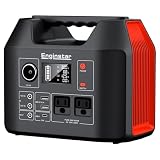
The MARBERO kit is a 155Wh solar generator that includes a 30W solar panel and lists a 150W surge rating. A 155Wh battery holds roughly 10 to 12 full phone charges, or powers a router and a few lights for hours, and the included panel gives you a way to recharge it in sunlight at a useful rate. That combination is what makes it the best choice among these six if sunlight is genuinely part of your plan.
- 155Wh battery capacity
- 30W solar panel included, per the listing
- 150W surge rating stated; continuous rating to confirm on the product page
- AC outlet plus USB and DC ports (confirm the exact list)
- Portable power station form factor
- Battery chemistry not stated in the listing name; confirm on the product page
Pros:
- Panel included, so no compatibility guesswork
- Can run small AC devices and charge phones and laptops
Cons:
- Output limited to small loads
- 30W panels need a full day of sun to recover much of the battery
It is the only product here that lets you generate energy beyond a trickle, which is its edge over the banks.
In good sunlight a 30W panel might deliver around 15 to 25W in real conditions, so recharging 155Wh could take roughly eight to ten sun-hours. Plan on two days for a full refill, and use the panel in direct sun rather than through a window.
Specs Compared
| Product | Type | Stored energy | Solar | Output / ports | Extras |
|---|---|---|---|---|---|
| Leaton Hand Crank Radio | Crank radio | 10000mAh | Built-in panel (size to confirm) | USB-C noted | NOAA, AM/FM, flashlight |
| SOLPERK Solar Panel Kit | 12V panel and controller | None | Solar panel with MPPT controller | Battery-clip style (confirm) | Waterproof, adjustable mount |
| FEELLE 50000mAh | Power bank | 50000mAh | Built-in panel | Confirm on listing | Magnetic, hand crank |
| Mesqool 12000mAh | Crank radio | 12000mAh | Built-in panel | USB phone charging | NOAA, AM/FM, LED flashlight |
| BLAVOR 10,000mAh | Power bank | 10,000mAh | Built-in panel | 20W USB-C, wireless | IPX5, two flashlights |
| MARBERO 155Wh | Solar generator kit | 155Wh | 30W panel included | AC outlet, 150W surge | USB and DC (confirm) |
How We Chose These
This guide is based on desk research of current catalog listings and manufacturer-style specification fields, drawn from listing data. We grouped the six products by what they actually do: crank radios, solar power banks, a maintenance panel and a panel-plus-battery kit. For each, we noted stored energy, how solar input is delivered and which ports are listed, marking unknowns as “confirm on listing.” We judged each item on how well it would work as part of an emergency kit, favoring devices that clearly state capacity, include their own charging method and can be used without extra parts. One listing, the SOLPERK, does not fit the phone-charging brief and is labeled a runner-up accessory.
What to Look For
Panel wattage and what it really delivers
A solar panel’s rating is its output under ideal laboratory conditions; real-world output is typically 50 to 75 percent of that. A tiny built-in panel on a power bank, often rated at only 1 to 3 watts, adds a few percent of charge per day at best. A 30W panel can deliver perhaps 15 to 25W in direct sun, which means roughly 100 to 150Wh over a good day. Rule of thumb: divide the battery’s watt-hours by the real panel output to estimate sun-hours needed. For 155Wh and 20W, that is nearly eight hours.
Worked example for a family of four. Suppose each person needs one phone charge a day, about 15Wh each, so 60Wh per day, plus a radio running two hours at about 2W and a lamp for three hours at 5W, adding roughly 20Wh. That is around 80Wh per day, or 240Wh over a three-day outage. A 10,000mAh bank (about 37Wh) covers less than half a day of that. After conversion losses, a 155Wh station covers a little over a day and a half of that routine, and a large 185Wh-class bank covers roughly the same. Add the 30W panel and you can recover perhaps 100Wh on a sunny day, which funds most of a day’s usage and stretches the station across the full three days. Without a panel, you would need to ration, for example by charging phones only to 50 percent.
mAh, Wh and honest capacity
Power banks list capacity in milliamp-hours at the cell voltage (usually 3.7V). To convert, multiply amp-hours by 3.7: 10,000mAh is about 37Wh, 12,000mAh is about 44Wh and 50,000mAh is about 185Wh. Power banks lose roughly 20 to 35 percent in conversion, so a 10,000mAh bank gives about two phone charges. Flight rules matter too: banks over 100Wh need airline approval and those over 160Wh are generally not allowed in carry-on luggage, which affects very large units like a 50000mAh pack.
Crank, solar and wall charging: use them in order
Wall charging is the only fast method, so top up every device before bad weather. Solar is a slow second choice and works best in direct sunlight with the panel aimed at the sun. Hand-crank is the last resort, delivering minutes of radio or a small boost for an emergency call. Cranking for a minute may produce a few minutes of radio, not a full phone charge, so do not plan on it for anything else.
Ports, cables and compatibility
USB-C Power Delivery at 20W charges most modern phones quickly, while older USB-A ports at 5W are slower. Pack the right cables for every device in the kit, including a short USB-C cable, a Lightning cable if you use one, and a micro-USB adapter for older radios. Keep cables in the same pouch as the bank, and label which one is for which device. For gear with a 12V plug, confirm the connector size before you rely on it.
When you assemble the kit, think in layers. The first layer is stored energy that was charged from the wall before the event: the bank or station. The second is a renewable top-up, which is the solar panel or crank. The third is information, meaning a NOAA-capable radio. Put a laminated card in the bag listing the date each item was last charged, and rotate batteries and cables twice a year. Keep the kit in a spot you can reach quickly, such as a hall closet, rather than in a garage where summer heat and winter cold wear lithium cells down.
Weather resistance and storage
Ratings such as IPX5 mean protection against water jets, not submersion. Store lithium devices at moderate temperatures, avoid leaving them in a hot car, and charge them to about half to full every three to six months. Replace any pack that swells or runs hot.
Also remember that any lithium battery should be charged only with the cable and adapter that came with it or with a certified equivalent. Never charge a device under a pillow or in a closed bag, and do not use a pack with a swollen case. Stop using it, keep it away from anything flammable, and follow local guidance for disposal.
Questions
Can a small solar panel on a power bank fully recharge it?
Realistically, no. A panel of a few watts could take many days of direct sun to refill a 10,000mAh bank. Think of it as a way to add a little charge when nothing else is available.
How many phone charges does a 10,000mAh bank provide?
About two to three for a modern smartphone, depending on the phone’s battery size and conversion losses. A 155Wh station might give ten or more.
Is a hand-crank radio worth having?
Yes, as a backup. It lets you hear NOAA alerts after the battery has run down, even if only for a few minutes at a time. Charge the pack normally before storms.
Do solar chargers work in cloudy weather?
They still generate power under clouds, but output may drop to 10 to 25 percent of the rated figure. That is why charging before the event matters more than relying on the sun after it begins.
Can I take a large power bank on a plane?
Often only with limits. Banks up to 100Wh are generally allowed in carry-on bags, those between 100Wh and 160Wh may need airline approval, and larger ones are typically prohibited. Check the airline’s current rules.
What should I do with the SOLPERK-style maintenance panel?
Use it to keep a vehicle or boat battery from draining while parked, following its instructions for connection and polarity. It will not charge phones by itself, so pair it with other items in the kit.
Update History
- October 20, 2026 – Initial publication; product set drawn from current catalog listings.
- Check the product page for current specifications and availability before buying.
Sources
- Retailer listing titles and specification fields for each product
- Listing-stated capacity and charging fields, converted to watt-hours with standard cell-voltage arithmetic