Key takeaways
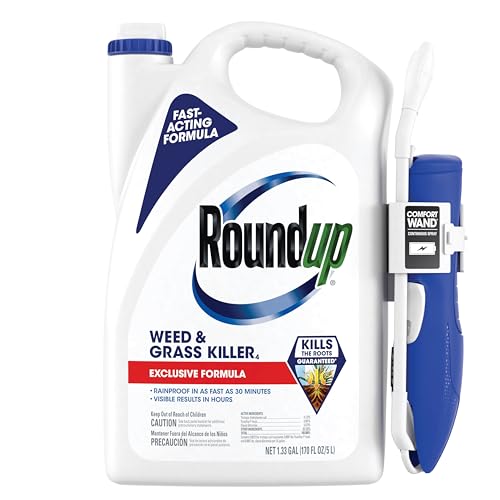
- Best Overall: Roundup Weed and Grass Killer4 with Comfort Wand – ready-to-use for walkways, beds and edges
- Best Value: Spectracide Weed and Grass Killer with AccuShot sprayer – low-cost refill-friendly ready-to-use
- Best for Long-Lasting Control: Ortho GroundClear Year Long Vegetation Killer concentrate – residual control for gravel and fence lines
- Best Glyphosate Concentrate: Hi-Yield Killzall Weed and Grass Killer – 41 percent glyphosate super concentrate
- Best Broadleaf-Only Option: Southern Ag Amine 2,4-D – selective broadleaf control in grass
- Best Battery-Wand Kit: Spruce Weed and Grass Killer kit – marketed as a pet-safe spray with a power wand
The best herbicide depends on the job, because the product that clears a gravel driveway for a year will also damage a lawn border if it drifts. For most homeowners looking for a general-purpose weed killer, our top pick is the Roundup Weed and Grass Killer4 with Comfort Wand, a ready-to-use sprayer for walkways and flower-bed edges that needs no mixing. For heavy, long-lasting vegetation control on gravel, fence lines and driveways, the runner-up is Ortho GroundClear Year Long Vegetation Killer, a concentrate that also offers residual control.
This guide covers six herbicides at different jobs, from non-selective killers to a broadleaf-only product, and explains how to choose by site, weed type and safety needs. It is research-based. We read maker pages, retailer listings and editorial reviews such as LawnStarter, and we did not personally use these products. Herbicides are regulated pesticides: the label is the law and the only authoritative source for rates, safe areas, re-entry times and protective equipment. Nothing in this article replaces the label, and we do not make safety claims about any product.
Our top picks


As an Amazon Associate we earn from qualifying purchases at no extra cost to you.
Top Picks at a Glance
- Best Overall: Roundup Weed and Grass Killer4 with Comfort Wand – ready-to-use for walkways, beds and edges
- Best Value: Spectracide Weed and Grass Killer with AccuShot sprayer – low-cost refill-friendly ready-to-use
- Best for Long-Lasting Control: Ortho GroundClear Year Long Vegetation Killer concentrate – residual control for gravel and fence lines
- Best Glyphosate Concentrate: Hi-Yield Killzall Weed and Grass Killer – 41 percent glyphosate super concentrate
- Best Broadleaf-Only Option: Southern Ag Amine 2,4-D – selective broadleaf control in grass
- Best Battery-Wand Kit: Spruce Weed and Grass Killer kit – marketed as a pet-safe spray with a power wand
Herbicide Comparison Table
| Product | Best for | Key specs | Watch for | Price tier |
|---|---|---|---|---|
| Roundup Weed and Grass Killer4 | Walkways, beds, edges | 1.33 gal ready-to-use; Comfort Wand; non-glyphosate (check label) | Non-selective; harms desirable plants | Mid-range |
| Spectracide Weed and Grass Killer | Budget spot treatment | 1.33 gal with AccuShot sprayer; refills sold | Actives vary by version; read the label | Budget |
| Ortho GroundClear Year Long | Gravel, driveways, fence lines | 2 gal concentrate; residual control | Do not use near roots of desirable plants | Premium |
| Hi-Yield Killzall | Large areas, concentrate buyers | 1 gal; 41 percent glyphosate | Needs mixing and care | Premium |
| Southern Ag Amine 2,4-D | Broadleaf weeds in lawns | 32 oz quart; amine 2,4-D | Harms many garden plants | Mid-range |
| Spruce Weed and Grass Killer | Small jobs, battery wand | 64 oz kit; 2 AA batteries | Small volume; claims need label check | Mid-range |
1. Roundup Weed and Grass Killer4 with Comfort Wand: Best Overall Ready-to-Use Weed Killer
- Format: 1.33 gallon ready-to-use with Comfort Wand (as listed)
- Use areas: flower beds, walkways and other yard areas, per the maker
- Actives: retailer listings for this line show triclopyr, fluazifop-P-butyl and diquat; the product does not contain glyphosate. Confirm on your label
- Type: non-selective
- Residual soil control: not listed
Best for: homeowners who want an easy-to-use sprayer for sidewalks, patios and mulch beds without mixing.
Skip if: you need lasting control for gravel or want to treat a large area, where a concentrate is cheaper.
Roundup is the best known name in weed control, and the Killer4 version is notable because current listings show it as a glyphosate-free formula based on a mix of triclopyr, fluazifop and diquat. That is useful to know if you specifically want to avoid glyphosate. It is also the reason you should always read the label, since many Roundup products use different actives.
Ready-to-use sprayers remove the mixing step, which is the largest source of mistakes for beginners. The Comfort Wand lets you aim at individual weeds along edges, which reduces overspray on plants you want to keep. Apply on a calm, dry day, avoid drift and follow the label for re-entry times.
The trade-off is cost per treated area. A ready-to-use jug is far more expensive per square foot than a concentrate. It also has no long-term soil barrier according to our research, so weeds can come back from seed or roots.
Pros
- No mixing needed
- Wand lets you target weeds
- Familiar brand
- Works on many weeds and grasses
Cons
- Costly per area
- Non-selective, so it can harm nearby plants
2. Spectracide Weed and Grass Killer with AccuShot Sprayer: Best Value Ready-to-Use Sprayer
- Format: 1.33 gallon ready-to-use with AccuShot sprayer (as listed)
- Claim: kills broadleaf weeds and grasses down to the root
- Actives: listings for the line show diquat, with some versions adding dicamba and fluazifop; check your label
- Refills: sold separately
- Type: non-selective
Best for: budget shoppers who want to treat cracks, borders and small patches.
Skip if: you plan to clear a large area, because ready-to-use is costly per square foot.
Spectracide is the value-oriented competitor to Roundup, and the AccuShot sprayer kit lets you reuse the sprayer with refills. Listings differ in which actives each version includes, from diquat alone to diquat combined with dicamba and fluazifop. That is a good reminder that the same brand name can cover several formulas.
For driveway cracks and brick patios, it is a sensible entry-level choice. Results are typically fast on young weeds, but tough perennial roots may need a second application. Use the sprayer on calm days and keep pets and children away until the area is dry, as the label directs.
If you want even better value, look at the concentrate versions, which need mixing but are cheaper per treated area.
Pros
- Low cost
- Reusable sprayer with refills
- Easy to find
- Fast on young weeds
Cons
- Actives vary by version
- Perennial weeds may need repeat sprays
3. Ortho GroundClear Year Long Vegetation Killer: Best for Long-Lasting Control on Gravel and Fence Lines
- Format: 2 gallon concentrate (as listed)
- Claim: kills weeds and prevents them for up to a year, per the listing
- Type: non-selective with residual soil activity
- Reported actives: imazapyr plus pelargonic acid, according to one editorial source; confirm on the label
- Use areas: gravel, driveways, fence lines, not lawns or garden beds
Best for: gravel driveways, industrial areas, fence lines and places where you never want anything to grow.
Skip if: you plan to grow plants nearby, since residual products can move in soil and affect roots.
A year-long vegetation killer is a different tool from a quick spray. Instead of killing only the plants you see, it leaves a barrier in the soil that discourages new growth for months. That is why it is right for gravel and fence lines, and wrong for lawns, flower beds and areas near tree roots.
The concentrate format is cost-effective for larger areas but requires a tank sprayer, careful measuring and protective equipment as directed on the label. Do not apply where rain could wash the product onto desirable plants or into drains.
Be especially careful with product placement. The residual effect is the whole point, and mistakes can last a long time. If you are unsure about the site, choose a non-residual product instead.
Pros
- Long-lasting control
- Good value over large areas
- Strong against grasses and weeds
Cons
- Residual effect can harm nearby plants
- Needs mixing and a sprayer
4. Hi-Yield Killzall Weed and Grass Killer: Best Glyphosate Concentrate
- Format: 1 gallon super concentrate (as listed)
- Active ingredient: 41 percent glyphosate (as listed)
- Type: non-selective, systemic
- Mixing: required, follow label rates
- Residual soil control: none expected from glyphosate
Best for: large areas, fence lines and gardeners who prefer a proven glyphosate concentrate.
Skip if: you want a ready-to-use bottle or must avoid glyphosate.
Glyphosate remains the most widely used non-selective herbicide worldwide, and Killzall is a straightforward high-strength concentrate. A single gallon makes a large volume of spray when mixed per the label, which makes it economical.
Because it is systemic, it moves through the plant to the roots, so results appear over days to weeks rather than hours. It does not leave a long-term soil barrier. Follow the label for mixing, protective gear and use sites, and avoid spraying near desirable plants since glyphosate harms most green growth it touches.
Glyphosate has been the subject of public debate and legal action. We do not make safety claims either way. If you have concerns, choose a different active ingredient or ask your local extension service.
Pros
- High strength
- Economical per area
- Proven active ingredient
Cons
- Slow visible results
- Requires mixing and careful handling
5. Southern Ag Amine 2,4-D Weed Killer: Best Broadleaf-Only Option for Lawns
- Format: 32 oz (quart) concentrate (as listed)
- Active ingredient: amine 2,4-D (as listed)
- Type: selective broadleaf herbicide
- Targets: dandelions, clover and similar broadleaf weeds
- Residual soil control: not listed
Best for: lawn owners with broadleaf weeds who want to leave the turf alone.
Skip if: you have weedy grasses, since this product mostly leaves grass alone but will not remove it.
A selective herbicide is a different strategy: it removes certain weeds and leaves the lawn grass. Amine 2,4-D is a long-standing broadleaf killer for turf. Because it can damage many garden plants, ornamental shrubs and vegetables, avoid drift and read the label for spray windows and temperature limits.
As a concentrate, a quart treats a meaningful amount of lawn but requires measuring and a sprayer. Different grass types tolerate it differently, so check the label before treating a new lawn.
This is not a substitute for a non-selective killer on driveways. It is a lawn tool, and that is the main reason we include it.
Pros
- Leaves most lawn grasses
- Targets broadleaf weeds
- Economical concentrate
Cons
- Not for grassy weeds
- Drift can harm garden plants
6. Spruce Weed and Grass Killer Kit: Best Battery-Wand Kit for Small Jobs
- Format: 64 oz kit with power wand and 2 AA batteries (as listed)
- Marketing: pet-safe weed killer spray, reusable wand
- Actives: not listed in our research; check the label
- Type: non-selective
- Use areas: small patios, cracks and walkways
Best for: small spot jobs where you do not want to pump a sprayer.
Skip if: you need to treat large areas or want documented performance data.
The Spruce kit is a newer product that pairs a ready-to-use bottle with a battery-powered wand. The listing markets the spray as safe for pets once dry. We cannot verify safety claims, so read the label and keep pets away until the product is dry as directed.
A battery wand is convenient for small jobs because it provides a steady spray without pumping. The trade-off is volume: a 64 ounce bottle is only enough for small areas, so large jobs get expensive.
Because it is new, independent reviews are limited. Treat it as a convenience product rather than a proven performer.
Pros
- Convenient wand
- Easy for small areas
- Reusable kit
Cons
- Few independent reviews
- Small volume
Also Consider
Ortho GroundClear Weed and Grass Killer with Comfort Wand
A 1 gallon ready-to-use product from Ortho. One source lists ammonium nonanoate for this version, but actives differ across the GroundClear line, so check the label.
Tenacity Turf Herbicide
An 8 ounce selective product for turf, used to control weeds in lawns. Rates and grass types vary, so read the label.
BASF Drive XLR8
A crabgrass killer for lawns and turf with quinclorac as the active ingredient, per the listing. A good option if crabgrass is your main problem.
How We Chose
We searched the product store for real, currently sold herbicides and compared listings, maker pages and editorial coverage such as LawnStarter and other reviews. We looked at selective versus non-selective action, formulation, size, residual control and the active ingredients that retailers report. We did not personally use these products. We do not quote prices, only tiers.
Herbicide listings often disagree about active ingredients because brands reuse names across several formulas. Where we could not confirm an ingredient, we say so and send you to the label.
Buying Guide
Selective or Non-Selective?
Non-selective herbicides kill or damage almost any green plant they touch. They are for driveways, gravel and clearing a bed before replanting. Selective herbicides target a group of plants, such as broadleaf weeds or specific grassy weeds, and leave desirable turf mostly alone.
Match the product to the site. Using a non-selective on a lawn will leave dead patches, and using a selective on a driveway will not remove grasses.
Ready-to-Use or Concentrate?
Ready-to-use bottles are simple, fast and expensive per area. Concentrates need mixing but cost much less when you have a large area. If you only have a few cracks to treat, ready-to-use is fine.
For mixing, use the measuring tools recommended on the label, wear the protective gear listed and never reuse spray equipment for other purposes without cleaning.
Residual Control and Soil Safety
Residual products stay active in the soil for weeks or months to prevent regrowth. They are ideal for gravel but risky near trees, shrubs and lawns because roots can absorb them. Non-residual products affect only the plants sprayed.
If you plan to replant, check the label for the waiting period before planting.
Weather, Timing and Drift
Spray on a calm day with no rain forecast for the period stated on the label. Wind carries droplets onto plants you want to keep. Temperatures that are too hot or too cold can reduce effectiveness or increase injury risk to desirable plants.
Use a shield or a wand for edging and keep nozzles low to the ground.
Safety and Disposal
Follow every label instruction about gloves, eye protection, clothing, re-entry times and keeping children and pets away. Store the product in its original container, out of reach, and dispose of leftovers according to local hazardous waste rules.
Never pour herbicide into drains or onto soil that drains to water. If you are unsure, ask your local cooperative extension office.
Identifying Your Weeds First
Treating the wrong weed wastes time and money. Broadleaf weeds such as dandelion, plantain and clover have wide leaves and respond to broadleaf products. Grassy weeds such as crabgrass look like lawn grass and need a grass-active product such as quinclorac. Woody weeds and brush may need a brush killer. A photo and a quick check with your local extension office can identify the plant.
Annual weeds die each season and spread by seed, so timing sprays before they set seed matters. Perennial weeds regrow from roots, so they may require repeat applications. Young weeds are easiest to kill; large, mature weeds can need higher label rates or multiple treatments.
Non-Chemical Steps That Help
Herbicide is only one tool. Mulch, landscape fabric, hand weeding after rain and edging reduce the number of weeds that reach spray stage. For gravel areas, a weed barrier under the stone slows new growth. For lawns, mowing at the right height and keeping the grass thick prevents weeds from taking hold.
Combining methods lets you use less product. Spot treating a few weeds is usually safer for surrounding plants than spraying a whole area.
Sprayers, Wands and Equipment
A ready-to-use bottle includes its own sprayer, but concentrates need a separate tank sprayer. A one-gallon pump sprayer is fine for gardens, while larger yards benefit from a backpack sprayer. Keep one sprayer for herbicide only and label it clearly, because even small residues can damage plants later if you use the same sprayer for fertilizer or insecticide.
Rinse the sprayer after each use as the label directs, and never pour rinse water near wells, drains or desirable plants. Replace worn seals and nozzles, which are cheap and keep the spray pattern even.
Cost Per Area
To compare value, find how many square feet the label says a container treats and divide the tier by that area. A concentrate such as Hi-Yield Killzall or Ortho GroundClear typically treats far more area per container than any ready-to-use bottle, which is why professionals buy them. Ready-to-use is for convenience, not economy.
Remember to count the cost of a sprayer and protective equipment when you choose a concentrate. For a few weeds a year, the convenience of a wand bottle can be worth the extra cost.
Reading the Label Before You Buy
Every herbicide label lists the active ingredients, the weeds controlled, the sites where it may be used, the mixing rates, the rain-free period, and the waiting time before you can plant or let people and pets back in. Open the product page and find the label or the manufacturer’s PDF before ordering, and compare it with the bottle you receive. If the label does not list your site or weed, choose another product.
Pay attention to signal words such as Caution, Warning and Danger, which indicate how careful you need to be. Store the label with the container, because you will need the first aid and disposal sections if anything goes wrong.
Common Herbicide Mistakes
- Spraying on a windy day and killing garden plants by drift.
- Using a residual killer near trees or planting areas.
- Applying a non-selective to a lawn by mistake.
- Mixing stronger than the label rate in the hope of faster results.
- Ignoring pet and child re-entry times.
Frequently Asked Questions
What is the best herbicide for a home garden?
For beds and edges, a ready-to-use non-selective such as Roundup Weed and Grass Killer4 is convenient. Always keep spray off plants you want to keep and follow the label.
What is the best herbicide for gravel and driveways?
Ortho GroundClear Year Long Vegetation Killer is designed for long-lasting control in non-planted areas. Do not use it where roots of desirable plants can reach.
Is glyphosate the best herbicide?
It is the most widely used non-selective active, but it is not the only choice and has been debated. Choose by site and read the label.
What is the difference between selective and non-selective herbicides?
Selective products target certain weeds, such as broadleaf plants, and leave grass alone. Non-selective products harm most plants they touch.
How long until I can walk on a treated area?
It depends on the product. The label lists the re-entry time, and many say to wait until the spray is dry. Keep children and pets away as directed.
Is a pet-safe weed killer really safe?
We cannot verify safety claims. Read the label, follow the re-entry guidance and ask your vet if you have concerns.
How often should I reapply?
Ready-to-use products may need a second pass for tough perennials. Residual products can last months. Never exceed label limits.
Can I use herbicide near a vegetable garden?
Check the label for waiting periods and restrictions. Many products say not to use them on or near edible crops. When in doubt, hand weed instead.
What should I wear when spraying herbicide?
Follow the label. It usually lists long sleeves, long pants, chemical-resistant gloves, closed shoes and eye protection. Wash exposed clothing separately.
Will rain wash herbicide away?
Rain soon after application can reduce effectiveness or move the product. Check the rain-free period on the label before you spray.
Which One Should You Buy?
For most homeowners, Roundup Weed and Grass Killer4 with Comfort Wand is the easiest overall pick. Choose Spectracide for budget spot jobs, Ortho GroundClear Year Long for gravel and fence lines, Hi-Yield Killzall for large areas with a concentrate, Southern Ag 2,4-D for broadleaf weeds in lawns and Spruce for very small jobs with a wand.
Before you buy, identify your weeds, decide whether you need selective or non-selective action, and read the label for the exact product in your hands.
Sources
- Roundup, Spectracide, Ortho, Hi-Yield, Southern Ag and Spruce product labels and pages
- LawnStarter best weed killers review
- Spectracide and Roundup comparison guides
- University cooperative extension pesticide label guidance
- BASF and Syngenta turf herbicide product pages
Last updated: October 2026