
Our Top Picks
 Luster Leaf Products 1663 80 Professional Soil Test80 Tests8.25 x 1.25 x 9 inches1.05 PoundsCheck on Amazon



For most lawns, the best soil test kit for lawns is the Luster Leaf 1663 80 Professional Soil Test Kit. It covers pH plus nitrogen, phosphorus, and potassium using a capsule color-comparator method that is repeatable enough to track a fertilizer program across a whole season, and its 80-test capacity lets you sample a typical suburban lawn by zone in spring and retest after an amendment without buying refills. It suits owners who want numbers they can act on at home and do not mind a 10–15 minute bench procedure with a few tubes and a color chart.
If you would rather not run reagents at all, the Yard Mastery Soil Testing Kit mails your sample to a lab and returns a digital report covering 13 nutrient levels — the most accurate option here and the best fit for a lawn you are about to spend real fertilizer money on. For a quick, no-consumable reading between waterings, the SONKIR MS02 is the budget pick; for laboratory-grade bench work on your own kitchen counter, the LaMotte Model EL Turf and Garden Soil Test Kit is the premium one. This guide compares pH and nutrient accuracy, sample requirements, lab versus home testing, result clarity, and how each kit’s output translates into an actual fertilizer recommendation.
Top 3 Picks
Best overall: Luster Leaf 1663 80 Professional Soil Test Kit. The widest useful parameter set at home — pH, nitrogen, phosphorus, and potassium — with enough test capacity that you are not rationing capsules. It is the right pick if you already own a spreader and want to decide between a starter ratio, a maintenance ratio, and lime.
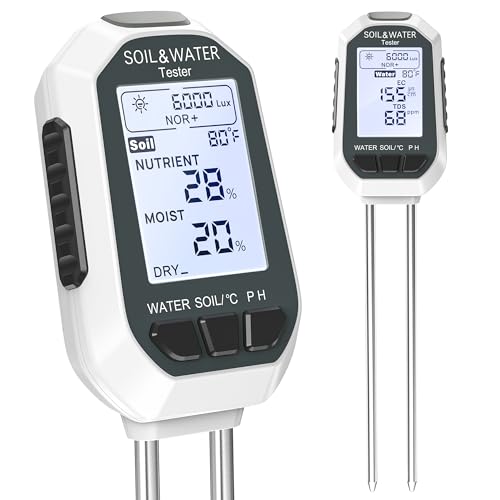
Best budget: SONKIR MS02 3-in-1 Soil Moisture/Light/pH Tester. No capsules, no batteries, no waiting — a probe you push into the root zone and read on a needle. Its pH channel is directional rather than precise, but for deciding whether to water today it is genuinely useful, and it never runs out of consumables.
Best premium: LaMotte Model EL Turf and Garden Soil Test Kit (5679-01). A reagent-based, refillable color-comparator system built to laboratory methods, aimed at people who test several times a season and want the tightest repeatability you can get outside a commercial lab. If you would rather outsource the chemistry, the Yard Mastery mail-in kit is the other premium-grade answer and the easier one to read.
Quick Comparison
The table below covers every kit in this roundup. Price tiers are relative bands only — listing prices move constantly, so treat budget, mid-range, and premium as a statement about consumable cost and build, not a quote.
| Product | Best for | Key specs | Price tier |
|---|---|---|---|
| AKSBTEC 4-in-1 Soil Test Kit | A first full pH + N-P-K baseline | pH, nitrogen, phosphorus, potassium; 40 tests; capsule color-comparison tubes; no batteries | Mid-range |
| SONKIR MS02 3-in-1 Tester | Instant moisture checks between waterings | Analog 3-in-1 (moisture, light, pH); single metal probe; no batteries; no consumables | Budget |
| HSLGOVE 7-in-One Soil Tester | One device across beds, borders and containers | 7 functions including moisture, pH, fertility index and light; dual digital screen; probe type; battery powered | Mid-range |
| Buladeke 7-in-1 Digital Soil Tester Kit | A gift-ready digital kit for mixed plantings | 7-in-1 digital readout; dual screen; probe type; accessory kit included | Premium |
| Luster Leaf 1663 80 Professional Soil Test Kit | Whole-lawn N-P-K and pH programs with repeat testing | pH plus nitrogen, phosphorus, potassium; 80-test capacity; reusable comparator and tubes; capsules as consumable | Premium |
| Luster Leaf 1612 Rapitest pH Soil Tester | Diagnosing and correcting a pH problem on a small lawn | pH only; capsule color comparator; single-parameter; pocket format | Budget |
| Luster Leaf 1601 Rapitest Soil Test Kit, 40 Count (3 Pack) | Multi-zone, multi-season testing | Three 40-test kits — up to 120 tests total; pH, nitrogen, phosphorus, potassium; color comparator | Premium |
| VILLNO 4-in-1 Soil Test Kit (40 Tests) | A low-cost full nutrient panel | pH, nitrogen, phosphorus, potassium; 40 tests; capsule/tube color match; no batteries | Mid-range |
| NewTest Soil pH Test Kit | Fast pH screening and season-to-season trend checks | 125 pH strips; two measuring cylinders; strip color chart; single-parameter | Budget |
| Yard Mastery Soil Testing Kit | Lab-grade nutrient numbers without choosing a lab | Mail-in laboratory analysis; 13 nutrient levels reported; prepaid return shipping; digital report | Mid-range |
| Aenncci Soil Test Kit 3-in-1 | A cheap spare meter for a second bed or greenhouse | 3-in-1 analog (moisture, pH, fertility); probe type; no batteries; no consumables | Budget |
| LaMotte Model EL Turf and Garden Soil Test Kit (5679-01) | Professional-grade home testing for serious turf programs | Reagent color-comparator system; multi-parameter turf and garden panel; refillable reagents; laboratory-standard methods | Premium |
How We Chose
Selection here is based on published specification and category fit, not on bench testing. We started from what a lawn owner actually needs to decide: a pH number, a phosphorus number (because phosphorus drives establishment and is the nutrient most often over-applied), a potassium number, and some indication of nitrogen availability, which is the hardest of the four to capture in a home kit because nitrate moves with water. A kit that reports only pH is still included, but it is slotted into the specific job it does well rather than presented as a general-purpose tool.
From there we applied four filters. First, parameter coverage against the price tier — does the kit return one number, four, or a lab panel of thirteen? Second, method and repeatability: sealed reagent capsules and liquid reagents hold calibration better than paper strips, while probe meters trade accuracy for speed and zero consumables. Third, sample requirements and result clarity — how much soil the kit needs, how many samples a single purchase realistically covers, and whether the output is a number, a color band, or a needle position. Fourth, ownership path: what wears out first, whether refills exist, and whether there is a sensible upgrade route from a probe meter to capsules to a mail-in lab panel. Kits that could not be placed on that ladder were left out.
1. AKSBTEC 4-in-1 Soil Test Kit – Best for a First Full Nutrient Baseline
As an Amazon Associate we earn from qualifying purchases at no extra cost to you.

This is the entry point most people should consider if they have never tested a lawn and want one snapshot that answers “what is actually in my soil?” rather than “is it wet?” The listing describes a 4-in-1 kit covering pH, nitrogen, phosphorus, and potassium across 40 tests, using the familiar capsule-and-tube color-comparison method: you mix a soil-and-water slurry, add a reagent capsule, shake, and match the resulting color against a printed chart.
Key specs
- Parameters: pH, nitrogen (N), phosphorus (P), potassium (K)
- Test capacity: 40 tests as listed
- Method: sealed reagent capsules with color-comparison tubes
- Power: none — no batteries, no probes, no calibration
- Consumable: one capsule per parameter per test
Where it earns its place. The four-parameter panel is the right shape for lawn work. Phosphorus and potassium are the two numbers that most often change a fertilizer choice, and pH determines whether the fertilizer you already own will even be taken up. Capsules are a genuine advantage over loose powders: they are sealed until use, they are dosed for you, and they keep better in a garage that swings between humid summers and freezing winters. The tube format also gives you enough liquid to read the color properly instead of squinting at a wet strip.
Pros
- Full pH + N-P-K panel at a mid-range price band
- No batteries, no probes to clean, nothing to calibrate
- Sealed capsules resist humidity better than open reagent bottles or loose strips
- Works for lawn, beds, containers, and vegetable plots alike
Cons
- “40 tests” means 40 individual parameter tests, not 40 complete panels — a full four-parameter round consumes four of them, so you are realistically looking at about ten complete tests
- Color matching is subjective; two people can read the same tube half a band apart
- Nitrogen reading reflects a snapshot of available nitrate and can swing after rain or fertilizing
- Capsules are a consumable — when they run out, the kit is done unless refills are available
How it compares. The VILLNO 4-in-1 kit is the closest sibling in this list: same four parameters, same 40-test count, same mid-range band and the same capsule/tube method. Functionally they are interchangeable, so the tie-breaker is which one is in stock at the size you want. Against the Yard Mastery mail-in kit, the AKSBTEC trades four rough bands for thirteen precise nutrient levels — a fair trade if you want an answer today, and a poor one if you are about to spend a season’s fertilizer budget.
2. SONKIR MS02 3-in-1 Soil Moisture/Light/pH Tester – Best for Instant Watering Decisions

The MS02 is not a nutrient test kit and should not be judged as one. It is a probe meter: push the metal rod into moist soil, watch a needle swing, and pull it back out. Its value on a lawn is in the moisture channel, which tells you whether the root zone is actually dry three inches down or whether the surface just looks pale. Anyone who has over-watered a lawn into a fungal problem knows how much that one reading is worth.
Key specs
- Functions: soil moisture, light, pH — selected by a switch on the housing
- Display: analog needle gauge, no batteries
- Probe: single metal rod, inserted roughly 2–4 inches into the root zone
- Consumables: none
- Format: hand-held, pocket-sized, no setup
Where it earns its place. The economics are unbeatable. A probe meter has no capsules, no strips, no reagents, and no battery, so the cost per reading is effectively zero forever, and the reading arrives in about five seconds. That makes it the tool you actually reach for on a Tuesday evening when you are standing on the lawn with the hose in your hand. The light channel is a bonus for diagnosing thin turf in shade, and the pH channel is best treated as a directional hint rather than a measurement.
Pros
- Instant readings with no consumables and no batteries
- Moisture channel is genuinely useful for irrigation timing
- Cheap enough to keep one in the garage and one in the shed
- Light function helps explain shade-related turf decline
Cons
- The pH channel is the weakest part of the design — analog probes in this class are directionally useful at best and should never be the basis for a lime application
- Reads a single point in the soil; a lawn is not uniform
- The metal rod corrodes and the needle drifts over time, especially if stored dirty or wet
- Reports no nutrients at all, so it cannot drive a fertilizer ratio
How it compares. The Aenncci 3-in-1 is the nearest alternative and effectively the same category — analog, battery-free, three functions, budget band. Differences come down to housing and probe length rather than capability. The more interesting comparison is with the Luster Leaf 1612 Rapitest pH tester: if pH is the thing you actually care about, a cheap capsule-based pH kit will beat any probe meter in this class, and the MS02 should be bought for moisture instead.
3. HSLGOVE 7-in-One Soil Tester – Best for One Device Across Beds and Containers

HSLGOVE’s 7-in-One moves the same probe concept onto a digital dual screen. The listing groups moisture, pH, fertility, and light among its seven functions, with readings displayed numerically rather than on a swinging needle. That single change matters more than it sounds: needle meters suffer from parallax and from a scale so compressed that a meaningful pH difference can be a hair’s width on the dial, whereas a numeric display removes the guesswork about what the needle is pointing at.
Key specs
- Functions: seven, including soil moisture, pH, fertility index, and light
- Display: dual digital screen, backlit on most versions
- Probe: metal rod type, inserted into the root zone
- Power: battery powered
- Consumables: none
Where it earns its place. This is the kit for someone managing several different growing situations — a front lawn, a raised bed of vegetables, a few containers on a patio — who wants one instrument that travels between them. The fertility channel deserves a clear explanation, because it is the most misunderstood reading on any of these devices: it is derived from the soil’s electrical conductivity, which responds to dissolved salts from any source, including fertilizer, tap water, and dog urine. A high fertility reading does not mean your soil has enough phosphorus; it means the soil solution is carrying a lot of dissolved material. Used that way, it is a decent proxy for “have I been feeding heavily?” and a poor proxy for a nutrient panel.
Pros
- Digital readout removes needle parallax and scale-squinting
- Seven functions in one housing — good value per function at a mid-range band
- Backlit dual screen is readable in a garage or at dusk
- No consumables to reorder
Cons
- “Fertility” is a conductivity-derived index, not nitrogen, phosphorus, or potassium numbers
- Battery is one more thing to fail mid-season, and it will fail at the worst time
- Probe readings are shallow by nature — you are measuring the top few inches, not the full root profile
- pH accuracy is better than an analog needle but still below a reagent kit
How it compares. The Buladeke 7-in-1 is the same idea at a premium band with an accessory kit bundled in, so the choice between them is about whether you want the extras. Against the AKSBTEC 4-in-1, the trade is stark and worth stating plainly: the HSLGOVE is faster, repeatable in seconds, and gives you a fertility index, while the AKSBTEC gives you actual N-P-K bands. If you want to change a fertilizer ratio, you need the capsules. If you want to know whether to water and whether the soil is salty, the HSLGOVE wins on convenience.
4. Buladeke 7-in-1 Digital Soil Tester Kit – Best for a Gift-Ready Digital Kit

Buladeke’s 7-in-1 sits at the premium end of the digital probe category. The listing describes a multi-function digital tester with a dual screen and a bundled accessory kit, which is the practical difference between it and the cheaper digital units: it arrives as a complete package rather than a bare instrument. For a gardener who wants one box that covers moisture, pH, fertility, and light across a mixed planting scheme, that packaging has real value.
Key specs
- Functions: seven-in-one, digital
- Display: dual screen
- Probe: metal rod type for direct soil insertion
- Power: battery powered
- Included: accessory kit as listed
- Consumables: none
Where it earns its place. The digital format is genuinely better for container growing, where volumes are small and a single reading can represent the whole pot. A numeric moisture value lets you compare a terracotta pot against a plastic one and see the difference in how fast they dry, which is the kind of comparison a needle gauge blurs. The bundled accessories also mean fewer separate purchases, and the kit format makes it a reasonable gift for someone starting a garden who would not otherwise buy a tester.
Pros
- Digital readings are easier to compare across pots, beds, and zones than a needle
- Multi-function design covers moisture, pH, fertility index, and light in one tool
- Accessory kit included, so it is a complete gift rather than a component
- No reagents, no capsules, nothing to mix
Pros and cons of the format
- Faster than any reagent kit by a wide margin
- Repeatable in seconds, which encourages more frequent checking
Cons
- Premium band for a probe meter — the chemistry-based kits at similar money return more usable nutrient data
- Still no N-P-K numbers, only a conductivity-style fertility index
- Requires battery management and cleaning of the probe after every use
- Shallow measurement depth compared with a proper 4–6 inch composite sample
How it compares. Against the HSLGOVE 7-in-One, this is the same architecture at a higher price with more in the box; buy whichever represents better value on the day. Against the Luster Leaf 1663, the two occupy different jobs and a serious lawn owner may end up owning both — the Buladeke for daily moisture decisions and the Luster Leaf for the once-or-twice-a-season nutrient panel that actually changes what you spread.
5. Luster Leaf 1663 80 Professional Soil Test Kit – Best Overall for Whole-Lawn Programs

This is the kit we would hand to most lawn owners who ask the question. The listing identifies it as the Professional Soil Test Kit with an 80-test capacity, covering pH along with nitrogen, phosphorus, and potassium, and using a reusable color comparator with sealed capsules. The “80” is the headline number: it is roughly double the capacity of the consumer Rapitest kits, which matters because a serious lawn program involves a spring baseline, a retest after liming or a starter application, and a late-season check.
Key specs
- Parameters: pH, nitrogen, phosphorus, potassium
- Capacity: 80 tests as listed
- Method: sealed reagent capsules with a reusable color comparator
- Reusable components: comparator, tubes, and mixing equipment
- Power: none
- Consumable: capsules
Where it earns its place. Three things put this kit at the top. First, the capacity-to-parameter ratio: with 80 tests and four parameters, you can run a complete four-parameter panel roughly twenty times, which is enough to sample three zones in spring, retest the problem zone in summer, and still have capsules left for next year. Second, the reusable comparator and tubes mean the expensive part is bought once — you are paying for glassware and a color reference, not for disposables. Third, the color comparator itself is a step up from a printed card, because you match the tube against a fixed reference under consistent light rather than holding a card at an angle.
Pros
- 80-test capacity makes zone-by-zone sampling affordable instead of a one-shot luxury
- Reusable comparator and tubes — the durable parts are not consumables
- Covers the two nutrients most likely to change a fertilizer choice, plus pH
- No batteries, no calibration, no software
Cons
- Premium band, and the up-front cost is higher than a probe meter that never runs out
- Requires a disciplined procedure — consistent light, consistent timing, clean tubes — or readings drift
- Capsules eventually run out, and refill availability varies by season
- Nitrogen results are a snapshot and can be misleading within days of feeding or heavy rain
How it compares. The Luster Leaf 1601 Rapitest 40 Count (3 Pack) delivers more total tests for the money in a different shape — three separate 40-test kits rather than one 80-test kit — which suits someone testing three properties or wanting sealed spares in storage. The 1663 is the better single-lawn choice because everything lives in one box with one comparator. Against the LaMotte Model EL, this kit is the accessible version of the same philosophy: fewer parameters and a simpler workflow, at a fraction of the outlay.
6. Luster Leaf 1612 Rapitest pH Soil Tester – Best for Fixing a pH Problem Cheaply

This is a single-parameter kit, and that is the entire point. The Rapitest pH tester measures pH and nothing else, using the same capsule color-comparison approach as the larger Luster Leaf kits in a small, inexpensive format. If your only open question is whether the lawn needs lime, this answers it without making you pay for nitrogen, phosphorus, and potassium chemistry you will not act on.
Key specs
- Parameter: pH only
- Method: capsule reagent with color comparison
- Format: compact, pocket-sized
- Power: none
- Consumable: capsules
Where it earns its place. pH is the highest-leverage single number in lawn care, because it governs whether the nutrients already in your soil are available to the roots at all. A lawn sitting at 5.2 will look hungry no matter how much fertilizer you apply, and the fix is lime, not more nitrogen. A dedicated pH kit is also the cheapest way to check the same lawn at several points — front, back, and the shady strip along the driveway — because you are not spending four capsules per location to get one answer you care about. The capsule method also beats strips on this specific job: liquid reagent in a tube gives a wider, cleaner color development than a dipped paper square.
Pros
- Cheapest reliable home pH measurement in this roundup
- Capsule chemistry is more consistent than pH strips
- Small enough to test multiple spots without a bench setup
- No batteries, no probes to corrode
Cons
- No nutrient data whatsoever — you will need a second kit for N-P-K
- Limited test count, so it is a diagnostic tool rather than a monitoring tool
- Color interpretation is still subjective
- Capsules are single-use and the kit is finished when they are gone
How it compares. The NewTest pH strip kit is the direct rival: 125 strips plus measuring cylinders for a budget price, which is dramatically more tests per purchase. The trade is precision — strips are quick and semi-quantitative, capsules are slower and tighter. Buy the 1612 if you need to make a lime decision; buy the strips if you want to watch pH trend across a season at many points. Against the Luster Leaf 1663, the 1612 is what you buy when you have already tested N-P-K and only pH remains in question.
7. Luster Leaf 1601 Rapitest Soil Test Kit, 40 Count (3 Pack) – Best for Multi-Zone and Multi-Season Testing

The 1601 is the classic Rapitest soil test kit covering pH, nitrogen, phosphorus, and potassium, and this listing bundles three 40-test kits together. That is up to 120 individual parameter tests in one purchase, which changes the economics of home testing considerably: at that capacity you can sample a lawn by zone, retest after amendments, and still have a sealed kit in reserve for next spring.
Key specs
- Contents: three separate 40-test kits
- Total capacity: up to 120 tests
- Parameters: pH, nitrogen, phosphorus, potassium
- Method: capsule reagents with color-comparison tubes
- Power: none
- Consumable: capsules
Where it earns its place. The multi-pack format solves a problem single kits create: the temptation to test one spot and generalize. A lawn has at least three distinct zones in most yards — full sun, partial shade, and the compacted strip beside a driveway or foundation — and they can differ by more than half a pH point. With 120 tests you can run a full four-parameter panel at each of three zones (12 tests), repeat after liming (12 more), and repeat once more in late summer, and still be nowhere near the bottom of the box. The three separate kits also store better: sealed kits keep their capsules fresh while you work through the open one.
Pros
- Highest total test capacity in this roundup
- Three separate kits means sealed spares stay fresh in storage
- Same proven Rapitest chemistry and color chart as the single kits
- Enough capacity to test a lawn, a garden bed, and a vegetable plot without rationing
Cons
- Premium band up front, even though cost per test is competitive
- Three boxes, three sets of glassware — more to store and more to lose
- If you only ever test one small lawn, most of the capacity will sit unused
- Still four parameters; still no micronutrients or soil texture data
How it compares. Against the Luster Leaf 1663, the honest answer is that both are excellent and the choice is about shape rather than quality. The 1663 concentrates 80 tests in one box with one reusable comparator, which is tidier for a single property. The 3-pack spreads 120 tests across three kits, which is better for multiple properties, for splitting a purchase with a neighbour, or for anyone who wants sealed backup on a shelf. Against the VILLNO and AKSBTEC four-parameter kits, this is the same chemistry at roughly three times the capacity and a higher tier.
8. VILLNO Soil Test Kit 4-in-1 Professional (40 Tests) – Best for a Low-Cost Full Nutrient Panel

VILLNO’s 4-in-1 is the mid-range workhorse of this list: pH, nitrogen, phosphorus, and potassium across 40 tests, using capsule reagents and comparison tubes. It is aimed at the same buyer as the AKSBTEC kit and arrives at the same specification point, which tells you something useful — in this category the chemistry is standardized and the differentiator is packaging, capacity, and price at the moment you buy.
Key specs
- Parameters: pH, nitrogen, phosphorus, potassium
- Test capacity: 40 tests
- Method: capsule reagents with color-comparison tubes
- Power: none
- Consumable: capsules
- Format: boxed kit with tubes and chart
Where it earns its place. The value proposition is straightforward: four parameters for the price of a bag of decent fertilizer. If you have ever stood in a garden centre trying to choose between a 10-10-10 and a 30-0-5 with no information about your soil, this kit is the cheapest way to stop guessing. The four-parameter panel is also the minimum useful set for lawn care specifically, because it separates the two decisions that matter: whether to adjust pH, and which nutrient is actually short. A kit that reports only pH leaves the fertilizer decision untouched; a kit that reports only a fertility index leaves you choosing ratios blind.
Pros
- Complete pH + N-P-K panel at a mid-range band
- Simple procedure with no calibration or batteries
- Compact enough to store on a shelf between seasons
- Useful beyond the lawn — beds, containers, and vegetable plots all benefit
Cons
- 40 tests equals roughly ten complete four-parameter rounds, not forty
- Color interpretation is subjective and light-dependent
- Nitrogen bands are coarse — fine for “low, medium, high”, not for fine-tuning rates
- No guidance built into the chart about how much product to apply
How it compares. This is the closest thing in the roundup to a straight duplicate of the AKSBTEC 4-in-1, and there is no honest way to separate them on capability. Pick whichever is available at the capacity you want. Against the Luster Leaf 1601 3-pack, the VILLNO trades capacity for a lower entry price — the right call if you are testing one lawn once a year, and the wrong one if you plan to sample by zone. Against the Yard Mastery mail-in kit, you are choosing speed and cost over precision.
9. NewTest Soil pH Test Kit (125 Strips with Cylinders) – Best for Fast pH Screening and Trend Tracking

NewTest’s kit is the outlier in a good way: 125 pH strips plus two measuring cylinders, priced at the budget end. It measures one thing — pH — but it measures it 125 times, which is a fundamentally different proposition from a 10-test capsule kit. If your question is “how does pH vary across this lawn, and is my lime program working?”, this is the cheapest way to answer it repeatedly.
Key specs
- Parameter: pH only
- Capacity: 125 test strips
- Included: two measuring cylinders for soil-slurry preparation
- Method: dip-and-match strip against a printed color chart
- Power: none
- Consumable: strips
Where it earns its place. The cylinders are the underrated part of this kit. Strips fail most often because people dip them into muddy water or into soil directly, which coats the pad and skews the color. Having a dedicated cylinder means you can mix soil and distilled water to a consistent slurry, let it settle, and dip the strip into the clearer liquid above — a small procedural step that improves repeatability more than any upgrade in strip quality. With 125 strips, you can test the same five points on your lawn every few weeks through a growing season and actually see a trend, which no capsule kit in this roundup will let you do without spending serious money.
Pros
- 125 tests at a budget band — by far the lowest cost per data point here
- Measuring cylinders make slurry preparation more consistent
- Fast: a reading in seconds rather than a multi-step capsule procedure
- Ideal for tracking change over time after liming or sulfur application
Cons
- pH only — no nutrient information at all
- Strips are semi-quantitative and typically read in half-point or one-point bands
- Strip pads degrade with humidity and heat if the container is left open
- Color matching on a small pad is harder than on a tube of liquid
How it compares. Against the Luster Leaf 1612, the trade is capacity versus precision: 125 quick readings or a small number of tighter capsule readings. The pragmatic answer for a lawn owner is to own both, since together they cost less than a single premium kit. Against the pH channel on any probe meter in this list — the SONKIR MS02 or the Aenncci 3-in-1 — strips are meaningfully more trustworthy, because a paper pad responding to a controlled slurry is a better measurement than a metal rod’s voltage drift.
10. Yard Mastery Soil Testing Kit – Best for Lab-Grade Nutrient Numbers

Everything else in this roundup is a home test. The Yard Mastery kit is a laboratory test with a home-collection front end: you take a soil sample, mail it in using the prepaid return postage described in the listing, and receive a report covering 13 nutrient levels. That is three times the parameter depth of the best capsule kit here, and it comes with the thing home kits cannot provide — a calibrated instrument reading rather than a color match.
Key specs
- Method: mail-in laboratory analysis
- Parameters reported: 13 nutrient levels
- Logistics: prepaid return postage included in the listing
- Output: digital report
- Turnaround: measured in days to a couple of weeks, depending on the lab
- Consumable: one sample submission per kit
Where it earns its place. There is a specific moment when a home kit stops being the right tool: when you are about to spend a season’s fertilizer budget and you want the ratio to be correct the first time. At that point, four coarse color bands are not enough. Thirteen nutrient levels tell you about the secondary nutrients and micronutrients — calcium, magnesium, sulfur, iron, manganese and the rest — that home kits simply do not measure, and that can explain a yellowing lawn that no amount of nitrogen fixes. A lab report also usually comes with interpretation, which is the real deliverable: not a number, but a recommendation.
Pros
- Thirteen nutrient levels — far beyond any home color-comparator kit
- Laboratory instrumentation removes color-matching subjectivity entirely
- Prepaid return postage removes most of the friction from mailing a sample
- Digital report is easy to keep, compare year over year, and share
Cons
- Not instant — you wait days for a result, so it cannot guide today’s watering or a spot diagnosis
- One submission per kit, so repeat testing means buying again
- Requires you to collect and pack a sample correctly; a bad sample wastes the whole test
- Mid-range price band, and more expensive per test than any home kit in this list
How it compares. The natural comparison is with the LaMotte Model EL, the other laboratory-method option here. LaMotte gives you the chemistry in your own hands and lets you retest indefinitely with reagent refills; Yard Mastery gives you a professional instrument and a report with no bench work at all. If you enjoy the process and test often, LaMotte is the better long-run purchase. If you want the answer and not the procedure, Yard Mastery wins. Against the Luster Leaf 1663, the split is the same: four parameters at home today, or thirteen by post next week.
11. Aenncci Soil Test Kit 3-in-1 – Best for a Cheap Spare Meter

Aenncci’s 3-in-1 is an analog probe meter covering moisture, pH, and fertility, in the budget band. It does the same job as the SONKIR MS02 and does it the same way: metal rod into soil, needle moves, reading taken. Its case for inclusion is not superiority but redundancy — at this price the sensible move is to own two and leave one wherever you garden most.
Key specs
- Functions: soil moisture, pH, fertility
- Display: analog needle gauge
- Probe: metal rod, direct insertion
- Power: none — no batteries
- Consumables: none
Where it earns its place. The best use of a meter like this is as a moisture tool, and moisture is the variable lawn owners get wrong most often. Over-watering is at least as common as under-watering on established turf, and it brings fungal disease and shallow rooting with it. A meter that lives in the shed and gets pushed into the soil before every irrigation cycle will change your watering habits within a fortnight, and because it has no consumables, that habit costs nothing to maintain. The fertility needle is best read as a rough salinity indicator, useful for spotting a spot where a dog urinates repeatedly or where fertilizer has been dumped.
Pros
- Very low cost, so buying a second or third unit is reasonable
- No batteries, no consumables, nothing to reorder
- Moisture function is genuinely habit-changing for irrigation timing
- Immediate readings with no preparation
Cons
- Analog pH is the least reliable measurement in this entire roundup
- Single-point readings on a lawn that varies across zones
- Probe needs wiping after every use or it corrodes and sticks
- No nutrient numbers — the fertility needle is a relative index only
How it compares. Against the SONKIR MS02, the difference is cosmetic rather than functional: same category, same limitations, same budget band. Buy on price. Against the HSLGOVE 7-in-One, the digital unit is worth the step up if you plan to compare readings between containers or beds, because a number is easier to reason about than a needle position. And against any capsule kit, remember what you are giving up: a fertility needle is not a phosphorus test.
12. LaMotte Model EL Turf and Garden Soil Test Kit (5679-01) – Best Premium Kit for Serious Turf Programs
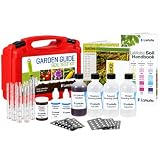
LaMotte is a long-established name in water and soil testing, and the Model EL is the company’s turf-and-garden kit: a reagent-based color-comparator system covering a multi-parameter panel relevant to turf, with refillable reagents rather than single-use capsules. This is the kit you buy when testing has become part of how you manage the lawn rather than a one-off diagnostic.
Key specs
- Method: liquid reagent color comparison, laboratory-standard procedures
- Panel: multi-parameter turf and garden suite
- Reagents: refillable rather than sealed single-use capsules
- Format: bench kit with comparator, tubes, and reagents
- Power: none
- Best suited to: repeated testing across a season
Where it earns its place. Two things separate a kit like this from consumer color comparators. First, the comparator design: LaMotte’s approach uses a proper viewing apparatus that holds the sample and the color standard under identical light, which removes the biggest single source of error in home testing — reading a tube against a card held at a different angle in different light. Second, refillable reagents: instead of counting capsules, you buy reagent refills and top up, so the marginal cost per test falls the more you test. For someone running a multi-zone lawn program with several tests a year, that changes the long-run economics in favour of the premium kit. The wider parameter panel also means you are not paying for a separate kit every time a new question comes up.
Pros
- Laboratory-standard methods and a comparator designed to reduce reading error
- Refillable reagents mean the kit keeps working instead of running out
- Broader parameter coverage than any capsule kit here
- Built for repeated use across seasons, not a single snapshot
Cons
- Premium band — the highest up-front outlay in this roundup
- Liquid reagents have shelf lives and need sensible storage away from heat and light
- Procedure takes longer and rewards care; sloppy technique wastes reagent
- Overkill for a small lawn tested once a year
How it compares. Against the Luster Leaf 1663, this is the same philosophy executed at a higher standard and a higher price: both are capsule-or-reagent color comparators covering pH and the major nutrients, but the LaMotte adds a proper viewing apparatus, a wider panel, and refillable chemistry. Against the Yard Mastery mail-in kit, the choice is bench work versus postage — LaMotte gives you control and repeat testing, Yard Mastery gives you thirteen nutrient levels and a written interpretation with no chemistry at all. If you want both depth and frequency, the honest answer is that a serious programme can justify both.
How to Choose
Choosing between these kits comes down to four questions: what you need to measure, how often you will measure it, how much procedure you are willing to tolerate, and what you will actually do with the number. Work through them in that order and the shortlist narrows fast.
Decide what the number is for
If the decision is “should I water today”, you need a probe meter — a SONKIR MS02 or Aenncci 3-in-1 — and nothing else in this list is relevant. If the decision is “should I lime”, you need pH, and a dedicated pH kit (Luster Leaf 1612 or NewTest strips) is the cheapest way to get it. If the decision is “which fertilizer ratio should I buy”, you need pH plus at least phosphorus and potassium, which means a four-parameter capsule kit at minimum. And if the decision is “why is my lawn still yellow after feeding it”, you need the secondary nutrients and micronutrients that only a lab panel reports — the Yard Mastery mail-in kit or the LaMotte Model EL.
Work out how many tests you actually need
This is where most buyers miscalculate, because a “40-test kit” sounds like forty tests and behaves like ten. Here is the arithmetic for a typical 5,000 square foot lawn split into three management zones — full sun, partial shade, and a compacted strip along the driveway:
- Each zone needs one composite sample, built from 10–15 individual cores taken 4–6 inches deep and mixed in a clean bucket. That is 30–45
Affiliate disclosure. As an Amazon Associate we earn from qualifying purchases at no extra cost to you. Prices accurate as of the date shown.Best Soil Test Kits for LawnsCheck price on Amazon






