Key takeaways
- Best Overall: Midland WR120B, a plug-in alert radio with county programming and battery backup.
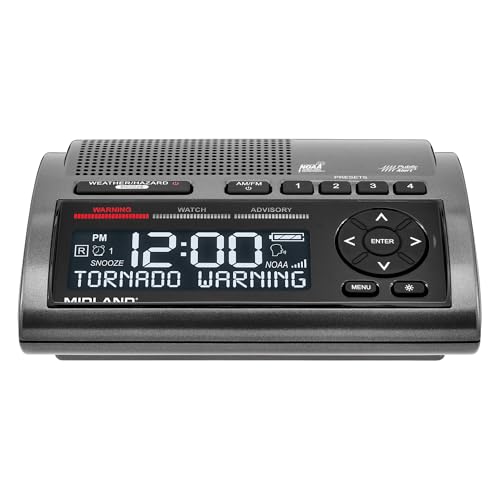
- Best for the Bedroom: Midland WR400, adds a clock radio, AM/FM and a longer list of alert types.
- Best Budget: RCA RCWR7V, a simple AM/FM clock radio with weather alerts for a low outlay.
- Best Value With County Alerts: RunningSnail 23-county model with an external antenna and warning light.
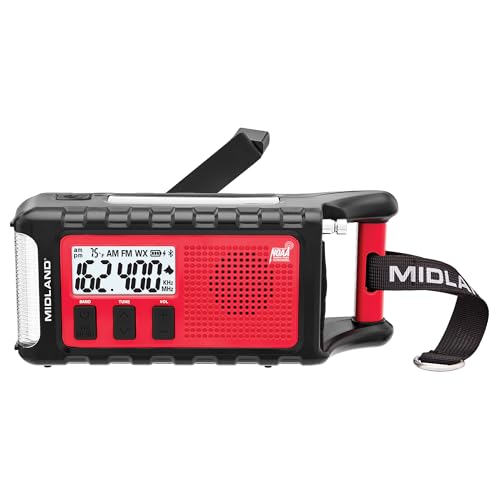
- Best for Power Outages: Midland ER310, solar, hand crank, lithium battery and a flashlight in one body.
- Best Budget Crank Radio: FosPower A1, a solar and hand-crank radio that doubles as a power bank.
- Best Plug-In Alternative: DreamSky NOAA alert radio with S.A.M.E. programming and three alert tones.
For most households, the Midland WR120B is the best weather radio for storm season because it does the one job that matters, which is waking you with a county-specific alert, and it does it without extras to configure. If you want the same alerts plus an AM/FM clock radio on the nightstand, the Midland WR400 is the runner-up. If the power is likely to be out for days, the Midland ER310 crank radio is the pick that keeps listening when the wall outlet does not.
A weather radio matters in storm season because it is the one alert channel that does not depend on cell towers, mobile data or a charged phone. NOAA Weather Radio broadcasts National Weather Service warnings on seven VHF frequencies between 162.400 and 162.550 MHz, and a receiver with S.A.M.E. (Specific Area Message Encoding) programming will only sound off for the counties you choose. That filtering is the difference between a radio you trust at 3 a.m. and one you eventually unplug because it cries wolf. This guide compares seven radios by how they alert, how they are powered and who they suit, with plain notes on what we could not confirm from listings and maker pages.
Our top picks
| Product | Key specs | |
|---|---|---|
 Midland Midland | Check price | |
 Midland Midland | Check price | |
 Midland Midland | Midland | Check price |
 Midland Midland | 200 hours of battery during radio use MULTIPLE, SUSTAINABLE POWER SOURCES: SOLAR PANEL - Simply… Everyday utility meets emergency functionality with the ER310PRO | Check price |
As an Amazon Associate we earn from qualifying purchases at no extra cost to you.
Top Picks at a Glance
- Best Overall: Midland WR120B, a plug-in alert radio with county programming and battery backup.
- Best for the Bedroom: Midland WR400, adds a clock radio, AM/FM and a longer list of alert types.
- Best Budget: RCA RCWR7V, a simple AM/FM clock radio with weather alerts for a low outlay.
- Best Value With County Alerts: RunningSnail 23-county model with an external antenna and warning light.
- Best for Power Outages: Midland ER310, solar, hand crank, lithium battery and a flashlight in one body.
- Best Budget Crank Radio: FosPower A1, a solar and hand-crank radio that doubles as a power bank.
- Best Plug-In Alternative: DreamSky NOAA alert radio with S.A.M.E. programming and three alert tones.
Weather Radio Comparison Table
| Product | Best for | Key specs | Watch for | Price tier |
|---|---|---|---|---|
| Midland WR120B | Simple, reliable bedside alerts | County programming, 60+ alert types, trilingual display, selectable alert tone | No AM/FM radio listed | Budget |
| Midland WR400 | Bedroom or kitchen counter | County programming, 80+ voice and flashing alerts, alarm clock, AM/FM | Battery-backup details differ between sources | Mid-range |
| RCA RCWR7V | Tight budgets, basic alerts | NOAA alerts, AM/FM, alarm clock, headphone jack, AC or 4 AAA | County programming not listed | Budget |
| RunningSnail 23-county | Large or noisy homes | 80+ alerts, 23 county codes, external antenna and warning light | Lesser-known brand, read the manual | Budget |
| Midland ER310 | Multi-day outages | Solar, crank, Li-ion battery, 130-lumen LED, USB output, AM/FM/NOAA | Solar charging is slow | Premium |
| FosPower A1 | Go-bag and car kit | 7400mWh, solar and crank, AM/FM/WB, SOS alarm, LED flashlight and reading light | County programming not listed | Budget |
| DreamSky NOAA alert radio | Plug-in home alerts | County programming, 80+ alerts, 3 alert tones, FM radio, alarm clock | Wall power is the main source | Budget |
1. Midland WR120B: Best for Reliable County Alerts
- County-localized programming so only your area triggers the alarm
- 60+ emergency alert types
- Trilingual display (English, Spanish, French)
- Selectable alert tone and alarm function
- Plug-in with battery backup; backup battery type varies between sources, so confirm it in the manual
Best for: Anyone who wants one purpose-built alert radio on a shelf. Skip if: you want to listen to music or news, because the listing shows no AM/FM tuner.
The WR120B is the classic answer to the question of what to buy first. Its core feature is county-localized programming: you tell it which county or counties to respond to, and it ignores warnings for areas you are not in. In storm season that filter is the whole value proposition. A tornado warning two counties away should not wake a household, and a flood warning for your own county absolutely should.
The 60+ alert types cover the events most readers worry about, from tornado and severe thunderstorm warnings to flash flood alerts and non-weather hazards that NOAA relays. The trilingual display helps in multilingual households, and a selectable alert tone lets you pick a sound that will actually wake the lightest sleeper in your house. Battery backup means a storm that knocks out power does not also silence the radio, which is exactly when you need it.
Setup is a one-time job: choose your state and county from the menu, then confirm the alert types you want. Independent reviewers describe the menu as straightforward, though sources disagree on small details such as the exact backup battery size and how many counties can be stored, so check the manual rather than trusting a single review.
Pros: Focused on alerts; county filtering; multilingual display; backup power; modest cost. Cons: No broadcast radio; plain styling; reception depends on your distance from the transmitter.
2. Midland WR400: Best for the Bedroom Nightstand
- Local county programming
- Over 80 emergency voice and flashing alerts
- Alarm clock with AM/FM radio
- Battery backup for home use
- Deluxe alert-scanner design
Best for: People who want an alert radio that also replaces the bedside clock. Skip if: you only need the cheapest possible alert.
The WR400 takes the WR120B formula and adds the pieces that make a device easy to live with. The listing highlights more than 80 alert types, voice announcements, a flashing alert indicator and an AM/FM alarm-clock radio. The voice read-out matters more than it sounds: an alert tone tells you something is wrong, while a spoken message tells you whether to go to the basement or just check your phone.
The flashing alert helps if a household member is hard of hearing or if the radio sits across a noisy room. Because it doubles as the bedside clock, you are far less likely to unplug it or let it drift to a closet shelf, which is how many weather radios end up useless.
Some third-party reviews report USB charging and different battery counts for the backup; listings do not agree, so treat those as unconfirmed until you read Midland’s own manual. A newer revision of the same model is also sold, so make sure the version you order matches what you expect.
Pros: Voice alerts; flashing indicator; clock radio; county filtering. Cons: More menu options to learn; costs more than the entry model; sources conflict on backup battery details.
3. RCA RCWR7V: Best Budget Weather Alert Radio
- Weather alert function for NOAA warnings
- AM/FM digital radio with alarm clock and snooze
- Headphone jack
- Runs on the included AC adapter or on 4 AAA batteries (not included)
- County (S.A.M.E.) programming: not listed
Best for: First-time buyers and guest rooms. Skip if: you live in a region with many neighboring counties and want strict filtering.
The RCWR7V is the simplest and cheapest way to get weather alerts onto a bedside table. It is a conventional AM/FM clock radio with a weather alert function, powered from the wall with battery power as a fallback. The headphone jack is a small but handy touch for listening quietly during an event.
The trade-off is filtering. Neither the listing nor the manual summaries we found mention county-code programming, which means it may sound for any warning your receiver picks up rather than only your county. In a rural area with a single large county that may be fine. Near a metro area with many small counties it can mean frequent alerts you do not need.
Pros: Low cost; clock radio; battery fallback; headphone jack. Cons: No county filtering listed; no crank or solar; batteries not included.
4. RunningSnail 23-County NOAA Radio: Best Value With County Alerts
- 80+ emergency alerts
- 23 S.A.M.E. localized county codes
- Battery backup, alarm and selectable alert tone
- External antenna and external warning light included
Best for: Large or noisy homes, workshops and anyone who wants a visual cue. Skip if: you prefer a recognizable name with a long manual-support history.
This model stands out for its accessories. An external antenna can improve reception where the built-in antenna struggles, such as in basements, metal-roofed buildings or valleys far from a transmitter. The external warning light adds a visual alert that you can place where you work or sleep.
The 23-code capacity is generous for a household that watches home, work and a relative’s county. As with any lesser-known brand, read the manual after unboxing, set it up the day it arrives and check it using the radio’s built-in test or the weekly test broadcast that NOAA transmits on most stations.
Pros: Many county codes; antenna and light included; backup power. Cons: Less established support; no clock-radio features listed.
5. Midland ER310: Best for Multi-Day Power Outages
- Powered by solar panel, hand crank, rechargeable lithium-ion battery or six AA batteries
- Lithium-ion battery rated at 2600 mAh in Midland’s specifications (its online guide also shows a different figure)
- AM, FM and NOAA weather with seven weather channels
- 130-lumen LED flashlight with strobe and SOS
- USB output for charging phones, plus an ultrasonic dog whistle
Best for: Households that lose power in storms, go-bags and cabins. Skip if: you want filtered county alerts on a nightstand.
The ER310 is an emergency kit in one body. Midland’s published figures put one minute of cranking at up to nine minutes of radio use, and one hour of ideal sunlight at up to 45 minutes. Reviewers consistently note that solar charging is better for topping up than for primary charging, and cranking is the reliable last resort. Charge it from USB before storm season so it starts full.
It scans the seven NOAA frequencies and sounds an alert when a broadcast carries one. That is useful, but it is not the same as a county-filtered desktop receiver, so many people pair the two: a plug-in county radio at the bedside and the ER310 in the hall closet for outages.
Pros: Four power sources; flashlight; phone charging; AM/FM/NOAA. Cons: Solar is slow; heavier than handheld models; costs more than basic crank radios.
6. FosPower A1: Best Budget Crank and Solar Radio
- 7400mWh battery that also works as a power bank
- Solar panel and hand crank charging
- AM/FM and NOAA weather band
- SOS alarm, LED flashlight and four-LED reading light
- County programming: not listed
Best for: Car kits, go-bags and secondary rooms. Skip if: you want it to be your only alert device.
The FosPower A1 packs four power options and several lights into a compact body at a budget price. For a trunk kit or a backpack it is a sensible, inexpensive layer of redundancy. The power-bank function can trickle-charge a phone, which is useful when you need a small boost to send a message.
Radios in this class receive NOAA broadcasts but are generally not meant to replace a county-filtered desktop receiver. Think of it as the backup that is nice to have and cheap to replace.
Pros: Low cost; multiple power sources; lights and SOS. Cons: No county filtering listed; plastic build; modest solar output.
7. DreamSky NOAA Alert Radio: Best Plug-In Alternative
- S.A.M.E. localized county code programming
- 80+ all-hazards emergency alerts
- 3 alert tones
- Battery backup, FM radio and alarm clock
Best for: Shoppers comparing against the WR120B who want an FM radio. Skip if: you want a long-established service network.
DreamSky’s alert radio covers the same ground as the Midland entry models with a clock and FM tuner added. The three alert tones let you pick a sound that cuts through, and battery backup covers outages. It is a reasonable alternative when your preferred Midland model is unavailable or when you want an FM radio in the same unit.
Pros: County programming; FM radio; backup battery; alarm clock. Cons: Less brand history; verify backup battery type before buying.
Also Consider
- Emerson WBS12 SmartSet: A dual-alarm clock radio with NOAA weather alerts, a 15W wireless charger, USB-C and USB-A ports, a temperature sensor and battery backup. Great if you want one bedside device for everything, but alert filtering details are not listed.
- PRUNUS J161: A handheld AA-powered NOAA and AM/FM radio with an earphone jack. Light and cheap for a pocket or a walk.
- Raynic solar crank radio (5000mAh): AM/FM/SW/NOAA with solar and crank charging, phone charging, headphone jack, flashlight and SOS siren. A strong crank-radio alternative to the FosPower.
- XHDATA D221: A small AM/FM/shortwave/NOAA receiver on two AA batteries. A good pocket receiver for hikers and campers.
How We Chose
We did not personally test any of these radios. Instead we compared manufacturer product pages, listing details and published reviews, and we checked conflicting claims against more than one source. We gave priority to three features: county-level alert filtering, a power plan that survives an outage, and clear controls. Where sources disagreed, such as backup battery size on some Midland units and county-capacity figures, we said so rather than picking a number. We also leaned on the National Weather Service description of NOAA Weather Radio and S.A.M.E. coding to explain how the technology works. Where a spec is not stated in the listing, we wrote that it is not listed. Prices are shown as tiers only because retail prices move week to week.
Buying Guide
Choose county (S.A.M.E.) filtering unless you have a reason not to
Without county codes a radio can sound for every warning its antenna picks up. With S.A.M.E. you pick the counties you care about, up to the number the radio stores, and you can usually choose which alert categories sound the alarm. For a household in a metro area, that filtering is the biggest difference between a radio you keep and one you give up on. A practical threshold: if three or more counties touch your own, insist on county programming. If you live in a large rural county, filtering matters less and models without it can work as a secondary radio.
Plan for the outage, not just the storm
Storm alerts are most valuable when the power is out. Check that the radio runs on batteries or a built-in rechargeable pack. Plug-in alert radios with battery backup are best for the home, while crank and solar radios are best for kits. A good rule is one plug-in county radio in the sleeping area plus one crank or battery-powered radio in the emergency kit. Check the batteries twice a year, for instance at the time changes, and replace alkaline cells every year or two. A crank radio you have never cranked is an untested radio, so run it for a few minutes when you buy it.
Check reception before you rely on it
NOAA transmitters have a limited range, often described as around 40 miles, depending on terrain and power. Buildings with metal roofs, basements and valleys can weaken the signal. If the radio shows a weak signal in your sleeping area, move it near a window, extend its antenna or choose a model with an external antenna such as the RunningSnail. Use the radio’s test function or wait for the weekly test broadcast to confirm it responds.
Look for loud, clear alerts and a visual cue
Alerts are only useful if you wake up. Check that the alarm volume is adjustable, that the tone can be changed and that a flashing light is available if anyone in your home is hard of hearing. Voice read-outs help you decide what to do instead of guessing. If you sleep with a fan or white-noise machine running, choose a model with an external light or a louder siren, and place it within arm’s reach rather than across the room.
Match the radio to the room
The bedside needs a clock radio with a display you can read at night. A kitchen or workshop radio benefits from an external light. A go-bag radio should be small and use common batteries. Buying one of each is often cheaper than one expensive radio trying to do all three jobs.
Set It Up in Ten Minutes
- Find your county’s S.A.M.E. (FIPS) code on the National Weather Service lookup, or use the state and county menu if your model has one.
- Plug the radio in, insert fresh backup batteries and let it scan for a station. Choose the strongest channel.
- Enter your home county and any neighboring counties you want to track, such as your workplace county.
- Turn on warnings for tornado, severe thunderstorm and flash flood. Keep watches on if you want earlier notice, but expect more alerts.
- Set the alarm volume to a level that wakes you from sleep, then run the radio’s test function.
- Write the date on the battery cover and set a reminder to replace the cells next spring and fall.
Which Radio for Which Household?
| Your situation | Start with | Why |
|---|---|---|
| Metro area, many small counties | Midland WR120B or WR400 | County filtering keeps false alarms down |
| Rural home, long outages | WR120B plus Midland ER310 | Alerts at night, power independence in the closet |
| Basement bedroom or metal roof | RunningSnail 23-county | External antenna and light |
| Guest room or dorm | RCA RCWR7V | Simple clock radio with weather alerts |
| Car or go-bag | FosPower A1 or XHDATA D221 | Small, battery or crank powered |
| Hard-of-hearing household member | WR400 or RunningSnail | Flashing or external light |
Common Mistakes to Avoid
- Skipping setup. A radio with no county programmed may sound for broad alerts or not at all.
- Relying on one phone app. Apps depend on data and battery, so use them as a second channel.
- Leaving old batteries in the backup tray until they corrode when the storm arrives.
- Placing the radio in a basement or a metal shed where the signal is weak.
- Turning off categories that matter, such as flash flood or tornado warnings, to reduce noise.
Frequently Asked Questions
What is the best weather radio for storm season?
For most homes, a county-programmable plug-in radio with battery backup such as the Midland WR120B is the best choice. Add a crank radio like the ER310 if outages are common where you live.
What does S.A.M.E. mean on a weather radio?
S.A.M.E. stands for Specific Area Message Encoding, a code in NOAA broadcasts that identifies the county an alert applies to. A radio with S.A.M.E. programming only alerts for the counties you select.
Do weather radios work without power or internet?
Yes, a battery-powered or crank radio can receive NOAA broadcasts without wall power, mobile data or Wi-Fi, as long as you are within range of a transmitter. Plug-in models need fresh backup batteries to keep working during an outage.
How far away can a NOAA weather radio receive signals?
Range depends on terrain and the transmitter, and it is often described as roughly 40 miles. Hills, metal buildings and basements can reduce it, so check reception in the room where you plan to keep the radio.
Do I need a hand-crank weather radio?
You do not need one if you have a battery-backed plug-in radio, but a crank or solar model adds redundancy for long outages. It is a sensible addition to a go-bag or storm kit.
How often should I test my weather radio?
Test it when you set it up and then at least monthly during storm season, using the radio’s test function or the weekly test broadcast NOAA transmits. Replace backup batteries on a regular schedule.
Is a weather alert app enough?
Apps are useful but depend on cell service and a charged phone, so they work best as a second layer. A dedicated radio is a more independent warning channel.
Which One Should You Buy?
If you want one dependable radio for the home, get the Midland WR120B. If you want it to double as the bedside clock, choose the WR400. If funds are tight and your county is large, the RCA RCWR7V is a reasonable start, and the RunningSnail and DreamSky models are worth a look when you want county filtering at a budget price. For power outages and go-bags, the Midland ER310 is the stronger pick and the FosPower A1 is the cheaper backup. Whatever you buy, program your county the day it arrives and keep spare batteries beside it.
Sources
- National Weather Service, NOAA Weather Radio All Hazards overview
- Midland product pages and user guides for the WR120B, WR400 and ER310
- RCA RCWR7V product listing and manual summary
- FosPower, RunningSnail and DreamSky product listings
- Independent weather radio reviews from Weather Radio Review and other publications
Last updated: October 2026