Key takeaways
- Tank capacity: 6 gallons — roughly 22–23 litres of dry debris
- Motor: 4 peak horsepower, corded
- Hose: mid-diameter class, long enough to reach across a single-car bay
- Filtration: cartridge filter for dry work, with a foam sleeve class filter for wet pickup
- Mobility: caster base with a top carry handle
- Duty: wet and dry, single-operator shop use
The best wet dry vacuum for most workshop use is the STANLEY SL18116P 6-Gallon 4-Horsepower model. Its 6-gallon tank swallows a full bucket of sawdust or the mop-up from a burst supply line, its 4-peak-HP motor is sized for the small-diameter hoses that actually reach into tool ports and floor drains, and it rolls on casters without needing a dedicated parking bay. It suits a one- or two-person shop where a single machine has to cover dust at a miter saw or sander, general floor cleanup, and the occasional wet mess. If your “workshop” is a bench in a rented garage and you want the least expensive machine that genuinely works, the WORKSHOP WS0255VA 2.5-gallon is the budget answer and can even hang on a wall. If your shop routinely produces heaps — planer shavings, demolition grit, flooded floors — the CRAFTSMAN CMXEVBE17595 16-gallon 6.5-peak-HP unit is the pick. Everything below sorts by tank size, hose class, filtration, mobility, and how well each machine handles the wet-to-dry switch.
Top 3 Picks
Best overall: STANLEY SL18116P 6-Gallon 4 HP. The most balanced workshop vacuum in this roundup — enough tank for a serious cleanup session, enough suction for tool-port dust collection, and a footprint that still fits beside a bench. It is the machine to buy if you only want one vacuum and you want it to do everything reasonably well.
Best budget: WORKSHOP WS0255VA 2.5-Gallon 1.75 Peak HP. A genuinely useful small-shop vacuum rather than a toy, with a wall-mount option that turns dead wall space into storage. Ideal for bench-top cleanup, small sanders, and car interiors, and cheap enough to keep as a second unit upstairs.
Best for high-volume debris: CRAFTSMAN CMXEVBE17595 16-Gallon 6.5 Peak HP. When the job is planer shavings, table-saw dust by the bushel, or standing water, tank volume beats everything else. This is the machine for a shop that generates waste faster than a small canister can hold it.
Quick Comparison
| Product | Best for | Key specs | Price tier |
|---|---|---|---|
| STANLEY SL18116P | All-round workshop duty | 6 gal tank; 4 peak HP; corded; caster base; mid-diameter hose class | Mid-range |
| WORKSHOP WS0255VA | Small shops and wall storage | 2.5 gal tank; 1.75 peak HP; corded; wall-mount capable; accessory kit | Budget |
| CRAFTSMAN CMXEVBE17250 | Bench-top and tight-space cleanup | 2.5 gal tank; 2.5 peak HP; corded; compact canister; utility nozzle set | Budget |
| CRAFTSMAN CMXEVBE17595 | High-volume debris and standing water | 16 gal tank; 6.5 peak HP; corded; large hose class; blower port; drain-friendly canister | Premium |
| Koblenz WD-2L | Light occasional use, cars and corners | 2.0 peak HP; corded; compact canister; small tank class; hose and nozzle set | Budget |
| Seesii Cordless Wet Dry Shop Vac | Cordless cleanup where there is no outlet | 2 × 4.0 Ah rechargeable batteries; cordless; compact tank; tool kit | Premium |
| Shop-Vac 5989305 | Mid-size cleanup with blow function | 5 gal tank; 4.5 peak HP; corded; blower function; caster base | Mid-range |
| DEWALT DXV06P | Premium 6-gallon shop workhorse | 6 gal poly tank; 4 peak HP; corded; blower function; rugged caster base | Premium |
| Armor All AA155 | Portable spill and interior cleanup | 1.5 gal tank; 2 peak HP; corded; carry-handle portable body | Budget |
| DEWALT DXV04T | Tool dust with accessories included | 4 gal poly tank; 5.0 peak HP; corded; hose and accessory set included | Premium |
| Armor All AA255W | Compact garage and car utility | 2.5 gal tank; 2 peak HP; corded; utility nozzle set | Mid-range |
| Amazon Basics 4-Gallon Stainless Steel | Rust-resistant tank on a budget | 4 gal stainless tank; 3 HP; corded; caster base | Mid-range |
How We Chose
This roundup was assembled from published manufacturer specifications, category norms, and the way workshop owners actually use these machines — not from any testing bench. We started with the constraints that decide whether a vacuum survives a shop: tank volume measured in gallons and how that volume behaves when the float shuts off wet pickup, motor rating expressed as peak horsepower alongside the caveat that peak HP is a stall measurement rather than a working airflow figure, and hose diameter, which determines whether the vacuum can be adapted to a sander, a router table, or a floor drain.
From there we filtered on category fit. A machine had to belong clearly to one job — compact bench vacuum, mid-size all-rounder, high-volume canister, cordless field unit — rather than sit awkwardly between two. We weighed filtration and the wet-to-dry switch (foam sleeve versus cartridge, bag compatibility, drain options), mobility and real-world footprint, noise class, and the upgrade path: whether the model accepts common accessory diameters, replacement filters, and bags that will still be stocked in a few years. Price enters only as a tier, because listing prices move constantly. Where a listing does not publish a number, we say so and describe the spec class instead of guessing.
1. STANLEY SL18116P – Best for All-Around Workshop Duty
As an Amazon Associate we earn from qualifying purchases at no extra cost to you.

The SL18116P is the vacuum to buy when you want one machine that covers the whole shop. Six gallons is the sweet spot for a workshop: big enough that you are not emptying the tank every twenty minutes during a sanding session, small enough that the canister still rolls under a bench and lifts onto a shelf. The 4-horsepower motor rating puts it in the mid-power class, which is more than enough for the small-to-mid diameter hose it carries, and it suits a garage or basement shop where cleanup is a mix of sawdust, metal filings, drywall dust, and the occasional spill of coolant or rainwater.
What makes it a strong workshop choice is the combination of a rigid canister and a caster base. A rigid tank does not flex or collapse when you pull the hose hard, and it wipes clean after wet pickup far more easily than a ribbed plastic drum. The caster base means you can drag it across a concrete floor by the hose without tipping, which matters more than most buyers expect — a vacuum that fights you gets left in the corner, and a vacuum left in the corner is the reason dust piles up on the miter saw.
Key specs
- Tank capacity: 6 gallons — roughly 22–23 litres of dry debris
- Motor: 4 peak horsepower, corded
- Hose: mid-diameter class, long enough to reach across a single-car bay
- Filtration: cartridge filter for dry work, with a foam sleeve class filter for wet pickup
- Mobility: caster base with a top carry handle
- Duty: wet and dry, single-operator shop use
Pros
- Six-gallon tank balances capacity against footprint better than almost anything else in this list
- Strong enough for tool-port dust collection with an adapter, not just floor cleanup
- Rigid canister handles wet pickup and cleans up quickly afterwards
- Casters and a top handle make it genuinely movable, not just technically portable
- Sits in the mid-range tier, so it costs meaningfully less than the premium 6-gallon option
Cons
- Heavier than a 2.5-gallon unit once the tank has debris in it, so stairs are a chore
- No cordless option — you need an outlet within reach of the cord
- Large, bulky shavings from a planer will fill it faster than the gallon figure suggests
- Not the machine for a shop that generates bushels of debris in a single session
How it compares
Against the DEWALT DXV06P, which also carries a 6-gallon poly tank, the STANLEY is the value play: the DEWALT sits in the premium tier and adds a blow function and a heavier-duty build, but the STANLEY covers the same everyday workshop jobs for less. Against the Shop-Vac 5989305 at 5 gallons, the STANLEY gives up a little motor rating and the blower function but gains a gallon of capacity and, for most buyers, a sturdier-feeling canister. Choose the STANLEY if you want the most versatile single machine; step up to the DEWALT if you want the blower and premium build, or down to a 2.5-gallon unit if your shop is small and your debris volume is low.
2. WORKSHOP WS0255VA – Best Budget Small-Shop Vacuum

The WS0255VA is the vacuum for the person whose workshop is a bench, a stool, and a wall of tools. At 2.5 gallons with a 1.75-peak-HP motor, it is not trying to be a shop-wide dust collector — it is trying to be the thing you grab when the sander has dumped a pile of dust on the bench and you want it gone before you start the next cut. It suits hobby woodworkers, apartment and condo garages, craft rooms, and anyone who has been putting off buying a vacuum because the big canister models feel like overkill.
The feature that separates it from other budget canisters is wall-mount capability. A wall bracket turns the vacuum into a hanging appliance, which frees the floor space that a canister would otherwise occupy and keeps the machine where the dust is. For a small shop, that is a real gain rather than a marketing line: floor space is the scarcest resource in a garage workshop, and a vacuum that lives on the wall stops being an obstacle.
The accessory set matters here too. A 2.5-gallon vacuum lives or dies by its nozzles, because you will use it on bench tops, crevices, and car footwells rather than open floor. A crevice tool and a utility nozzle in the box mean the vacuum is useful the day it arrives, without a separate shopping trip.
Key specs
- Tank capacity: 2.5 gallons — roughly 9–10 litres
- Motor: 1.75 peak horsepower, corded
- Mounting: wall-mount capable, with a carry handle for bench use
- Filtration: cartridge filter for dry debris plus a foam sleeve for wet pickup
- Accessories: hose, crevice tool, utility nozzle, and brush class attachments
- Duty: light-to-moderate wet and dry cleanup
Pros
- Wall-mount option is rare at this price and genuinely useful in a tight shop
- Light enough to carry in one hand up a ladder or out to a car
- Cheap enough to buy as a second vacuum for a specific bench or the upstairs garage
- Accessory kit covers bench, crevice, and upholstery work out of the box
- Small tank empties fast, which discourages the common mistake of leaving debris sitting in the canister
Cons
- 2.5 gallons fills quickly during any sustained sanding or planing session
- 1.75 peak HP will not drive a long, large-diameter hose run
- Not suitable as a whole-shop dust-collection solution for power tools
- Small tanks mean more frequent filter checks when working with fine dust
How it compares
Its closest rival here is the CRAFTSMAN CMXEVBE17250, also a 2.5-gallon budget unit — but the CRAFTSMAN carries a 2.5-peak-HP rating against the WORKSHOP’s 1.75, so it has an edge in raw suction class. The WORKSHOP answers with wall-mount capability and a slightly more accessory-forward package. If your shop has a wall you can dedicate to a hanging vacuum, take the WORKSHOP. If you want the strongest motor in the smallest canister, take the CRAFTSMAN. Neither will replace a 6-gallon machine for heavy sessions; both are excellent second vacuums or first vacuums for genuinely small spaces.
3. CRAFTSMAN CMXEVBE17250 – Best for Bench-Top and Tight-Space Cleanup

The CMXEVBE17250 is the same 2.5-gallon canister class as the WORKSHOP unit, but with a different priority: suction density. A 2.5-peak-HP motor in a 2.5-gallon body is a lot of motor for the tank, and that shows up in how it handles the jobs small vacuums usually struggle with — pulling dust off a router table through a narrow hose, lifting debris out of a floor drain recess, and clearing a car’s footwell mats without a second pass.
It suits the woodworker who works at a bench with hand tools and small power tools, and the homeowner who keeps a garage bay for projects and a driveway for cars. It is also a sensible choice for anyone whose “shop” shares space with a laundry room or utility corner, where a big canister would be in the way.
The trade-off is exactly what you would expect from a compact canister: capacity. Two and a half gallons is roughly nine to ten litres, and fine dust from a random-orbit sander will fill that in a single afternoon of work. The practical answer is to empty it more often than you would a 6-gallon machine and to check the filter at the same time — fine dust that reaches the pleats is the main cause of the “my vacuum stopped sucking” complaint on small canisters.
Key specs
- Tank capacity: 2.5 gallons — roughly 9–10 litres
- Motor: 2.5 peak horsepower, corded
- Format: compact canister with a carry handle
- Hose: small-diameter class, suited to bench and crevice work
- Accessories: utility nozzle and crevice tool class attachments
- Duty: bench-top, vehicle, and light floor cleanup, wet and dry
Pros
- Highest peak-HP rating in the 2.5-gallon class in this roundup
- Compact enough to store on a shelf or under a bench without reorganising the shop
- Fast, focused cleanup on bench tops and in vehicle interiors
- Straightforward wet-to-dry switch with the standard foam sleeve swap
- Budget tier pricing makes it easy to justify as a dedicated bench vacuum
Cons
- Small tank requires frequent emptying during heavy sanding
- Short hose reach compared with a mid-size machine, so you move the vacuum more
- Not powerful enough to serve as a whole-shop dust collector
- No wall-mount option, unlike the WORKSHOP unit it competes with
How it compares
Put it beside the WORKSHOP WS0255VA and the split is clean: the CRAFTSMAN wins on suction class, the WORKSHOP wins on mounting flexibility. Put it beside the Armor All AA255W, a 2.5-gallon mid-range unit, and the CRAFTSMAN wins on motor rating while the Armor All typically wins on price positioning and brand familiarity for car-care buyers. If you want the strongest compact canister for bench work, this is the pick. If you need the vacuum to reach across a garage bay, or to hold more than a couple of litres of shavings, save for the 6-gallon STANLEY instead.
4. CRAFTSMAN CMXEVBE17595 – Best for High-Volume Debris and Standing Water

Sixteen gallons and 6.5 peak horsepower is a different category of machine. The CMXEVBE17595 is for the shop that makes waste faster than a small canister can hold it: a planer and jointer that produce shavings by the bin, a table saw with a large dust chute, a garage that floods when the drain backs up, or a renovation project that generates demolition grit for weeks.
Its strongest argument is simple arithmetic. Where a 2.5-gallon vacuum needs emptying three or four times to clear the same pile, a 16-gallon canister does it in one pass, and every trip to the bin is a minute of work you do not get back. In a production or semi-production shop, that difference compounds across a week. The same volume argument applies to water: a large canister with a wide hose can pull up a substantial puddle before the float shuts the motor off, whereas a small vacuum will need emptying into a bucket repeatedly.
It also brings the accessory ecosystem of a large canister — a large-diameter hose class that moves bulky shavings without clogging, a blower port for clearing benches and blowing dust out of a garage, and a canister large enough that a drain cap or bottom-emptying approach becomes practical for wet work. The blower function alone is worth noting: a wet/dry vacuum that can be run as a blower doubles as a shop-clearing tool after a project.
Key specs
- Tank capacity: 16 gallons — roughly 60 litres
- Motor: 6.5 peak horsepower, corded — the highest rating in this roundup
- Hose: large-diameter class, sized for shavings and bulky debris
- Features: blower port, caster base, large top handle
- Filtration: cartridge filter for dry work with a foam sleeve class filter for wet pickup
- Duty: heavy-volume dry debris and significant wet pickup
Pros
- Highest capacity and highest motor rating here — unmatched for bulk cleanup
- Large-diameter hose moves shavings and chips that clog small hoses
- Blower function adds a second job to the same machine
- Handles wet pickup in volume, which small canisters simply cannot
- Fewer emptyings means less downtime and less dust stirred back into the air
Cons
- Large and heavy — it needs dedicated floor space and a clear path
- Awkward to move up stairs or into a loft, even with casters
- Overkill for bench-top work and small touch-ups; the hose is too big for tight spots
- Premium tier pricing, and replacement filters cost more than compact-vac filters
How it compares
Its nearest alternative in this list is the DEWALT DXV06P at 6 gallons — a premium machine that is easier to live with daily but holds roughly a third of the debris. The DEWALT is the better everyday shop vacuum for a small space; the CRAFTSMAN 16-gallon is the better machine the moment volume becomes the constraint. If you routinely fill a 5-gallon bucket with shavings in an afternoon, this is the only vacuum here that solves your problem without three trips to the bin. If you mostly clean up after hand-tool work, it is more machine than you need.
5. Koblenz WD-2L – Best for Light Occasional Use
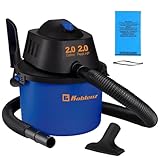
Koblenz has been building floor-care and utility vacuums for decades, and the WD-2L sits at the small end of its wet/dry range: a 2.0-peak-HP compact canister intended for the jobs that do not deserve a full shop vacuum. Think car interiors, garage corners, a utility sink overflow, spilled potting soil, and the dust that accumulates behind a workbench between projects.
It suits the buyer whose “workshop” is occasional rather than continuous — the person who builds something four times a year and needs a vacuum that stores on a shelf and works when called on. It also suits a second-vacuum role: one large machine for the shop, one compact unit for the car and the house.
One honest note on specifications: the model designation and the listing emphasise the 2.0 peak-HP motor and the wet/dry capability, but the published tank figure is not stated in the same way as the CRAFTSMAN or WORKSHOP listings. Treat it as a small canister class — comparable to a 1.5-to-2.5-gallon machine — and size your expectations accordingly. That is not a flaw in the product; it just means you should not buy it expecting to clear a planer bin in one pass.
Key specs
- Tank capacity: small canister class — expect roughly 1.5–2.5 gallons of usable volume
- Motor: 2.0 peak horsepower, corded
- Format: compact canister, carry handle, hose and nozzle set
- Duty: wet and dry, light and occasional use
- Storage: small enough to shelve in a garage or utility closet
Pros
- Low entry price in the budget tier makes it easy to keep as a spare unit
- Compact and light — easy to carry to a car or up a short flight of stairs
- Genuine wet/dry capability rather than a dry-only utility vacuum
- Simple design with few parts to break or misplace
- Well matched to interiors, crevices, and small spills
Cons
- Small tank means frequent emptying if you use it on any real debris volume
- 2.0 peak HP will not support a long hose run or a large-diameter accessory
- Not a candidate for tool-port dust collection on stationary machines
- Fewer published specs than the major shop-vac brands, which makes comparison shopping harder
How it compares
Against the Armor All AA155 at 1.5 gallons, the Koblenz is the more versatile machine — similar compact footprint, but a 2.0-peak-HP motor rating against the Armor All’s 2.0 peak HP with a smaller tank, and a stronger wet/dry positioning for general utility work. Against the WORKSHOP WS0255VA, the Koblenz loses on mounting flexibility and published capacity, and wins on price positioning. If your cleanup is occasional and small, the Koblenz is a sensible budget pick. If you want a compact vacuum that can also serve bench dust collection, spend a little more on the WORKSHOP or the CRAFTSMAN 2.5-gallon.
6. Seesii Cordless Wet Dry Shop Vac – Best Cordless Option
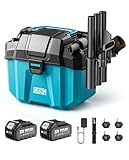
The Seesii cordless shop vacuum solves the problem no corded machine can: cleanup where there is no outlet. It ships with two 4.0 Ah rechargeable batteries, which means you can work with one pack while the other charges, and it suits job sites in progress, vehicles parked on the street, attics and crawlspaces, and any garage where the nearest socket is on the wrong wall.
Cordless wet/dry vacuums trade sustained suction for freedom. A corded 6-gallon machine will out-pull a battery unit on a long hose run every time, because battery packs cannot sustain the current draw of a large motor for long. What a cordless unit gives you instead is the ability to vacuum the back of a van, the inside of a cabinet, or a stair landing without dragging an extension cord behind you. For quick, targeted jobs, that convenience usually wins.
Runtime is the number to think about before buying. Two 4.0 Ah packs, if they are an 18–20 V class battery, store roughly 72–80 watt-hours each. A shop vacuum motor in this class draws somewhere in the 150–250 W range depending on mode, so a single pack gives you roughly 20–30 minutes of continuous running, and the pair gives you roughly 40–60 minutes of work before you need a charger. That is plenty for a car interior, a van, or an afternoon of spot cleanup — and not enough to replace a corded machine for continuous sanding sessions.
Key specs
- Power: cordless, 2 × 4.0 Ah rechargeable batteries included
- Runtime: roughly 40–60 minutes of intermittent work across two packs, depending on mode
- Format: portable body with carry handle and onboard tool storage class accessories
- Tank: compact capacity sized for portability rather than bulk debris
- Duty: wet and dry spot cleanup, vehicles, job sites without power
Pros
- No cord means no extension leads, no tripping hazards, and no outlet hunting
- Two batteries included — you can keep working while one charges
- Excellent for vehicles, vans, stairs, and remote corners of a property
- Quiet enough in many modes to use without hearing protection, unlike most corded shop vacs
- Compact enough to store in a vehicle or a closet
Cons
- Lower sustained suction than any corded machine in this roundup
- Runtime is measured in tens of minutes, not hours
- Batteries are a consumable that will eventually need replacing, and they are the most expensive part of a cordless tool
- Small tank class means frequent emptying on larger jobs
How it compares
The nearest alternative is the Armor All AA155: both are small, portable, and aimed at vehicle and spot cleanup. The Armor All is corded and cheaper to buy and run, but tethers you to an outlet. The Seesii is the premium choice and the only one here that works where there is no power at all. Buy the Seesii if portability is the deciding constraint — job sites, vans, second floors, outdoor cleanup — and buy a corded 6-gallon machine if you need maximum suction for continuous shop work.
7. Shop-Vac 5989305 – Best Mid-Size Cleanup with Blower Function

Shop-Vac is the name most people use generically for a wet/dry vacuum, and the 5989305 is a good example of why: 5 gallons, 4.5 peak horsepower, and a blower function, in a caster-mounted canister that sits between the compact units and the 16-gallon monsters. It suits a home workshop or garage where the vacuum handles floor cleanup, bench cleanup, and the occasional wet spill, and where a blower is useful for clearing sawdust off machines and out of corners.
The blower function is more valuable than it sounds in a workshop. After a sanding session, dust settles on every horizontal surface. Running the vacuum as a blower lets you push that dust out of the garage or into a collection zone instead of vacuuming it piece by piece. It is also useful for clearing dust from the inside of a table saw cabinet, drying a damp floor, and blowing debris out of a truck bed.
Five gallons is a practical middle ground. It is large enough that you are not emptying the canister constantly during a project, and small enough that the machine still fits beside a bench and rolls easily. The 4.5-peak-HP motor rating sits just above the STANLEY’s 4 HP, and in this class the difference is more about feel than about dramatically different performance.
Key specs
- Tank capacity: 5 gallons — roughly 19 litres
- Motor: 4.5 peak horsepower, corded
- Features: blower function, caster base, top carry handle
- Hose: small-to-mid diameter class with accessory nozzles
- Filtration: cartridge filter for dry work, foam sleeve class for wet pickup
- Duty: general wet and dry shop and garage cleanup
Pros
- Blower function doubles the machine’s usefulness in a dusty shop
- Five-gallon tank is a comfortable middle size for a one-car garage or basement
- Well-known brand with widely available filters and accessories
- Casters and a carry handle make it easy to reposition
- Mid-range tier pricing for a machine with a genuine second function
Cons
- A gallon less capacity than the STANLEY and DEWALT 6-gallon machines
- Smaller tank fills fast with planer shavings or demolition debris
- Blower mode is loud and kicks up fine dust if you are not careful about where it goes
- Not a substitute for a dedicated dust collector on stationary tools
How it compares
Directly against the STANLEY SL18116P, the Shop-Vac gives up one gallon of capacity and a slightly lower motor rating, and gains the blower function. That trade is worth it if you regularly blow dust out of a garage; it is not worth it if you mostly vacuum and want every litre of capacity you can get. Against the DEWALT DXV06P, the Shop-Vac is cheaper and slightly smaller, and the DEWALT offers a more rugged build and a poly tank at a premium price. The Shop-Vac is the sensible middle of this roundup.
8. DEWALT DXV06P – Best Premium 6-Gallon Shop Vacuum
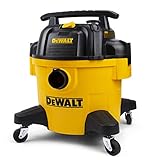
The DXV06P is the premium version of the 6-gallon idea: a poly tank, a 4-horsepower motor rating, a blower function, and the build quality that comes with the DEWALT name. It suits the shop owner who has already broken one cheap vacuum and does not intend to break another — someone who wants a machine that survives being dragged around a concrete floor, being loaded into a truck, and being left in an unheated garage through a cold winter.
A poly tank is the right choice for a workshop vacuum in most cases. It will not dent if you drop it, it does not rust when you vacuum up wet debris and forget to dry the canister, and it is light enough to lift by the handle without straining. The trade-off is cosmetic: poly scuffs and stains where stainless steel or painted metal does not. For a working shop, that is not a real cost.
The blower function and the large caster base round out the package. In practice, this machine’s advantage over the mid-range 6-gallon option is not raw suction — it is durability and the small design decisions that make daily use less annoying: hose storage that does not fall off, a handle that is comfortable when the tank is full, a lid that seals reliably after a hundred open-and-close cycles. If you use a vacuum most days, those details are the difference between a tool and a chore.
Key specs
- Tank capacity: 6 gallons — roughly 22–23 litres
- Tank material: polypropylene — dent- and rust-resistant
- Motor: 4 peak horsepower, corded
- Features: blower function, large caster base, top carry handle
- Hose: mid-diameter class with accessory nozzles
- Duty: heavy everyday wet and dry workshop cleanup
Pros
- Poly tank shrugs off drops, dents, and the rust that follows wet pickup
- Blower function adds real utility for shop dust control
- Build quality suited to daily use on concrete floors
- Same 6-gallon capacity as the mid-range pick, with better hardware
- Widely available replacement filters and accessories
Cons
- Premium tier pricing for the same capacity as a mid-range machine
- Poly tanks scuff and stain cosmetically over time
- Still not enough capacity for high-volume planer or demolition debris
- Heavier than the compact machines, so stairs remain a two-hand job
How it compares
Against the STANLEY SL18116P, the DEWALT is the upgrade: same capacity, tougher tank, blower function, higher price. If your vacuum lives in a fixed spot and gets light use, the STANLEY is the smarter buy. If it gets dragged across a shop floor every day and occasionally rides in a truck, the DEWALT earns its premium. Against the CRAFTSMAN 16-gallon, the DEWALT is the more usable everyday machine but gives up more than half the capacity — a trade worth making unless volume is your binding constraint.
9. Armor All AA155 – Best Ultra-Portable for Small Messes

The AA155 is a 1.5-gallon, 2-peak-HP portable vacuum built for exactly what the name suggests: car interiors, small spills, and quick cleanups where hauling out a full-size shop vacuum would be absurd. In a workshop context, it earns its place as the vacuum you keep in the car, the one you grab for a bench-top spill, and the one you hand to someone who is not going to learn how a large canister works.
At 1.5 gallons, the tank is roughly 5–6 litres. That is enough for a car’s footwells and seats, a workbench covered in sawdust, a dropped bag of potting soil, and a small water spill from a leaking pipe fitting. It is not enough for a sanding session, and it is not meant to be. The value here is format: light, easy to carry by a handle, easy to store on a shelf, and easy to empty into a bin without wrestling a heavy canister.
For workshop use specifically, treat it as a specialty tool rather than a primary vacuum. Keep it near the bench for spot cleanup, keep it in the vehicle for the drive home, and keep the big machine for the jobs that generate real volume. Buyers who try to make a 1.5-gallon unit their only vacuum usually end up emptying it five times in an afternoon and then buying a second machine anyway.
Key specs
- Tank capacity: 1.5 gallons — roughly 5–6 litres
- Motor: 2 peak horsepower, corded
- Format: portable body with carry handle and hose
- Filtration: cartridge filter class for dry debris with wet-pickup capability
- Duty: light spot cleanup, vehicle interiors, small spills
Pros
- Very low budget-tier price makes it an easy second or third vacuum
- Light enough to carry in one hand and store on any shelf
- Fast setup for quick jobs — no cord management, no caster wrestling
- Handles both dry debris and small wet spills
- Ideal for vehicles and for keeping in a truck or van
Cons
- 1.5-gallon tank needs emptying constantly on anything but spot work
- Not suitable as a workshop’s primary vacuum
- Small hose and nozzle set limits reach and debris size
- Short cord on many compact units, so an extension lead may still be needed
How it compares
The nearest alternative is the Koblenz WD-2L: both are compact budget canisters with similar motor ratings. The Koblenz has the edge in general utility work and wet/dry positioning; the Armor All has the edge in car-care ergonomics and portability. Against the Armor All AA255W at 2.5 gallons, the AA155 is smaller and cheaper, while the AA255W holds meaningfully more and serves as a better single compact vacuum. If you want one small vacuum for everything, buy the AA255W. If you want a dedicated car and spill unit, the AA155 is the cheaper way to get it.
10. DEWALT DXV04T – Best for Tool Dust with Accessories Included

The DXV04T sits in an interesting spot: 4 gallons of poly tank, a 5.0-peak-HP motor rating — the highest in the 4-to-6-gallon class in this roundup — and a hose-and-accessory set included rather than sold separately. It suits the woodworker who wants to hook a vacuum to a sander, a router table, or a track saw and needs a machine that arrives ready to do it.
Four gallons is a deliberate compromise. It is small enough to fit under a bench or beside a tool stand, and large enough to hold a real sanding session’s worth of dust without constant emptying. The 5.0-peak-HP rating gives it more headroom than most machines this size, which matters when you add hose length and a tool adapter — every extra foot of hose and every reduction in diameter costs airflow, so starting with more motor helps offset the losses.
The included accessory set is the practical differentiator. Buying a vacuum and then discovering you need to order a nozzle kit, a brush, and an adapter separately is a common and irritating experience. A machine that ships with the hose and accessories needed for tool hookup and floor cleanup removes that step, and it means the vacuum is useful on day one rather than after a second order arrives.
Key specs
- Tank capacity: 4 gallons — roughly 15 litres
- Tank material: polypropylene
- Motor: 5.0 peak horsepower, corded — highest rating in its size class here
- Included: hose and accessory set for floor, bench, and tool-port work
- Filtration: cartridge filter for dry debris, foam sleeve class for wet pickup
- Duty: tool dust collection plus general wet and dry cleanup
Pros
- Strongest motor rating in the 4-gallon class in this roundup
- Accessories included, so it works with tools without extra purchases
- 4-gallon tank fits under a bench while still holding a meaningful amount of dust
- Poly tank resists dents and rust from wet pickup
- Good middle ground between compact canisters and 6-gallon machines
Cons
- Premium tier pricing for a 4-gallon machine
- Two gallons less capacity than the 6-gallon options at a similar price tier
- Not enough volume for planer shavings or demolition debris
- Smaller tank means more frequent filter checks when sanding
How it compares
Against the DEWALT DXV06P, the DXV04T gives up two gallons of capacity but gains a higher peak-HP rating and a bundled accessory set. If your priority is tool dust collection at a bench, the DXV04T is arguably the better match. If your priority is general shop cleanup and you want the biggest tank you can roll around, the DXV06P wins. Against the Amazon Basics 4-gallon stainless model, the DEWALT costs more but offers a higher motor rating and a more complete accessory package; the stainless tank on the Basics model is the more attractive option if wet pickup and rust resistance matter most to you.
11. Armor All AA255W – Best Compact Garage and Car Utility Vacuum

The AA255W