Key takeaways
- Mounting height: mount high enough to be out of reach but not so high that faces are hard to see.
- Weatherproofing: check the stated IP rating and use weatherproof connectors outdoors.
- Cable runs: PoE has maximum distances per cable; the maker lists them.
- Electrical work: if you need to add an outdoor outlet or run mains power, hire a licensed electrician.
- Privacy: aim the camera at your property and use privacy masking where available. Rules on recording differ by place.
- Network security: change default passwords and update firmware.
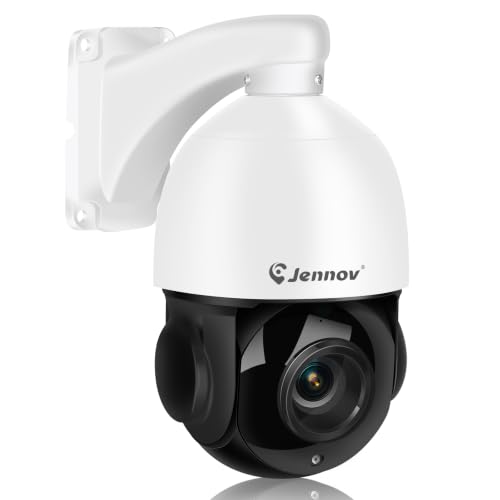
For most homeowners who want one outdoor camera to cover a wide area, a 4K pan-tilt model such as the Reolink RLC-823A or Reolink Duo-style PTZ lines, the Tapo C-series pan-tilt outdoor models, or an Eufy outdoor PTZ camera is the best fit, while larger properties that need optical zoom and a wired, always-on setup should look at Reolink or Amcrest PoE PTZ cameras with optical zoom. A true PTZ camera physically moves and zooms to follow activity, which is useful but not a replacement for several fixed cameras covering known entry points.
Our top picks


As an Amazon Associate we earn from qualifying purchases at no extra cost to you.
At a Glance: 4K PTZ Options
| Camera line | Best for | Key stated features | Limits |
|---|---|---|---|
| Reolink RLC-823A (PoE) | Wired property coverage with optical zoom | 8MP / 4K video, pan-tilt, optical zoom, auto tracking, local storage, per the maker | Needs a PoE switch or recorder and cabling |
| Reolink Duo and TrackMix-style lines | Wide coverage and tracking in one device | Dual-lens designs with tracking, local storage | Some models are Wi-Fi, check the specs |
| Tapo outdoor pan-tilt models | Budget wide-view coverage | Pan-tilt, color night video, app alerts, microSD support | Resolution varies by model; confirm 4K on the version you pick |
| Eufy outdoor PTZ lines | Local storage and app control | Pan-tilt, tracking, local storage, per the maker | Zoom is often digital |
| Amcrest PoE PTZ models | Systems with a recorder | Optical zoom options, PoE power | More setup; app experience varies |
Product names and resolutions vary by region and year. Confirm the stated resolution, zoom type and power method for the exact model before you buy.
What PTZ Really Offers
PTZ stands for pan, tilt and zoom. A motor turns the camera horizontally and vertically, and a lens zooms in. Cameras with optical zoom use a moving lens and keep detail when zoomed; cameras that zoom digitally crop the image and lose sharpness. Many consumer cameras advertise “4K” with digital zoom, so read the specification sheet. Auto tracking follows a moving person within the camera’s range, but it can only watch one area at a time, and while it follows, other areas are out of view.
Resolution and Real Detail
4K video, usually listed as 8 megapixels, offers more detail than 1080p and allows some digital zoom afterward. It also uses more storage and bandwidth. Night performance depends on the sensor and lighting as much as the pixel count, and makers describe infrared and color night modes differently.
Power and Connection
PoE (Power over Ethernet)
PoE sends power and data through one cable, which is a strong fit for PTZ cameras because motors draw more power. PoE needs a compatible switch, injector or recorder, plus cable runs. It is the most reliable choice for continuous recording.
Wi-Fi
Wi-Fi models are easier to place but still need power, usually through an adapter. Streaming 4K video over a weak signal leads to delays, so check signal strength at the mounting spot.
Battery and Solar
True 4K PTZ cameras rarely run on batteries because of the motors. Be skeptical of battery claims on PTZ models.
Storage and Subscriptions
4K video fills storage quickly. Reolink and Amcrest PoE cameras generally work with a network video recorder or microSD card, which avoids a required cloud plan. Eufy also emphasizes local storage. Tapo, Ring and Arlo offer cloud features that may require a plan. Read the current terms on the maker’s site.
Picks by Situation
Large Yard or Driveway
A PoE camera with optical zoom, such as the Reolink RLC-823A, can cover wide areas and zoom to read details. Mount it high and out of reach.
Whole-Side-of-House Coverage
A pan-tilt Wi-Fi camera from Tapo or Eufy can sweep a patio or side yard at a lower cost, with the trade-offs noted above.
Business or Shed Area
PoE PTZ cameras paired with a recorder are a common choice because they stay powered and record around the clock.
Renters
Wi-Fi models that mount with a few screws or a bracket are more practical. Check the lease.
Budget Tiers
| Tier | What to expect | Trade-off |
|---|---|---|
| Budget | Pan-tilt Wi-Fi cameras, often with digital zoom | Lower resolution on some versions, cloud plan upsells |
| Mid-range | 4K pan-tilt with tracking, local storage | Power cabling or strong Wi-Fi needed |
| Premium | PoE with optical zoom, recorder support | Setup complexity and added gear |
Installation and Safety
- Mounting height: mount high enough to be out of reach but not so high that faces are hard to see.
- Weatherproofing: check the stated IP rating and use weatherproof connectors outdoors.
- Cable runs: PoE has maximum distances per cable; the maker lists them.
- Electrical work: if you need to add an outdoor outlet or run mains power, hire a licensed electrician.
- Privacy: aim the camera at your property and use privacy masking where available. Rules on recording differ by place.
- Network security: change default passwords and update firmware.
Pick X If You Want…
| Pick this | If you want |
|---|---|
| Reolink RLC-823A | PoE, optical zoom and local recording |
| Reolink Duo or TrackMix lines | Wide coverage and tracking in one camera |
| Tapo pan-tilt outdoor | A lower-cost wide view with app alerts |
| Eufy outdoor PTZ | Local storage and a simple app |
| Amcrest PoE PTZ | Integration with a recorder system |
Alternatives
- Multiple fixed 4K cameras: cover several angles at once with no blind spots, often with less mechanical wear.
- Panoramic dual-lens cameras: stitch a wide view without moving parts.
- Floodlight cameras: pair lighting and recording near doors.
Setting Up a PTZ Camera Well
Plan the camera’s field of movement before mounting. A PTZ camera sweeps through an arc, so obstacles such as tree branches, flagpoles and eaves can block part of it. Mount it where the whole area you care about is within reach and where the motor cannot be tampered with easily. Many PTZ cameras let you save preset positions, such as the gate, the driveway and the front door, and run scheduled patrols between them. Presets are often more useful than constant auto tracking, because they guarantee that key spots are watched.
Tracking Settings
If auto tracking is available, limit it to people or vehicles where the camera offers that choice, and set a return-to-home position so it goes back to its main view after an event. Poorly tuned tracking can follow trees, insects or headlights and waste storage.
Storage Planning
4K video at a steady bitrate uses a large amount of space. Makers list typical bitrates; multiply by the hours you record to estimate how many days a card or drive will hold. For continuous recording, a network video recorder with a surveillance-grade drive is the usual choice. For event-only recording, a high-endurance microSD card often works, though capacity limits matter.
Limits to Keep in Mind
- Moving parts: motors and gears can wear over time, and weather exposure matters.
- Single view at a time: while the camera follows a subject, other areas are not covered.
- Night range: infrared range claims are maker figures and reflect ideal conditions.
- Bandwidth: multiple 4K streams can crowd a home network.
- Cost of ownership: PoE gear, cables and storage add to the project total.
PTZ Compared With Other Camera Types
| Type | Coverage | Strength | Weakness |
|---|---|---|---|
| PTZ | Wide, one view at a time | Covers large areas, zoom to details | Blind spots when pointed elsewhere |
| Fixed bullet | One fixed view | Simple and reliable | Limited coverage |
| Dual-lens panoramic | Very wide, no moving parts | Constant wide view | Digital zoom only |
| Dome | Fixed or PTZ | Discreet, vandal-resistant forms | Reflections from the dome |
Many installers suggest a hybrid: fixed cameras on entry points, with a PTZ to cover a broad yard or parking area.
Frequently Asked Questions
Is a PTZ camera better than a fixed camera?
Not always. PTZ covers more area with one device, but it only watches one direction at a time. Fixed cameras cover chosen points continuously.
What is the difference between optical and digital zoom?
Optical zoom moves the lens and keeps detail. Digital zoom crops the picture and reduces sharpness.
Does 4K need a special network?
It needs more bandwidth and storage than 1080p. A wired PoE connection handles it best; Wi-Fi requires a strong signal.
Can PTZ cameras run on batteries or solar?
Most true PTZ models are plugged in or PoE powered because of motor demand. Treat battery claims carefully.
Do I need a subscription?
Not necessarily. Many PoE and local-storage cameras operate without one, while cloud services may charge for history and detection.
Will tracking follow every person?
Auto tracking follows moving subjects in range, but results vary with lighting, distance and settings. Treat it as a convenience, not a guarantee.
More from Amazon
Programs that pair well with the guide above. Offers and eligibility are set by Amazon and may change.
Free shipping on eligible items, Prime Video and more. Eligible new members can start with a free trial.
Start a Prime free trialAudiobooks and podcasts to listen to on the go. Eligible new members can start with a free trial.
Try Audible freeAd-free music streaming. Eligible new subscribers can start with a free trial.
Try Music Unlimited freeA free business account with business pricing and bulk-buying tools for work, shop or home office.
Create a business accountAs an Amazon Associate we earn from qualifying purchases.