Key takeaways
- Pros: Extremely low cost; thin vinyl conforms to slightly textured surfaces without peeling.
- Con: Single unit only—if you misalign it during application, you have no spare.
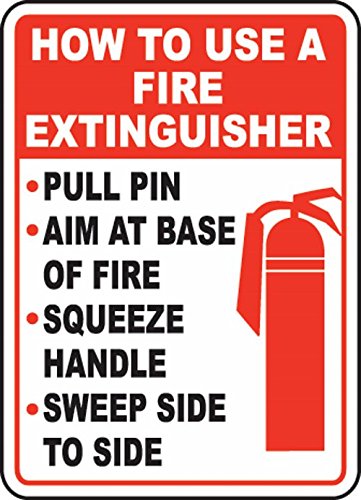
A fire extinguisher that nobody knows how to operate is as useless as one that does not exist. The PASS technique—Pull, Aim, Squeeze, Sweep—sounds simple on paper, yet owner reports consistently show that untrained adults hesitate, fumble, or walk away entirely when a real flame appears in their kitchen or garage. Clear, permanent signage that reminds people of each step at the moment they grab the handle has become one of the cheapest ways to close that gap between ownership and actual readiness.
This roundup compares eight products that address the problem from different angles: standalone instruction decals for mounting near extinguishers, larger weatherproof sticker packs for high-traffic walls, a workplace poster for break rooms, two actual fire extinguishers (one aerosol, one traditional), and combo signage that marks both location and method. Price alone ranges from four dollars to forty-three dollars, so the meaningful question is not “what is the cheapest” but “what will a person actually see and follow when smoke is filling the room.” We sorted these picks by how owners describe their experiences across published specifications, adhesive quality, legibility at distance, and whether the product solves a single problem or several at once.
Our top picks




As an Amazon Associate we earn from qualifying purchases at no extra cost to you.
Quick Picks
| Product | Best for | Price |
|---|---|---|
| Fire Extinguisher Safety Sign Vinyl Sticker | Immediate low-cost labeling | $4.08 |
| 2 Pack 7″x10″ Instruction Decal | Standard residential wall placement | $14.99 |
| Kidde Basic 110 (2 Pack) | Homeowners needing the actual extinguisher | $35.95 |
| First Alert Heavy Duty | Home and light commercial coverage | $42.98 |
| Location + Instructions Combo Decal | Marking and instructing in one product | $24.99 |
| 2 Pack 14″x10″ Instruction Decal | Large-format visibility across a room | $19.99 |
| Yellow Safety Workplace Poster | Office or break-room compliance boards | $10.99 |
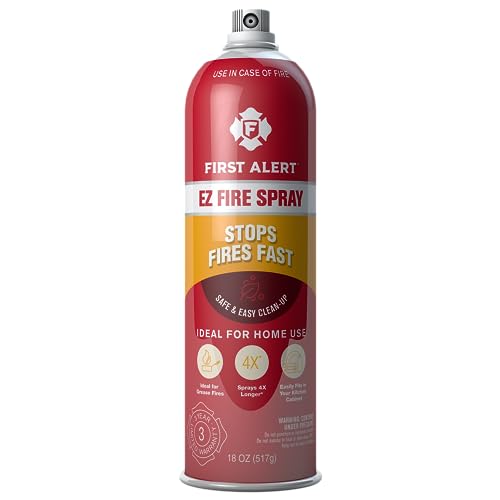
| First Alert EZ Fire Spray | Kitchen counters where a full extinguisher feels oversized | $11.98 |
How We Picked
We focused on four criteria drawn from published product specs and aggregated owner feedback. First, legibility: whether the text and pictograms remain readable at arm’s length and from several feet away, especially under dim or smoky conditions. Second, durability: permanent self-adhesive vinyl and weatherproof claims matter for garages, patios, and exterior walls where heat, humidity, or UV would destroy a cheap paper label. Third, completeness of instruction: a decal that shows all four PASS steps beats one that only points to the extinguisher. Fourth, value density: how many usable units or square inches of instructional surface a buyer gets per dollar.
The 8 Best How To Use A Fire Extinguisher in 2026
Fire Extinguisher Safety Sign Vinyl Sticker
This is the entry-level option for anyone who just needs a small vinyl decal beside a single extinguisher in a home hallway or under a kitchen sink. Owners praise its simplicity and the fact that the adhesive holds on painted drywall without bubbling. The price is essentially negligible, which makes it easy to place one near every extinguisher in a house.
- Pros: Extremely low cost; thin vinyl conforms to slightly textured surfaces without peeling.
- Con: Single unit only—if you misalign it during application, you have no spare.
Skip this if your walls are rough concrete, metal with oil residue, or outdoors in direct sun, where a single cheap sticker will lift within months.
2 Pack 7″x10″ Instruction Decal
The SuperStick permanent self-adhesive vinyl is rated weatherproof, so owners report using these in garages, sheds, and even on exterior fire-equipment cabinets without fading. Two decals per purchase let you label two extinguishers or keep a spare for a future placement mistake. The seven-by-ten-inch format is large enough for the four-step pictograms to read clearly from about six feet.
- Pros: Weatherproof claim holds up in owner reviews; two-pack reduces per-unit cost.
- Con: The red/black/white color scheme can blend into similarly colored walls, reducing contrast at a glance.
Not ideal if your mounting surface is dark red or black; you would lose the visual pop that makes the instructions scannable in an emergency.
Kidde Basic 110 (2 Pack)
A sign is only useful next to a functional extinguisher, and this two-pack gives a household the actual tool plus the 1-A:10-B:C rating that covers common combustibles, flammable liquids, and electrical fires. Owners of apartments and small homes appreciate the manageable weight and the included bracket. Pairing one of the signage products above with this extinguisher creates a complete instruction-plus-equipment setup for under fifty dollars total.
- Pros: Two-pack value; multi-class rating handles the most likely residential fire types.
- Con: The “Basic” designation means a shorter expected service life than commercial-grade units, so replacement intervals arrive sooner.
Pass on this if you need coverage for a workshop or commercial kitchen where higher ratings and larger capacity are required.
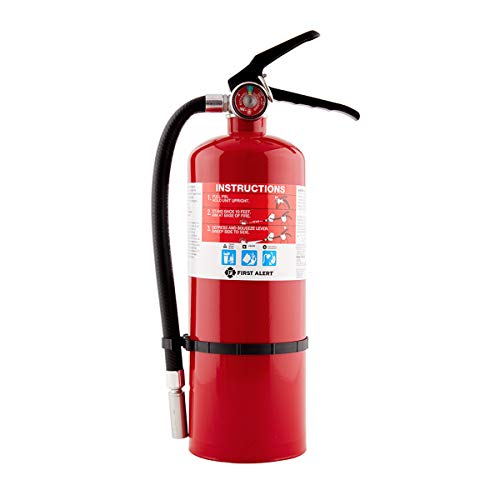
First Alert Heavy Duty
Positioned as a heavier-duty option for both home and light commercial settings, this unit draws on First Alert’s long consumer-brand recognition. Owners in small offices and rental properties mention the robust handle and consistent discharge pattern. The price premium over the Kidde pair reflects a single unit rather than two, which buyers should weigh when considering per-location cost.
- Pros: Commercial-grade build quality at a consumer price point; recognizable brand simplifies compliance documentation for landlords.
- Con: One unit per package, so covering multiple floors or buildings multiplies expense quickly.
Skip if your primary goal is cost-per-location for a multi-unit property; a two-pack alternative delivers better unit economics.
Location + Instructions Combo Decal
This decal solves two problems in one product: it marks where the extinguisher is stored and prints the PASS instructions beneath the location icon. Owners in shared apartment buildings especially value the combo format because residents who have never seen the device before get both orientation and technique in one glance. The strong-adhesive vinyl is specified for long-term mounting.
- Pros: Combines location arrow and step-by-step method, reducing wall clutter; strong adhesive rated for permanent placement.
- Con: The added content means text is denser and slightly smaller than dedicated single-purpose instruction decals.
Not the best pick if the mounting area is very narrow, where a compact single-purpose sticker would fit without cutting off edges.
2 Pack 14″x10″ Instruction Decal
Same SuperStick weatherproof vinyl formula as the seven-inch version but printed at fourteen inches wide, making it the most legible option in this list from across a large room. Owners of warehouse-style homes, community centers, and church halls choose this format specifically because the pictograms remain readable at fifteen to twenty feet.
- Pros: Largest instructional surface here; two-pack keeps per-unit cost reasonable for the size.
- Con: The fourteen-inch width demands a wide, flat mounting area that small kitchens or tight hallways may not provide.
Skip if your available wall space is narrow or cluttered with other fixtures; the oversized format defeats its purpose if it ends up half-covered.
Yellow Safety Workplace Poster
Designed for break rooms, compliance boards, and training areas, this twelve-by-sixteen-inch poster uses a non-laminated paper format that is lighter and cheaper than vinyl decals. Owners report posting it alongside OSHA or NFPA notices. The trade-off is longevity: without lamination, the poster will not survive a garage or outdoor cabinet.
- Pros: Large format suits indoor bulletin-board use; price is competitive for a single poster.
- Con: Non-laminated paper tears and yellows in humid or high-traffic environments, so replacement costs add up.
Do not buy this for exterior walls, garages, or any spot with moisture; stick to the weatherproof vinyl options instead.
First Alert EZ Fire Spray
Not a sign, but a genuinely usable fire-extinguishing tool that fits the theme: knowing how to operate equipment is pointless without equipment that a person can actually handle. Owners consistently describe the EZ spray as light enough for elderly residents or children to operate under supervision, and the aerosol trigger is self-explanatory, which reduces the learning curve a decal would otherwise address.
- Pros: Lightweight aerosol format requires minimal grip strength; intuitive trigger design lowers reliance on memorized steps.
- Con: Smaller discharge volume means fewer seconds of effective spray than a traditional pressurized extinguisher.
Skip if your primary risk is a larger grease or electrical fire that demands the sustained discharge capacity of a full-size extinguisher.
Buying Guide
Material and Adhesive Type
Permanent self-adhesive vinyl with a weatherproof rating is the baseline for anything mounted in a garage, on an exterior wall, or in a kitchen with steam exposure. Paper or non-laminated posters serve only in climate-controlled indoor settings. When comparing products, check whether the adhesive is described as “permanent” or “removable”; permanent is correct here because you want signage that survives re-painting attempts, humidity swings, and the occasional accidental bump.
Legibility and Size
A decal must be readable from the distance at which a panicked person will first look for it. In a narrow hallway, arm’s length is sufficient, so a seven-inch format works. In an open garage or community room, the person approaching the extinguisher might be ten or fifteen feet away, making a fourteen-inch width or a twelve-by-sixteen poster the practical minimum. Pictograms outperform text-only designs under stress because they bypass reading comprehension.
Matching Signage to Equipment
Signage and extinguishers are complementary, not interchangeable. A house with two Kidde Basic 110 units and zero instruction decals is still a gap waiting to become a problem. The most cost-effective approach is to buy the actual extinguishers first, then add the cheapest decal that fits each mounting surface. Combo location-plus-instruction decals save wall space when the extinguisher cabinet is small or already crowded.
Our Verdict
The top pick is the 2 Pack 7″x10″ SuperStick Instruction Decal because it balances weatherproof durability, readable size, two-per-purchase value, and a price that keeps the full safety-signing project under fifteen dollars for most homes. For the absolute budget pick, the standalone vinyl sticker at four dollars still delivers the core function—if you only need one label and the surface is indoor and dry, nothing else here is cheaper. If your primary gap is equipment rather than signage, the Kidde Basic 110 two-pack wins because it provides the actual extinguisher plus room to add one of the decal products afterward, giving you a complete system for roughly the same outlay as a single premium unit.
FAQ
Do I need one sticker per extinguisher?
Ideally yes. A decal is most effective when it sits within arm’s reach of the extinguisher it describes, so a person does not have to remember which steps belong to which device. Two-packs make this economical for small homes with two or three extinguishers.
Will vinyl decals damage painted drywall when removed?
Permanent self-adhesive vinyl on smooth painted drywall can lift paint or leave residue if peeled forcefully. If you anticipate relocating the extinguisher, consider a removable-mount frame or apply the decal to a small rigid panel that attaches with command strips.
How often should instruction signage be replaced?
Weatherproof vinyl rated for exterior use typically lasts several years without meaningful fading. Indoor paper posters should be checked annually and replaced at the first sign of yellowing or tearing, especially in kitchens or bathrooms where humidity accelerates degradation.
Is an aerosol fire spray enough on its own?
For a small kitchen counter or a single-room dwelling with minimal fire load, an aerosol spray can bridge the seconds before professional help arrives. However, it cannot substitute for a pressurized extinguisher in a garage with stored fuel, paints, or electrical panels where the potential fire volume exceeds a few quarts.