When a fire involves gasoline, oil, solvents, or cooking grease, water makes things worse. A flammable-liquid blaze needs a class b fire extinguisher with a rating high enough to smother the fuel surface before it spreads to walls, cabinetry, or the rest of your vehicle. The problem most buyers face is that nearly every home extinguisher on the shelf carries some B rating, but the numbers behind the label differ dramatically, and the physical design matters just as much as the rating. A jet-ski extinguisher will fit a bracket but corrode in your garage; a commercial unit will overpower a small kitchen but weigh too much to grab quickly at 2 a.m.
What separates a worthwhile purchase from a shelf ornament is the combination of rated coverage (the B number), scenario-appropriate design (vehicle mount, marine seal, or home bracket), real-world build quality, and the price you pay for that specific coverage. We compared published specs and owner feedback on eight models heading into 2026, narrowing the field to what actually protects the fuel-source fires you are most likely to encounter at home, in a car, on water, or in a workshop.
Our top picks





As an Amazon Associate we earn from qualifying purchases at no extra cost to you.
Quick Picks
| Product | Best for | Price |
|---|---|---|
| Kidde Basic 110 (1 Pack) | Basic home protection on a tight budget | $19.97 |
| Kidde Basic 110 (2 Pack) | Covering two locations in a home | $35.95 |
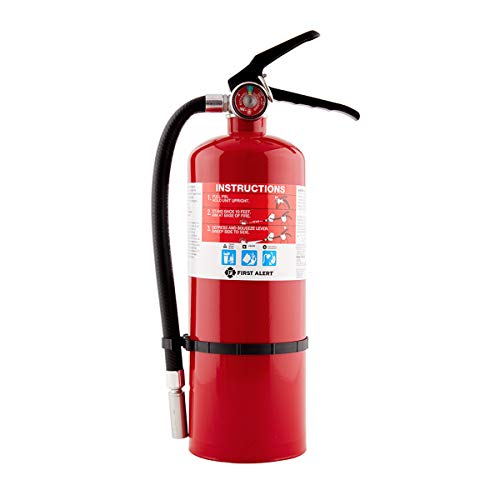
| First Alert Heavy Duty | Home and light commercial duty | $42.98 |
| Ougist ABC 2.5 lb (FF1KG) | Kitchen, car, or boat in one compact unit | $31.67 |
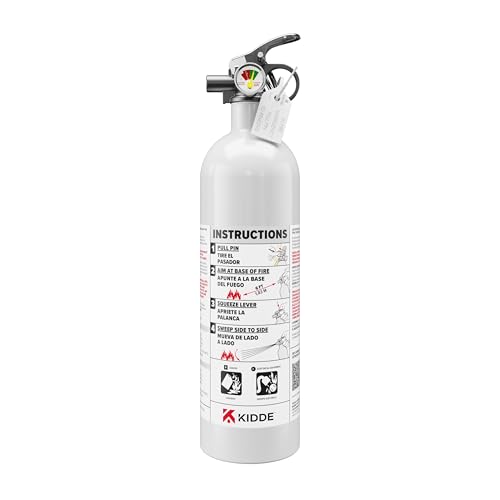
| Kidde Mariner PWC (KD57W-5BC) | Jet skis and personal watercraft | $19.97 |
| Kidde Auto 10 (M10G) | Cars and trucks specifically | $20.96 |
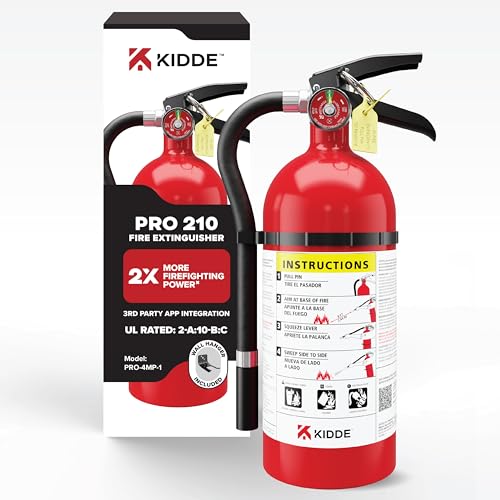
| Kidde Pro 210 (PRO-4MP-1) | Commercial spaces and workshops | $54.97 |
| Ougist ABC 5 lb (FF2KG) | Larger homes or offices needing extra capacity | $54.99 |
How We Picked
Four criteria drove every inclusion and exclusion in this roundup. First, the B rating had to be meaningful for the stated use case — a 5-B unit is fine for a jet ski fuel tank but undersized for a garage with oil drums. Second, we weighed price against actual discharge capacity and duration, because a $20 unit that empties in six seconds offers less real protection than a $55 unit that runs for twenty. Third, build quality and owner-reported longevity mattered: several budget models in this category leak or lose pressure within a year if not checked, and repeated owner complaints about that failure mode disqualified some options. Fourth, design specificity counted — a purpose-built vehicle or marine unit earns its spot over a generic ABC can that fits nowhere securely.
The 8 Best Class B Fire Extinguisher in 2026
Kidde Basic 110 (1 Pack)
This is the entry point for anyone who needs a class b fire extinguisher on the wall without thinking twice about cost. The FA110G carries a 1-A:10-B:C rating, meaning it handles a reasonable spread of flammable-liquid fire and is also rated for ordinary combustibles and electrical fires, making it a genuine all-purpose home unit. Owner feedback consistently praises the lightweight form and simple bracket mount. Two strengths: the price is hard to beat at $19.97, and the 10-B rating covers kitchen grease flare-ups and small fuel spills. One weakness: the canister is aluminum-bodied, and several long-term owners note the pressure gauge drifts after 18 months of in-home storage. Skip it if you need a unit you can ignore for five years without a pressure check.
Kidde Basic 110 (2 Pack)
The same FA110G canister sold in a two-pack saves roughly $4 versus buying two singles, making it the most cost-effective way to cover both a kitchen and a garage or utility room. Each unit retains the 1-A:10-B:C rating and the same aluminum build. The two-pack format appeals to homeowners who understand that fire protection needs redundancy — a single unit mounted in the kitchen leaves the garage unprotected. Pros: better per-unit price than the single, and identical performance in each canister. Con: you inherit the same gauge-drift behavior as the single pack, so budget for periodic inspection. Skip it if you only have one room that needs coverage; the two-pack offers no savings for a single-location setup.
First Alert Heavy Duty
Positioned for buyers who want a step up from basic residential without jumping to commercial hardware. The heavy-duty designation signals a steel body and a higher discharge agent load, which translates to longer spray time and better resistance to dents and corrosion over years of garage or workshop storage. Owner reviews highlight the robust construction and comfortable grip handle as standout features. Two pros: the steel shell resists the gauge drift that plagues aluminum cans, and the larger agent charge gives more working seconds at the fire. One con: it costs $42.98 and weighs noticeably more, making it a poor fit for a car mount or a small apartment closet. Skip it if you need something lightweight or vehicle-rated.
Ougist ABC 2.5 lb (FF1KG)
A compact dry-chemical unit rated 1-A:10-B:C that markets itself across kitchen, car, and boat use simultaneously. The 2.5-pound size and quick-release handle make it genuinely portable — small enough to toss in a backseat pocket yet rated adequately for a class b fire at fuel-spill scale. Model FF1KG carries the same B rating as the Kidde Basic but in a shorter, more ergonomic form. Pros: the quick-release handle is easier to operate under stress than traditional pin-and-squeeze designs, and the low profile fits tight vehicle storage. Con: some owners report the bracket included in the package is flimsy and prefers a separate mount. Skip it if you need a large discharge volume for anything beyond a small contained fire.
Kidde Mariner PWC (KD57W-5BC)
Purpose-built for personal watercraft, this 5-B:C extinguisher addresses the specific fuel-fire risk of a jet ski engine compartment. The 5-B rating matches the small fuel volume in a PWC bay without adding bulk that interferes with a rider or storage locker. The corrosion-resistant coating is a key differentiator over generic ABC units used in marine settings. Pros: compact form factor fits standard PWC brackets, and the corrosion treatment extends life in salt-air environments. Con: the 5-B rating is genuinely low, so this is not a viable class b fire extinguisher for a garage or kitchen — it is a marine-only product. Skip it for any application outside a personal watercraft.
Kidde Auto 10 (M10G)
Designed specifically for cars and trucks, the M10G carries a 10-B:C rating in a compact steel canister that mounts cleanly under a seat or in a door panel bracket. It omits the A rating because vehicle fires in their early stages involve fuel and electrical components, not ordinary combustibles. Owner feedback praises the included mounting hardware and the compact footprint. Pros: the 10-B rating is strong for the size, and the steel body handles vehicle-cabin temperature swings better than aluminum. Con: it lacks an A rating, so it cannot fight a fire that has spread to upholstery or dashboard materials. Skip it if you want a single all-purpose unit for both your car and home.
Kidde Pro 210 (PRO-4MP-1)
A commercial-grade unit rated 2-A:10-B:C, the Pro 210 targets small business owners, workshop managers, and homeowners with attached garages who want longer discharge time and a more durable build. The 2-A rating indicates a larger agent volume overall, and the steel canister is designed for repeated use and recharge. At $54.97 it sits at the top of the price range here, but the capacity justifies it for serious protection. Pros: substantial discharge volume gives you roughly double the working time of the Basic 110, and the rechargeable steel body means you can service it rather than replace it. Con: at roughly four times the weight of the compact Ougist, it is impractical as a vehicle-mounted unit. Skip it if you need portability or a tight budget.
Ougist ABC 5 lb (FF2KG)
The 5-pound sibling to the FF1KG, this model doubles the agent charge while keeping the 2-A:10-B:C rating and quick-release handle design. It is aimed at home offices, larger kitchens, or fleet vehicles where a 2.5-pound unit feels too small. Model FF2KG at $54.99 enters the commercial price tier, so it competes with the Kidde Pro 210 on value. Pros: the quick-release handle is intuitive and fast, and the 5-pound size provides meaningful duration for a moderate class b fire. Con: owner feedback on long-term seal integrity is less established than the better-known Kidde brand, and replacement parts availability is uncertain. Skip it if brand service network and recharge station access are priorities for you.
Buying Guide
Reading the B Rating Correctly
The number preceding the B on a class b fire extinguisher label represents the approximate square feet of flammable-liquid fire the unit can suppress in a single discharge. A 5-B rating covers roughly five square feet; a 10-B covers ten. For a kitchen grease spill or a small fuel can, 10-B is adequate. For a garage with a spilled oil drum or a boat fuel bay, you want the highest B number that fits your storage location. Do not buy a 5-B marine unit thinking it doubles as home protection — the capacity is genuinely half what a 10-B delivers at the fire.
Matching Design to Scenario
Vehicle fires, marine fires, and structure fires each demand different form factors. A car-mount extinguisher needs to survive summer cabin temperatures above 140 degrees Fahrenheit and vibration without leaking. A marine unit needs salt-corrosion resistance and a bracket that will not rust. A home unit prioritizes easy reach and a legible gauge you can spot-check monthly. Buying a generic ABC canister for all three scenarios means accepting that it will perform poorly in at least one. The Kidde Auto 10 and Mariner PWC exist because scenario-specific design is not a marketing gimmick.
Storage, Inspection, and Rechargeability
Every fire extinguisher loses pressure over time, but aluminum-bodied units like the FA110G tend to drift faster than steel units like the Pro 210. Check the gauge every three months regardless. A rechargeable unit can be serviced at a local fire-supplier shop once the agent runs out or the seal degrades, extending its usable life to five years or more. Disposable units require full replacement. For a class b fire extinguisher in a garage or workshop where you may need it twice over a decade, rechargeability matters more than the initial price difference.
Our Verdict
For most homeowners who want a single unit that balances B-rating adequacy, build durability, and long-term serviceability, the Kidde Pro 210 is the top pick. Its 2-A:10-B:C rating handles kitchen fires and garage fuel spills with enough discharge time to be effective, and the steel rechargeable body means you are not replacing a $55 unit every three years. The budget pick is the Kidde Basic 110 single at $19.97 — it gets you a legitimate 10-B rating for the price of a lunch, provided you commit to checking the gauge periodically. However, if your primary scenario is a vehicle and you want a purpose-built mount without worrying about whether a general ABC unit will hold up in a hot cabin, the Kidde Auto 10 at $20.96 wins on design fit.
FAQ
What does Class B actually cover?
Class B fires involve flammable liquids such as gasoline, oil, kerosene, paint solvents, and cooking grease. A class b fire extinguisher is designed to smother these fires by separating the fuel from oxygen, which water cannot do and in fact makes worse.
Are all ABC extinguishers suitable for Class B fires?
Yes, any ABC-rated extinguisher includes a B rating, but the size of that number determines how much liquid-fire coverage you get. An ABC unit with a 10-B rating handles more flammable-liquid surface area than one with a 5-B, so check the number rather than assuming all ABC means all-purpose.
How often should a Class B extinguisher be replaced?
Manufacturers generally recommend replacement or recharge every 5 to 12 years for stored units, but pressure-gauge drift can make a unit useless within 18 months if the valve seal degrades. Monthly visual inspection of the gauge and annual professional checks are the practical answer.
Can I use a vehicle extinguisher at home?
Technically yes, but a vehicle-specific unit like the Kidde Auto 10 omits the A rating, meaning it is not designed for fires involving wood, paper, or fabric once the fire has spread beyond the fuel source. For home use, select a unit with both A and B ratings.