Our Short List of 3

- Best for: Benches that run microtubes and PCR strips in the same day.
- COMBI-Rotor for 12 x 1.5/2.0 mL microtubes and 4 PCR strips
- Fixed speed of 5,500 rpm and 2,000 xg
- Lid-activated start and stop
- Dimensions of 5.5 x 7.9 x 4.4 inches

- Best for: A single workstation that needs fast, repeated spin-downs close at hand.
- Speed of 6,000 rpm and 2,000 xg
- Capacity of 8 x 1.5/2.0 mL tubes, 16 x 0.2 mL tubes, and 2 PCR strips
- Two rotors included: microtube rotor and PCR strip rotor
- Dimensions of 4.5 x 5.9 x 4.5 inches

- Best for: Benches that need higher force for pelleting in a compact machine.
- Maximum speed of 7,000 rpm and 2,680 xg
- Capacity of 8 x 1.5/2.0 mL microtubes, with 0.2 mL and 0.5 mL adapters
- Two rotors included: microtube rotor and PCR rotor
- Timer from 30 seconds to 99 minutes, plus continuous operation
All 3 Picks at a Glance
| Product | Specs | Action |
|---|---|---|
| Benchmark MyFuge 12 |
| Check price on Amazon |
| Benchmark MyFuge Mini |
| Check price on Amazon |
| Scilogex D1008 EZeeMini |
| Check price on Amazon |
Key takeaways
- Compare the best microcentrifuges for sample preparation: three lab centrifuges for spin-downs, PCR strips and microtubes, checked by speed and capacity.
Choosing a microcentrifuge for sample preparation comes down to matching the machine to the protocol, not buying the fastest box on the shelf. A quick spin-down that pulls droplets off tube walls needs far less force than pelleting cells or precipitating nucleic acids, and a rotor that only holds microtubes will slow down a bench that runs PCR strips all day. The wrong pick wastes bench space, adds tube transfers, and turns a thirty-second step into a bottleneck.
This guide is for lab technicians, researchers, and teaching-lab managers who prepare samples daily and need a compact centrifuge that fits the workflow. The three models below were chosen from the names and specifications shown on their Amazon product pages, comparing speed, rotor format, capacity, and the safety features that matter when a rotor spins thousands of times per minute. Each pick below lists its rotor format and top force, so a buyer can match the machine to the protocol before ordering.
Quick Picks
As an Amazon Associate we earn from qualifying purchases
| Product | Best for | Key spec from title |
|---|---|---|
| Benchmark MyFuge 12 | PCR strips and microtubes together | COMBI-Rotor for 12 microtubes and 4 PCR strips |
| Benchmark MyFuge Mini | Quick bench-side spin-downs | 6,000 rpm with 8 microtube and PCR rotors |
| Scilogex D1008 EZeeMini | Faster spins in a small footprint | 7,000 rpm with 8 microtube and PCR rotors |
How to Choose
Speed and Force
Speed in revolutions per minute tells only half the story, because the force on a sample depends on rotor size as well. Relative centrifugal force, measured in times gravity, is the number a protocol actually calls for, so check the RCF figure on the listing before comparing two machines by rpm alone. Quick spin-downs of droplets from tube walls need only around 2,000 times gravity, while pelleting bacteria or precipitating nucleic acids calls for much higher force. A fixed-speed mini centrifuge suits spin-downs and PCR prep, but a protocol that needs a specific RCF for pelleting deserves a model whose top force reaches that number. Fixed-speed models suit spin-downs; pelleting needs the higher force.
Tube Capacity and Rotor Format
Count the tubes a typical run holds before choosing a rotor format. A bench that processes one strip of PCR tubes at a time gains little from a twelve-place microtube rotor, while a bench that spins a full rack of 1.5 mL tubes needs capacity more than strip support. Some rotors handle microtubes and PCR strips in one setup, which removes the rotor change between steps and keeps the workflow moving. Confirm the included rotors and adapters match the bench’s tube sizes. Adapters for 0.2 mL and 0.5 mL tubes matter when a protocol uses small volumes, so confirm the included adapters match the tube sizes the bench actually runs.
Safety and Bench Habits
A microcentrifuge spins a metal rotor fast enough to throw an unbalanced load, so the safety features on the listing deserve real attention. Lid-activated machines start when the lid closes and stop when it opens, which keeps hands away from a moving rotor and makes repeated spin-downs quick. Load tubes in opposite positions with equal volumes, using a water blank when running a single tube, because an unbalanced rotor vibrates, wears bearings, and can walk across the bench. Wait until the rotor has fully stopped before opening the lid or removing tubes, and keep the machine on a flat, stable surface away from the bench edge. Never force the lid while spinning.
Footprint, Noise and Power
Bench space is scarce in most labs, so measure the footprint before ordering. Mini centrifuges in this class sit in a square roughly six inches across and weigh about two pounds, which means one fits beside a pipette rack or inside a biosafety cabinet without crowding the work area. Near-silent operation matters when several people share a small room and run spin-downs all day. Universal voltage from 100 to 240 volts lets the same model move between benches or travel to a field lab, and a removable cord makes storage simpler when the machine is not in daily use. A short power cord limits placement, so check the cord length on the listing.
The 3 Best Options
Benchmark MyFuge 12
- Best for: Benches that run microtubes and PCR strips in the same day.
- COMBI-Rotor for 12 x 1.5/2.0 mL microtubes and 4 PCR strips
- Fixed speed of 5,500 rpm and 2,000 xg
- Lid-activated start and stop
- Dimensions of 5.5 x 7.9 x 4.4 inches
Benches that run microtubes and PCR strips in the same day.
The fixed speed cannot be raised for protocols that need higher force for pelleting.
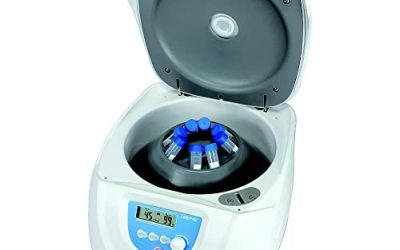
The MyFuge 12 suits benches that switch between microtubes and PCR strips in the same workflow. Its COMBI-Rotor holds twelve 1.5 or 2.0 mL microtubes and four PCR strips in one setup, so there is no rotor change when the next step uses a different tube format. The fixed speed of 5,500 rpm produces 2,000 times gravity, which covers quick spin-downs, microfilter separations, and HPLC sample prep without a digital control panel to learn. Closing the lid starts the rotor and opening it stops the spin, a rhythm that fits repeated short runs. The simple design keeps operation easy for a shared bench.
Watch out for: The fixed speed cannot be raised for protocols that need higher force for pelleting.
Benchmark MyFuge Mini
- Best for: A single workstation that needs fast, repeated spin-downs close at hand.
- Speed of 6,000 rpm and 2,000 xg
- Capacity of 8 x 1.5/2.0 mL tubes, 16 x 0.2 mL tubes, and 2 PCR strips
- Two rotors included: microtube rotor and PCR strip rotor
- Dimensions of 4.5 x 5.9 x 4.5 inches
A single workstation that needs fast, repeated spin-downs close at hand.
Eight microtube places fill quickly when a protocol runs a full rack at once.
The MyFuge Mini is the palm-sized option for a bench that needs spin-downs within arm’s reach. It spins up to 6,000 rpm when the lid closes and stops quickly when the lid opens, which makes it easy to run dozens of short spins in a session without touching a control. Two rotors come in the box: an eight-place rotor for 1.5 and 2.0 mL microtubes and a strip rotor for PCR tubes. The small footprint leaves room for pipettes and racks, and the quiet motor keeps a shared bench calm. The blue lid makes the model easy to spot on a crowded bench.
Watch out for: Eight microtube places fill quickly when a protocol runs a full rack at once.
Scilogex D1008 EZeeMini
- Best for: Benches that need higher force for pelleting in a compact machine.
- Maximum speed of 7,000 rpm and 2,680 xg
- Capacity of 8 x 1.5/2.0 mL microtubes, with 0.2 mL and 0.5 mL adapters
- Two rotors included: microtube rotor and PCR rotor
- Timer from 30 seconds to 99 minutes, plus continuous operation
Benches that need higher force for pelleting in a compact machine.
The analog timer and single-speed dial give less precise control than a digital display.
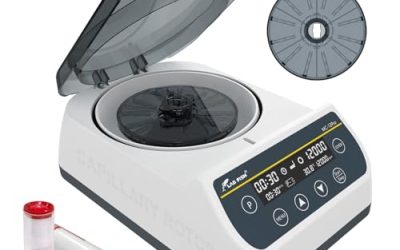
The Scilogex D1008 gives a small bench the highest top speed of the three, reaching 7,000 rpm and 2,680 times gravity. That extra force makes it the pick when a protocol needs more than a gentle spin-down, such as pelleting small volumes or pulling down precipitates. The box includes an eight-place rotor for 1.5 and 2.0 mL microtubes plus a PCR rotor, and adapters cover 0.2 mL and 0.5 mL tubes. A timer runs from thirty seconds to ninety-nine minutes, with continuous operation available for longer spins. The timer frees the user to prepare the next batch while a longer spin runs.
Watch out for: The analog timer and single-speed dial give less precise control than a digital display.
Which One Fits Your Situation
PCR Prep Bench
A bench that prepares PCR reactions all day should pick the MyFuge 12. Its COMBI-Rotor holds strips and microtubes together, so a plate of strips and a rack of master-mix tubes spin in the same run without swapping rotors. A strip rotor change is never needed mid-run. The fixed speed is enough for bringing reagents down from tube walls and caps, and lid-activated operation keeps the rhythm fast between pipetting steps.
Shared Teaching Lab
A teaching lab with many users and limited bench space should pick the MyFuge Mini. Its palm-sized body fits beside a pipette rack, the lid-activated start needs no training, and the quiet motor keeps the room usable while several students spin samples. Students learn the lid rhythm in minutes, and the quiet motor suits a teaching room. Two rotors in the box cover the microtube and PCR work a teaching protocol usually needs.
Small Bench With Tight Space
A crowded bench should pick the Scilogex D1008. Its six-inch square footprint takes less room than a textbook, yet it delivers the highest force of the three when a protocol needs a real pellet. The small footprint also leaves room for a pipette rack beside the machine. The timer lets a user walk away during a longer spin instead of standing over the machine.
Routine High-Volume Spins
A bench that runs full racks of microtubes through the same spin-down step should pick the MyFuge 12 for capacity. Twelve places per run cut the number of spins a batch needs, and the COMBI-Rotor means a stray PCR strip does not force a rotor change in the middle of a run. Fewer spins per batch means less waiting and a steadier pace through the day.
Common Mistakes
- Buying by rpm alone without checking the RCF the protocol actually requires.
- Choosing a rotor that holds only microtubes when the bench also runs PCR strips.
- Loading tubes unevenly, which vibrates the rotor and wears the bearings.
- Opening the lid before the rotor has fully stopped.
- Ignoring tube adapters, then finding the 0.2 mL and 0.5 mL tubes do not fit the rotor.
Frequently Asked Questions
What speed does a microcentrifuge need for sample preparation?
Most sample preparation steps need far less speed than the machine’s maximum. Quick spin-downs that pull droplets off tube walls work at around 2,000 times gravity, while pelleting cells or precipitating nucleic acids needs higher force. Check the protocol for its RCF figure first, then pick a model whose top force reaches it, rather than buying by rpm alone.
Can one microcentrifuge spin both microtubes and PCR strips?
Yes, when the rotor supports both formats. The MyFuge 12 uses a COMBI-Rotor that holds twelve microtubes and four PCR strips in one setup, and the MyFuge Mini and Scilogex D1008 ship with separate microtube and PCR rotors. Confirm the included rotors and adapters match the tube sizes the bench runs before ordering.
How do I load a microcentrifuge safely?
Place tubes in opposite positions with equal volumes so the rotor stays balanced. When running a single tube, add a water blank of the same volume in the opposite slot. Close the lid fully, let the rotor reach speed, and wait until it has completely stopped before opening the lid or removing tubes.
Does a mini centrifuge replace a full-size benchtop centrifuge?
No, it covers a different job. Mini centrifuges handle quick spin-downs, PCR prep, and small-volume pelleting in 1.5 and 2.0 mL tubes. A full-size benchtop centrifuge is needed for larger tubes, higher forces, refrigeration, or programmed runs. Many labs keep a mini centrifuge on each bench and a full-size machine for the heavier steps.
More from Amazon
Programs that pair well with the guide above. Offers and eligibility are set by Amazon and may change.
Free shipping on eligible items, Prime Video and more. Eligible new members can start with a free trial.
Start a Prime free trialAudiobooks and podcasts to listen to on the go. Eligible new members can start with a free trial.
Try Audible freeAd-free music streaming. Eligible new subscribers can start with a free trial.
Try Music Unlimited freeA free business account with business pricing and bulk-buying tools for work, shop or home office.
Create a business accountAs an Amazon Associate we earn from qualifying purchases.