Our Short List of 3
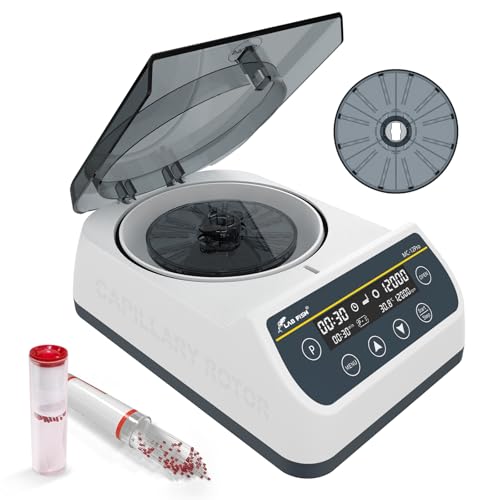
- Best for: Buyers who want a simple 10,000 RPM microcentrifuge and will verify the unstated details live.
- Max speed: 10,000 RPM
- Max RCF: 6,708 x g
- Timer: stated as a feature; range not stated on the listing
- Rotor capacity: not stated on the listing

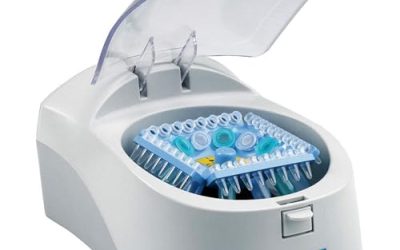
- Best for: Benches splitting time between loose microtubes and PCR strip tubes.
- Speed range: 1,000-10,000 RPM
- Max RCF: 5,600 x g
- Rotors included: round rotor for 8 x 0.2/0.5/1.5/2 mL tubes; strip rotor for 2 x 8 x 0.2 mL PCR strips
- Display: LCD

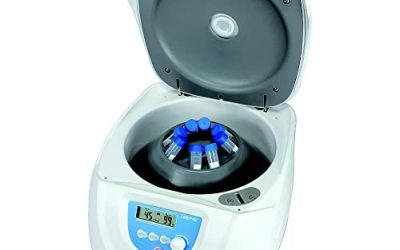
- Best for: Teaching labs and prep benches running gentle, frequent spins at modest force.
- Speed range: 1,000-7,000 RPM
- Max RCF: 3,286 x g
- Rotor capacity: 12 x 0.2/0.5/1.5/2 mL tubes
- Display: LCD
All 3 Picks at a Glance
| Product | Specs | Action |
|---|---|---|
| LAB FISH MC-10PRO |
| Check price on Amazon |
| LACHOI Mini Centrifuge LCD |
| Check price on Amazon |
| LAB FISH Mini Centrifuge LCD |
| Check price on Amazon |
Key takeaways
- Compare five microcentrifuges for sample preparation on speed, RCF, rotor format and locking hardware, with each listing's locking claims stated plainly.
Choosing a microcentrifuge for sample preparation usually comes down to one trade-off: raw spinning force against hardware you can verify. Listings in this category use the word lock loosely, and a lid lock, a rotor lid and a true rotor locking mechanism are three different things. Only one machine in this roundup has a listing that states a rotor safety feature in plain terms. Buyers who spin infectious, valuable or hard-to-replace samples need to decide how much stated locking hardware matters before they compare speed figures.
This guide serves teaching labs setting up a first sample prep bench, small research teams spinning microtubes daily, PCR-heavy benches that need strip capacity, and quality-control staff who want documented safety features. Every machine below was picked from the names and specifications published on its own Amazon page. Where a listing stays silent on rotor locking, rotor size or a timer range, the entry says so instead of filling the gap, so you can see exactly which claims each seller actually makes.
Quick Picks
As an Amazon Associate we earn from qualifying purchases
| Product | Best for | Key spec from title |
|---|---|---|
| JOANLAB MC-12PRO | Benches that need stated rotor locking | 12,000 rpm with a 3-in-1 rotor |
| FOUR E’S SCIENTIFIC Microcentrifuge | Protocols needing the highest stated force | 500-15,000 RPM, 15,100 x g RCF |
| LAB FISH MC-10PRO | Straightforward mid-speed sample prep | 10,000 RPM and 6,708 x g |
| LACHOI Mini Centrifuge LCD | PCR strip work with two included rotors | 1,000-10,000 RPM, 5,600 x g, LCD |
| LAB FISH Mini Centrifuge LCD | Gentle everyday spins at modest force | 1,000-7,000 RPM with LCD display |
How to Choose
Rotor Locking Versus Lid Locking
A rotor lock secures the rotor itself to the drive or keeps it captive under a fastened cover, while a lid lock only keeps the chamber lid shut during a run. Sellers blur the two, so read the exact wording. In this group, one listing states a rotor safety buckle with an automatic lid lock, one states a motor-driven lid lock and a separate rotor lid, and three listings say nothing about locking at all. If your lab protocol names rotor retention, only a listing that states it in words counts as evidence. Treat every unstated locking claim as absent until the seller confirms it in writing.
Speed Range and RCF for Your Protocols
Protocols specify force, not motor speed, so compare the RCF figure wherever a listing states one. Two machines with identical rpm numbers can deliver different force because rotor radius changes the result. The listings here span from a gentle 3,286 x g up to 15,100 x g, and one model states no RCF figure at all, which makes cross-checking impossible for that machine. Match the stated ceiling to your hardest routine protocol, then confirm the machine also covers the low speeds your delicate samples need for short clearing spins. A wide stated range matters more than a high top speed you will never call on.
Rotor Format, Adapters and Tube Capacity
Start with the tubes you actually load. A fixed twelve-place rotor suits benches that only spin loose microtubes, while a three-in-one design adds PCR strip positions and adapter support for smaller tubes. One model here ships two separate rotors, one round and one for strips, which saves buying accessories later. Check whether 0.2 mL and 0.5 mL tubes need included adapters or a different rotor entirely, and count positions honestly: a twelve-place rotor loaded with strip tubes is not the same throughput as twelve loose tubes. Listings that leave capacity unstated force you to verify it on the live page.
Display, Timer and Stored Programs
Daily sample prep rewards small conveniences. An LCD or LED readout that shows speed and time together prevents guesswork, and a stated timer range tells you whether long digestions or quick pulse spins are realistic. One listing here gives a full thirty-second to ninety-nine-minute range, while others confirm only that a timer exists. Stored programs help shared benches return to standard settings without re-entering values, and a quick spin function covers the seconds-long clearing runs that full programs handle badly. Weigh these details alongside stated noise figures and bench footprint before choosing. None of that helps, though, if the display type itself goes unstated on the listing.
The 5 Best Options
JOANLAB MC-12PRO
This is the pick for buyers who read safety sections before spec tables. Its listing is the only one in this group that states a rotor safety buckle, paired with an automatic lid lock that holds during the run and releases once the machine stops. The three-in-one rotor covers twelve loose microtubes plus PCR strip positions, over-temperature protection shuts the run down with an alarm, and stored settings suit shared benches. At a stated 12,000 rpm it is not the fastest here, but it is the only machine whose locking hardware is described in words.
Specs
- Max speed: 12,000 rpm
- Rotor: 3-in-1 rotor, 12 positions for 1.5/2 mL tubes plus a 4-position PCR strip rotor
- Tube fit: 0.2 mL and 0.5 mL tubes fit the 12-position rotor with the included adapters; the strip rotor holds 48 individual 0.2 mL PCR tubes or strip tubes
- Rotor locking: stated — rotor safety buckle design with automatic lid lock
- Over-temperature protection: stated, with auto shut-down, lid opening and buzzer alarm
- Program memory: speed and time settings can be stored
- Noise: less than 56 dB(A)
- Item weight: 6.16 lbs
- Max RCF: not stated on the listing
- Timer range: not stated on the listing
Best for: Sample prep benches that want the locking hardware stated in writing on the listing.
Watch out for: Listing copies for this ASIN are several months old, so confirm a live buy option before ordering, and use the visit to check the RCF figure and timer range the listing leaves unstated.
FOUR E’S SCIENTIFIC Microcentrifuge
Force is the reason to shortlist this machine. The listing states the widest speed span in the group and the highest RCF, driven by a brushless motor through an aluminum alloy rotor that carries its own lid against leakage. A motor-driven lid lock secures the chamber during operation — note that this is a lid lock, not a stated rotor lock. Ten stored programs, a quick spin function, an LED readout and overspeed plus overheating protection round out a listing aimed at benches running varied, demanding protocols every day.
Specs
- Speed range: 500-15,000 RPM
- Max RCF: 15,100 x g
- Timer: 30 seconds to 99 minutes
- Display: LED, showing speed and time
- Rotor: aluminum alloy, 12 places for 0.2/0.5/1.5/2.0 mL tubes, with a rotor lid against leakage
- Lid lock: motor-driven lid lock stated (lid lock only; rotor locking not stated)
- Motor: brushless
- Noise: below 56 dB
- Protections: overspeed and overheating protection stated
- Programs: stores up to 10 custom programs; quick spin function stated
Best for: Protocols that need the highest stated RCF in this group with programmable repeat runs.
Watch out for: A tracker shows a low-inventory signal for this ASIN, so confirm a live buy option before ordering; also confirm you are comfortable that the stated lock covers the lid only, not the rotor.
LAB FISH MC-10PRO
- Best for: Buyers who want a simple 10,000 RPM microcentrifuge and will verify the unstated details live.
- Max speed: 10,000 RPM
- Max RCF: 6,708 x g
- Timer: stated as a feature; range not stated on the listing
- Rotor capacity: not stated on the listing
Buyers who want a simple 10,000 RPM microcentrifuge and will verify the unstated details live.
The retrieved listing copy is brief, so open the live page and confirm rotor capacity, display type and any locking hardware before ordering — none of those details are stated in the copy checked here.
Buyers who want a plain mid-speed microcentrifuge without paying for features they will not use should look here. The listing states 10,000 RPM and 6,708 x g from its title, and names a timer as a feature. Beyond that, the retrieved listing copy is unusually brief: rotor capacity, display type and any locking hardware all go unstated. That thin documentation is this machine’s defining trait, so it suits purchasers comfortable confirming the remaining details on the live product page before ordering rather than trusting a summary.
Watch out for: The retrieved listing copy is brief, so open the live page and confirm rotor capacity, display type and any locking hardware before ordering — none of those details are stated in the copy checked here.
LACHOI Mini Centrifuge LCD
- Best for: Benches splitting time between loose microtubes and PCR strip tubes.
- Speed range: 1,000-10,000 RPM
- Max RCF: 5,600 x g
- Rotors included: round rotor for 8 x 0.2/0.5/1.5/2 mL tubes; strip rotor for 2 x 8 x 0.2 mL PCR strips
- Display: LCD
Benches splitting time between loose microtubes and PCR strip tubes.
Availability signals for this model conflict and it circulates under several ASINs, so confirm this exact ASIN shows a live buy option before ordering, and check the timer range on the live page.
PCR benches get the clearest value story here because two rotors come in the box: a round rotor for eight loose tubes across four sizes and a strip rotor holding two eight-tube PCR strips. The LCD display and a stated range from 1,000 to 10,000 RPM with 5,600 x g make settings easy to repeat. The listing does not state a timer range for this ASIN and says nothing about rotor locking, so treat locking as unverified and judge this machine on its rotor bundle and display instead.
Watch out for: Availability signals for this model conflict and it circulates under several ASINs, so confirm this exact ASIN shows a live buy option before ordering, and check the timer range on the live page.
LAB FISH Mini Centrifuge LCD
- Best for: Teaching labs and prep benches running gentle, frequent spins at modest force.
- Speed range: 1,000-7,000 RPM
- Max RCF: 3,286 x g
- Rotor capacity: 12 x 0.2/0.5/1.5/2 mL tubes
- Display: LCD
Teaching labs and prep benches running gentle, frequent spins at modest force.
Recent copies of this listing show out of stock and one maps the ASIN to a different title, so confirm a live buy option and that the page names this LCD model before ordering.
Routine, gentler separations are this mini centrifuge’s territory. Its listing states an adjustable range from 1,000 to 7,000 RPM and up to 3,286 x g, with a twelve-place rotor that accepts all four common microtube sizes and an LCD display for settings. Neither a timer nor any rotor locking is stated, so it fits teaching labs and prep benches whose samples tolerate modest force and whose staff spin short loads through the day. Confirm current availability first, because recent listing copies disagree about stock.
Watch out for: Recent copies of this listing show out of stock and one maps the ASIN to a different title, so confirm a live buy option and that the page names this LCD model before ordering.
Which One Fits Your Situation
When Locking Hardware Must Be Documented
Choose the JOANLAB MC-12PRO. It is the only machine here whose listing states a rotor safety buckle, and its automatic lid lock plus over-temperature shutdown give a protocol file something concrete to cite. The trade-off is a lower stated top speed than the group leader, which matters only if your protocols genuinely call for force beyond what a 12,000 rpm machine delivers on your rotors.
When Your Protocols Demand Maximum Force
Choose the FOUR E’S SCIENTIFIC microcentrifuge. Its stated 15,100 x g is the highest force figure in this group, the brushless motor covers a broad speed span, and ten stored programs keep repeat protocols consistent. Accept that its stated security feature is a motor-driven lid lock; if your protocol file specifically requires rotor locking language, this listing does not provide it.
When PCR Strips Share the Bench
Choose the LACHOI mini centrifuge if strips dominate your workload, because its box includes both a round rotor and a dedicated strip rotor, so no accessory order stands between delivery and the first run. The JOANLAB is the alternative when locking documentation also matters, since its three-in-one rotor includes strip positions. Either way, verify the exact ASIN at checkout, because this LACHOI model circulates under several.
When Spins Are Short, Gentle and Frequent
Choose the LAB FISH Mini Centrifuge for everyday clearing spins and teaching-lab work. Its adjustable range tops out at a modest force that suits samples which pellet easily, the rotor takes all four tube sizes, and the LCD keeps settings visible for rotating users. Stock signals on this ASIN are unreliable, so confirm a live buy option on the exact listing before committing a purchase order.
Common Mistakes
- Treating a lid lock as rotor locking: the two secure different parts, and only wording that names the rotor counts as a stated rotor feature.
- Comparing headline rpm across brands instead of the stated RCF, which is the force your samples actually experience during a run.
- Borrowing specifications from a sibling ASIN or a same-name variant; several models here circulate under multiple listings with different stated details.
- Ordering before checking which tube formats the included rotor holds, then discovering PCR strips or small tubes need adapters that are not in the box.
- Skipping the availability check on listings whose stock signals are months old or conflicting, then building a purchase plan around a machine that cannot currently be ordered.
Frequently Asked Questions
What is the difference between a rotor lock and a lid lock?
A lid lock keeps the chamber lid closed while the rotor turns and usually releases when the run ends. A rotor lock goes further, securing the rotor itself through a buckle, fastened cover or similar hardware described by the seller. Listings often highlight whichever they offer, so the safe habit is matching the exact phrase on the page against the wording your lab protocol requires before ordering.
Which models here actually state rotor locking?
Only the JOANLAB MC-12PRO. Its listing names a rotor safety buckle design and an automatic lid lock. The FOUR E’S SCIENTIFIC listing states a motor-driven lid lock, which secures the lid rather than the rotor. The LAB FISH MC-10PRO, the LACHOI mini centrifuge and the LAB FISH Mini Centrifuge listings state no locking mechanism at all, so buyers should treat the feature as absent on those three machines.
Should I compare rpm or RCF when choosing?
Compare RCF wherever a listing states it, because RCF is the force acting on your samples and it depends on rotor radius as well as speed. Two machines at the same rpm can produce different RCF values. One machine in this group states no RCF figure, so its force cannot be checked against protocol requirements from the listing alone; treat that gap as a question to resolve before buying.
Can these microcentrifuges run PCR strip tubes?
Two listings say yes in their own words. The JOANLAB three-in-one rotor includes a four-position strip rotor for PCR tubes, and the LACHOI ships a separate strip rotor alongside its round rotor. The other three listings describe rotors for loose microtubes only, or state no capacity at all, so strip work on those machines should not be assumed without checking the live listing or the seller.
More from Amazon
Programs that pair well with the guide above. Offers and eligibility are set by Amazon and may change.
Free shipping on eligible items, Prime Video and more. Eligible new members can start with a free trial.
Start a Prime free trialAudiobooks and podcasts to listen to on the go. Eligible new members can start with a free trial.
Try Audible freeAd-free music streaming. Eligible new subscribers can start with a free trial.
Try Music Unlimited freeA free business account with business pricing and bulk-buying tools for work, shop or home office.
Create a business accountAs an Amazon Associate we earn from qualifying purchases.