Key takeaways
- Wi-Fi band. Many battery Reolink cameras are listed for 2.4 GHz and some for dual-band. Check the product page for the band supported, and test signal strength at the mounting spot.
- microSD cards. The maker lists a maximum supported card size per model. Use a high-endurance card made for continuous recording and format it as instructed in the manual.
- PoE switch or NVR. PoE cameras need either a PoE injector, a PoE switch or an NVR with PoE ports. Confirm the power budget of the switch versus the number of cameras.
- Cable length. Ethernet has a distance limit of roughly 100 meters (328 feet) per run, which is standard for the technology. For longer runs, use a switch partway.
- Weatherproofing. Reolink lists an IP rating per model. Seal cable entry points and use outdoor-rated cable where cables are exposed to sun and rain.
- Mains wiring. Anything connecting to household mains, including floodlight fixtures, should follow local code, and an electrician should handle it if you are unsure.
For most buyers, a Reolink PoE camera paired with a Reolink recorder is the most dependable setup, a battery or solar Argus camera suits spots with no power, a dual-lens Duo camera suits wide yards and driveways, and a pan-and-tilt TrackMix style camera suits anyone who wants motion tracking. Reolink’s main appeal, according to the maker and to reviewers, is local recording with no required monthly fee.
Our top picks


As an Amazon Associate we earn from qualifying purchases at no extra cost to you.
At a Glance: Reolink Camera Families Compared
| Family | Power and connection | Best for | Key stated traits | Limits |
|---|---|---|---|---|
| Argus (battery and solar) | Rechargeable battery, optional solar panel, Wi-Fi | Places without power or Ethernet | Wire-free placement, local microSD recording, spotlight on some models | Battery life depends on activity and weather; recharging needed |
| Duo (dual-lens) | Wi-Fi or PoE, varies by model | Wide driveways, yards, building fronts | Two lenses stitched into one ultra-wide view, per the maker | Wider view means smaller subjects at distance |
| TrackMix (pan, tilt, dual-lens) | Wi-Fi, battery or wired depending on version | Following people or vehicles | Auto-tracking, a fixed wide lens plus a tracking lens, per the maker | Moving parts; higher cost than fixed cameras |
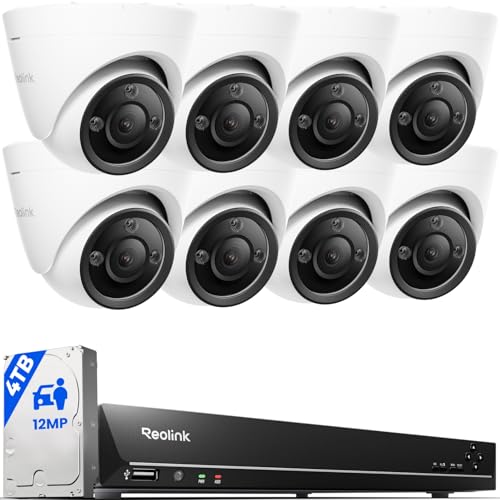
| RLC PoE bullet and dome cameras | Power over Ethernet | Permanent, reliable 24/7 recording | Single-cable power and data, works with Reolink NVRs | Needs cable runs and a recorder or switch |
| Go series (cellular) | Battery and solar with 4G | Remote sites: cabins, sheds, construction | Uses a mobile data connection instead of Wi-Fi | Needs a data plan from a carrier |
| Floodlight and spotlight cameras | Mains or PoE | Garages, side yards, deterrence | Built-in light with camera | Wiring may need an electrician |
Why Buyers Look at Reolink
Reolink is a camera maker that sells directly and through retailers, and its pitch is simple: recording to a local microSD card or a network video recorder (NVR) instead of requiring a cloud plan. The company also lists an optional cloud service for those who want it. Reviewers often highlight the number of camera shapes and power options at modest prices, while noting that the mobile app and desktop client are functional rather than polished. Smart-home integration is more limited than with Ring or Nest, though Reolink states that some cameras support Alexa or Google Assistant for live view and offers RTSP and ONVIF support on many wired models, which allows third-party software.
Top Picks by Need
1. Reolink Argus series: battery and solar flexibility
The Argus line is the usual starting point for buyers who cannot run a cable. The maker lists a rechargeable battery, a microSD slot, motion detection, and in many versions a spotlight and color night vision. A separate solar panel accessory is available, and reviewers say it is a worthwhile add for outdoor positions with steady sun. Battery cameras sleep between events, so there can be a short delay between motion and recording. For critical entry points, a wired camera avoids that. Budget to mid-range tier.
2. Reolink Duo series: wide coverage with one unit
The Duo uses two lenses to create a panoramic view, and the maker states that it can replace two separate cameras in some placements. Reviewers like the broad view of a driveway or the front of a house in a single frame. The trade-off is that the wide field of view makes distant subjects smaller, so if you need to identify faces across a large yard, a narrower lens may be better. Mid-range tier.
3. Reolink TrackMix: motion tracking
TrackMix cameras combine a fixed wide lens with a motorized lens that follows moving subjects. According to the maker, this lets the camera show the whole scene while also zooming in on a person or vehicle. The moving parts and extra lens add cost and complexity. Mid-range to premium tier.
4. Reolink RLC PoE cameras with an NVR: the dependable backbone
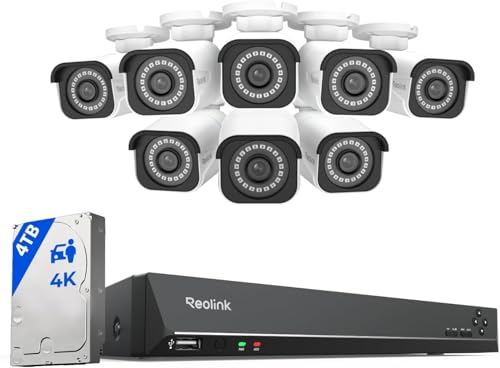
For a whole-property system, PoE bullet and dome cameras connected to a Reolink NVR are the most robust option. You run an Ethernet cable to each camera, the NVR records continuously to its internal hard drive, and you view everything in the Reolink app. Reviewers highlight steady 24/7 recording and no Wi-Fi dropouts. The cost is cable installation and the need to choose a recorder with enough channels and storage for your camera count. Budget to mid-range tier per camera, plus the recorder.
5. Reolink Go series: cellular for remote locations
The Go line uses a cellular connection, so it can work at a barn or cabin with no Wi-Fi. A data plan from a carrier is required, and coverage depends on the location. Solar power accessories are offered by the maker. Mid-range to premium tier.
6. Reolink floodlight cameras: light and video combined
Floodlight models combine bright lighting with a camera and are meant for garages and side yards. If installation involves replacing or wiring a fixture to household mains, a licensed electrician is the safest route and local code may require it.
Pick X If… Decision Table
| Pick this | If | Watch for |
|---|---|---|
| Argus battery or solar | No outlet or cable is nearby | Recharging, short wake delay |
| Duo | You need a very wide view of a driveway or yard | Smaller subjects at distance |
| TrackMix | You want the camera to follow movement | Cost, moving parts |
| RLC PoE with NVR | You want constant recording and top reliability | Cable runs, recorder sizing |
| Go series | No Wi-Fi at the site | Carrier data plan and signal strength |
| Floodlight camera | You want light and video at a garage or side yard | Wiring work |
Fit, Setup and Compatibility Notes
- Wi-Fi band. Many battery Reolink cameras are listed for 2.4 GHz and some for dual-band. Check the product page for the band supported, and test signal strength at the mounting spot.
- microSD cards. The maker lists a maximum supported card size per model. Use a high-endurance card made for continuous recording and format it as instructed in the manual.
- PoE switch or NVR. PoE cameras need either a PoE injector, a PoE switch or an NVR with PoE ports. Confirm the power budget of the switch versus the number of cameras.
- Cable length. Ethernet has a distance limit of roughly 100 meters (328 feet) per run, which is standard for the technology. For longer runs, use a switch partway.
- Weatherproofing. Reolink lists an IP rating per model. Seal cable entry points and use outdoor-rated cable where cables are exposed to sun and rain.
- Mains wiring. Anything connecting to household mains, including floodlight fixtures, should follow local code, and an electrician should handle it if you are unsure.
Reolink Versus Other Brands
| Factor | Reolink | Ring, Arlo, Nest | Eufy |
|---|---|---|---|
| Subscription needed for core recording | No, local microSD or NVR | Yes for saved clips, per makers | No, local storage |
| Wired PoE and NVR options | Wide range | Limited | Limited |
| Smart-home polish | Functional, fewer integrations | Stronger ecosystems | Good app, mixed integrations |
| Third-party software support | RTSP and ONVIF on many wired models | Limited | Limited |
Budget Tiers
- Budget: Entry-level wired and Argus models, good for a single door or window.
- Mid-range: Duo cameras, solar-equipped Argus kits, multi-camera PoE kits with a recorder.
- Premium: TrackMix cameras, cellular Go units, larger NVR systems with many channels and big drives.
Alternatives
- Eufy eufyCam and SoloCam: Another local-storage family with a polished app, available in battery and solar options.
- Arlo or Ring: Better ecosystem integration, but saved video typically requires a subscription.
- Other PoE brands such as Amcrest or Lorex: Comparable wired systems with recorders for buyers who want a whole-property setup.
Buying Checklist
- Decide whether each location has power, Ethernet or neither, since that narrows the family immediately.
- Count the cameras you want. Two or three can use microSD cards, while larger systems are easier to manage with an NVR.
- Walk the property at night and note where light is poor. Models with a spotlight or color night vision help in dark corners, according to the maker.
- Check the Wi-Fi signal at each mounting spot, or plan for wired cameras where it is weak.
- Choose the storage plan: a microSD card per camera, a recorder with a hard drive, or both for redundancy.
- Set activity zones and sensitivity after installation so that passing traffic and swaying branches do not trigger constant alerts.
- Create a strong, unique password for the camera account and apply firmware updates when the maker releases them.
Reviewers often note that the biggest source of disappointment with any camera system is placement rather than the hardware. A well-aimed mid-range camera usually beats a premium camera pointed at the wrong angle, so spend time on the layout before drilling.
Frequently Asked Questions
Do Reolink cameras need a subscription?
No, the maker states that recording to a microSD card or an NVR works without a monthly fee. A paid cloud option exists for those who want off-site backup.
Which Reolink camera is best for a driveway?
A dual-lens Duo camera is a common pick because of its wide field of view, while a PoE model suits a long-term wired install. If you need to read plates or identify faces at distance, consider a narrower, higher-zoom camera instead.
How long does an Argus battery last?
The maker gives battery life as a range that depends on how many motion events occur, the temperature and the video settings. Busy locations drain batteries faster, and a solar panel can reduce charging effort.
Can I use Reolink cameras without the app?
Many wired Reolink cameras support RTSP and ONVIF, so you can use third-party recording software. Support varies by model, so read the product page for the specific camera before relying on it.
Are Reolink cameras good in the cold?
Each model has an operating temperature range in the maker’s specifications. Batteries lose capacity in the cold, and charging may be restricted below freezing, so a wired or PoE model is the safer choice in harsh winters.
Do I need an NVR?
Not for one or two cameras, since microSD cards can handle recording. An NVR becomes worthwhile with several cameras because it gives continuous recording on a hard drive and a single place to review footage.