Key takeaways
- Keep windows and doors closed, and choose one room as a clean room for sleeping.
- Run the purifier on a higher setting when smoke is heavy, then lower for maintenance.
- Place the unit with space around it, as the manual states, and away from walls that block intake.
- Replace filters on the maker’s schedule or sooner if the unit is clogged or odors return.
- If you use a box fan filter, follow public guidance on the correct fan, filter orientation and unattended use. Use fans that carry a safety certification and avoid older units with damaged cords. Never leave a modified fan running in a way the fan maker warns against.
- If you run HVAC, check that your system can handle a higher MERV filter, and consult an HVAC technician if unsure.
- Avoid candles, incense, fireplaces and gas stoves indoors during smoke events, as they add particles.
- Do not rely on a purifier for carbon monoxide. Purifiers do not remove it, so keep certified CO alarms installed and working.
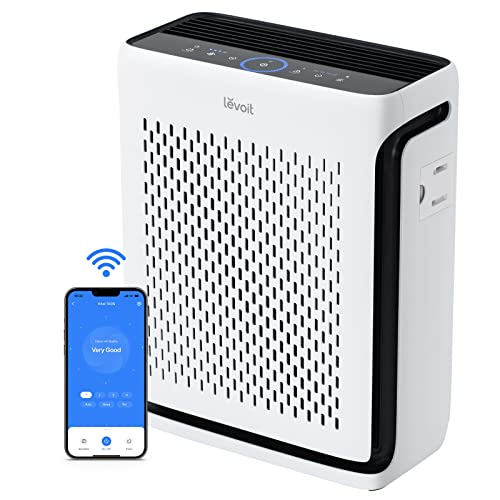
For wildfire or household smoke, the best air purifier is one with a true HEPA filter, a smoke CADR rating high enough for your room size, and a carbon filter that is thick enough to help with odor, which in practice points to models such as the Coway Airmega series, Levoit Core and Vital lines, Blueair Blue and Pure lines, Winix models, or higher-end IQAir units for larger budgets. A purifier lowers airborne particles but does not make smoke exposure safe, so follow local air-quality advice and see a doctor if symptoms such as breathing difficulty or chest pain appear.
Our top picks



As an Amazon Associate we earn from qualifying purchases at no extra cost to you.
Air Purifiers for Smoke at a Glance
| Brand and line | Best for | What the maker lists | Filter | Limits |
|---|---|---|---|---|
| Coway Airmega series | Bedrooms and living rooms | Smoke CADR and room size ratings, filter-change indicators | HEPA-type filter plus carbon pre-filter | Replacement filters are an ongoing need |
| Levoit Core and Vital lines | Value-focused buyers | Room coverage and CADR figures, sleep modes | HEPA-type filter with activated carbon | Carbon layer is thin on smaller models |
| Blueair Blue and Pure lines | Quiet operation and design | CADR and room size ratings, filter reminders | HEPAsilent or HEPA-type filters, carbon options | Check the specific filter variant for smoke |
| Winix models | Mid-range with carbon options | Stated room coverage, auto mode with sensors | True HEPA with carbon | Some units include ionizer features that can be turned off |
| IQAir HealthPro and Atem series | Heavy smoke use and larger rooms | Particle and gas filters, high airflow | HEPA-grade with thick carbon options | Higher tier, heavier units |
| Box fan plus furnace filter (DIY) | Low-cost temporary use | Guidance from public agencies and researchers | MERV 13 filters | Louder and less tidy, needs careful assembly |
Specific models and ratings are updated often, so confirm the current CADR numbers on the maker’s page or the certification listing for the exact model.
What Matters Most for Smoke
True HEPA filtration
Wildfire smoke contains very fine particles, commonly called PM2.5. A true HEPA filter is rated to capture 99.97 percent of particles at 0.3 microns, which is among the hardest sizes to capture. Models that use a different filter name should list a comparable test result. Avoid products that rely on ozone generation, as ozone is a lung irritant, and public health agencies advise against ozone generators for air cleaning.
Smoke CADR and room size
CADR (clean air delivery rate) shows how much filtered air a purifier delivers. The AHAM certification program lists separate CADR numbers for smoke, dust and pollen, and the smoke figure is the most relevant here. A widely cited rule of thumb from AHAM is that the smoke CADR should be at least about two thirds of the room’s floor area. Using a model sized well above your room lets you run it on a lower, quieter setting.
Activated carbon for odor
Carbon filters adsorb some gases and smoke odor. A thin carbon layer saturates fast, so purifiers marketed for smoke odor typically list a heavier carbon bed. Carbon is not a guarantee of removal of all gases from smoke.
Noise and sleep modes
You will want to run the purifier for long periods during smoke events. Check the maker’s decibel figure on the low and high settings and whether lights can be dimmed for bedrooms.
Filter costs and availability
Filters need replacing every several months, sooner after heavy smoke. Factor in replacement cost and whether the maker sells filters reliably. Some brands use filter-change indicators, though smoky conditions can shorten life before the light activates.
Energy and running time
Many units are rated by the maker for modest power use. Running one around the clock during a smoke event is common, so look at the stated wattage.
Picks by Budget Tier
Budget tier
Levoit and Winix compact models are often highlighted by reviewers for strong value, with HEPA and basic carbon filtering for small to medium rooms. They suit bedrooms and offices. A DIY box fan filter also fits here for temporary needs.
Mid-range tier
Coway Airmega and Blueair models are frequently recommended for larger rooms, with higher CADR figures, filter monitors and quieter operation. Check the smoke CADR on each model rather than relying on the series name.
Premium tier
IQAir offers units with substantial carbon beds and strong airflow, aimed at smoke-prone regions and sensitive households. They are heavier and more costly, and their replacement filters are an ongoing expense.
Decision Table: Pick X If…
| Pick this | If… |
|---|---|
| Levoit Core compact model | You need an affordable option for a small bedroom |
| Coway Airmega | You want strong coverage for a living room and filter indicators |
| Blueair | Quiet operation and style matter |
| Winix with carbon filter | You want auto sensing and a mid-range price tier |
| IQAir | You live in a smoke-prone area and want maximum filtration |
| DIY box fan filter | You need a short-term low-cost option and can assemble it safely |
| Whole-home HVAC upgrade | You want to filter air throughout the house and your system supports a higher MERV filter |
Use Tips During Smoke Events
- Keep windows and doors closed, and choose one room as a clean room for sleeping.
- Run the purifier on a higher setting when smoke is heavy, then lower for maintenance.
- Place the unit with space around it, as the manual states, and away from walls that block intake.
- Replace filters on the maker’s schedule or sooner if the unit is clogged or odors return.
- If you use a box fan filter, follow public guidance on the correct fan, filter orientation and unattended use. Use fans that carry a safety certification and avoid older units with damaged cords. Never leave a modified fan running in a way the fan maker warns against.
- If you run HVAC, check that your system can handle a higher MERV filter, and consult an HVAC technician if unsure.
- Avoid candles, incense, fireplaces and gas stoves indoors during smoke events, as they add particles.
- Do not rely on a purifier for carbon monoxide. Purifiers do not remove it, so keep certified CO alarms installed and working.
Alternatives
Corsi-Rosenthal box
This design uses several MERV 13 filters taped to a box fan. Researchers and public agencies have described it as an inexpensive way to reduce particles. It is louder and must be built carefully.
Upgrading furnace filters
Switching to a higher-MERV filter and running the fan can clean air whole-house, if your equipment allows it. An HVAC professional can confirm compatibility.
Respirators
For outdoor exposure, public health agencies note that properly fitted N95 or similar respirators can reduce particle inhalation. Fit and use guidance from health authorities should be followed, and they are not a replacement for staying indoors with clean air.
Sizing, Placement and Maintenance in Practice
Room size is the main sizing factor, but ceiling height and openness also matter. A purifier in an open-plan space has to clean a larger volume, so choose a model with a higher smoke CADR or use two units. Place the purifier where air can flow freely into and out of the unit, usually a few inches to a foot from walls, as the manual states. Bedroom placement near the bed is common during smoke events.
Maintenance matters as much as the unit itself. Vacuum the pre-filter if the model has a washable one, keep the sensor window clean, and write the replacement date on the unit. Store spare filters in a sealed bag so they are ready when a smoke season arrives. After the event ends, open windows and ventilate when outdoor air quality improves, using a local air-quality index to decide when it is reasonable.
Frequently Asked Questions
Does an air purifier remove wildfire smoke?
It can reduce smoke particles in a room when properly sized and run continuously, but it does not remove them all and does not clear gases fully. Stay indoors when air quality is poor and follow local health advice.
What CADR do I need for smoke?
Look at the smoke CADR for the model, and compare it with your room’s floor area. A common guideline is a smoke CADR around two thirds of the area, assuming standard ceiling height. Higher is better for large rooms or heavy smoke.
Are ionizers and ozone generators safe?
Ozone is a lung irritant, and public agencies recommend against ozone generators. Some purifiers include ionizers that can be switched off. Choose models that do not produce ozone and look for certification such as CARB listing where available.
How often should I replace the filter?
Follow the maker’s schedule, usually every few months for HEPA and carbon filters. In heavy smoke seasons, filters clog faster, so check them more often.
Can a purifier remove the smell of smoke?
Carbon filters help with odors, but thin carbon layers wear out quickly. Models with thicker carbon beds work better for lingering smells, and heavy odors may also need cleaning of the source.
Should I see a doctor about smoke exposure?
If you or a family member has asthma, heart or lung conditions, or symptoms such as shortness of breath, wheezing, or chest pain, contact a doctor and follow your care plan. In an emergency, call local emergency services.