If you want a smart smoke alarm that sends a phone alert when you are away, choose a connected smoke and carbon monoxide alarm from an established safety brand such as Kidde, First Alert or Google Nest; if you would rather keep the alarms you already have, a listener device like the Ring Smoke and CO Listener can add phone alerts without replacing them. Whatever you pick, the alarm itself must meet fire-safety listing requirements and be installed according to the manual and local code.
Our top picks


As an Amazon Associate we earn from qualifying purchases at no extra cost to you.
Smart Smoke Detectors at a Glance
| Option | Best for | Key stated features | Limits |
|---|---|---|---|
| Google Nest Protect (2nd generation) | Existing Google Home households | The maker lists smoke and carbon monoxide detection, voice location alerts, app notifications and a split-spectrum sensor | Previous-generation hardware; availability and long-term support depend on the maker’s current policy, so read its support page before buying |
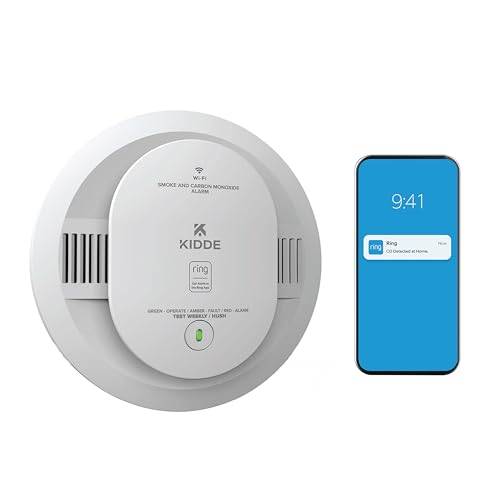
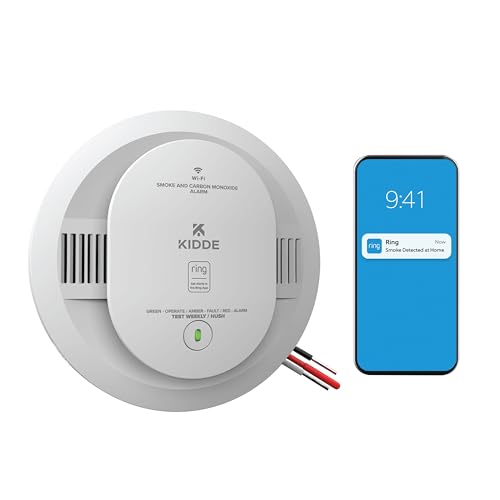
| Kidde smart smoke and CO alarms | Mainstream buyers who want phone alerts and an established fire-safety brand | The maker lists app notifications, voice alerts and compatibility with common voice assistants on selected models | Features vary by model; some are hardwired, others battery powered |
| First Alert smart and Z-Wave smoke and CO alarms | Smart-home hubs and security systems | The maker lists Z-Wave connectivity and integration with compatible hubs on certain models | Needs a compatible hub for remote alerts |
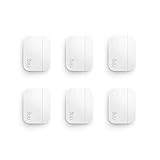
| Ring Smoke and CO Listener | Renters or owners who want to keep existing alarms | The maker states it listens for the sound of an existing smoke or CO alarm and sends a notification | Not an alarm itself; it depends on the other alarm sounding |
| Aqara smart smoke detector | Buyers building a Zigbee or Matter-based home | The maker lists smoke detection and hub-based alerts | Requires an Aqara hub; check that the product carries the listing required in your region |
What Makes a Smoke Detector “Smart”
A smart smoke detector does the same core job as a conventional one: detect smoke or carbon monoxide and sound a loud alarm. The extra features sit on top. These typically include a mobile alert when the alarm sounds, a notification for low batteries, remote silencing of nuisance alarms, interconnection with other alarms and sometimes spoken messages that name the room. Reviewers who cover the category generally agree that the smart layer is a convenience. The life-safety function still depends on the alarm hardware, correct placement and regular maintenance.
Safety Basics Before You Buy
- Look for a listing mark from a recognized testing laboratory. In the United States, smoke alarms are evaluated to UL 217 and carbon monoxide alarms to UL 2034.
- Follow the National Fire Protection Association guidance: alarms inside every bedroom, outside each sleeping area and on every level, including the basement.
- Replace smoke alarms by the date stated in the manual; most makers say about ten years from manufacture.
- Test alarms monthly using the test button, and replace batteries as the maker directs.
- Never rely on a phone alert alone. If an alarm sounds, leave the building and call emergency services from outside.
Google Nest Protect
Nest Protect has been one of the best-known smart alarms, and reviewers have praised its spoken alerts, pathlight and app integration. The second generation is the model most buyers have encountered. Because it is a previous-generation product and the maker has been shifting its smart-home lineup, confirm availability and ongoing support in the maker’s help pages before purchasing. Pick it if you already use Google Home and want integration with other Nest devices.
Kidde Smart Alarms
Kidde has long been a household name in smoke alarms. The maker offers connected models that send alerts to a phone and work with voice assistants, along with simpler interconnected alarms for buyers who want a wired or wireless network without an app. Choose the hardwired version if you are replacing existing ceiling alarms and have a licensed electrician or confident installer; choose a battery model if the room has no wiring. Read the package carefully, because some models combine smoke and CO sensing while others do not.
First Alert and Z-Wave Options
First Alert, which is owned by the same corporate family as the Onelink brand, sells connected alarms and Z-Wave models that integrate with several smart-home and security hubs. If you already run a Z-Wave network, these alarms can raise an alert on your hub and trigger other devices such as lights. If you do not use a hub, a Wi-Fi or app-based alarm is simpler. Onelink-branded alarms are now a previous-generation line in most reviews, so buyers who see them should confirm current support.
Ring Smoke and CO Listener
This small device is not a replacement for a smoke alarm. According to the maker, it listens for the pattern of an existing smoke or carbon monoxide alarm and then sends a notification to the Ring app. It suits renters, buyers who do not want to replace working alarms, and homes with alarms already hard-wired by a landlord. Its limitation is obvious: it only knows what the alarm tells it, and it will not detect smoke on its own.
Aqara and Hub-Based Alarms
Aqara offers a smoke detector that connects through its hub, which makes sense for people building a larger Aqara home. Hub-based alarms may require a local network connection, so a router outage can affect remote alerts, though the audible alarm should still sound. Always confirm the product carries the safety listing for your country, since some smart-home gear is sold regionally.
Budget Tier Trade-offs
- Budget: Basic interconnected battery alarms or a listener device. They provide the alarm or the alert, but rarely both in one unit.
- Mid-range: Connected smoke and CO alarms from Kidde or First Alert with app alerts and voice announcements.
- Premium: Alarms with multiple sensors, spoken room names, pathlights and deeper smart-home integration, such as Nest Protect.
Placement, Power and Compatibility Notes
- Hardwired alarms with battery backup are common in newer homes; do not mix brands on the same interconnect wire unless the maker says they are compatible.
- Sealed ten-year battery models reduce the need for battery swaps but still have an end-of-life date.
- Keep alarms away from kitchens and bathrooms where steam and cooking can cause nuisance alarms; the manual shows the minimum distances.
- Confirm Wi-Fi band support (most smart alarms use 2.4 GHz) and that your voice assistant is supported.
- Dust and insects can foul sensors, so vacuum around the alarm gently as the manual directs.
Living With Smart Alarms Day to Day
Plan for the small maintenance tasks. Test every alarm monthly, and use the app to confirm that notifications reach every adult in the household, not only the person who installed the system. Give each alarm a clear room name so alerts tell you where the problem is. If the alarm uses Wi-Fi, keep the router firmware current and note that a new router or password requires reconnecting the alarm. Record the manufacture date of each unit, and set a reminder for its replacement. Finally, practice an escape plan with two exits from each room and a family meeting spot outside, because no alarm replaces knowing how to get out.
Pick X If …
| If you want … | Pick | Why |
|---|---|---|
| Spoken alerts and Google Home integration | Nest Protect | Voice messages and app control, with support caveats for previous-generation hardware |
| A familiar brand with app alerts | Kidde smart alarm | Wide model range from wired to battery |
| Integration with a Z-Wave hub | First Alert Z-Wave | Works with hub automations |
| To keep your existing alarms | Ring Smoke and CO Listener | Adds phone alerts without replacement |
| An Aqara or Matter-oriented home | Aqara smoke detector | Fits that ecosystem |
Alternatives to Consider
- Interconnected non-smart alarms. If every alarm in the home sounds together, you may not need an app at all.
- Monitored fire alarm service. A professionally monitored system dispatches responders even when no one is home.
- Standalone CO alarms. Homes with fuel-burning appliances need CO protection in addition to smoke protection.
Frequently Asked Questions
Do smart smoke detectors work if Wi-Fi goes down?
The local sensor and siren should keep working, because the alarm function does not depend on the internet. What you lose is the phone notification. Read the maker’s manual to see exactly how your model behaves without a network connection.
How often should I replace a smart smoke detector?
Most makers state about ten years from the manufacture date, which is printed on the back of the unit. Replace the alarm earlier if it fails a test or chirps after a battery change. Smart features do not extend the sensor life.
Do I need a smoke and carbon monoxide combination?
Homes with gas appliances, a fireplace, an attached garage or fuel-burning heat should have carbon monoxide alarms as well. A combination unit saves wall space, but a separate CO alarm is acceptable. Follow your local code for required locations.
Can I install a hardwired smart alarm myself?
Local rules differ, and working on household wiring carries a shock risk. If you are not comfortable, hire a licensed electrician. Always switch off the circuit breaker first and follow the maker’s wiring diagram.
Why does my alarm go off when I cook?
Smoke and steam from cooking can trigger sensors that are too close. Move the alarm to the distance the manual specifies, use the exhaust fan, and consider an alarm with a hush feature. Do not remove or disable the alarm.
Can a phone alert replace the siren?
No. The siren wakes people in the home, which is the main life-safety function. Phone alerts are an extra layer for when you are away, and you should still leave the building and call emergency services when any alarm sounds.