Key takeaways
- Comparing solar generators is harder than it looks because the listings rarely line up. One title leads with watt-hours, another with AC output.
Comparing solar generators is harder than it looks because the listings rarely line up. One title leads with watt-hours, another with AC output, a third with panel wattage, and a fourth with a surge figure that sounds impressive but means something different. Anyone who has put three browser tabs side by side knows the frustration. The way through is to compare the same four numbers on every candidate: stored energy, continuous AC output, solar panel wattage, and battery chemistry.
This guide is for shoppers who already know they want a solar generator kit and are trying to decide between a small portable bundle, a mid-size system and a large home-backup package. It sets seven kits against each other using only what the titles state, with cost handled as budget, mid-range and premium tiers instead of exact figures. It is written for 2026 buyers who would rather understand the trade-offs than chase the biggest number.
Quick Picks
Our top picks

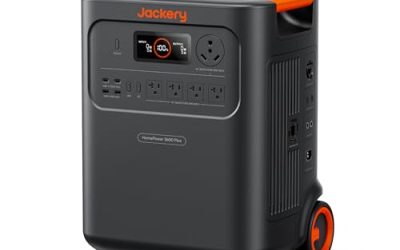
 Jackery HomePower 3600 Plus & 2x200W Solar
- Essential Home Backup: The Jackery HomePower 3600 Plus…
- Safe Power That Lasts: Built with high-temp resistant…
- Plug-and-Play: With its easy plug-and-play design, the Jackery…

 Jackery HomePower 3000 and 2x200W Solar Panels
- Essential Home Backup: With a robust 3600W output…
- ≤20ms UPS: Featuring a UL-certified UPS that switches…
- Power for Essentials: The Jackery HomePower 3000 keeps…


As an Amazon Associate we earn from qualifying purchases at no extra cost to you.
| Product | Best for | Key spec from the title |
|---|---|---|
| Jackery Solar Generator 300 with 40W panel | Entry-level portable kit | 292Wh, 300W AC, pure sine wave |
| Jackery HomePower 3600 Plus with 2x200W panels | Expandable home backup | 3584Wh, 3600W AC, expandable to 21kWh |
| Jackery HomePower 3000 with 2x200W panels | Starting heavy loads | 3072Wh, 3600W AC, 7200W surge |
| MARBERO 237Wh with 60W foldable panel | Budget camping kit | 237Wh, 300W pure sine wave, 60W panel |
| Anker SOLIX C2000 Gen 2 with 400W bifacial panel | Large kit with quick refills | 2048Wh, 2,400W (4,000W peak), full charge in 58 minutes |
| DaranEner 300W with 30W panel | Light-duty budget option | 192Wh, 300W, 2 AC outlets, LiFePO4 |
| Jackery Explorer 2000 v2 with 2x200W panels | Mid-to-large portable backup | 2042Wh, 2200W AC, 20ms UPS |
How to Choose
Compare stored energy against your daily use
Watt-hours decide how long the system runs. A 200Wh class kit gives you phone and light charging for a weekend. A 2,000Wh class kit can power a fridge, router and laptop overnight. Systems above 3,000Wh are meant for essential-circuit backup. Add up the devices you actually run, multiply by hours, and compare that daily total to each battery with a margin of about 20 percent for conversion losses.
Match panel size to battery size
A 30W to 60W panel suits batteries under 300Wh, where a few sunny hours matter. For 2,000Wh and above, look at 400W of panels or more, otherwise a recharge may stretch across several days. Folding panels are easier to store and aim, while fixed arrays suit a base camp or a rooftop. Treat the listed wattage as a ceiling, since angle and cloud cover trim it every day.
Look past peak figures to continuous output
Peak or surge figures such as 4,000W or 7200W describe a brief burst, useful for starting compressors and pumps. Continuous AC output decides what runs steadily. A 300W unit handles laptops and lights, a 2,000W-class unit covers many kitchen and workshop loads, and a 3600W unit is aimed at larger essential circuits. Ignore headline peaks if your devices are simple electronics.
Chemistry, UPS and expansion
LiFePO4 or LFP cells are generally specified for thousands of cycles, which matters for any kit that will see regular use. A 20ms UPS function lets the unit act as a backup between wall power and sensitive electronics. Expansion to larger capacity is worth paying for only if you will add batteries later. Finally, do not mix up battery systems with fuel generators: gas models produce carbon monoxide and must stay outdoors, well away from windows and doors.
The 7 Best Options
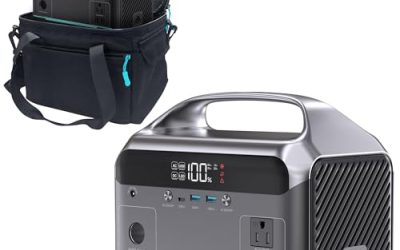
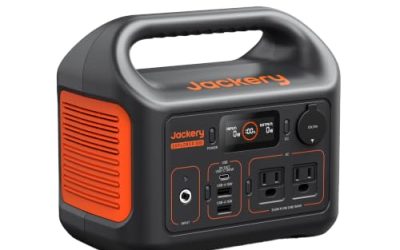
Jackery Solar Generator 300 with 40W Panel
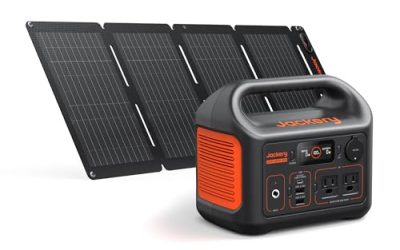
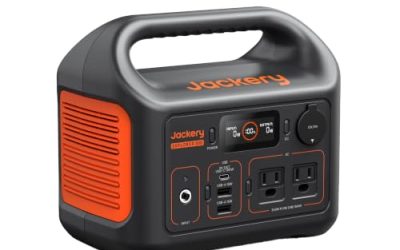
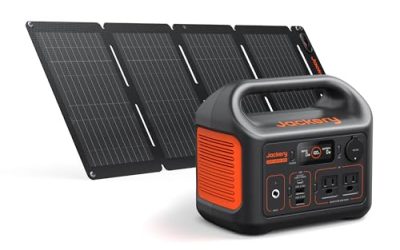
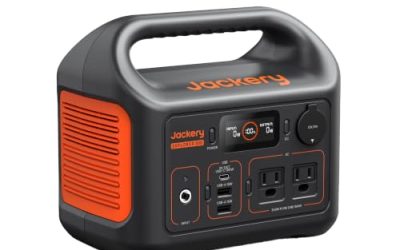
This bundle suits a buyer who wants a small, recognizable kit for RV trips, camping and short blackouts. The title lists 292Wh, a 300W AC outlet with pure sine wave output, and a 40W panel, so storage and charging arrive together. Its sweet spot is the shopper who has never owned a solar kit and wants something simple to unbox, set in the sun and plug into.
- Strength: Pure sine wave AC is listed, which suits sensitive electronics.
- Strength: Panel included, so the kit is ready to set up.
- Trade-off: A 40W panel refills a 292Wh battery slowly.
Skip it if you need to run anything beyond small electronics and lights, or if you want to recharge quickly from sun alone, because the small panel limits how fast the battery refills.
Jackery HomePower 3600 Plus with 2x200W Panels
This is the expandable option in the group: 3584Wh, 3600W AC output, an LFP battery and a path to 21kWh, plus two 200W panels. Households that want to start with essentials and add storage later will see the appeal, particularly where outages are long enough that a single battery may not feel like enough after the first season.
- Strength: Expansion up to 21kWh gives room to grow.
- Strength: 3600W AC output ties for the highest continuous figure in this comparison.
- Trade-off: Premium-tier hardware, and 400W of panels is modest for a battery this size.
Skip it if your needs are camping-scale or you want something light enough to carry. A system of this size is more of a fixture than a travel companion, and the cost tier reflects that.
Jackery HomePower 3000 with 2x200W Panels
The HomePower 3000 shares the 3600W AC output of its sibling but lists 3072Wh and a 7200W surge. That surge figure is the headline for anyone who needs to start a well pump, compressor or similar load. It is for owners who already know their equipment draws extra power for the first second and do not want a shutdown at the worst moment.
- Strength: A 7200W surge listing helps with hard-starting motors.
- Strength: LFP chemistry and 3072Wh suit essential-circuit backup.
- Trade-off: The title does not mention expansion the way the 3600 Plus does, so confirm growth options before buying.
Skip it if you want the biggest possible long-term expansion path. In that case the 3600 Plus is the closer match, since its title spells out the growth ceiling.
MARBERO 237Wh with 60W Foldable Panel
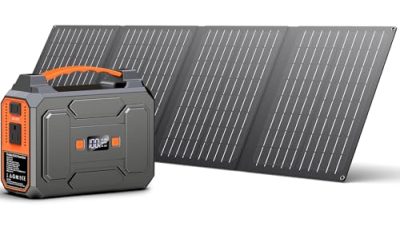
A budget-tier kit that lists 237Wh, a 300W pure sine wave output and a 60W foldable panel. It is aimed at casual campers who want a complete set without spending much, for example a family that camps a handful of nights each summer and only needs lights, phones and a fan.
- Strength: A 60W foldable panel is larger than the panels in some small kits.
- Strength: Pure sine wave output is listed.
- Trade-off: 237Wh is limited, and the listed title text does not name the battery chemistry.
Skip it if you need a proven long-cycle battery or more than light device charging. Anyone planning years of regular use should lean toward a model whose title states its cell type. For occasional trips, though, the budget tier it sits in may be all the capability required.
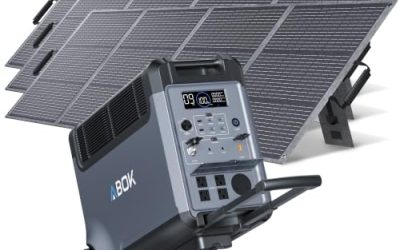
Anker SOLIX C2000 Gen 2 with 400W Bifacial Panel
The C2000 Gen 2 lists 2048Wh, 2,400W output with a 4,000W peak, a 58-minute full-charge claim and a LiFePO4 battery, bundled with a 400W bifacial panel. It targets buyers who want large capacity without the premium-tier home systems, and who value the idea of bringing the battery back to full quickly whenever grid power returns.
- Strength: A 400W panel is the largest single panel in this comparison.
- Strength: Fast full-charge claim shortens grid-charging windows.
- Trade-off: Capacity trails the 3,000Wh-plus systems for long outages.
Skip it if you need multi-day autonomy for a whole household. At 2048Wh it is a strong essentials backup, but it is not meant to carry an entire home through a long outage. Treat it as the centerpiece of a plan that covers the fridge, router, lights and phones.
DaranEner 300W with 30W Panel
This light-duty kit lists a 192Wh LiFePO4 battery, a 300W output with two AC outlets, a 30W panel and a 2-hour fast-charge claim. It is for buyers who want a low-cost tier and LiFePO4 cells in a small package, such as someone building a grab-and-go kit for a car trunk or a tent.
- Strength: LiFePO4 chemistry is named at a small size.
- Strength: Two AC outlets let you run two devices at once.
- Trade-off: The 30W panel is slow for recharging.
Skip it if your plan involves a fridge or appliances beyond small electronics. At 192Wh, even a modest appliance will empty it quickly, and the small panel means a full recharge from sun alone is a slow process on anything less than a clear day.
Jackery Explorer 2000 v2 with 2x200W Panels
The Explorer 2000 v2 lists 2042Wh, 2200W AC output, a LiFePO4 battery, 20ms UPS and 100W USB-C PD, bundled with two 200W panels. It is the balanced mid-to-large choice for vans, cabins and essential home loads, especially for people who want to charge a laptop over USB-C while the AC outlet feeds something else.
- Strength: 2200W output and 20ms UPS suit a mix of appliances and electronics.
- Strength: 100W USB-C PD charges laptops directly.
- Trade-off: Heavier and bulkier than 300Wh kits.
Skip it if you want something to toss in a backpack. It is also more than most weekend campers need, so lighter kits may serve better, and its size suits a vehicle or fixed spot best.
Which One Fits Your Situation
You camp occasionally and carry your own gear
The Jackery Solar Generator 300 is the sensible default, with the MARBERO 237Wh as a budget alternative if you accept a less proven brand.
You need a fridge and router running in a storm
The Jackery Explorer 2000 v2 or Anker SOLIX C2000 Gen 2 are the right class. Choose the Anker for the 400W panel and the Jackery for the UPS listing.
You expect to grow your system
The Jackery HomePower 3600 Plus is the only kit here whose title promises expansion to 21kWh. Start with the included panels and add batteries as your list of essential circuits grows.
Your loads include a pump or compressor
The Jackery HomePower 3000 and its 7200W surge listing is the most direct fit. Confirm the starting wattage of each motor on its nameplate before relying on any surge figure.
Common Mistakes
- Comparing peak watts on one listing to continuous watts on another.
- Pairing a large battery with a tiny panel and expecting quick refills.
- Assuming every listing names its battery chemistry.
- Paying for expansion that will never be used.
- Running a gas generator near living spaces to avoid solar limits; carbon monoxide from fuel units is a real hazard, so they belong outdoors only.
Specs and Terms Explained
Spec sheets for these kits use the same words in slightly different ways, so a few definitions make comparisons fairer.
Rated versus usable capacity
The headline watt-hour figure is the energy inside the battery, not the energy that reaches your appliance. Converting battery power to household current uses some of it, so plan on getting noticeably less than the label number when running AC loads. For DC and USB loads the loss is smaller.
Panel wattage
A 200W panel produces 200W only under ideal conditions, with full sun at the right angle. Real output is lower for most of the day, so treat panel wattage as a ceiling on charging speed rather than a promise.
Bifacial panels
A bifacial panel can collect light on both sides, adding some output when the ground behind it is bright, such as pale gravel or snow. The extra gain depends on placement, so it helps but does not double anything.
Cycle life
Cycle life counts full charge and discharge rounds before the battery drops to a stated share of its original capacity. Lithium iron phosphate cells generally list far more cycles than other lithium chemistries, which matters if you will use the system often.
Sizing and Compatibility Checklist
- Confirm that the panel connector matches the input on the power station, since adapter cables can add losses.
- Check the maximum solar input in watts and volts, and do not exceed it with extra panels.
- Compare the AC output with your largest appliance, then confirm the surge figure covers startup.
- Look for expansion options if you might add batteries later, and check which models support them.
- Weigh the unit against how often you will carry it, particularly for the larger batteries.
- Note the panel dimensions folded and unfolded, so they fit your storage space and your intended spot in the yard.
- Check whether the panels are bundled with the kit or sold separately, and confirm the bundled wattage matches the title.
Who Should Skip These
Skip the larger systems here if your needs stop at charging phones and a laptop, because you would pay for capacity you cannot use. Skip the smallest kits if a refrigerator is on your must-run list, since the battery and inverter are sized for light electronics. Skip any kit with a modest panel if you expect to recharge a big battery from the sun alone in a single day; the panel will be the bottleneck.
Related guides
- Portable Power Stations For Cpap During Power Outages
- How Long Does A Portable Generator Run On A Tank Of Fuel
- How To Prepare For A Power Outage Checklist And Gear
Frequently Asked Questions
What is the most important number when comparing?
Watt-hours first, then continuous AC output. Together they tell you how long and how heavy a load the system can handle. Panel wattage and battery chemistry then decide how quickly and how many times the system can be refilled.
Do bigger panels always help?
Only up to the station’s maximum solar input. Check that limit on the listing, because extra panel wattage beyond it goes unused.
Is a UPS function important?
It matters if you plan to connect a router, desktop or medical-adjacent electronics that cannot tolerate a drop. Otherwise it is a nice extra.
Which tier should I buy?
Match tier to the job: budget for light camping, mid-range for vans and storm kits, premium for home backup and expansion.