Key takeaways
- When the grid drops, a home solar generator has to do something specific: keep the refrigerator cold, the router blinking.
When the grid drops, a home solar generator has to do something specific: keep the refrigerator cold, the router blinking, the phones charged and maybe a sump pump or furnace blower running until the lights come back. That is a different job from weekend camping, and it is why the keyword “best solar generators for home use” deserves a separate answer. The question is not how portable a unit is, but how many of your household essentials it can carry and for how long, with sunshine as the refill.
This guide is for homeowners, renters and anyone in a storm-prone or wildfire-prone region who wants quiet, fume-free backup power in 2026. The seven bundles below range from a pocket-size set that handles phones and lights to expandable whole-house-adjacent systems with large panel kits. Every comparison relies only on the numbers printed in the product titles, and nothing here assumes performance the listings do not state.
Quick Picks
Our top picks

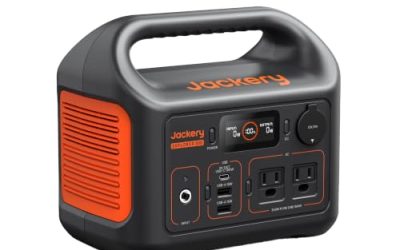
 Jackery HomePower 3600 Plus & 2x200W Solar
- Essential Home Backup: The Jackery HomePower 3600 Plus…
- Safe Power That Lasts: Built with high-temp resistant…
- Plug-and-Play: With its easy plug-and-play design, the Jackery…

 Jackery HomePower 3000 and 2x200W Solar Panels
- Essential Home Backup: With a robust 3600W output…
- ≤20ms UPS: Featuring a UL-certified UPS that switches…
- Power for Essentials: The Jackery HomePower 3000 keeps…


As an Amazon Associate we earn from qualifying purchases at no extra cost to you.
| Product | Best for | Key spec from the title |
|---|---|---|
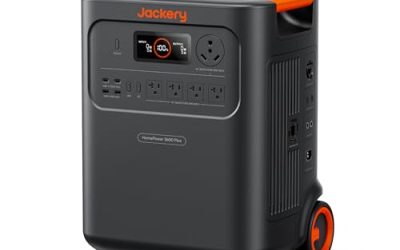
| Jackery HomePower 3600 Plus with 2x200W panels | Largest bundled storage | 3584Wh, 3600W AC, expandable to 21kWh |
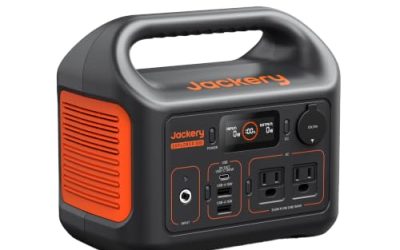
| Jackery Solar Generator 300 with 40W panel | Phones, router and lights | 292Wh, 300W AC, pure sine wave |
| Jackery HomePower 3000 with 2x200W panels | High surge for pumps and motors | 3072Wh, 3600W AC, 7200W surge |
| BROWEY 1600W | Mid-size backup with built-in solar | 1024Wh LiFePO4, 1600W (3200W peak) |
| Jackery Explorer 2000 v2 with 2x200W panels | Seamless switchover on sensitive gear | 2042Wh, 2200W AC, 20ms UPS |
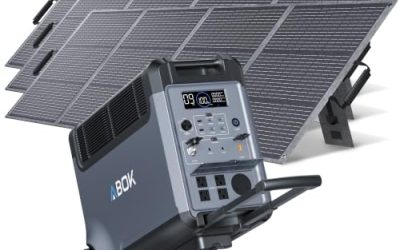
| EcoFlow DELTA Pro | Maximum expandable capacity | 3600Wh, 3600W AC, up to 25kWh |
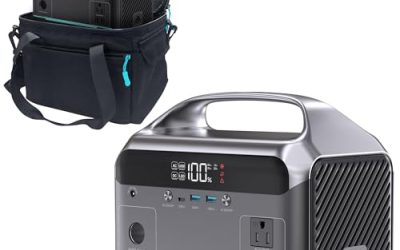
| MARBERO 237Wh with 60W panel | Light-duty outage kit | 237Wh, 300W pure sine wave |
How to Choose
List the circuits you actually need
Start with a short list: refrigerator, internet, lights, a medical device if relevant, phones and one fan or heater. A modern refrigerator may need several hundred watt-hours over a day, a router and modem under a hundred, LED lights a few dozen. Units near 300Wh cover communications only; around 1,000Wh gets you through a short outage; 2,000Wh to 3,600Wh covers a fridge plus essentials for a day or more.
Check output and surge for motors
Refrigerators, sump pumps and furnace blowers all use motors that draw a burst on startup. Look at the continuous AC rating, then the surge. A 2,200W to 3,600W continuous rating gives comfortable headroom, while a 300W unit will refuse a compressor load. A listed UPS switchover time, such as 20ms, matters if you want computers to ride through the changeover.
Plan the solar side
Bundled panels determine how fast the battery refills. Two 200W panels can feed a mid-size battery over a sunny day, while a 40W or 60W panel only trickles. Make sure your roof, yard or balcony can host the panels, and consider how many hours of sun your region gets in the season you most worry about.
Safety, wiring and what to ignore
Plugging appliances directly into the unit is simplest. Connecting to a home circuit requires a proper transfer switch installed by a licensed electrician, since backfeeding the grid is dangerous. Never run a gas generator in a garage, basement or near windows; carbon monoxide poisoning is a leading danger during outages. Ignore giant port counts and focus on watt-hours, continuous output and panel wattage.
The 7 Best Options
Jackery HomePower 3600 Plus with 2x200W Panels
The title lists 3584Wh, 3600W AC output, an LFP battery and two 200W panels, with expansion up to 21kWh. It is aimed at households that want one box capable of carrying a refrigerator, lights, a router and extras through a multi-day outage. The bundle includes the means to recharge, which helps if the outage extends past what the battery alone can handle. With 3600W of AC output on tap, it can also run a few kitchen appliances in sequence once the fridge is safe, which makes it feel closer to a small house generator than to a camping battery.
- Strength: 3584Wh is the largest bundled capacity among these seven.
- Strength: expansion to 21kWh gives a path to grow into a larger backup.
- Trade-off: 400W of panels refills a battery this size slowly in weak sun.
Skip it if you need only a phone-and-light backup; it is far more capacity than that requires.
Jackery Solar Generator 300 with 40W Panel
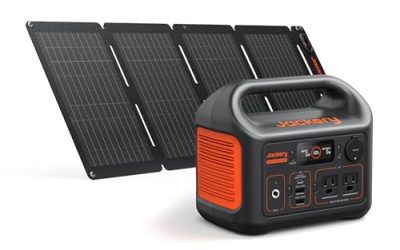
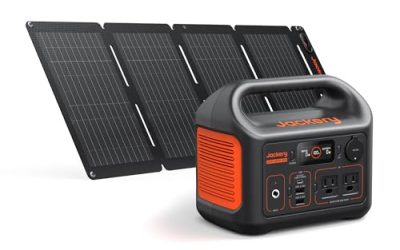
This small kit lists 292Wh, 300W AC output with a pure sine wave outlet, and a 40W panel. It suits renters and apartment dwellers who want to keep a router, phones and a lamp running during a short blackout without any installation. It is a starter backup rather than a fridge-capable system. The title mentions use during blackouts, and that matches its realistic role: a few hours of connectivity and light while you wait for service to return. Keep expectations small and it will do that job without fuss, with the panel handling slow top-ups between uses.
- Strength: pure sine wave output protects laptops and other electronics.
- Strength: compact format is simple to store in a closet.
- Trade-off: 292Wh is exhausted quickly by anything with a heating element or compressor.
Skip it if you plan to keep a refrigerator going, because the capacity is too low.
Jackery HomePower 3000 with 2x200W Panels
The listing shows 3072Wh, 3600W AC output, a 7200W surge and an LFP battery, with two 200W panels. The surge figure is the standout: it suggests better odds of starting motor-driven loads such as a well pump or a deep freezer. It targets households with a few heavier appliances that need to restart after a power cut. Compared with the 3600 Plus bundle, it trades a little capacity for that high surge claim, so it is the better fit when startup spikes matter more than the extra runtime, or when you simply want to hold more power than a mid-size battery gives.
- Strength: 7200W surge supports demanding motor starts.
- Strength: 3072Wh is enough for a fridge plus essentials for a good stretch.
- Trade-off: the title offers no listed expansion figure for growth.
Skip it if your needs are modest; smaller kits do the job more simply.
BROWEY 1600W Power Station with Built-In Solar
The title lists 1600W with a 3200W peak, a 1024Wh LiFePO4 battery, USB-C 100W fast charging and a built-in solar panel. The built-in panel is the unusual feature: no separate cable runs, which suits people with limited space and short outages. It fits an apartment or a small house where the plan is lights, router and a fan. The 100W USB-C fast charging in the title is useful for laptops, and the 1600W rating means a small space heater or microwave could run briefly, although a longer runtime would call for more battery than the listed 1024Wh provides.
- Strength: built-in panel keeps the setup compact.
- Strength: 1600W output handles mid-size appliances for short periods.
- Trade-off: a single built-in panel limits solar recharge speed.
Skip it if you want a big array on a roof or yard, since this layout is not made for that.
Jackery Explorer 2000 v2 with 2x200W Panels
Listed at 2042Wh, 2200W AC, with a LiFePO4 battery, 20ms UPS, USB-C PD 100W and two 200W panels. The UPS note matters for people working from home who fear a flicker during a blackout. It sits between the small and large kits, suited to a household that cares about a day of essentials plus laptops. A 2042Wh battery with 2200W of output also has enough headroom to run a refrigerator alongside a router, a monitor and lights, and the included 400W of panels give the unit a daily recharge route when the grid stays down for more than a night.
- Strength: 20ms UPS switchover keeps sensitive gear running.
- Strength: USB-C PD 100W charges laptops directly.
- Trade-off: 2200W output is lower than the 3600W bundles.
Skip it if you need surge headroom for large motors.
EcoFlow DELTA Pro
The title lists 3600Wh, 120V 3600W AC output, a 2.7-hour fast charge and expansion up to 25kWh. This is the highest expansion ceiling in the set, aimed at households that expect to build a larger backup over time. Panels are not stated as bundled in the listing, so factor them in separately. The 3600Wh figure edges ahead of every bundled battery here, and the 120V mention clarifies it is built around standard household outlets in North America. Buyers who plan to add batteries step by step will appreciate that the expansion path is stated in the title itself.
- Strength: expansion up to 25kWh offers the largest growth potential.
- Strength: 2.7-hour fast charge suits quick turnarounds from a wall outlet.
- Trade-off: the title lists no solar panels, so you must source them.
Skip it if you want a complete kit out of the box.
MARBERO 237Wh with 60W Foldable Panel
Listed at 237Wh, 300W pure sine wave AC with a foldable 60W solar panel set. It is a light-duty outage kit for charging phones, a tablet and a small light, and the folding panel is easy to put in a window. It suits first-time buyers who want to try the idea before investing more. The foldable panel can be set on a sunny windowsill or balcony rail, and the 300W pure sine wave outlet is gentle enough for a laptop or a small TV. Think of it as a trial run that teaches you how much solar your household actually uses.
- Strength: 60W foldable panel is the largest among the small kits.
- Strength: pure sine wave AC supports electronics.
- Trade-off: 237Wh cannot run a refrigerator for any meaningful time.
Skip it if your household has medical equipment or a freezer to protect.
Which One Fits Your Situation
A suburban house with a full fridge and a sump pump
The Jackery HomePower 3000 with its 7200W surge claim and 3072Wh storage is the match for motor loads. If you also expect to grow the system, the HomePower 3600 Plus offers expansion to 21kWh.
A remote worker in an apartment
The Jackery Explorer 2000 v2 with its 20ms UPS keeps a laptop and router running through a flicker, and the 100W USB-C PD port charges laptops directly.
A renter who wants simple backup
The Jackery Solar Generator 300 or the MARBERO 237Wh handle the router, phones and lights without any installation.
A planner building toward whole-house backup
The EcoFlow DELTA Pro, with expansion up to 25kWh, is the logical base to grow from; remember to add panels.
Common Mistakes
- Counting on a 300W unit to restart a refrigerator compressor.
- Buying a huge battery with panels too small to recharge it during a long outage.
- Wiring a unit into a home circuit without a proper transfer switch.
- Storing a battery in a hot attic or an uninsulated garage.
- Running a gas generator in a garage or near open windows; carbon monoxide poisoning is a serious hazard during outages.
Which One Should You Buy?
| If you… | Choose |
|---|---|
| Need a router, lamp and phone backup in an apartment | MARBERO 237Wh with 60W Foldable Panel |
| Want a small starter kit with a panel included | Jackery Solar Generator 300 with 40W Panel |
| Want a single box with built-in solar for light-duty use | BROWEY 1600W Power Station with Built-In Solar |
| Need to run a refrigerator and a few lights during outages | Jackery Explorer 2000 v2 with 2x200W Panels |
| Want a larger backup that can grow with extra batteries | EcoFlow DELTA Pro |
| Plan to cover a sump pump, fridge and more for a longer outage | Jackery HomePower 3000 with 2x200W Panels or Jackery HomePower 3600 Plus with 2x200W Panels |
Sizing and Compatibility Checklist
- Read the nameplate on each essential appliance and note running watts and, for motors, the startup surge.
- Add the watt-hours you need per hour of outage and multiply by how many hours you want to cover.
- Decide how the unit will connect. Extension cords work for a few appliances; powering circuits through a panel needs a transfer switch or interlock installed by a licensed electrician.
- Match the outlet types on the station to the plugs on your gear, especially for a sump pump or furnace blower.
- Check the maximum solar input and whether the panels in a kit connect without extra adapters.
- Pick a dry, ventilated spot indoors or in a garage that stays within the temperature range on the spec sheet.
Who Should Skip These
Skip the small kits if you need the fridge and sump pump covered for days, since a 237Wh class battery is better for electronics than appliances. Skip any portable system if your main aim is to power the whole house automatically at the moment the grid fails; that job belongs to an installed standby system.
Setup and Care Tips
- Run a trial in daylight before an emergency, including panel cables, so you know the layout.
- Place panels outdoors in direct sun, never inside behind a window, which cuts output sharply.
- Keep the station off the floor in a basement that could flood.
- Do not run it in a closed garage or space with poor airflow, and keep it away from water and fuel containers.
- Recharge fully after every outage and note the date for the next check.
Specs and Terms Explained
Continuous output
This is the wattage the inverter can hold for hours. Add the running watts of everything you want on at once and keep the total comfortably below this figure.
Solar input limit
Every unit caps how many panel watts it accepts. Extra panels beyond that cap add nothing, so match panel wattage to the stated limit rather than buying the biggest array available.
Related guides
- Portable Power Stations For Cpap During Power Outages
- How Long Does A Portable Generator Run On A Tank Of Fuel
- How To Prepare For A Power Outage Checklist And Gear
Frequently Asked Questions
Can a solar generator run a refrigerator?
Larger units with 2,000Wh or more and strong surge ratings can run a refrigerator for a day or more. Small units under 300Wh usually cannot handle the compressor.
Do I need panels with the unit?
Panels let you recharge without grid power. Without them you depend on the wall outlet or a car, which does not help in a long outage.
Is it safe to use indoors?
Battery power stations make no exhaust, so they can be used indoors with normal ventilation and care. Fuel generators must never be used indoors, in a garage or near windows.
What does UPS mean on a listing?
It means the unit can switch to battery power quickly when the wall power drops, such as 20ms, so connected equipment may keep running.