Key takeaways
- Most people shop for a solar power generator for the home the week after a storm, and the first surprise is how many different products carry that name.
Most people shop for a solar power generator for the home the week after a storm, and the first surprise is how many different products carry that name. Some are phone-charger-sized boxes with a fold-out panel; others are suitcase-scale batteries that can hold a refrigerator for a day. The useful way to sort them is by the outage you are trying to survive: a few hours, one night, or several days. That outage length drives how much battery, how much output and how many panels you need.
The seven bundles below are arranged so that you can see each step up that ladder, from a 280Wh entry kit to a 3584Wh expandable system. As in any buyer guide, the facts come from the listing titles only: capacity, output, chemistry, bundled panels and stated extras. Nothing is assumed about runtime beyond simple arithmetic, so you can plug your own appliance wattages into the numbers. In 2026, lithium iron phosphate cells show up in most mid-size and large models, which suits frequent cycling.
Quick Picks
Our top picks

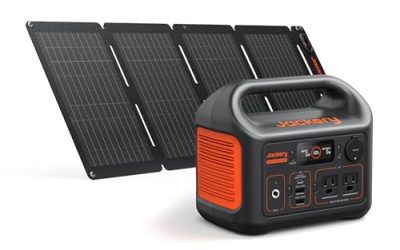
 Jackery HomePower 3600 Plus & 2x200W Solar
- Essential Home Backup: The Jackery HomePower 3600 Plus…
- Safe Power That Lasts: Built with high-temp resistant…
- Plug-and-Play: With its easy plug-and-play design, the Jackery…

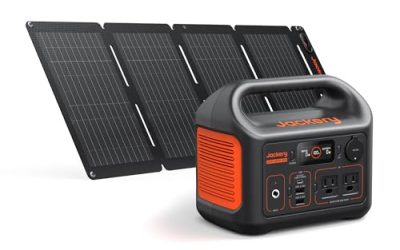
 Jackery HomePower 3000 and 2x200W Solar Panels
- Essential Home Backup: With a robust 3600W output…
- ≤20ms UPS: Featuring a UL-certified UPS that switches…
- Power for Essentials: The Jackery HomePower 3000 keeps…


As an Amazon Associate we earn from qualifying purchases at no extra cost to you.
| Product | Best for | Key spec from the title |
|---|---|---|
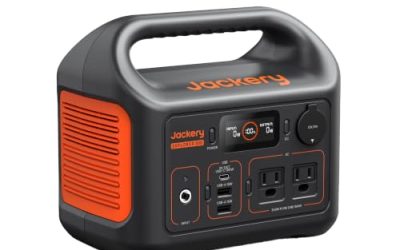
| Jackery Solar Generator 300 with 40W panel | Short outages, small gear | 292Wh, 300W AC, pure sine wave |
| Jackery HomePower 3600 Plus with 2x200W panels | Multi-day essentials | 3584Wh, 3600W AC, expandable to 21kWh |
| 300W station with 60W panel | Entry-level lights and phones | 280Wh, 110V pure sine wave, USB QC3.0 |
| Jackery HomePower 3000 with 2x200W panels | Starting motors | 3072Wh, 3600W AC, 7200W surge |
| Jackery Explorer 2000 v2 with 2x200W panels | Work-from-home continuity | 2042Wh, 2200W AC, 20ms UPS |
| BROWEY 1600W with built-in panel | Compact one-piece backup | 1024Wh LiFePO4, 1600W (3200W peak) |
| EcoFlow DELTA 3 Classic with 220W panel | Mid-size kit with a stronger panel | 1024Wh, 1800W AC (3600W surge) |
How to Choose
Think in outage tiers
For a few hours, around 300Wh keeps a router, phones and lights alive. For one night with a refrigerator, aim for 1,000Wh to 2,000Wh. For several days, 3,000Wh and above plus panels that can claw back energy daily is a realistic target. Choosing the tier first stops you from overspending on capacity you will never drain, or underspending and watching the screen go dark at midnight.
Read the inverter numbers carefully
Listings show continuous output and a larger surge value. For a household, the continuous figure tells you how many appliances run together, while the surge tells you whether a compressor can start. A 1,800W continuous rating with a 3,600W surge is good for a kettle or a refrigerator; a 300W model fits only small electronics. Pure sine wave output protects computers and medical-style gear that dislikes rough power.
Bundled panels versus panels sold separately
A bundle saves the effort of matching connectors, but panel size varies a lot. A 40W or 60W panel only trickles; 200W to 400W of panels can refill a mid-size battery in a day of good sun. Where a title mentions no panels, add the cost and space of panels to your plan before you commit.
What to ignore, and where cheaper kits skimp
Ignore marketing about total ports and focus on watt-hours, continuous watts and panel wattage. Lower-cost kits typically trim battery chemistry quality, expansion options and warranty clarity. Also remember the safety rule that matters most at home: never run a gas generator in a garage, basement or near a window, because carbon monoxide can reach lethal levels quickly.
The 7 Best Options
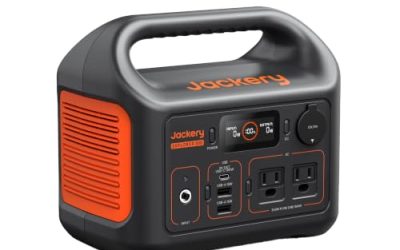
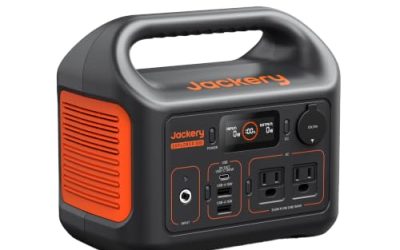
Jackery Solar Generator 300 with 40W Panel
The title lists 292Wh, 300W AC output with a pure sine wave outlet and a 40W panel, and it names blackout use directly. It is the right size for someone whose outages are short and whose priorities are the internet, a lamp and phones. In practice, 292Wh divided by a 40W router and lamp load gives several hours of cover, which is exactly the use case it targets. The panel is small, so treat the solar side as a slow recovery between outages rather than a way to keep the battery full during a long one, and plan to top it up from a wall outlet beforehand.
- Strength: pure sine wave output suits sensitive electronics.
- Strength: small footprint fits a closet shelf.
- Trade-off: it cannot sustain a refrigerator compressor or any heating appliance.
Skip it if your outages run longer than a night or involve medical equipment.
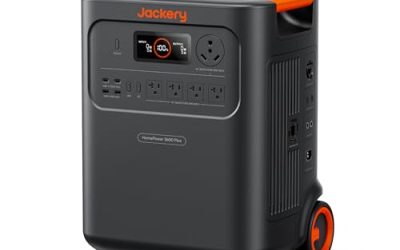
Jackery HomePower 3600 Plus with 2x200W Panels
This bundle lists 3584Wh, 3600W AC, an LFP battery and two 200W panels, with expansion up to 21kWh. It is the highest-capacity kit in this group and speaks to households with a freezer, a well pump and a desire to keep life normal for days. Expansion means you can add storage later as budgets allow, rather than replacing the base unit. Because the 3600W rating matches the other top-tier Jackery in this guide, the main reason to pick this one is the extra stored energy and the stated upgrade path, not a difference in how many appliances can run at once.
- Strength: 3584Wh is the largest stored energy among the seven.
- Strength: 21kWh expansion ceiling supports a gradual build-out.
- Trade-off: 400W of panels refills such a large battery slowly in poor weather.
Skip it if the home only needs short, light-duty coverage.
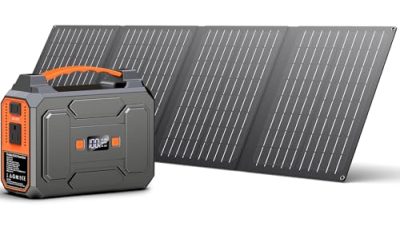
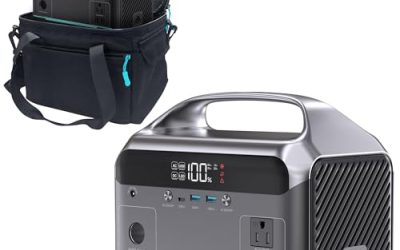
300W Portable Solar Generator with 60W Panel
An unbranded-style listing with a 280Wh battery, 300W output, 110V pure sine wave, USB QC3.0 and a 60W panel. The 60W panel is larger than the 40W panels on some rivals, so it refills a little faster. It suits a first-time buyer who wants to practice with solar before investing more, perhaps keeping it near the front door as a flashlight-and-charger station. A 280Wh pack will carry a laptop through an evening and a couple of phone charges, but anything with a motor or a heating element is out of reach, so set expectations accordingly before the first storm arrives.
- Strength: 60W panel included for slow solar recharge.
- Strength: USB QC3.0 and AC outlets cover phones and small devices.
- Trade-off: with no brand named in the title, support and certification details need extra checking.
Skip it if you expect to run a refrigerator or a space heater.
Jackery HomePower 3000 with 2x200W Panels
The listing shows 3072Wh, 3600W AC, 7200W surge and an LFP battery with two 200W panels, billed as essential backup for home use. The 7200W surge claim stands out in this group and suggests it can handle motors such as pumps and large compressors that struggle on smaller inverters. It is a two-day-plus option for a normal house. If you already know that your outages involve a sump pump, a freezer in the garage or a well, this is the listing that speaks most directly to that need, and the two included panels give you a way to claw back energy each afternoon.
- Strength: 7200W surge supports tough motor starts.
- Strength: 3072Wh gives long runtime for essentials.
- Trade-off: the visible title does not state an expansion capacity.
Skip it if you want a smaller, lighter unit for occasional use.
Jackery Explorer 2000 v2 with 2x200W Panels
Listed at 2042Wh, 2200W AC, LiFePO4, 20ms UPS and USB-C PD 100W, with two 200W panels. This one suits a household that needs steady power for a home office and a refrigerator through a one-night outage, and the UPS function reduces the chance of a rebooting computer when the grid fails. With 2042Wh and 2200W, it also leaves some room for a refrigerator in the same breath as the desk setup, and the two panels bundled in the set provide a daily refill if the outage stretches into a second day or longer.
- Strength: 20ms UPS switching protects running equipment.
- Strength: USB-C PD 100W recharges laptops without a brick.
- Trade-off: 2200W output may limit simultaneous heavy appliances.
Skip it if you plan to run electric heating or cooking.
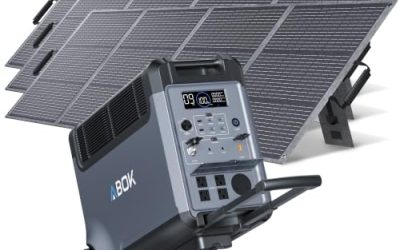
BROWEY 1600W with Built-In Solar Panel
The title lists a 1600W (3200W peak) output, a 1024Wh LiFePO4 battery, USB-C 100W fast charging and a built-in panel. The one-piece design appeals to people who dislike cable clutter, and the LiFePO4 cell label hints at good cycle life. It fits a small house or condo with a plan for lights, a router and laptops. At 1024Wh, a 1600W inverter can power a short burst from a larger appliance such as a toaster or a blender, then fall back to small loads, so use it in bursts rather than as a continuous source for anything power-hungry.
- Strength: built-in panel means nothing extra to carry or connect.
- Strength: 1600W output exceeds most small-kit ratings.
- Trade-off: a single integrated panel limits recharge speed.
Skip it if you want to place panels in the best sun while the battery stays indoors.
EcoFlow DELTA 3 Classic with 220W Panel
The title lists 1024Wh, 1800W AC with a 3600W surge, 100W USB-C output, LiFePO4 and a 220W panel. The panel is the biggest single panel in the small and mid group, so solar refill is brisk for its capacity. It is suited to households that want a middle ground between light kits and large systems. The 1800W continuous rating covers a refrigerator plus small appliances, and the 100W USB-C output means laptops charge directly. It is a sensible fit for a household that wants real backup but has no room for a large battery in a hallway closet.
- Strength: 3600W surge helps start moderate motor loads.
- Strength: 220W panel recharges faster than the 30W to 60W panels on tiny kits.
- Trade-off: 1024Wh limits how long it can power a refrigerator and other loads.
Skip it if your home needs several days of backup.
Which One Fits Your Situation
You lose power for a few hours a year
The Jackery Solar Generator 300 is enough to run a router and phones. Add the 60W-panel unbranded kit only if you want a second, cheaper small station.
Outages usually last one night
The EcoFlow DELTA 3 Classic or the BROWEY 1600W protects a fridge for part of the night and handles lights, but plan on turning off extras.
You work from home and cannot lose the session
The Jackery Explorer 2000 v2 pairs 20ms UPS with 2042Wh of storage and two panels, a sound base for a home office.
Storms knock out power for days
Go to the Jackery HomePower 3000 for motor starts or the HomePower 3600 Plus for the largest bundled capacity and expansion.
Common Mistakes
- Buying on watt-hours alone and ignoring the surge rating needed for motors.
- Expecting a 40W panel to refill a multi-kilowatt-hour battery.
- Waiting until a storm warning to learn how the unit works.
- Leaving the battery fully drained for months, which strains the cells.
- Using a gas generator near the house to compensate; carbon monoxide can enter through doors and vents.
Sizing and Compatibility Checklist
Work through these checks before ordering, because most disappointment with home solar kits comes from a mismatch that was visible on paper.
- Walk the house and list every device you want running during an outage, then read the rating label on each one for watts.
- Mark anything with a motor or compressor, such as a refrigerator, freezer or sump pump. These draw a brief surge on startup that can be several times the running figure, so the inverter’s surge rating matters for them.
- Add up the running watts of what will be on at the same time, not everything you own. Keep that total comfortably under the unit’s continuous AC output.
- Multiply that total by the hours you want coverage. The result in watt-hours should sit well below the battery’s rated capacity, because inverter conversion and standby draw use up part of it.
- Check the outlet types. A standard household plug is fine for a refrigerator, but a dryer, well pump or central air system usually needs a different connection that portable units may not offer.
- Decide whether you will plug appliances straight into the unit or want it feeding the house wiring. The second option involves transfer equipment and belongs in the hands of a licensed electrician.
- Measure the spot where the panels will sit. Two 200W panels need real ground or roof space, and the cable has to reach the battery without being pinched in a door or window frame.
Setup and Care Tips
A backup battery only helps if it is charged and working when the lights go out. A few habits keep that true.
- Keep it topped up. Lithium packs lose charge slowly in storage, so recharge it every few months instead of discovering a flat battery during a storm.
- Store it indoors. Extreme heat and freezing temperatures both shorten battery life and can limit charging, so a closet beats a garage or shed.
- Place panels with care. Even partial shade from a branch or railing can cut solar input sharply. Reposition them through the day if you can.
- Warm it up before charging in winter. Most lithium packs restrict charging when frozen, so bring the unit inside to warm before connecting panels.
- Rehearse once. Plug in the refrigerator and router on a calm day so you know which cords reach and how the display behaves when the load changes.
Who Should Skip These
Portable solar kits are not the answer to every outage. If your priority is running central air conditioning, electric heat, an electric water heater or a large well pump, the continuous output of even the larger kits here will fall short, and a permanently installed system or a fuel generator fits better. If you only need a phone and a lamp for a couple of hours, the smallest kit is already enough and a larger one is wasted capacity. And if you cannot store a heavy battery where you can reach it quickly, a lighter unit you will actually use beats a bigger one left in the basement.
Related guides
- Portable Power Stations For Cpap During Power Outages
- How Long Does A Portable Generator Run On A Tank Of Fuel
- How To Prepare For A Power Outage Checklist And Gear
Frequently Asked Questions
What size solar generator does a house need?
It depends on the outage length and appliances. A few hundred watt-hours handles communications, around 2,000Wh covers a fridge for a night, and over 3,000Wh supports several days.
Can I plug a refrigerator into a solar generator?
Larger models with strong continuous and surge ratings can. A 300W unit generally cannot start a compressor.
Do these replace a whole-house generator?
No. They cover essential loads rather than central air or electric heating. Whole-house wiring requires a transfer switch and a licensed electrician.
Is it safe to charge and use it indoors?
Battery units produce no exhaust, so indoor use with normal airflow is fine, while panels belong outside. Fuel generators never belong inside a home or garage.