Key takeaways
- A portable battery generator is the quiet alternative to the gas unit in the garage: no pull cord, no fuel can, no exhaust.
A portable battery generator is the quiet alternative to the gas unit in the garage: no pull cord, no fuel can, no exhaust. That also changes the buying question. Instead of asking how many running watts a gas engine makes, you ask how many watt-hours the battery holds, how many watts the inverter can deliver, and how fast it refills. Get those three numbers right and a box that fits in a back seat can run a laptop desk, a campsite kitchen light set or a basic outage kit.
This roundup covers seven models spanning pocket-size to roughly two kilowatt-hours, and judges each strictly on its listed specs. It is written for campers, storm-prep shoppers and remote workers heading into 2026 who want a unit they can actually carry. Budget, mid-range and premium tiers stand in for exact prices, and a few listings that only differ by a bundled panel are folded into the base model.
Quick Picks
Our top picks



As an Amazon Associate we earn from qualifying purchases at no extra cost to you.
| Product | Best for | Key spec from the title |
|---|---|---|
| Jackery Explorer 300 | Light camping and short blackouts | 292Wh, LiFePO4 |
| Jackery Explorer 1000 v2 | All-round camping and emergency use | 1070Wh, 1500W, 1-hour fast charge |
| BLUETTI Elite 30 V2 | Fast-charging compact backup | 288Wh, 600W, 10ms UPS |
| ALLWEI 300W | Budget small-device power | 256Wh LiFePO4, pure sine wave, PD 60W |
| Daran 89.6Wh | Ultra-light carry | 89.6Wh LiFePO4, 100W (200W peak) |
| LIBRIDS 640Wh | Mid-size portable with several AC outlets | 640Wh, 4 AC, 8 ports, 10ms UPS |
| Anker SOLIX S2000 | Large portable for home and outdoors | 2,010Wh LiFePO4, 1,500W |
How to Choose
Watt-hours set the runtime
Treat the battery as a fuel tank. Under 100Wh is a rechargeable power bank with an outlet. Around 250 to 300Wh handles phones, a laptop and lights for a night or two. Roughly 600 to 1100Wh stretches to a small cooler or a fan overnight. Beyond 2000Wh you are in home-backup territory. Divide the capacity by your combined load in watts to estimate hours, then trim the answer by about 15 percent to account for inverter loss.
Inverter output and surge
The AC rating tells you which devices you may plug in at once. A 300W unit suits chargers and a small TV; a 1500W unit can start a drill or a blender but not both at once. Surge numbers, such as the 1200W surge on one listing, cover brief start-up spikes only. Compare continuous output first, and only use surge to judge motor loads.
Chemistry, UPS and charging
All seven here state LiFePO4 or LFP, which is generally associated with long cycle life and good thermal behavior. A listed UPS switching time of 10ms means the unit can bridge a power cut without rebooting a computer. Check charging as well: an hour to refill versus several hours changes how usable the unit is between outages, and solar input limits how fast panels can recharge it.
Ignore the noise, watch the trade-offs
Do not pay extra for outlet count if the total output is small, and do not trust capacity quoted in mAh without a Wh figure. Budget units usually give up fast charging, UPS switching and AC output. Also, if you ever pair a battery unit with a gas generator as a second source, the gas unit must run outdoors, well away from doors and windows, because of carbon monoxide.
The 7 Best Options
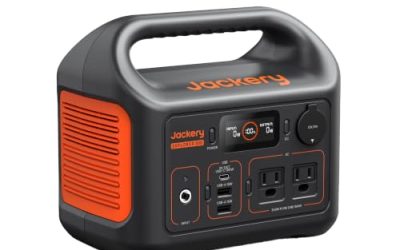
Jackery Explorer 300
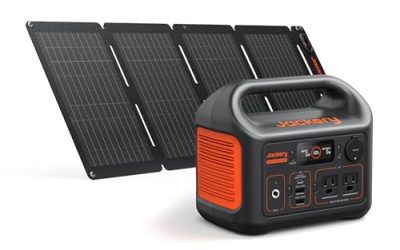
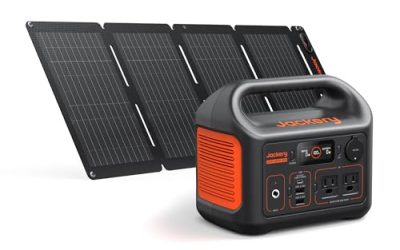
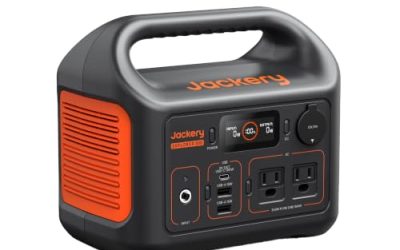
The Explorer 300 lists a 292Wh LiFePO4 battery and is aimed at outdoors, camping, travel, hunting and blackouts. It is a compact, light-duty choice for phones, lights, a camera and similar low-draw gear, and a sensible first unit if you are not sure how much capacity you will use.
- Strength: LiFePO4 chemistry is suited to repeated charging in a small package.
- Strength: its small capacity keeps it simple to carry and store.
- Trade-off: the title gives no AC wattage, so appliance support has to be confirmed in the full listing.
Skip it if you need to run anything with a heating element. It also suits buyers who prefer a familiar name and a basic feature set over extra ports and screens, and who would rather add a second unit later than overbuy now.
Jackery Explorer 1000 v2
This model lists 1070Wh, 1500W output, a one-hour fast charge, LiFePO4 chemistry and a 100W USB-C port. It spans camping and emergency use and is the balanced middle of the guide, with enough capacity to run a small cooler and electronics and enough output for power tools in short bursts.
- Strength: 1500W output is a large step up from the 300W models.
- Strength: one-hour fast charging cuts downtime between uses.
- Trade-off: it is heavier and costs more than the entry units, so it suits car travel more than hiking.
Skip it if you only charge phones and a laptop. The extra capacity is worth carrying only when your loads include something that runs for hours, such as a cooler or a string of camp lights, and when you travel by vehicle rather than on foot.
BLUETTI Elite 30 V2
A 288Wh, 600W LFP unit with 10ms UPS switching, a Power Lifting mode to 1500W and a 45-minute 0-80% charge. It is built for people who want a very quick top-up and an output that handles more than the usual 300W class.
- Strength: 600W output and fast charging are rare in this capacity range.
- Strength: UPS switching works for a desk computer or router.
- Trade-off: 288Wh limits runtime on any bigger load, even when output allows it.
Skip it if you need overnight power for a cooler. Its value is speed and flexibility rather than endurance, so it fits people who can plug back into a wall outlet or a car port often and treat the battery as a short-term buffer.
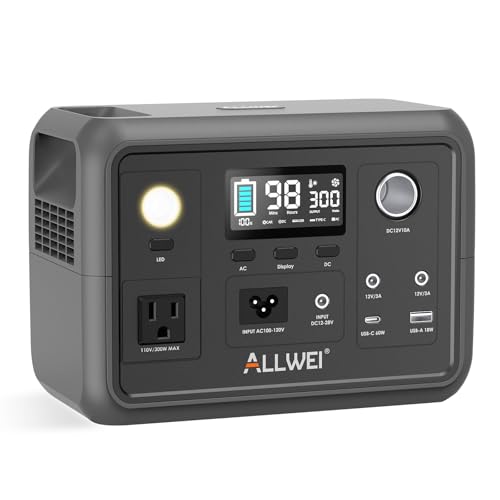
ALLWEI Portable Power Station 300W
Listed at 300W and 256Wh with LiFePO4 cells, a pure sine wave AC outlet, PD 60W fast charging, MPPT and BMS protection. It sits at the budget end and appeals to buyers who want basic wall power and a USB-C port for laptops without paying for extras.
- Strength: LiFePO4 with BMS protection is a sound base at this size.
- Strength: PD 60W suits most laptops and phones.
- Trade-off: 256Wh is the smallest of the 300W-class units here.
Skip it if you want UPS switching or high output. The MPPT label means the unit is meant to accept solar input efficiently, which makes it a candidate for a modest panel on a weekend trip, though the title does not state the maximum solar wattage.
Daran 89.6Wh Portable Power Station
A pocket-size 89.6Wh LiFePO4 pack with 100W continuous (200W peak), AC outlets and PD fast charging. Think of it as a power bank with a wall socket, for phones, tablets and short laptop sessions on a trip.
- Strength: very small and light for a unit with a real AC outlet.
- Strength: LiFePO4 and PD charging suit modern devices.
- Trade-off: it runs out quickly and cannot power anything near 200W for long.
Skip it if you want to run a cooler, fan or any appliance rather than electronics. It earns its place in a travel bag or glove box as an emergency phone and tablet reserve, where small size matters far more than the number of hours it can run.
LIBRIDS Portable Power Station 640Wh
The LIBRIDS lists 640Wh of LiFePO4 capacity, a 1200W surge, four AC outlets, eight ports, 10ms UPS and a pure sine wave output with a 1.5-hour charge. It is the mid-size pick for shared use, where several people charge devices at once.
- Strength: four AC outlets and eight ports serve a small group.
- Strength: UPS switching and 1.5-hour charging are useful for backup.
- Trade-off: the title lists a surge number rather than continuous watts, so check that figure.
Skip it if you need verified high continuous output for tools. For a family campsite or a living-room outage kit, the mix of outlets and the 640Wh battery covers lights, phones, a laptop and a fan without needing the larger and heavier class of unit.
Anker SOLIX S2000
This unit lists 2,010Wh of LiFePO4 capacity and 1,500W of output, aimed at home backup, outdoor use and emergencies. It is the largest portable option here, big enough to keep a refrigerator and electronics running through an outage.
- Strength: 2,010Wh gives the longest runtime in the guide.
- Strength: LiFePO4 and 1,500W cover many household essentials.
- Trade-off: its size makes it less portable than the smaller models.
Skip it if you want a backpack-ready unit. It is better thought of as a movable appliance that lives by the door or in a vehicle, ready to be carried to wherever the outage or the campsite is, and recharged fully between uses. Buyers should confirm the carrying weight and handle design in the full listing before committing.
Which One Fits Your Situation
You want to carry everything on one trip
The Daran 89.6Wh or the ALLWEI 300W stay small and light for day trips. Choose the Daran for pure portability and the ALLWEI for more capacity. Either one fits comfortably in a daypack alongside a laptop.
You camp by car and want a cooler running
The Jackery Explorer 1000 v2 brings 1070Wh and 1500W, which handles that job with margin.
You work from a desk and fear outages
The BLUETTI Elite 30 V2 and the LIBRIDS 640Wh both list 10ms UPS switching. Pick the Elite for faster charging and the LIBRIDS for more capacity.
You want the biggest battery you can still move
The Anker SOLIX S2000 offers the largest capacity here and can anchor a home outage plan. Pair it with a smaller unit such as the Explorer 300 so a lamp and a phone charger have a dedicated source if the big one is busy with the refrigerator.
Common Mistakes
- Choosing by mAh instead of watt-hours.
- Assuming a surge rating means a unit can run that load continuously.
- Skipping the UPS spec when buying for a desktop computer.
- Pairing a large battery with a tiny solar panel and expecting a full recharge in a day.
- Running a gas generator in a garage or near a window to save battery, which risks carbon monoxide poisoning.
Which One Should You Buy?
| If you… | Choose | Why it fits |
|---|---|---|
| Need phones and a small light charged on a short trip | Daran 89.6Wh Portable Power Station | Small and easy to carry; the name states its capacity |
| Want a compact unit for a laptop and router during an outage | Jackery Explorer 300 or ALLWEI Portable Power Station 300W | Entry-sized options for light electronics |
| Want a small desk-side unit for a work setup | BLUETTI Elite 30 V2 | Suits a laptop-and-router backup role |
| Need a little more runtime than a 300-class unit | LIBRIDS Portable Power Station 640Wh | Larger stored energy while still manageable to carry |
| Want to run a cooler or small fridge by car | Jackery Explorer 1000 v2 | Higher capacity for continuous low loads |
| Want a bigger system for home outages | Anker SOLIX S2000 | Stepped-up output and capacity for larger appliances |
Before ordering, check the listed output against the biggest single device you plan to run.
Setup and Care Tips
- Charge it before you need it. A battery that arrives partly drained is no use during a storm. Fill it once, then keep it near full if it is for emergencies.
- Do a dry run. Plug in the actual devices you would use and watch how fast the percentage drops, so there are no surprises later.
- Keep it cool and dry. Garage shelves that swing between hot and freezing shorten pack life. An indoor closet is better.
- Never block the fan. Air intake and exhaust grilles need open space, and soft surfaces like blankets can trap heat.
- Keep it away from water. Run cords so they are not a trip hazard and are not pinched in doors.
- Cycle it periodically. Use and recharge the unit every few months, because lithium packs left empty for a long time can degrade.
Specs and Terms Explained
Converting mAh to Wh
Phone power banks advertise milliamp-hours, which is not directly comparable with a power station’s watt-hours. Multiply mAh by the cell voltage, typically 3.7V, then divide by 1,000. That is why a 20,000mAh bank holds about 74Wh, close to the Daran 89.6Wh Portable Power Station in stored energy but with far fewer outlets.
The 100Wh flight limit
Airlines generally allow spare lithium batteries up to 100Wh in carry-on bags, with larger ones needing airline approval and anything above that typically banned. Only the smallest unit in this list sits under the lower limit, so check the airline rule before packing any of the others.
Continuous watts versus surge
Continuous watts is what the inverter holds steady. Surge is a brief peak for motors, so a cooler compressor may start fine on a unit whose running rating looks too small.
Related guides
- Portable Power Stations For Cpap During Power Outages
- How Long Does A Portable Generator Run On A Tank Of Fuel
- How To Prepare For A Power Outage Checklist And Gear
Frequently Asked Questions
What is the difference between a power station and a battery generator?
They are the same idea: a battery, an inverter and ports in one box. Battery generator is simply a common search phrase, while power station is the manufacturer’s term.
Can I use one indoors?
Battery units have no exhaust, so they avoid the carbon monoxide danger of gas generators, which must always stay outdoors and well away from openings. Keep any battery unit ventilated and away from heat.
How many phone charges will a 300Wh unit give?
Phones use roughly 10 to 20Wh per charge, so a 300Wh class unit provides a few dozen after losses. Laptops take more.
Is LiFePO4 necessary?
Not required, but it is a good sign for longevity and heat tolerance in a unit you will cycle often. Every model in this guide lists it, so use output, capacity and charging speed as the tie-breakers instead.