Key takeaways
- Ten hand crank solar emergency radios compared from their listings: NOAA weather band, battery size, phone charging and a plain-English mAh to mWh guide.
The strongest all-round pick from these listings is the OnLyee emergency radio: its title states a 12000mAh battery, an 8500mm² solar panel, a NOAA weather band, AM/FM, a 5W flashlight and a 120dB SOS alarm. If you want something small and cheap to stash in a drawer, the 2000mAh models such as the RunningSnail cover the basics. Every radio below names a weather band, but none of the listings can promise reception where you live.
Quick picks
Our top picks






As an Amazon Associate we earn from qualifying purchases at no extra cost to you.
- Biggest stated battery: OnLyee and Mesqool, both 12000mAh
- Most accessories in the box: Vokida, with a thermal blanket and survival bracelet
- Compact and simple: RunningSnail, Emgykit, iRonsnow, yesiwtc
- Check the number first: QAUYYW, whose title says 74000mWh
All ten side by side
| Model | Key point from the title | Best for |
|---|---|---|
| FosPower A1 | 7400mWh, 4 power options | Power-bank use |
| OnLyee | 12000mAh, 8500mm² panel | Overall pick |
| yesiwtc | 7400mWh, 3 built-in cables | Cable-free phone top-ups |
| Mesqool | 12000mAh, dual outputs | Two devices at once |
| Vokida | 10000mAh, blanket, bracelet | Bundled go-bag |
| Leaton | 10000mAh, USB-C | Modern phone cable |
| Emgykit | 7400mWh, 3 LED flashlights | Light in the dark |
| QAUYYW | 74000mWh in title | Verify before buying |
| iRonsnow | 2000mAh, USB phone charger | Basic backup |
| RunningSnail | 7400mWh, compact, USB-C | Drawer or glovebox |
The ten radios, model by model
FosPower NOAA Emergency Weather Radio A1
The title advertises a 7400mWh battery, solar and hand crank, AM/FM/WB bands and a power bank function across four power options, plus a flashlight, a four-LED reading light and an SOS alarm. The orange color is easy to spot in a dark bag. Treat the 7400mWh figure as roughly 2,000mAh, which is a modest cell by the standards of this list. Four power options usually means a mix of crank, solar, USB charging and battery power, but the title does not spell out each one, so read the listing to see which methods are actually included. Lighting is generous for the size, since it pairs a flashlight with a separate four-LED reading light for hands-free use.
Pros
- Four power options listed in the title
- Separate reading light and flashlight
Cons
- Battery is on the small side
- Title does not mention USB-C
Who it’s for: buyers who want a bright, easy-to-find unit for a go-bag.
OnLyee Emergency Radio, 12000mAh
This listing states a 12000mAh battery, an 8500mm² solar panel, NOAA, AM/FM, a 5W flashlight with reading light, a 120dB SOS alarm and phone charging. The large panel area is the useful detail, because a bigger panel gathers more charge in the same sun. Twelve thousand milliamp-hours is about 44,400mWh, the largest consistent figure here. The 5W flashlight and reading light are named, though the title gives no lumen or runtime figure. A bigger battery also takes longer to refill from the panel alone, so plan to top it up by USB ahead of a storm and keep the panel and crank as backup.
Pros
- Largest consistent battery figure
- Large solar panel area stated
Cons
- Likely bulkier than the 2000mAh units
- Solar wattage not given in the title
Who it’s for: households that want one radio to cover long outages and phone top-ups.
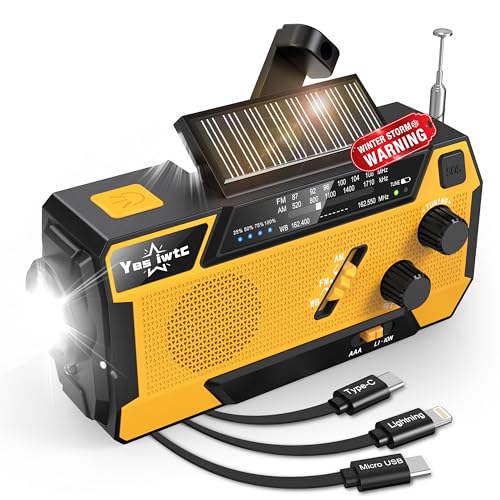
yesiwtc Hand Crank Emergency Radio
The title gives 7400mWh (2000mAh), AM/FM/NOAA reception and three built-in charging cables, which is the standout feature: no hunting for the right lead when the phone is at 5 percent. Cable types are not listed, so check which connectors you get against your own phone. Battery operated, hand crank and solar are all named. Built-in cables are convenient but also a point of failure; if one connector breaks, a lead you carry yourself still works. With only 2000mAh, think of them as an emergency top-up for one phone, not a charging station for the household.
Pros
- Three built-in charging cables
- Both mWh and mAh stated clearly
Cons
- Small battery for phone charging
- Connector types not listed
Who it’s for: people who keep forgetting cables.
Mesqool Solar Radio, 12000mAh
Mesqool also lists 12000mAh, with AM/FM/NOAA, a two-mode LED flashlight, an SOS alert and dual charging outputs. The dual outputs mean two small devices can share the battery, though both will draw it down faster. The title mentions clear signal but gives no sensitivity data, so read that as a seller claim. Dual outputs also invite overloading a small battery, so charge the most important device first. Hand crank, solar and battery-operated modes are all named; read the listing to see which ones the radio supports and whether it takes replaceable cells.
Pros
- 12000mAh battery in the title
- Two outputs for shared charging
Cons
- Signal-quality claim has no numbers
- Flashlight has only two modes
Who it’s for: couples or families sharing one backup source.
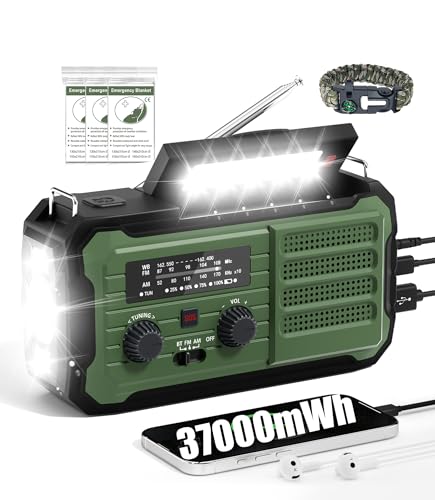
Vokida Emergency Radio, 10000mAh
The title lists 10000mAh (37000mWh), NOAA, AM and FM, plus a thermal blanket and a survival bracelet. The bundle extras are the point; they turn a radio into a small emergency kit. The numbers are internally consistent, since 10,000mAh at 3.7V is 37,000mWh. Check the listing for what the extras look like in person, since add-ons vary in quality. The listing groups the radio with survival gear rather than selling it purely on audio, so judge it on whether you want the extras. Check the product photos and description to see exactly what the blanket and bracelet are, instead of assuming.
Pros
- Blanket and bracelet included
- Consistent battery figures
Cons
- Extras may be basic
- Flashlight details not in the title
Who it’s for: first-time buyers assembling a kit from scratch.
Leaton Hand Crank Emergency Radio, 10000mAh
Leaton lists 10000mAh, NOAA weather radio, AM/FM, solar charging, a USB-C charger input, a flashlight and an SOS alarm. USB-C matters because most newer phones and cables use it, so you can top up the radio from the same wall adapter. The title does not state whether it also charges phones through USB-C, so confirm that on the listing. A rechargeable battery and solar input suggest the usual mix of wall, sun and crank, so read the manual for charge times. At 37,000mWh it sits in the middle of the list, enough headroom for a phone top-up or two.
Pros
- USB-C charging stated in the title
- 10000mAh battery
Cons
- Phone-charging output not explicit
- No solar panel size given
Who it’s for: users with USB-C phones and chargers.
Emgykit Hand Crank Radio, 7400mWh
The red unit lists AM/FM/NOAA, three LED flashlights, an SOS function, solar power, hand crank and a 2000mAh/7400mWh battery for charging. Three separate LED lights are a practical touch if you want task lighting plus a bright beam. Battery size is modest, so expect it to add only a partial charge to a phone. The red body is easy to find in a dark closet. The SOS function and solar input are named, but charge time, brightness and radio sensitivity are not, so those remain questions for the listing page and manual.
Pros
- Three LED flashlights
- Core features in a simple body
Cons
- Small battery
- No USB-C mention in the title
Who it’s for: anyone prioritizing light over charging capacity.
QAUYYW Hand Crank Solar Emergency Radio
The title says 74,000mWh, NOAA and AM/FM, a three-mode LED flashlight with reading light and a USB-C SOS alarm. That battery number would equal about 20,000mAh, far above the others, and it may be a typo for 7,400mWh. Because the title is ambiguous, confirm the real capacity on the listing and in any manual before buying. If the listing confirms a smaller figure, it falls into the same class as the 2000mAh models and the comparison with them is fair. If the large figure is real, it would rank near the top. Either way, confirm it before you pay a premium.
Pros
- Three-mode flashlight and reading light
- USB-C named in the title
Cons
- Battery figure looks inconsistent
- Unclear what “USB-C SOS alarm” means
Who it’s for: careful shoppers willing to verify the specs first.
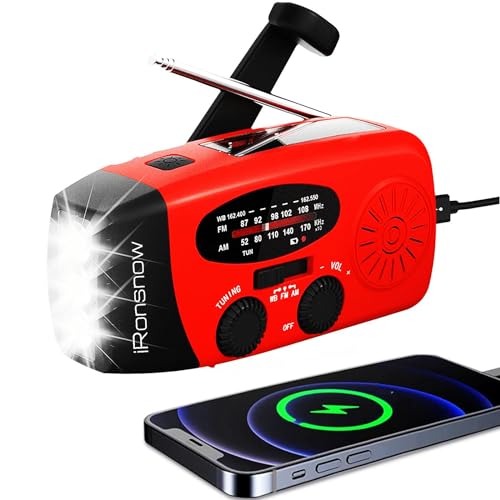
iRonsnow Solar Emergency Hand Crank Weather Radio
A red, self-powered radio with NOAA and AM/FM, an SOS alarm, an LED flashlight and a USB phone charger, backed by a 2000mAh battery. It keeps to the basics, and basics are fine if the radio is for weather alerts and a small light. Phone charging from 2000mAh will be limited, and the title does not mention USB-C. The listing mentions camping, which suggests a role as a spare for a tent or tackle box. Its title reads as one of the older ones on the page, so check that the listing is current and that buyer reviews describe the version you are ordering.
Pros
- Lists all the core emergency functions
- Self-powered design
Cons
- Small battery
- Older-style listing, no USB-C mention
Who it’s for: a spare radio for a car or a camping box.
RunningSnail Hand Crank Radio with Flashlight
Listed as lightweight and compact, with NOAA/AM/FM, a bright LED flashlight, hand crank and solar power, USB-C and a 2000mAh/7400mWh battery. Compact size cuts the battery, so it is a backup, not a primary power bank. The title gives both mAh and mWh, which makes the claim easy to sanity-check. Weight and dimensions are not in the title, so check them if a pocket-sized unit is the goal. Solar and crank are both named, which keeps it self-sufficient when wall power is unavailable, even if the trickle charge is slow.
Pros
- Compact and lightweight per the title
- USB-C charging named
Cons
- Small battery
- Panel size not stated
Who it’s for: drawer, glovebox or daypack storage.
Reading the battery numbers
mAh to mWh in one line
Multiply mAh by 3.7 volts. This table shows what the titles imply:
| mAh | mWh at 3.7V |
|---|---|
| 2,000 | 7,400 |
| 10,000 | 37,000 |
| 12,000 | 44,400 |
| 20,000 | 74,000 |
What to expect from phone charging
Worked example: 10,000mAh at 3.7V is 37Wh. A phone with a 4,000mAh battery holds about 14.8Wh. If conversion losses take roughly a third, around 24Wh is usable, which is about one and a half phone charges. A 2,000mAh radio, by the same math, holds under a fifth of a phone charge. Treat these as rough planning numbers, not promises.
Weather band and reception
The NOAA or WB label means the radio can tune weather broadcasts, not that your area has strong coverage. A built-in antenna helps, and moving near a window often helps more. Try the radio indoors, outdoors and in the room you would shelter in, because walls and metal roofs change what you hear.
Solar and crank are slow
Panels and cranks trickle in energy. Use them to keep the radio alive, and charge by USB before a storm. Look for a panel size in the title, as OnLyee gives, since area is a rough guide to how fast sun can help.
Lighting and the SOS alarm
Most titles list a flashlight and an SOS alarm. Check how many light modes there are and whether a reading light is separate, because a steady low light is more useful indoors than one blinding beam.
Storage, heat and a ten-minute go-bag check
Lithium cells age faster in heat, so keep the radio in a cool place. Every few months, power it on, tune the weather band, run each flashlight mode and top up by USB. Write the date inside the bag so you recheck on schedule.
Common buying mistakes
Buyers often compare mAh on one listing with mWh on another, assume a long battery number means a bright flashlight, or trust a weather-band label without trying it. Another mistake is relying on cranking for phone charging and leaving the radio in a hot car. Charge it before the storm and keep it cool.
How we picked these
This roundup uses published specifications, manufacturer documentation and buyer reviews, and it relies only on what each listing title says. Where a number looks off, we flag it and say to check the listing. Nobody on the team used or measured these units, so every figure here is the seller’s claim.
Verdict
Choose the OnLyee or Mesqool for the biggest stated battery, the Vokida if you want extras in the box, and a 2000mAh model if the radio is just a small backup. Verify the QAUYYW battery figure before ordering. Keep official alerts on your phone as well.
Related guides
- Portable Power Stations For Cpap During Power Outages
- How Long Does A Portable Generator Run On A Tank Of Fuel
- How To Prepare For A Power Outage Checklist And Gear
Frequently asked questions
Do hand crank solar emergency radios get NOAA weather alerts?
Every radio on this list names a NOAA or weather band in its title, which is the feature that lets it tune a weather broadcast. Reception still depends on your distance from a transmitter, terrain and building materials, and none of the listings guarantees coverage in your area. Try the weather band at home first, and treat the radio as one source alongside official alerts on your phone.
How long do you need to crank to charge the battery?
The listings do not give a reliable crank-to-runtime figure, so check each product page and its manual instead of trusting a number from a forum. Cranking is best viewed as a last resort for a few minutes of radio or light when the battery and sun are both unavailable. For real capacity, top up by solar or USB ahead of the storm.
Why do the battery numbers look so different between listings?
Some titles use milliamp-hours and others use milliwatt-hours. Multiply mAh by 3.7 volts to get mWh, so 2,000mAh equals 7,400mWh and 10,000mAh equals 37,000mWh. One title here lists 74,000mWh, which would be 20,000mAh and looks inconsistent with the rest, so verify that figure on the listing before you rely on it.
Can these radios charge a phone?
Most titles mention phone charging or USB output, but the amount of charge depends on the battery size and conversion losses, so a small cell will only add a partial charge to a modern phone. The 10,000mAh and 12,000mAh models give the most headroom. Use phone charging as a top-up for calls and alerts, not as a way to run a device for days.
How often should you check an emergency radio?
A reasonable habit is to power it on every few months, confirm the weather band tunes, check the flashlight, and top up the battery by USB or sun. Stored lithium cells drift down over time and heat is hard on them, so keep the radio in a cool spot inside your go-bag rather than in a hot car or attic.