Key takeaways
- Compact Size
- Adjustable Temperature
- Rapid Cooling
The best economical refrigerator for most households is a basic top-freezer model in the 18–19 cubic-foot range, because it usually combines a moderate purchase price with an annual energy draw of roughly 350–450 kWh—often a lower total cost than a cheaper but inefficient or oversized refrigerator.
Our top picks
 Electactic 1.6 Cu.ft Mini Fridge
- Compact Size
- Adjustable Temperature
- Rapid Cooling
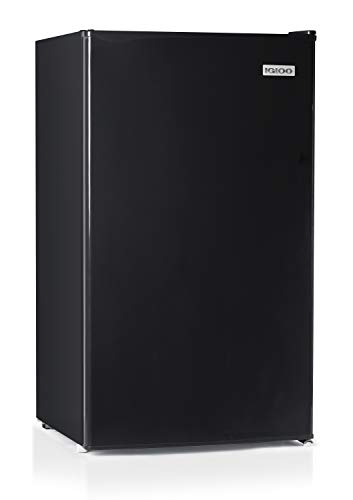 Igloo 3.2 Cu.Ft. Mini Fridge with Freezer
- Capacity: Spacious 3.2 Cu
- Refrigerator Cooling Range: 32
- Freezer: Separate Freezer Compartment Is Ideal For Any…
 West Bend Apartment Refrigerator Freestanding Reversible Dual
- Store fresh and frozen favorites in one compact…
- Organize groceries, drinks, and meal prep with adjustable/removable…
- Keep frozen foods and ice within reach with…
| Product | Key specs | |
|---|---|---|
| Electactic 1.6 Cu.ft Mini Fridge | Compact Size Adjustable Temperature Rapid Cooling | Check price |
| Igloo 3.2 Cu.Ft. Mini Fridge with Freezer | Capacity: Spacious 3.2 Cu Refrigerator Cooling Range: 32 Freezer: Separate Freezer Compartment Is Ideal For Any… | Check price |
| West Bend Apartment Refrigerator Freestanding Reversible Dual | Store fresh and frozen favorites in one compact… Organize groceries, drinks, and meal prep with adjustable/removable… Keep frozen foods and ice within reach with… | Check price |
 EUHOMY 130 Can Mini Fridge | 【Spacious & Customizable Storage】Enjoy the World Cup Watch… 【Precise Digital Temperature Control】This mini fridge offers precise… 【Advanced Cooling & Glass Door】Featuring a compressor system… | Check price |
As an Amazon Associate we earn from qualifying purchases at no extra cost to you.
Best economical refrigerators at a glance
The figures below use typical U.S. market prices and manufacturer energy-label data available for these model lines; promotions, finishes, regional electricity rates, and later model revisions can change the numbers. Annual operating cost is calculated at $0.17 per kWh, close to a representative 2026 residential electricity rate. Check the yellow EnergyGuide label before buying.
| Model | Configuration | Capacity | Typical price | Price per cu. ft. | Annual energy use | Estimated annual cost |
|---|---|---|---|---|---|---|
| Frigidaire FFTR1835VW | Top freezer | 18.3 cu. ft. | $550–$750 | $30–$41 | Approximately 363 kWh | About $62 |
| GE GTE18GSNRSS | Top freezer | 17.5 cu. ft. | $650–$900 | $37–$51 | Approximately 377 kWh | About $64 |
| Whirlpool WRT318FZDM | Top freezer | 18.0 cu. ft. | $650–$900 | $36–$50 | Approximately 385 kWh | About $65 |
| GE GTS19KMNRES | Top freezer | 19.2 cu. ft. | $750–$1,050 | $39–$55 | Approximately 363 kWh | About $62 |
| LG LTCS24223S | Large top freezer | 24.1 cu. ft. | $850–$1,200 | $35–$50 | Approximately 431 kWh | About $73 |
Best overall value: Frigidaire FFTR1835VW
The Frigidaire FFTR1835VW is a strong choice when the priority is low ownership cost rather than premium features. Its approximately 18.3 cubic feet is enough for a small family, while the top-freezer design keeps the purchase price and repair complexity below those of most French-door and side-by-side refrigerators.
At a mid-range price of $650, the purchase cost is about $36 per cubic foot. Its estimated energy cost is approximately $62 per year at $0.17 per kWh. It generally uses fixed glass or wire shelving and manual or straightforward temperature controls rather than an in-door dispenser, which means fewer components to replace.
Choose it if
- You need a practical refrigerator for two to four people.
- You want to spend less than roughly $800.
- You prefer simple controls and widely available replacement parts.
Best for a narrow replacement space: GE GTE18GSNRSS
The GE GTE18GSNRSS is a sensible pick when width and basic functionality matter more than maximum storage. Its 17.5-cubic-foot layout provides a full-width refrigerator section above a separate freezer, and the stainless-look finish can cost more than white or black versions.
Using an example purchase price of $775, the refrigerator costs about $44 per cubic foot. Its approximate annual energy cost is $64, so electricity use is not dramatically different from other conventional top-freezer models. Measure the opening, not just the old appliance: cabinet depth, hinge clearance, door swing, and the path through the home can determine whether the refrigerator actually fits.
Best for low-complexity ownership: Whirlpool WRT318FZDM
The Whirlpool WRT318FZDM is aimed at shoppers who want a conventional refrigerator with fewer expensive features. Top-freezer models typically avoid the ice-maker and chilled-water systems found in many larger designs, reducing the number of water valves, filters, tubing connections, and control components that can eventually need service.
At an illustrative $775 price, its purchase cost is approximately $43 per cubic foot. The estimated $65 annual electricity cost is competitive, but the best choice may be a less expensive finish of the same configuration. Stainless-style doors often add cost without adding capacity or reducing energy consumption.
Best capacity-per-dollar: GE GTS19KMNRES
The GE GTS19KMNRES is worth considering when an 18-cubic-foot refrigerator feels cramped but a French-door refrigerator is unnecessary. With approximately 19.2 cubic feet, it offers useful extra shelf and door-bin space without a major jump in annual energy consumption.
At a representative $900 price, the cost is about $47 per cubic foot. Its estimated operating cost is about $62 per year. That makes it more economical than buying a smaller refrigerator now and replacing it soon because the storage is inadequate. Confirm the exact model label, because similar GE model numbers can have different finishes, ice-maker equipment, and energy figures.
Best for maximum storage on a budget: LG LTCS24223S
The LG LTCS24223S provides approximately 24.1 cubic feet in a top-freezer format, making it one of the better choices for a larger household that wants to avoid the price and complexity of a French-door model. It costs more to purchase and uses more electricity than the smaller options, but its price per cubic foot can be attractive.
At an example $1,000 purchase price, the cost is about $41.50 per cubic foot. Its estimated energy cost is approximately $73 per year. The extra capacity is valuable only if you will use it: an oversized refrigerator can waste money through higher purchase cost, greater energy consumption, and more food spoilage when shelves are difficult to organize.
Decision matrix: which economical refrigerator fits your situation?
| Your situation | Best direction | Reason |
|---|---|---|
| Lowest upfront cost | Frigidaire FFTR1835VW or a white top-freezer model | Basic configuration and inexpensive finish usually reduce the purchase price. |
| Two-person household or apartment | 17–18 cu. ft. top freezer | Enough everyday storage without paying for unused capacity. |
| Three- to four-person household | 18–20 cu. ft. top freezer | Balances usable storage, footprint, and energy consumption. |
| Large household or frequent bulk shopping | LG LTCS24223S or another 23–25 cu. ft. top freezer | More capacity per dollar than many premium configurations. |
| Frequent outages or storm preparation | Simple refrigerator with no external dispenser | Fewer water and electronic components, while a separate thermometer helps monitor food safety during an outage. |
| Very tight kitchen opening | Measure first; then compare 17–18 cu. ft. models | Nominal capacity does not reveal width, depth, hinge clearance, or door-swing requirements. |
How to calculate the true long-term cost
Use this simple comparison:
Five-year ownership cost = purchase price + (annual kWh × electricity rate × five)
For example, compare a $650 refrigerator using 363 kWh per year with a $900 refrigerator using 431 kWh per year at $0.17 per kWh:
- Less expensive model: $650 + (363 × $0.17 × 5) = approximately $958.
- Larger model: $900 + (431 × $0.17 × 5) = approximately $1,266.
The larger refrigerator costs about $308 more over five years in this example. However, if the smaller model cannot hold the food your household buys, the apparent saving may disappear through a premature replacement or increased food waste. Also add delivery, haul-away, an optional ice maker, extended service coverage, and any required cabinet modifications.
Ownership details that affect savings
Keep the condenser area clean
Dust around accessible condenser coils, vents, or the compressor compartment can restrict heat release and make the appliance run longer. Unplug the refrigerator before cleaning, follow the manual’s instructions, and do not remove sealed-system panels. Cleaning every six to twelve months is a practical starting point, especially in homes with pets.
Allow ventilation
Do not push the cabinet tightly against the wall unless the installation instructions permit it. Maintain the specified top, side, and rear clearances. Blocking airflow can increase energy use and shorten the life of the compressor.
Expect wear in specific areas
Door gaskets, drawer rollers, light switches, ice-maker components, and temperature-control parts commonly wear before the cabinet itself. A damaged gasket is particularly important: close a sheet of paper in the door and pull gently. If it slides out easily in several locations, inspect the gasket for warping or damage.
Do not judge efficiency by capacity alone
Compare the yellow EnergyGuide annual kWh figure for the exact model and configuration. An ice maker, automatic defrost system, dispenser, garage installation, high room temperature, and frequent door opening can all affect real-world consumption. A refrigerator with a slightly higher purchase price can be the better value if it provides needed capacity without a large energy penalty.
Bottom line
For the lowest balanced ownership cost, start with an 18–19 cubic-foot top-freezer refrigerator such as the Frigidaire FFTR1835VW, GE GTE18GSNRSS, Whirlpool WRT318FZDM, or GE GTS19KMNRES. Choose the LG LTCS24223S when you truly need about 24 cubic feet. Compare price per cubic foot, annual kWh, installation dimensions, and feature complexity together—the cheapest sticker price is not always the cheapest refrigerator to own.