Key takeaways
- Measure the available wall width, cabinet depth, and the path in front of the unit.
- Mark the cabinet outline on the floor, then mark the door’s open arc using the model’s door dimensions.
- Check that the door clears an island, adjacent cabinet pulls, walls, and other appliances.
- Confirm that the door can open far enough for the shelves and interior components to come out for cleaning.
- Add space for ventilation and service access exactly as the manual specifies.
Best Commercial Refrigerators for Home Kitchens: Our 2026 Picks by Fit
The best commercial refrigerator for home use is a compact, self-contained stainless-steel reach-in with a listed operating range that covers your garage, enough room for its doors to open, and a noise level you can live with. For most homes, a one-section unit is easier to place and less costly to run than a two-section model; choose a residential garage-ready refrigerator instead if the room is unheated or noise matters more than a commercial interior.
Commercial models are designed for frequent access and food-service workloads, not necessarily for quiet kitchens or cold garages. Dimensions, temperature limits, and sound levels vary by exact model and configuration. Treat the figures below as planning ranges, not specifications for every unit in a brand’s lineup; confirm the data sheet for the model you are considering before ordering.
Our top picks

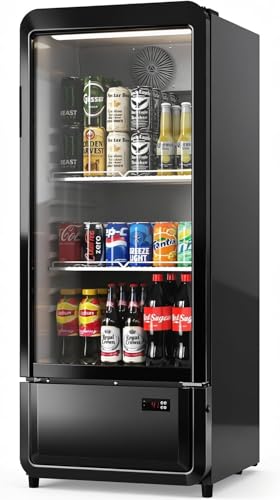
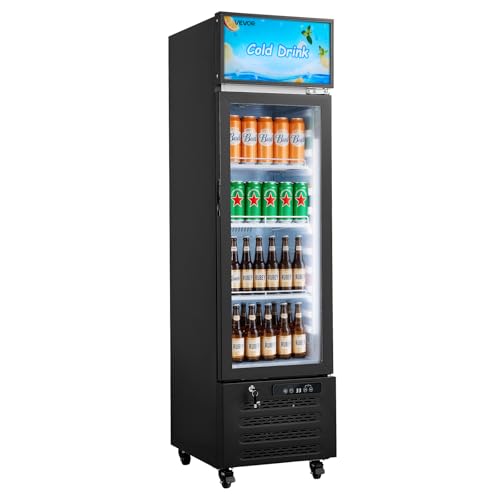

As an Amazon Associate we earn from qualifying purchases at no extra cost to you. Ratings are shown as listed on Amazon.
Compare the main options
| Option | Typical exterior footprint | Typical capacity | Typical operating range | Sound planning estimate | Best fit |
|---|---|---|---|---|---|
| Compact one-section commercial reach-in | 24–30 in. wide × 30–34 in. deep | About 10–20 cu. ft. | Often about 33–38°F inside; ambient limits vary | About 50–65 dBA at 3 ft, depending on compressor and room | Small kitchens, pantry zones, or frequent beverage and ingredient access |
| Full-size one-section commercial reach-in | 27–36 in. wide × 30–35 in. deep | About 20–30 cu. ft. | Often about 33–38°F inside; check the model’s ambient rating | About 50–65 dBA at 3 ft | Households needing commercial shelving and larger chilled storage |
| Two-section commercial reach-in | About 52–56 in. wide × 30–35 in. deep | About 40–50 cu. ft. | Often about 33–38°F inside; check the model’s ambient rating | About 52–68 dBA at 3 ft | Large households or a dedicated garage utility area |
| Residential garage-ready refrigerator | Commonly 28–36 in. wide × 30–36 in. deep | About 18–25 cu. ft. | Some models are rated for roughly 38–110°F ambient conditions | Often quieter than commercial units; verify the manufacturer’s data | Unheated garages, open-plan kitchens, or noise-sensitive homes |
These are broad screening ranges, not a substitute for an exact product specification. Manufacturers do not publish compressor noise in a consistent way, and room surfaces, floor vibration, and distance affect perceived sound. A difference of 10 dB is generally perceived as a substantial change in loudness, so a quiet-looking number is worth confirming with the manufacturer rather than assuming from the product category.
Choose by where it will live
For a kitchen beside living space
Look first at the smallest one-section reach-in that meets your capacity needs. Check whether the compressor is top- or bottom-mounted: a top-mounted unit can be easier to keep clear of floor dust, while a bottom-mounted compressor may be more convenient for servicing but can be more exposed to dirt and debris. Neither layout guarantees quieter operation. If the refrigerator will sit near a dining table or bedroom, a residential model is usually the safer choice unless the commercial unit’s sound level is documented and acceptable to you.
For a garage that gets cold or hot
“Commercial” does not automatically mean “garage-ready.” Check the specified ambient operating range, not just the refrigerator’s internal set point. Some commercial units are intended for controlled indoor environments and may not maintain safe temperatures in an unheated winter garage or a very hot summer space. A garage-rated residential model may be the more dependable option when the ambient temperature swings widely.
Also confirm the garage has a suitable grounded outlet and that the unit can be installed with the clearances required by its manual. Avoid extension cords unless the manufacturer explicitly allows them. A refrigerator should not be pushed into a tight enclosure that blocks its specified ventilation path.
For a narrow doorway or tight aisle
Measure the delivery route, not only the final parking spot: door openings, hallway turns, stair landings, and the refrigerator’s packaging can determine whether delivery is possible. Ask the supplier for the shipping dimensions and whether doors or handles can be removed for entry. Do not assume that a nominal 30-inch-wide cabinet will pass through a 30-inch doorway.
Measure the full door swing before buying
A refrigerator’s listed width and depth do not show how much room you need to use it. A hinged door can project well into an aisle, and many units need additional space for the door to open far enough to remove shelves or drawers. Confirm the hinge side, whether the door is reversible, and the manufacturer’s required side and rear clearances.
- Measure the available wall width, cabinet depth, and the path in front of the unit.
- Mark the cabinet outline on the floor, then mark the door’s open arc using the model’s door dimensions.
- Check that the door clears an island, adjacent cabinet pulls, walls, and other appliances.
- Confirm that the door can open far enough for the shelves and interior components to come out for cleaning.
- Add space for ventilation and service access exactly as the manual specifies.
Worked fit check: Suppose a refrigerator is 30 inches wide and its door extends 27 inches from the hinge when open. If a kitchen aisle is 42 inches deep from the front of the refrigerator to the opposite counter, the door would leave about 15 inches of standing space when opened fully: 42 − 27 = 15. That may be too little for comfortable loading. The actual open-door projection depends on the model and hinge, so use the manufacturer’s drawing for the final calculation.
What to verify on an actual product sheet
Commercial refrigeration brands such as True, Beverage-Air, and Turbo Air make reach-in products, but each brand sells multiple sizes and configurations. Select by the exact model number, not by brand reputation or a general category description.
- External dimensions: Include handles, hinges, casters, and any required ventilation clearance.
- Interior capacity and shelving: Check usable shelf dimensions; cubic-foot capacity alone does not reveal whether large containers will fit.
- Temperature control: Confirm the interior range, ambient operating limit, and how temperature is monitored.
- Noise: Look for a measured dBA figure and its measurement distance. If none is published, ask the manufacturer or dealer.
- Electrical requirements: Verify voltage, amperage, plug type, and whether a dedicated circuit is required.
- Door configuration: Check swing direction, handle projection, self-closing behavior, and any open-door alarm.
- Warranty and service: Confirm who can service the unit locally and whether parts and labor coverage differs for residential use.
Prices vary substantially by capacity, construction, and refrigeration system. As a broad market guide, compact commercial reach-ins can cost several thousand dollars, while larger or more specialized models can run higher. Include delivery, installation, electrical work, and service access in the budget; commercial equipment may also be heavier than a typical home refrigerator.
Ownership: cleaning, wear, and common mistakes
Stainless steel is durable, but it is not maintenance-free. Wipe spills promptly with a soft cloth and a cleaner suitable for the finish; avoid abrasive pads that can scratch it. Clean the condenser area on the schedule in the manual, since accumulated dust can impede heat rejection and increase operating strain. Unplug the unit before cleaning accessible components, and follow the manufacturer’s instructions for the specific model.
Door gaskets are a common wear point because frequent opening and closing, spills, and harsh cleaners can damage or loosen them. Inspect the seal periodically for tears, gaps, or areas that no longer make contact. Keep shelves from striking the gasket and avoid slamming a door that is not aligned. A damaged seal can make temperature control harder and encourage longer compressor run times.
Common buying mistakes include choosing by capacity alone, overlooking door clearance, assuming all commercial units are garage-rated, and placing a compressor against a wall without its required airflow space. Before loading a newly installed refrigerator, let it reach its specified operating temperature and verify the temperature with an appliance thermometer. Keep the unit level as directed, and do not block interior air outlets with tightly packed containers.
Bottom line
Choose a compact one-section commercial reach-in when you want frequent-access storage, have room for its footprint and door swing, and can tolerate its operating noise. Choose a larger one-section or two-section unit only when the added capacity justifies the floor space, clearance, and service needs. For an unheated garage or a kitchen connected to quiet living space, prioritize a residential refrigerator explicitly rated for those conditions. The best commercial refrigerator for home use is the exact model that fits the route, room, temperature environment, and opening clearance—not simply the one with the most capacity.