
The best battery powered leaf blowers for quick cleanup are the EGO Power+ LB7654 for maximum clearing speed, the EGO LB6504 for the best balance of power and weight, and the Milwaukee M18 FUEL 2724-20 for compact one-handed work.
For storm cleanup, CFM matters most when moving wet leaves, pine needles, and small twigs; MPH matters more for loosening material from deck gaps, gravel, and corners. The comparison below also separates tool weight from battery weight, because the battery can change how tiring a blower feels after several minutes.
Our top picks
 EGO POWER+ Cordless Electric Leaf Blower
- Battery powered leaf blower lets you power though…
- A single charge of the included 2.5Ah battery…
- Pull the trigger to choose blower speeds from…
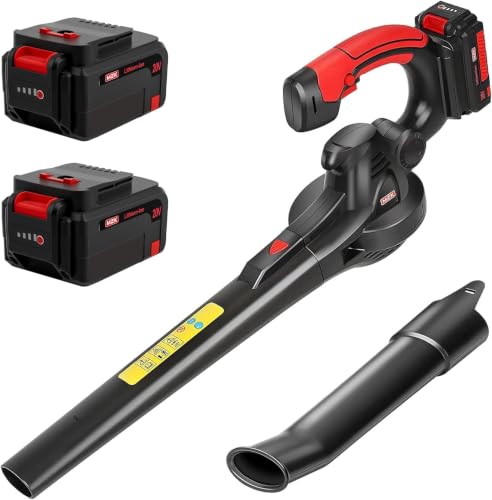 MZK 20V Cordless Leaf Blower
- [Cordless Design]: MZK leaf blower is designed to…
- [Long-lasting Battery]: MZK leaf blower features a powerful…
- [Lightweight and Portable]: Our product weighs only 3.9lbs,…
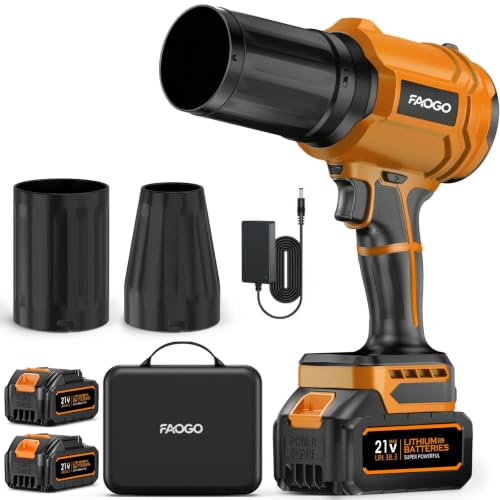 FAOGO Cordless Leaf Blower with 2 Batteries
- 【990,000 RPM Hurricane Power】Command relentless blowing force with…
- 【2 x Batteries + Charger】FAOGO cordless leaf blower…
- 【Ultra-Light
As an Amazon Associate we earn from qualifying purchases at no extra cost to you.
Best battery leaf blowers ranked for fast cleanup
| Rank | Model | Maximum CFM / MPH | Approx. one-handed weight | Runtime planning figure | Estimated 500 sq. ft. deck clear time |
|---|---|---|---|---|---|
| 1 | EGO Power+ LB7654 | 765 / 200 | 10.2 lb with 5.0Ah battery | About 7–10 minutes per battery Ah | 2–4 minutes |
| 2 | EGO Power+ LB6504 | 650 / 180 | 9.8 lb with 5.0Ah battery | About 8–11 minutes per battery Ah | 3–5 minutes |
| 3 | Greenworks Pro 80V blower | 730 / 170 | About 10–12 lb with battery | About 6–10 minutes per battery Ah | 3–5 minutes |
| 4 | DeWalt 60V MAX DCBL772 | 600 / 125 | About 10–11 lb with battery | About 7–11 minutes per battery Ah | 4–6 minutes |
| 5 | Ryobi 40V HP Whisper Series blower | Up to 730 / 190 | About 10–12 lb with battery | About 6–10 minutes per battery Ah | 3–6 minutes |
| 6 | Milwaukee M18 FUEL 2724-20 | 450 / 120 | About 7–9 lb with battery | About 8–13 minutes per battery Ah | 5–8 minutes |
| 7 | Makita 18V LXT XBU03 | 459 / 116 | About 6–8 lb with battery | About 9–14 minutes per battery Ah | 6–9 minutes |
These runtime and clearing figures are planning estimates, not laboratory measurements or hands-on test results. Actual time changes substantially with trigger position, battery age, temperature, nozzle restriction, moisture, and the material being moved. “Per battery Ah” is a useful way to compare platforms, but a 5.0Ah pack does not necessarily deliver five times the runtime of a 1.0Ah pack because high-output blowers can trigger thermal or electronic limits.
Best overall: EGO Power+ LB6504
The LB6504 is the most practical choice for homeowners who want serious clearing power without stepping up to the heaviest high-output models. Its 650 CFM and 180 MPH rating are enough for broad leaf piles, wet grass clippings, and ordinary post-storm debris. A variable-speed trigger and boost control make it easier to use a lower setting around flower beds and a higher setting on open pavement.
Its main advantage is balance. With a 5.0Ah battery installed, it is substantial but manageable for short one-handed passes. Expect roughly 40–55 minutes from a 5.0Ah battery when much of the work is done below maximum output. Continuous boost use can reduce that sharply. Choose this model when the yard has a deck, driveway, and several trees but does not require commercial-length cleanup sessions.
Fastest large-area choice: EGO Power+ LB7654
The LB7654 ranks first when speed is the priority. Its 765 CFM output creates a wider, stronger air stream than compact blowers, so it can move a large layer of leaves across a driveway with fewer passes. The 200 MPH rating is also useful for breaking loose wet leaves packed against siding, deck rails, and garage thresholds.
The tradeoff is battery demand and fatigue. Its high-output mode is best used in short bursts rather than continuously. A 5.0Ah pack may provide only around 35–50 minutes of mixed use, and less if the blower is operated near maximum for the entire job. It is the right pick for large lots, frequent autumn cleanup, and people who value fewer passes over minimum weight.
Best for a shared 80V yard-tool system: Greenworks Pro 80V
Greenworks’ 80V blower line is a strong alternative when you already own compatible 80V batteries or want a high-voltage platform for other yard equipment. Models in this family reach approximately 730 CFM and 170 MPH, placing them near the top for open-area clearing.
The broad air volume is particularly useful on driveways and lawns. The blower can feel less nimble than an 18V tool in a confined space, and battery-equipped weight varies by the pack selected. Use a smaller battery for short deck work and a larger pack for long driveway cleanup. Before buying, confirm the exact kit’s battery capacity because Greenworks sells tool-only and battery-included versions with different weight and runtime results.
Best for DeWalt owners: DeWalt 60V MAX DCBL772
The DCBL772 offers approximately 600 CFM and 125 MPH. Its lower MPH figure does not make it weak; CFM is doing much of the work when the task is pushing a broad layer of leaves. It is well suited to sidewalks, lawns, and driveways, particularly for people already invested in DeWalt 60V MAX batteries.
This is a sensible platform choice rather than the absolute fastest option. It can be easier to justify than buying a new battery ecosystem, and its variable-speed control helps conserve energy during routine cleanup. It is less ideal for repeatedly dislodging wet material from narrow deck gaps, where a higher air-speed nozzle has an advantage.
Best balance of portability and power: Milwaukee M18 FUEL 2724-20
The Milwaukee M18 FUEL blower is a good one-handed tool for patios, steps, walkways, vehicle interiors, and small decks. At about 450 CFM and 120 MPH, it will not match the clearing speed of the 40V, 60V, and 80V models, but its lighter battery platform is easier to carry and store.
Choose it when cleanup jobs are short and frequent rather than large and seasonal. It is also a practical option for users who already own M18 batteries. A 5.0Ah battery can provide approximately 40–65 minutes of mixed, moderate-speed use, though maximum output will consume energy much faster.
Best lightweight option: Makita 18V LXT XBU03
The Makita XBU03 is aimed at detail work and smaller properties. It produces about 459 CFM and 116 MPH and is generally easier to control than a high-voltage blower. Its lower equipment weight helps when clearing stairs, porches, vehicles, and narrow side yards.
It is not the best choice for a deep blanket of wet leaves. A lightweight blower may require several more passes, and its smaller battery format can mean more battery changes on a large driveway. For a compact home with modest leaf volume, however, portability can matter more than peak specifications.
Which blower fits your situation?
| Your situation | Best direction | Why |
|---|---|---|
| Large lot or long driveway | EGO LB7654 or Greenworks Pro 80V | High CFM reduces the number of passes. |
| Deck, porch, and occasional driveway | EGO LB6504 | Strong output without the maximum-model penalty. |
| Already own DeWalt 60V batteries | DeWalt DCBL772 | Battery compatibility may outweigh small specification differences. |
| Already own M18 batteries | Milwaukee M18 FUEL 2724-20 | Light, compact, and convenient for short jobs. |
| Small property or physical fatigue is a concern | Makita XBU03 or another compact 18V blower | Lower carried weight makes repeated short jobs easier. |
| Wet leaves and debris trapped in gaps | A high-MPH model such as the EGO LB7654 | Higher air speed helps break material loose before sweeping it away. |
How to estimate runtime before buying
Start with the battery’s amp-hour rating and the blower’s workload. As a practical planning example, suppose a blower delivers 8 minutes per Ah under your preferred mixed-use setting. A 5.0Ah battery would provide approximately:
8 minutes × 5.0Ah = 40 minutes of mixed runtime.
If your cleanup takes 12 minutes, one battery is sufficient with a reserve. If it takes 35 minutes and the work is mostly maximum-output clearing, choose a larger pack or keep a charged spare. Do not plan around the manufacturer’s longest low-speed runtime when your actual job involves wet leaves or repeated boost use.
How to clear a deck or driveway faster
- Remove large branches and stones by hand first. Hard objects can become dangerous projectiles and may damage the blower or nearby windows.
- Work with the wind when possible. Start at the far edge and create one moving line of debris instead of scattering leaves in multiple directions.
- Use a narrow nozzle and short boost bursts to loosen wet material from corners and between deck boards.
- Switch to a broader air stream or lower speed once the material is moving. Maximum MPH is not always the fastest way to transport a large pile.
- Make one final pass along doors, drains, and steps. Leaves left in those areas can become slippery or block drainage during the next storm.
Ownership issues that affect real-world value
The battery is usually the most expensive consumable, not the blower tube. Store lithium-ion packs indoors, away from freezing temperatures and excessive heat, and recharge them according to the manufacturer’s instructions. Avoid leaving a battery permanently on the charger in a hot garage.
Air inlets are another common failure point. Grass, plastic bags, and loose fabric can restrict cooling and cause reduced output or thermal shutdown. Check the intake before each use and brush away debris with the battery removed. Do not spray water into the motor housing, even if the exterior appears weather resistant.
For storm cleanup, inspect the tube and housing for cracks after moving branches or gravel. Never use a blower to propel stones, glass, or metal fragments. If vibration, burning odor, unusual noise, or repeated shutdown occurs, stop using the tool and follow the manufacturer’s service guidance.
For most households, the buying decision is simple: choose the EGO LB7654 for the fastest large-area cleanup, the EGO LB6504 for the best all-around balance, or a compatible 18V model when low weight and existing batteries matter more than clearing speed.






