Key takeaways
- Pros: Everything preassembled saves an hour or more of installation labor; monitoring controller sends alerts on high water, pump failure, and low battery.
- Con: WiFi module is sold separately, so the headline price understates the full smart-home setup.
A basement that fills with water during a heavy storm is not just an inconvenience. It means destroyed drywall, ruined belongings, mold remediation costs that dwarf the price of the pump that should have prevented the whole mess. A watchdog sump pump is the line of defense most homeowners rely on, but the lineup has grown confusing — primary pumps, backup systems, combo bundles, and standalone batteries all compete for attention at wildly different price points.
What separates a pump that quietly handles six inches of water from one that fails at the worst possible moment? Motor construction matters: copper-wound PSC motors outlast cheaper shaded-pole units. Float-switch design matters: caged microreed switches resist debris better than vertical mechanical switches. And integration matters: a monitoring controller that alerts you before the battery dies is worth more than a marginal horsepower increase. Below we compare the eight most relevant models on published specs, street prices, and consistent owner feedback.
Our top picks




As an Amazon Associate we earn from qualifying purchases at no extra cost to you.
Quick Picks
| Product | Best for | Price |
|---|---|---|
| CITS-50 Combo | Complete WiFi-ready system | $469 |
| CITE-33 Combo | Reliable combo without extras | $379 |
| BW-27AGM Battery | Replacing a dead backup battery | $209 |
| BWT050 | Mid-range primary with high flow | $169 |
| BWT075 | Maximum primary flow in one unit | $189 |
| 1/3 HP Backup | Standalone battery-powered backup | $287.90 |
| SIT-33D | Narrow pits on a tight budget | $149 |
| SI-50V | Cast-iron durability, vertical switch | $149 |
How We Picked
We evaluated motor construction (copper-wound PSC versus alternatives), float-switch type and its resistance to common pit debris, GPH output relative to horsepower class, and whether the unit integrates with a monitoring controller or functions as a standalone. Price-per-feature and consistency of owner reports over multiple seasons also factored in. Systems that bundle primary and backup together scored higher on long-term reliability because they eliminate the guesswork of matching components.
The 8 Best Watchdog Sump Pump in 2026
CITS-50 Combo Preassembled System
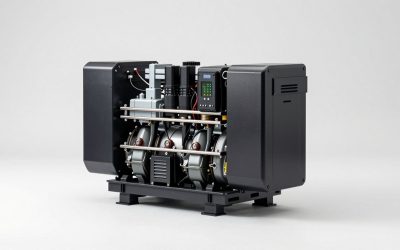
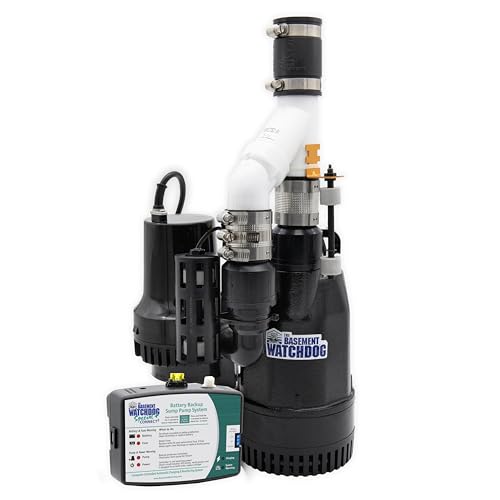
This is the most complete package Basement Watchdog sells: a preassembled primary pump, a battery backup unit, and a monitoring controller in one box. The copper-wound PSC motors in both pumps are the same ones that make the company’s standalone units durable. WiFi capability arrives via an add-on module, which is convenient but adds a small ongoing cost for cloud services.
- Pros: Everything preassembled saves an hour or more of installation labor; monitoring controller sends alerts on high water, pump failure, and low battery.
- Con: WiFi module is sold separately, so the headline price understates the full smart-home setup.
Skip it if you already own a working primary pump and only need a backup, or if you will never use the connectivity feature.
CITE-33 Combo Preassembled System
The same integrated architecture as the CITS-50 minus the WiFi module and monitoring controller extras. For owners who simply want a matched primary-and-backup set with copper-wound PSC motors, this eliminates component-mismatch headaches. Installation is straightforward because both pumps and the float arrangements arrive pre-configured in a single basin setup.
- Pros: $90 cheaper than the CITS-50 with nearly identical core pumping hardware; preassembled design reduces DIY errors.
- Con: No remote monitoring, so a failure during a storm goes unnoticed until you check the basement yourself.
Skip it if your existing primary pump still works and only the backup needs replacing.
BW-27AGM Standby Battery
AGM (absorbed glass mat) batteries outlast flooded lead-acid types because they tolerate deep discharge without the acid stratification that kills cheaper units. This is the direct replacement part for anyone whose watchdog backup sump pump system has a dead cell. Installation requires only disconnecting two terminals and reconnecting the new leads.
- Pros: Maintenance-free construction means no topping up water or acid; fits most Basement Watchdog backup controllers without adapters.
- Con: Heavy at around 60 pounds, so lifting it into a pit-side box is awkward alone.
Skip it if your backup pump itself is failing; a new battery will not rescue a seized motor.
BWT050 ½ HP Submersible
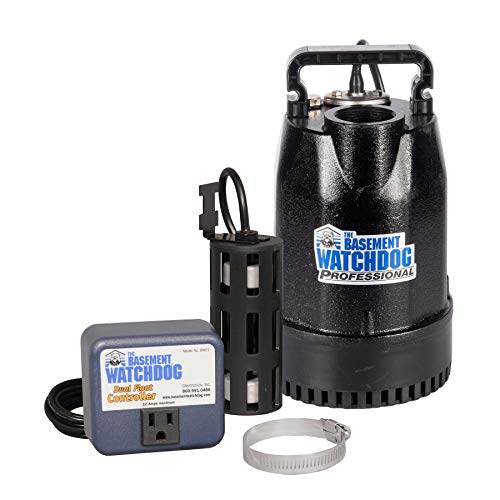
Four thousand one hundred gallons per hour from a copper-wound PSC motor makes this the default recommendation for homes with average-to-heavy water intrusion. The caged microreed dual float switch keeps both floats protected from lint and grit that would jam a vertical mechanical switch on a comparable watchdog sump pump at this price.
- Pros: High GPH relative to a mid-range price; caged float design dramatically reduces callback failures reported by owners.
- Con: Plastic housing is lighter and cheaper than cast iron, so it may not last as long in gritty or sandy pit conditions.
Skip it if your pit has a lot of sediment; the plastic casing is more vulnerable to abrasion.
BWT075 ¾ HP Submersible
The most powerful primary-only submersible in this roundup, rated at 5,300 GPH. For homes with a high water table or a sump pit that refills rapidly during prolonged rain, the extra horsepower prevents the pump from cycling constantly and overheating. Same copper-wound PSC motor architecture and caged microreed dual float switch as the BWT050.
- Pros: Highest flow rate in the list; only $20 more than the BWT050 for an additional 1,200 GPH.
- Con: Draws more amperage, so on long extension cords voltage drop can reduce performance or trip a shared circuit.
Skip it if your pit only fills slowly; the ½ HP version handles the same workload with less electrical demand.
1/3 HP Backup Sump Pump
A standalone battery-driven unit designed to activate when the primary pump stalls or power fails. At just under $288 it sits above the combo bundles on a per-pump basis, but you gain the flexibility of installing it alongside any existing primary watchdog sump pump regardless of brand. Copper-wound motor and caged float match the build quality of the pricier BWT series.
- Pros: Universal compatibility with most pit geometries; runs independently of household power.
- Con: Does not include a battery, so total cost rises once you add the BW-27AGM.
Skip it if you want everything in one box; the CITS-50 or CITE-33 combos deliver better value.
SIT-33D Cast-Iron ⅓ HP Submersible
Designed specifically for narrow sump pits where the wider BWT series will not fit. Cast-iron housing handles abrasive sediment better than the plastic alternatives, and the caged dual float switch protects against jamming. The 3,720 GPH rating is modest but adequate for homes with light-to-moderate water entry.
- Pros: Fits pits as narrow as the company’s slim-line diameter spec; cast iron extends service life in sandy conditions.
- Con: Lower GPH than the ½ HP plastic models, so it may struggle if water inflow spikes suddenly.
Skip it if your pit is standard diameter; the BWT050 offers more flow for the same price.
SI-50V Cast-Iron ½ HP Submersible
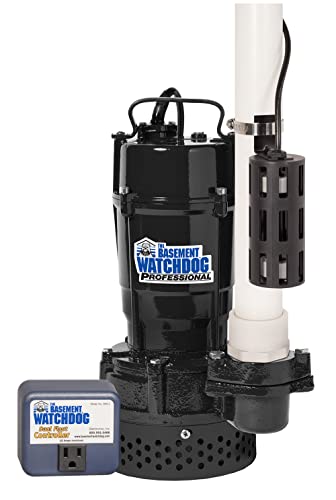
Cast-iron construction paired with a vertical mechanical float switch. The vertical switch is simpler and cheaper to replace than a caged microreed assembly, though it can snag on pit walls or debris in tight quarters. For owners who prefer a watchdog sump pump with a proven, easily serviceable switch design, this model at $149 is a sensible middle ground.
- Pros: Cast-iron durability at the lowest price in the primary-pump group; 4,300 GPH is competitive with the plastic BWT050.
- Con: Vertical float is more prone to interference from pit walls and floating debris than caged designs.
Skip it if your pit is tight; ensure the float has clearance through its full travel arc before committing.
Buying Guide
Motor Construction
Copper-wound PSC motors are the single most important durability factor. They resist heat buildup during extended run times and tolerate voltage fluctuations better than shaded-pole or aluminum-wound alternatives. Every pump listed here uses a copper-wound PSC motor, which is why Basement Watchdog units consistently earn favorable long-term owner reports compared to big-box store brands that cut costs on winding material.
Float-Switch Design
Caged microreed dual switches activate electronically with no moving parts exposed to debris. Vertical mechanical switches rely on buoyancy and a pivot point that can bind when lint, gravel, or slime accumulates. If your pit sees anything more than clean water, favor caged designs. If you prefer a serviceable switch you can replace for a few dollars yourself, the vertical type on the SI-50V remains a workable option in open, debris-free pits.
Primary vs. Backup Integration
A standalone primary pump handles routine water. A backup watchdog sump pump handles power outages during storms, which is precisely when the primary is most needed. Buying a matched combo like the CITE-33 guarantees correct pit placement, shared discharge routing, and a controller that sequences the two pumps automatically. Mixing brands works electrically but often costs more in time spent troubleshooting float clearances and discharge conflicts.
Our Verdict
Our top pick is the CITS-50 Combo. It bundles a primary, a backup, and a monitoring controller into one preassembled unit, eliminating the most common cause of system failure: a mismatched or poorly sequenced DIY setup. The WiFi module is optional, so you can ignore it and still own a fully integrated, alert-ready watchdog sump pump system.
Our budget pick is the SIT-33D. At $149 you get cast-iron construction, a copper-wound motor, and a caged dual float — a combination that typically costs $30-50 more from other manufacturers.
The BWT075 wins outright if your pit refills faster than 4,300 GPH can manage. That single scenario makes the extra horsepower worth the small premium over the BWT050.
FAQ
How long does a watchdog sump pump last?
Copper-wound PSC motor units commonly reach eight to twelve years with routine maintenance, based on aggregated owner reports. Plastic-housed models in sediment-heavy pits tend toward the lower end of that range, while cast-iron versions in clean pits exceed it.
Do I need both a primary and a backup pump?
If your area experiences extended power outages during storms, yes. A backup watchdog sump pump runs on battery and protects the basement when the primary loses power. In regions with rare outages and low water tables, a quality primary alone may suffice.
Can I replace the battery myself?
The BW-27AGM swaps in by disconnecting two terminal bolts and reconnecting them to the new battery, a task that takes under ten minutes for most models. No programming or calibration is required with the current controllers.
Is 5,300 GPH overkill for a typical home?
For most residential pits it exceeds the needed flow, but the extra capacity means the pump finishes each cycle faster, reducing motor heat and extending service life. It is a meaningful advantage in homes with clay soil or high water tables where the pit refills quickly.