Key takeaways
- Pros: Engineered specifically for radon containment; dome shape resists cracking under foot traffic.
- Pros: JACKEL is a recognized name in radon-system components, and owners report reliable long-term seals.
- Con: Premium price — nearly three times the cost of standard flat covers.
A flooded basement after a heavy storm is one of the most expensive surprises a homeowner faces, and the cost of remediation dwarfs the price of almost any preventive measure. A sump pump cover sits at the intersection of safety, maintenance access, and radon control, making it a small but consequential upgrade for anyone relying on a sump basin or submersible pump in a finished or semi-finished space.
What separates a good cover from a mediocre one comes down to a handful of practical questions: Does it seal tightly enough to contain radon gas or odors without trapping dangerous moisture against the pump housing? Can you remove or access the basin without tools or a second person? Is the material durable enough to handle weight, UV exposure outdoors, or the vibration of a cycling pump? We compared published specs, retail pricing, and aggregated owner feedback across these eight models to identify where each one fits and where it falls short.
Our top picks



As an Amazon Associate we earn from qualifying purchases at no extra cost to you.
Quick Picks
| Product | Best for | Price |
|---|---|---|
| JACKEL Original Radon Sump Dome | Radon mitigation | $123.99 |
| Sump Basin Cover 17.7 in. | Outdoor wells and septic tanks | $36.99 |
| 18 inch Metal Slotted Cover | Decorative outdoor basins | $42.99 |
| 18 Inch Slotted Steel Lid | Heavy-duty sewage pump protection | $40.84 |
| Memorywuu 20.5 Inch (Two Round Holes) | Multi-pipe discharge setups | $50.99 |
| Memorywuu 17.71 Inch (Side Notch) | Power cord routing | $43.99 |
| JACKEL Sump Basin Cover 20.5 in. | Wide-basin indoor use | $64.99 |
| 20-1/2 in. Basic Cover with Vent Holes | Ventilated sealed basins | $40.58 |
How We Picked
We evaluated these covers on four criteria that consistently appear in owner reviews and spec sheets: fit and diameter range relative to common basin sizes, material suitability for the intended environment (outdoor exposure versus indoor vapor containment), ease of access for routine pump maintenance, and price relative to the build quality described by buyers. A cover that looks rugged but warps in direct sunlight or seals so tightly that moisture corrodes the pump housing scores poorly regardless of cost.
The 8 Best Sump Pump Cover in 2026
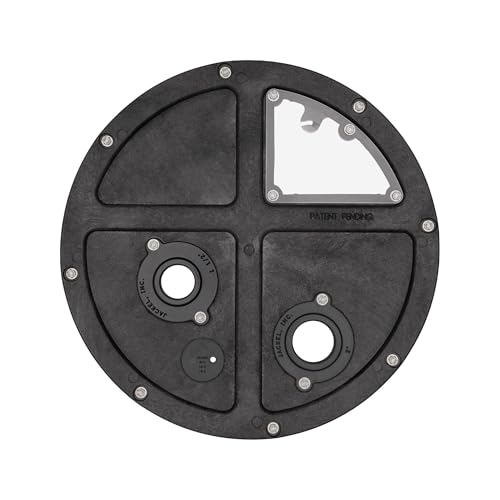
JACKEL Original Radon Sump Dome (SMR16101-CV)
This is the cover for homeowners running a sub-slab radon mitigation system through an open sump pit. The dome design creates an airtight seal that channels radon gas into the vent stack rather than letting it leak around a flat lid.
- Pros: Engineered specifically for radon containment; dome shape resists cracking under foot traffic.
- Pros: JACKEL is a recognized name in radon-system components, and owners report reliable long-term seals.
- Con: Premium price — nearly three times the cost of standard flat covers.
Skip it if you have no radon system and just need a basic safety lid.
Sump Basin Cover 17.7 in. OD Plastic (Black)
A straightforward heavy-duty plastic lid aimed at outdoor applications: water wells, septic tanks, and submersible pump basins exposed to the elements.
- Pros: Lowest price in this roundup at $36.99, making it easy to stock replacements.
- Pros: Plastic construction resists rust, which is a common failure point for steel covers in wet outdoor settings.
- Con: At 17.7 inches OD it will not fit wider basins; owners with 20-inch pits reported needing a different size.
Skip it if your basin exceeds 17 inches in diameter or you need a radon-grade seal.
18 inch Metal Slotted Sump Pump Cover (Black, Decorative)
This steel cover combines a slotted design for drainage with a black finish intended for visible outdoor installations around wells and sewage pump basins.
- Pros: Slotted surface allows rainwater to pass through rather than pooling on top, reducing freeze-thaw stress in cold climates.
- Pros: At $42.99 it sits in the mid-range while offering metal rigidity that plastic cannot match for load-bearing scenarios.
- Con: Owners in coastal or high-humidity regions noted that the coating can chip, exposing the steel beneath to corrosion over time.
Skip it if you live in a salt-air environment and want a rust-proof option.
18 Inch Slotted Steel Sump Pump Cover Lid
Very similar to the previous model in diameter and slotted construction, this version markets itself toward heavier sewage pump applications with a slightly lower price point.
- Pros: At $40.84 it undercuts the comparable 18-inch metal cover by a couple of dollars while offering equivalent dimensions.
- Pros: Slotted design supports ventilation, reducing condensation buildup under the lid during pump cycling.
- Con: Limited listing information makes it harder to confirm steel gauge or coating durability compared to branded alternatives.
Skip it if spec transparency is important and you would rather buy from a manufacturer with a published product sheet.
Memorywuu 20.5 Inch Sump Pump Cover (Two Round Holes)
Designed for basins with multiple discharge pipes or a pump plus a float switch that exits through the lid, this 20.5-inch plastic cover includes two round cutouts for routing.
- Pros: The larger 20.5-inch diameter accommodates wide basins that smaller covers cannot seal.
- Pros: Two pre-cut holes eliminate the need for DIY drilling, which can crack plastic and compromise the seal.
- Con: At $50.99 it costs noticeably more than basic single-hole or notch-only alternatives without offering a sealed dome shape.
Skip it if your setup has only a single discharge line and a power cord that exits at the rim.
Memorywuu 17.71 Inch Sump Pump Cover (Side Notch)
The companion model to the two-hole version, this cover solves a different routing problem: a side notch that lets a power cord or small tubing exit without requiring a drilled hole in the lid surface.
- Pros: The notch design keeps the lid surface intact, preserving its structural strength and weather resistance.
- Pros: At $43.99 it undercuts the two-hole model while fitting standard basins.
- Con: A side notch is less versatile than a through-hole if you need to route multiple lines simultaneously.
Skip it if your installation requires more than one penetration point on the cover.
JACKEL Sump Basin Cover 20.5 in. OD (SF16314-CV)
A branded JACKEL option in the larger 20.5-inch size, positioned between the budget plastic covers and the premium radon dome.
- Pros: JACKEL’s reputation for sealed-fit quality gives buyers confidence that the cover matches the basin rim without gaps.
- Pros: The 20.5-inch OD covers the widest range of residential basin sizes in this group.
- Con: At $64.99 it is the second-most-expensive item here, and it does not include radon-venting geometry.
Skip it if your basin is 17 to 18 inches across — you would be overpaying for unused diameter.
20-1/2 in. Sump Basic Cover with 2 in. Vent Holes
This cover targets basins that need active ventilation through the lid, offering two-inch vent holes that accommodate standard PVC fittings or passive airflow.
- Pros: At $40.58 it delivers the 20.5-inch diameter and vent holes for less than most competing options in the same size class.
- Pros: Two-inch vents are wide enough to accept coupling adapters without re-drilling.
- Con: Open vents mean no radon or odor containment; this is purely a safety and access cover, not a sealing product.
Skip it if you are dealing with gas or odor issues and need a sealed lid.
Buying Guide
Match Diameter to Your Basin Rim
Sump basins typically range from 15 to 20-plus inches in outer diameter. A cover that is even half an inch undersized will sit on the lip rather than seal into it, leaving gaps that let moisture, pests, or radon through. Measure the outer rim of your basin before ordering, and buy the cover whose listed OD equals or slightly exceeds that measurement by a quarter inch at most.
Choose Material for the Environment
Indoor covers face vibration and humidity but rarely UV or road salt, making plastic or coated steel both viable. Outdoor covers around wells and septic tanks contend with sun, freeze-thaw cycles, and foot traffic. Plastic resists corrosion indefinitely but can become brittle under prolonged UV exposure. Steel handles weight better but will rust the moment the coating fails. For outdoor use in temperate climates without heavy snow load, a slotted metal cover at under $45 is a reasonable middle ground.
Account for Penetrations Before You Buy
Every hose, cord, float switch, or vent pipe that exits through the lid is a potential leak point. Pre-cut holes and notches cost a few dollars more but preserve the cover’s integrity. Drilling plastic creates stress risers that propagate cracks with each freeze cycle, and punching through steel without proper finishing starts corrosion at the hole edge. Match the cover’s penetration design to your actual plumbing layout rather than modifying after purchase.
Our Verdict
For homeowners with a radon mitigation system, the JACKEL Original Radon Sump Dome is the clear top pick despite its price, because nothing else on this list is engineered for gas containment. The best value overall is the 20-1/2 in. Basic Cover with Vent Holes at $40.58 — it handles larger basins, supports ventilation, and costs the same as the smallest plastic lids here. However, if your primary concern is a sealed indoor basin where odor control matters and radon is not an issue, the Memorywuu 20.5 Inch with Two Round Holes wins on diameter and routing flexibility without the JACKEL premium.
FAQ
Do I need a cover if my pump runs fine?
Yes. A cover prevents debris, small animals, and children from falling into the basin, reduces evaporation during dry periods, and in the case of radon systems, is essential for directing gas into the vent stack. Running without one is a liability and a code issue in many jurisdictions.
Can I paint or seal a plastic sump pump cover?
Most plastic covers are not paint-friendly because standard coatings do not adhere to molded polyethylene or polypropylene. Sealing the rim with a silicone gasket is possible and sometimes recommended to improve the barrier against gases or moisture, but check whether the manufacturer’s warranty allows modification.
How often should I remove the cover for maintenance?
A good practice is to inspect the pump, float switch, and discharge line every few months and before each storm season. Covers with pre-cut access holes or lightweight plastic construction make this routine easier than heavy steel lids that require lifting and re-seating.
What is the difference between a slotted and a sealed cover?
Slotted covers allow water and air to pass through the openings, making them suitable for outdoor basins where rain pooling is a concern. Sealed covers block all airflow and liquid passage, which is necessary for indoor odor control or radon containment. The right choice depends entirely on whether the basin needs to breathe or stay closed.