Key takeaways
- Clear 1-A:10-B:C rating that covers electrical and common home fires
- Lowest single-unit price in this roundup at $19.97
- Bracket quality is below what the price implies
An electrical fire is different from a grease flare-up or a wood blaze in your garage. The moment energized wiring or an appliance panel catches, water-based extinguishers become a liability and standard chemical units may not hit the rating you need. Choosing the right electrical fire extinguisher means matching a specific class rating to the hazard you face, then placing enough of them where you can actually grab one in seconds.
We compared the eight units below against published ratings, pack pricing, and long-term owner feedback to separate the genuinely dependable from the ones that look fine on paper but disappoint in a garage or kitchen drawer. Good picks here share a few traits: a clear BC or ABC rating that covers energized equipment, a size you will keep within reach instead of tucked away, and a construction that survives years of temperature swings without losing pressure. The bad ones tend to overstate portability, understate weight, or lack a mounting solution that keeps them accessible when it matters.
Our top picks



As an Amazon Associate we earn from qualifying purchases at no extra cost to you.
Quick Picks
| Product | Best for | Price |
|---|---|---|
| Kidde FA110G 1-Pack | Tight budget, single-point placement | $19.97 |
| First Alert Heavy Duty | Home and light commercial use | $42.98 |
| Kidde FA110G 2-Pack | Kitchen plus garage coverage | $35.95 |
| Small ABC 2-Pack (1.32 lb) | Car and apartment dwellers | $29.99 |
| AmzBoom 2-Pack with Bracket | Multi-room coverage, eco-minded buyers | $21.90 |
| ABC 4-Pack (1.32 lb) | Whole-home and fleet vehicles | $47.98 |
| Small ABC 6-Pack (1.32 lb) | Property managers, large households | $55.29 |
| Ougist FF2KG 5 lb | Workshop, office, or full-size vehicle | $54.99 |
How We Picked
We narrowed this category using four criteria. First, the published UL or equivalent rating must cover Class C (energized electrical equipment) — every unit here does, but some also cover kitchen grease or vehicle fuel. Second, weight and form factor determine whether a homeowner will actually keep the extinguisher nearby or forget it in a closet. Third, pack pricing per unit matters because a single extinguisher rarely covers an entire home; we looked at cost-per-pound-of-suppressant and cost-per-mounting-point. Fourth, sustained owner feedback on pressure retention, nozzle clogging, and bracket durability separated the reliable from the disappointing.
The 8 Best Electrical Fire Extinguisher in 2026
Kidde Basic 110 (1-Pack)
The go-to choice for anyone who needs one solid electrical fire extinguisher at the lowest price without guessing about quality. The 1-A:10-B:C rating covers energized wiring, flammable liquids, and ordinary combustibles in one compact shell. Owners appreciate the recognizable Kidde branding and the straightforward gauge that lets you confirm readiness at a glance. The FA110G model is widely stocked, so replacements or additions are easy to source later. One common complaint: the included wall bracket is thin-gauge metal that bends if you overtighten screws into drywall anchors. Skip this if your home has more than one hazard zone — a single unit in a hallway will not protect a garage and a kitchen simultaneously.
- Clear 1-A:10-B:C rating that covers electrical and common home fires
- Lowest single-unit price in this roundup at $19.97
- Bracket quality is below what the price implies
First Alert Heavy Duty
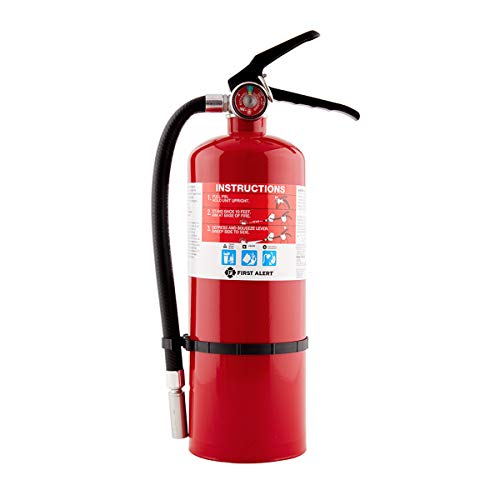
Built for someone who wants a step up in shell thickness and nozzle durability without jumping to commercial-grade weight. First Alert positions this as suitable for both home and light commercial settings, and owners consistently note the heavier-gauge handle and the longer discharge range compared to budget units. The trade-off is price: at $42.98 it costs more per unit than nearly everything else here, so you are paying for build quality you may not need if your primary concern is a small panel or outlet fire. Skip it if you are outfitting multiple rooms on a tight budget — the premium buys marginal gains over a Kidde for typical residential use.
- Heavier-duty construction that survives temperature swings better
- Rated for commercial use, so it handles larger-area electrical hazards
- Highest single-unit cost in this list
Kidde Basic 110 (2-Pack)
The smarter version of the first pick for most households. At $35.95 you get two identical FA110G units, dropping the per-unit cost below the single pack while covering a kitchen and a garage or a main floor and a basement. Owners on forums routinely recommend buying multi-packs of this exact model because the rating is well-matched to residential electrical loads. The one caveat is placement flexibility: both units share the same size and bracket style, so if you need one in a tighter spot (a utility closet shelf, for example) neither may fit where a slimmer option would.
- Best value per unit among name-brand options at roughly $18 each
- Identical 1-A:10-B:C rating on both, no guesswork about which covers what
- Limited to one size and style — no smaller form factor in the pack
Small ABC 2-Pack (1.32 lb)
Designed for people who need an electrical fire extinguisher they will not leave behind because it is too bulky. At 1.32 pounds each, these slide into a glovebox, a backpack, or a narrow kitchen shelf without complaint. The ABC powder formulation covers energized circuits, vehicle fuel, and cooking oil. Owners note the trigger mechanism feels less refined than larger units, and the powder disperses unevenly if the canister has been stored upside down. Skip this if your primary use is a fixed wall-mount in a garage or workshop — the small volume means you get only a few seconds of discharge on anything beyond a minor flare.
- Genuinely portable at 1.32 lb each — fits where full-size units cannot
- Covers electrical, grease, and vehicle fuel in one compact format
- Very short discharge time limits usefulness on larger fires
AmzBoom 2-Pack with Bracket
A thoughtful option for homeowners who care about environmental impact alongside fire safety. The AmzBoom uses an eco-friendly formula that also claims to prevent reignition, which matters with smoldering electrical insulation. It carries A, B, C, and K ratings in a compact spray format, and the included mounting bracket means you can put each unit at eye level in a kitchen or next to a breaker panel. At $21.90 for the pair it is the cheapest two-unit option here. The trade-off: spray-style delivery means you must stay closer to the base of the fire than a traditional pressurized stream would require.
- Covers Class K alongside ABC — rare at this price point
- Mounting brackets included in the box
- Spray format demands closer approach than a pressurized stream nozzle
ABC Fire Extinguisher 4-Pack (1.32 lb)
If you manage a small fleet, a rental property, or a home with four distinct hazard zones, this pack delivers consistent coverage at a reasonable per-unit cost. Each 1.32-pound unit carries the same ABC rating and the manufacturer emphasizes ease of use for all ages, which resonates with owners who want a family member or tenant to operate it without training. The packaging is utilitarian, and several owners report the included brackets are adhesive-backed and lose grip in hot garages. Skip it if you only need one or two units — buying four when you will store the extras adds dead weight on your shelf.
- Four units at $47.98 works out to under $12 each
- Marketed as easy for all ages, with a simplified trigger
- Adhesive brackets underperform in high-temperature storage
Small ABC 6-Pack (1.32 lb)
The bulk-buy answer for property managers, church facilities teams, or anyone outfitting a large home. Six identical 1.32-pound dry-chemical units at $55.29 brings the per-unit cost down further than the four-pack while maintaining the same portability advantage. Owners use these across kitchens, laundry rooms, workshops, vehicles, and storage sheds without worrying about theft or misplacement because extras exist. The limitation mirrors every small-format extinguisher: a 1.32-pound canister empties fast, so this is prevention and escape-window gear, not a tool for fighting a developed fire. Skip it if your real need is one reliable wall-mount for a single room.
- Lowest per-unit cost in the entire roundup
- Enough quantity to leave spares in every vehicle and utility room
- Same short discharge time as all 1.32-pound formats
Ougist FF2KG 5 lb
The only full-size unit here beyond the Kidde and First Alert shells, and the 2-A:10-B:C rating puts it in a different performance tier for electrical and grease fires alike. At five pounds of ABC dry chemical, it delivers a sustained stream long enough to knock down a panel fire or a smoldering motor housing. The quick-release handle and easy-grip design get specific praise from older owners with limited hand strength. It is still priced accessibly at $54.99. The downside: five pounds is not a glovebox item, and the bulk means it lives on a wall or in a garage cabinet, out of reach if the fire starts in a bedroom or vehicle interior.
- Highest rating in this list with 2-A:10-B:C on a 5 lb shell
- Quick-release handle praised by users with grip limitations
- Too large and heavy for car-mounted or tight-space placement
Buying Guide
Reading the Class Rating for Electrical Fires
Every electrical fire extinguisher must carry a C rating to indicate it is safe on energized circuits. The number before the C (like 1-A:10-B:C) tells you the effective coverage area for ordinary combustibles and flammable liquids, not the electrical hazard itself. For electrical panels, appliances, and wiring, any BC or ABC-rated unit is functionally adequate. The rating differences that matter are between 1-A:10-B:C units and 2-A:10-B:C units — the latter handles a broader range of simultaneous hazards without running out of suppressant. If your primary concern is a breaker box or a server rack, the C rating is what keeps you safe; the A and B numbers determine whether one unit can also handle a nearby trash fire or solvent spill.
Matching Size to Storage Location
The most common reason an electrical fire extinguisher fails is that it is not within arm’s reach when the fire starts. A five-pound wall unit in a garage does you no good if the outlet behind your couch sparks. Small 1.32-pound cans are ideal for vehicles, apartments, and bedrooms because you can mount or store them where the hazard actually is. Full-size units suit fixed positions: kitchens, workshops, laundry rooms. A practical rule is to place at least one small unit on each floor of your home and one full-size unit where the highest concentration of electrical equipment lives. Multi-packs make this strategy affordable.
Mounting, Maintenance, and Pressure Checks
An unmounted extinguisher slides behind a shelf and becomes invisible. Check whether the bracket is metal or plastic, whether it screws into studs or drywall anchors, and whether the product ships with one at all. Kidde and Ougist units typically include a wall bracket; some small-format products do not. For maintenance, look at the gauge monthly. Dry-chemical units can settle and compact over years, so a quick invert-and-shake every six months keeps the powder loose. Replace any unit whose gauge reads in the red or whose nozzle shows corrosion. In 2026 the options at every price point are better than they were a decade ago, but none of them work if you have not confirmed they are charged and reachable.
Our Verdict
For most households, the Kidde FA110G 2-Pack at $35.95 is the top pick. Two name-brand units with a verified 1-A:10-B:C rating, a proven track record, and the best balance of reliability and cost per placement in the entire roundup. The budget pick is the AmzBoom 2-Pack at $21.90 if you prioritize an eco-friendly formula and include your kitchen grease fires in the same purchase. If your primary scenario is a vehicle or a tight apartment with no wall space, the Small ABC 2-Pack at $29.99 wins on portability alone — nothing else here fits a glovebox while covering energized circuits.
FAQ
Can I use any fire extinguisher on an electrical fire?
No. Only units rated C (or ABC) are safe on energized electrical equipment. Water, foam, and wet-chemical extinguishers conduct electricity and can cause shock or expand the fire. Look specifically for the C designation on the label before using any extinguisher on an outlet, panel, or running appliance.
Is a 1.32-pound small extinguisher effective enough for home use?
It is effective for small, early-stage fires on a single source like one outlet or a small appliance. It will not handle a fire that has reached surrounding materials or a large panel. Use them as a first-response layer in cars and bedrooms, paired with a full-size wall-mount for kitchens and garages.
How often should I replace or recharge my electrical fire extinguisher?
Check the pressure gauge monthly. Disposable units typically last five to twelve years before the powder compacts or seals degrade. If the gauge reads low, the nozzle is corroded, or the unit has been discharged even partially, replace it immediately. Dry-chemical units benefit from being inverted and shaken every six months to prevent settling.
Do I need one for every room in my house?
Not every room, but every floor plus the garage or workshop if you have one. An electrical fire extinguisher should be within a few seconds of the most likely ignition points: the kitchen, the main electrical panel, and the laundry room. For a standard two-story home, two or three well-placed units provide solid coverage.