Key takeaways
- Location: Install according to the maker’s manual and local code. Common guidance is to place alarms outside each sleeping area and on each level of the home, not directly next to fuel-burning appliances or in very humid spots like bathrooms, unless the manual says otherwise.
- Height: CO mixes with air, so many makers allow wall or ceiling mounting; follow the instruction sheet for your model.
- Sensor life: CO sensors wear out. Alarms commonly have an end-of-life signal, and the replacement date is printed on the unit.
- Testing: Press the test button as the maker instructs, and check that connected notifications arrive on your phone.
- Power: Battery-only, plug-in with battery backup, and hardwired with battery backup models exist. Hardwired installs should be done by a licensed electrician.
- Interconnection: Linked alarms sound together, which helps in larger or multi-story homes.
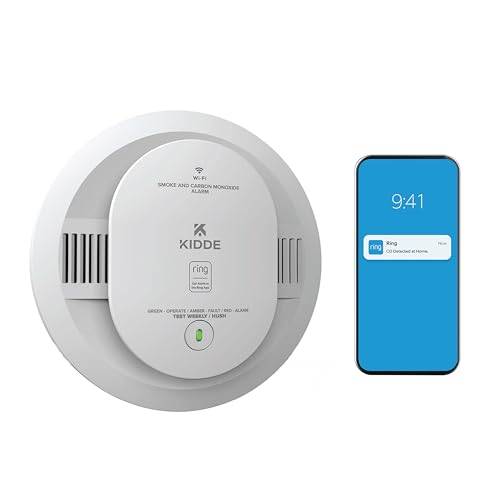
The best smart carbon monoxide detector for most households is a Wi-Fi alarm from an established safety brand such as Kidde or X-Sense that sends phone alerts and still sounds a loud local alarm if the internet is down; buyers who already own working alarms may prefer a listener device that adds phone alerts without replacing them, and people inside an existing smart-home platform should pick a model that matches it. Whichever you choose, the alarm’s certification, sensor life and placement matter more than the app.
Carbon monoxide is a colorless, odorless gas that can build up from fuel-burning appliances, furnaces, fireplaces, generators and vehicles in attached garages. A smart detector adds notifications when you are away from home, but it does not replace the basics: correct placement, regular testing and a plan for what to do when the alarm sounds. If an alarm sounds, follow the maker’s instructions, get everyone into fresh air, call emergency services, and do not re-enter until it is cleared. Anyone with symptoms such as headache, dizziness or nausea should seek medical attention.
Our top picks


As an Amazon Associate we earn from qualifying purchases at no extra cost to you.
What “smart” adds, and what it does not
A smart CO alarm connects through Wi-Fi, a hub or a smart-home protocol such as Z-Wave or Thread, and pushes a notification to your phone when it alarms. Some also report low battery, sensor end-of-life, or let you silence nuisance alerts remotely. The detection itself is still done by the same kind of electrochemical sensor found in ordinary alarms. The key point from safety agencies is that the device should carry a recognized safety certification, such as UL 2034 in the United States, according to what the makers list. A smart feature set does not make up for a missing certification.
Also note that the smart link is a convenience. If your Wi-Fi drops or the app fails, a well-designed alarm still sounds locally, so you should never rely on phone alerts alone. Check the maker’s documentation for what happens when the network is offline.
At a glance
| Option | Best for | Key stated features | Limits |
|---|---|---|---|
| Kidde smart CO or smoke and CO alarms | Mainstream buyers wanting a familiar safety brand | Maker lists Wi-Fi app alerts, and models that work with voice assistants; sealed-battery and replaceable versions | App and feature sets vary by model; confirm hardwired or battery before buying |
| X-Sense Wi-Fi or hub-linked CO alarms | Multi-room coverage and low upfront cost per alarm | Maker lists app notifications and sealed long-life battery versions; some use a base station | Hub-based versions need the base station for remote alerts |
| Ring Alarm Smoke and CO Listener | Adding phone alerts to existing alarms | Maker states it listens for the sound of an existing smoke or CO alarm and sends a notification | It is not a CO sensor itself and requires a Ring Alarm base station |
| First Alert smart or connected CO alarms | Hardwired homes and interconnected setups | Maker lists models with app connectivity or interconnection options | Smart features differ widely between product lines; some older smart lines are discontinued |
| Google Nest Protect (previous generation, where still available) | Existing Nest households | Combined smoke and CO unit with app alerts and voice messages according to the maker | Availability and support timelines have changed; read the maker’s current support notes |
Kidde
Kidde is among the best-known brands in home safety alarms. Its smart lineup includes combination smoke and CO alarms and standalone CO alarms with Wi-Fi connectivity, along with models that work with popular voice assistants, according to the maker. The company also sells plug-in and battery versions, which helps in rental homes where hardwiring is not allowed. When comparing models, look at the stated sensor life, which is commonly about 7 to 10 years for CO alarms, and whether the battery is replaceable or sealed. A sealed 10-year battery reduces maintenance but means the whole unit is replaced at end of life.
X-Sense
X-Sense has become a popular value-oriented brand in this space. It sells both standalone Wi-Fi CO alarms and sets that connect through a base station so alarms can be linked and monitored. Makers list sealed long-life batteries on several models. The key trade-off is that a hub-based system adds one more device to power and place, but it lets many alarms report through a single connection. Check that any model you buy is certified for your region and that the replacement date is marked clearly on the unit.
Ring Alarm listener
If your existing alarms are still within their service life and you only want phone notifications, a listener device is an option. The Ring Alarm Smoke and CO Listener, according to the maker, detects the sound pattern of a compatible smoke or CO alarm and sends an alert through a Ring Alarm system. This avoids replacing every alarm. The limit is that it depends on the existing alarm to detect the gas, and it needs the Ring base station. It is a notification layer, not a detector, so alarms past their expiry date should still be replaced.
First Alert and other connected models
First Alert, another long-established brand, offers CO and combination alarms, including interconnected and hardwired options. Some earlier smart models in its range, such as Onelink units, have been discontinued, so confirm that the model you pick is still supported and has an active app. If you own a smart-home hub that uses Z-Wave or Zigbee, models from smaller makers that support those protocols may suit you, but make sure the alarm has a recognized safety certification and that the smart link is documented by the maker.
Nest Protect
Google’s Nest Protect combined smoke and CO alarm has long been a reference point for smart alarms, with voice announcements and app alerts, according to the maker. The product line and its support status have changed over time, so a new buyer should read the maker’s current notes on availability and support before choosing it. Existing owners should keep following the maker’s replacement schedule.
Placement, sensor life and testing
- Location: Install according to the maker’s manual and local code. Common guidance is to place alarms outside each sleeping area and on each level of the home, not directly next to fuel-burning appliances or in very humid spots like bathrooms, unless the manual says otherwise.
- Height: CO mixes with air, so many makers allow wall or ceiling mounting; follow the instruction sheet for your model.
- Sensor life: CO sensors wear out. Alarms commonly have an end-of-life signal, and the replacement date is printed on the unit.
- Testing: Press the test button as the maker instructs, and check that connected notifications arrive on your phone.
- Power: Battery-only, plug-in with battery backup, and hardwired with battery backup models exist. Hardwired installs should be done by a licensed electrician.
- Interconnection: Linked alarms sound together, which helps in larger or multi-story homes.
Pick X if: decision table
| If you… | Pick | Reason |
|---|---|---|
| Want a safe, mainstream choice with an app | Kidde Wi-Fi alarm | Established brand, wide model range |
| Need several alarms at a lower cost per room | X-Sense system | Hub-linked alarms and sealed batteries |
| Already have working alarms and a Ring system | Ring listener | Adds alerts without replacing alarms |
| Have a hardwired home | First Alert or Kidde hardwired model | Interconnection and backup battery options |
| Rent and cannot hardwire | Plug-in or sealed battery alarm | No electrician needed |
Budget tiers
Budget: Basic Wi-Fi or battery CO alarms from reputable brands. They detect CO and may send phone alerts, but features are limited.
Mid-range: Combination smoke and CO alarms or hub-linked sets with sealed batteries and app reporting. This is where most households land.
Premium: Whole-home interconnected systems or integrations with security platforms, usually chosen for larger homes or existing smart ecosystems.
Alternatives
- Standard non-smart certified CO alarms: Simple, reliable and often cheaper. For many homes, these are enough if you hear them from sleeping areas.
- Professional monitored systems: Alarm companies can dispatch emergency services for CO events, which is helpful for vacation homes or older relatives.
- Maintenance steps: Annual servicing of fuel-burning appliances by a qualified technician reduces risk. A detector is a backup, not a substitute.
Frequently Asked Questions
Do smart CO detectors still work without Wi-Fi?
Well-designed ones should still detect CO and sound the local siren without a network, but you lose phone alerts. Read the maker’s documentation for your model to see what is affected when the internet is down.
How often should a CO alarm be replaced?
Sensor life varies by model, often around 7 to 10 years, and the date is typically marked on the unit. Replace the alarm when the maker’s end-of-life signal sounds or when the date passes.
Where should I put a CO detector?
Common guidance is to place one outside each sleeping area and on each level of the home, following the manual for distances from appliances. Local codes may add requirements, so check them if you are unsure.
What should I do if my CO alarm goes off?
Follow the instructions in your alarm’s manual, move everyone to fresh air, and call emergency services. Do not go back inside until responders say it is safe, and seek medical care for anyone with symptoms.
Is a combination smoke and CO alarm good enough?
A certified combination alarm is a convenient option and is widely sold. Make sure it carries both smoke and CO certifications and follow the placement rules for each hazard.
Can a smart detector replace a professional inspection?
No. A detector alerts you to a problem but does not fix it. Have furnaces, water heaters and fireplaces inspected on the schedule the maker or a licensed technician advises.
More from Amazon
Programs that pair well with the guide above. Offers and eligibility are set by Amazon and may change.
Free shipping on eligible items, Prime Video and more. Eligible new members can start with a free trial.
Start a Prime free trialAudiobooks and podcasts to listen to on the go. Eligible new members can start with a free trial.
Try Audible freeAd-free music streaming. Eligible new subscribers can start with a free trial.
Try Music Unlimited freeA free business account with business pricing and bulk-buying tools for work, shop or home office.
Create a business accountAs an Amazon Associate we earn from qualifying purchases.