Key takeaways
- The best water-powered backup sump pumps in 2026 are the Basepump HB1000 series for homes that need the most pumping capacity, the Basepump RB750-EZ for a lower-cost ceiling-mounted system that fits small pits, and the Liberty Pumps SumpJet SJ10A for…
The best water-powered backup sump pumps in 2026 are the Basepump HB1000 series for homes that need the most pumping capacity, the Basepump RB750-EZ for a lower-cost ceiling-mounted system that fits small pits, and the Liberty Pumps SumpJet SJ10A for homes with lower or variable water pressure. All three run on municipal water pressure with no battery to replace, but they only make sense if you have city water, enough pressure and a discharge path you can plumb. Check those three things first and the choice becomes straightforward.
Our top picks


As an Amazon Associate we earn from qualifying purchases at no extra cost to you. Ratings are shown as listed on Amazon.
Is a Water-Powered Backup Right for Your House?
| Question | Good fit | Poor fit |
|---|---|---|
| Water source | Municipal (city) water | Private well: the well pump stops in an outage |
| Static water pressure | 50 to 80 psi or higher | Below 40 psi |
| Supply pipe to the basement | 3/4 inch or larger | 1/2 inch only |
| Outage pattern | Multi-day storm outages, frequent short blips | Area where water service also fails in storms |
| Local code | Backflow prevention allowed and installable | Code bans potable-water-driven pumps |
To check pressure, screw an inexpensive hose-bib pressure gauge onto an outdoor or laundry faucet with all other fixtures off. Note the reading at a busy time of day, such as early morning, since that is closer to what the pump will see during a storm.
How These Pumps Work
A water-powered pump uses the venturi principle. City water rushes through a narrow nozzle, creating suction that draws sump water up and out through the same discharge line. A mechanical float opens the valve only when the pit rises above the primary pump’s normal level. There is no motor, no battery and no charger. The trade-off is water use: most designs consume about one gallon of city water for every two gallons removed from the pit, and output falls as pressure drops or lift height rises.
Spec Comparison
| Model | Maximum removal rate | Required pressure | Mounting | Minimum pit size | Warranty | Typical price range |
|---|---|---|---|---|---|---|
| Basepump HB1000 / HB1000-AVB / HB1000-PRO | 950 gph at 40 psi up to 1,400 gph at 90 psi | 40 to 90 psi | Ceiling or joist, above pit | Small pits accepted | 5 years | $280 to $430 |
| Basepump RB750-EZ | Up to about 900 gph at high pressure | About 40 to 90 psi; best above 60 psi | Ceiling or joist, above pit | About 10 inches | 5 years | $180 to $260 |
| Liberty SumpJet SJ10 / SJ10A / SJ10A-EYE | Up to about 1,188 gph | 20 to 100 psi | Inside the pit | About 18 inches | 3 years | $230 to $400 |
Picks by Situation
Highest capacity: Basepump HB1000 series
The HB1000 moves the most water of the mainstream models when pressure is strong. It mounts above the pit, so its intake line drops into the sump while the ejector stays out of the dirty water, away from debris and corrosion. The HB1000-AVB adds a built-in atmospheric vacuum breaker for backflow protection, and the HB1000-PRO adds a brass backflow preventer and push-fit connections that simplify installation. Choose the version that matches your local plumbing code. A high-water alarm is included.
Best for small pits and tighter budgets: Basepump RB750-EZ
The RB750-EZ shares the ceiling-mount design and the no-moving-motor reliability, at lower cost and lower flow. Its small pit requirement makes it the easiest fit where a battery backup pump will not squeeze in beside the primary. It wants strong pressure to reach its rated output, so check your gauge before choosing it.
Best for lower or fluctuating water pressure: Liberty SumpJet SJ10A
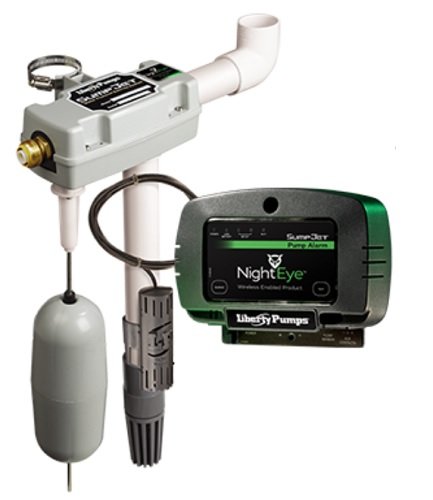
Liberty’s SumpJet tolerates the widest pressure range of the group, starting around 20 psi, and it lifts water higher than the Basepump units, which matters in deep basements. It sits in the pit and needs its own discharge pipe and an 18-inch or larger basin. The SJ10A adds a battery-powered alarm, and the SJ10A-EYE adds Liberty’s NightEye remote notifications so you know the backup has kicked on.
Other options to know
Zoeller sells water-powered emergency backups, including the 540 FLEX, which can be installed horizontally or vertically and runs from about 40 to 80 psi. Star Water Systems offers the Basement Sentry STWB140, rated up to about 20 gallons per minute. Availability of specific Zoeller models varies by region and plumbing supplier.
What It Costs to Run
Water-powered pumps only run during emergencies, but those runs use real water. Here is a worked example using the typical 1:2 ratio.
| Storm scenario | Sump water removed | City water used | Cost at $10 per 1,000 gal (water + sewer) |
|---|---|---|---|
| 12-hour outage, moderate inflow (5 gpm) | 3,600 gal | about 1,800 gal | about $18 |
| 3-day outage, moderate inflow | 21,600 gal | about 10,800 gal | about $108 |
| 3-day outage, heavy inflow (15 gpm) | 64,800 gal | about 32,400 gal | about $324 |
That compares favorably with even a small amount of basement water damage, and there are no batteries to replace every few years. Some utilities will adjust sewer charges for water that did not enter the sewer system if you ask.
Installation Realities
- Backflow protection is required almost everywhere. Because these pumps connect drinking water to a sump, codes require an approved backflow device. Many areas require a licensed plumber and inspection.
- Use the full pipe size. Feed the pump with 3/4 inch line from as close to the water meter as practical. Long runs of small pipe starve the venturi.
- Set the float above the primary pump’s cut-in. The backup should only engage when the primary fails or falls behind.
- Keep discharge clear and sloped. A frozen or clogged discharge line defeats any pump.
- Test twice a year. Unplug the primary and fill the pit with a hose to confirm the backup starts, runs and shuts off cleanly.
Water-Powered vs Battery Backup
Battery backups work with well water and do not depend on city pressure, but batteries need replacement every few years and may run out in a long outage. Water-powered units can run indefinitely as long as the utility keeps pressure up, though output is usually lower than a strong battery backup. In flood-prone homes with city water, some owners install both: the battery unit for high-volume bursts, the water-powered unit for endurance.