Key takeaways
- Rain gauges clog first. Leaves, pollen and insects block tipping buckets. Check the funnel monthly in spring and fall.
- Anemometer bearings wear. Cup sets on budget stations may start to squeak or under-read after a few years. Replacement cups are inexpensive for Ambient and Davis.
- Batteries and supercapacitors. Solar-assisted sensors still need backup cells. Lithium AAs handle cold far better than alkalines.
- Calibrate against a reference. Compare pressure with the nearest airport’s sea-level reading and set an offset during setup, otherwise storm-front pressure trends will be off.
- Ground the mast. A metal pole above the roofline should be grounded like an antenna mast, especially in lightning country.
For most homes the best weather station in 2026 is an Ambient Weather WS-2902 series kit, the WeatherFlow Tempest is the best low-maintenance and storm-alert option, and the Davis Vantage Vue or Vantage Pro2 are the picks when long-term accuracy and durability matter more than price. The AcuRite Iris 5-in-1 is the easiest entry point. Which one fits you depends less on brand and more on what weather you need to watch: wind gusts, rain rate, lightning or slow pressure drops before a front.
Our top picks


As an Amazon Associate we earn from qualifying purchases at no extra cost to you. Ratings are shown as listed on Amazon.
The Five Stations Worth Shortlisting
| Station | Outdoor sensors | Display | Lightning | Moving parts | Typical price range |
|---|---|---|---|---|---|
| Ambient Weather WS-2902 series | Temp, humidity, wind speed/direction, rain, UV, solar radiation | Color console, Wi-Fi | Optional add-on sensor | Cups, vane, tipping bucket | $170 to $230 |
| WeatherFlow Tempest | Temp, humidity, pressure, sonic wind, haptic rain, UV, light, lightning | Phone app only | Built in | None | $300 to $350 |
| Davis Vantage Vue | Temp, humidity, wind, rain (tipping spoon) | LCD console | No | Cups, vane, spoon | $400 to $550 |
| Davis Vantage Pro2 | Same core set, expandable to UV, solar, soil and more | LCD console | No | Separate anemometer and rain collector | $700 to $1,000+ |
| AcuRite Iris 5-in-1 | Temp, humidity, wind speed/direction, rain | HD color display (Wi-Fi in some kits) | In select bundles | Cups, vane, bucket | $100 to $180 |
Picks by What You Need to Track
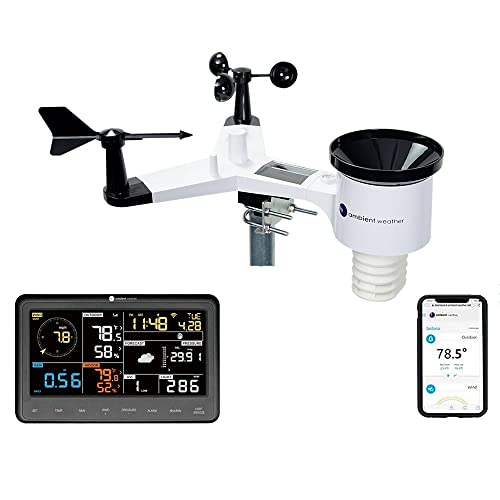
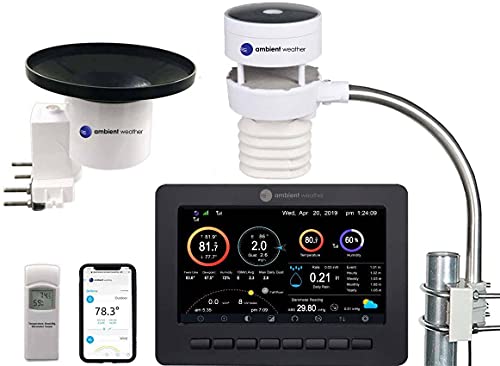
Best overall value: Ambient Weather WS-2902 series
The WS-2902 packs a full sensor array into a single outdoor unit and uploads directly to AmbientWeather.net and Weather Underground over Wi-Fi without a separate hub. You get rain rate, wind gusts and UV on a color console, plus phone alerts you can set for thresholds such as gusts above 40 mph or rainfall above an inch an hour. Weak points: the console needs its AC adapter to stay online, Wi-Fi is 2.4 GHz only, and the cup anemometer can ice up in freezing rain.
Best for storm alerts and no maintenance: WeatherFlow Tempest
The Tempest replaces spinning cups with an ultrasonic wind sensor and the rain bucket with a haptic sensor that counts drop impacts. Nothing moves, so there is nothing to jam with leaves, spiders or ice, and the solar-charged unit rarely needs attention. Its built-in lightning detector reports strike distance, and the app adds hyperlocal forecasts. Haptic rain totals can drift from a manual gauge in some conditions, and there is no physical screen, so it suits people who live in their phone.
Best for accuracy you can keep for a decade: Davis Vantage Vue
Davis stations are the reference point many hobby networks compare against. The Vantage Vue integrates its sensors into one compact package, transmits up to about 1,000 feet line of sight and updates wind every few seconds, which matters when you are watching gust fronts. Internet upload requires a separate logger or a Davis WeatherLink Live hub.
Best for serious hobbyists: Davis Vantage Pro2
The Pro2 separates the anemometer from the rain collector, so you can mount wind high and rain low, as meteorologists do. It accepts additional sensors and replacement parts are sold individually, which is why many units run for 10 years or more. The cost is high and installation takes real planning.
Easiest starter: AcuRite Iris 5-in-1
The Iris is simple to set up and its HD display is easy to read across a room. It covers the five core readings and some bundles add a lightning detector. It does not measure UV or solar radiation, and rain accuracy is generally a step below the Ambient and Davis units.
Decision Matrix
| Your situation | Best fit | Reason |
|---|---|---|
| Want full data under about $230 | Ambient Weather WS-2902 | Most sensors per dollar, direct online upload |
| Lightning-prone region, phone-first household | WeatherFlow Tempest | Built-in strike detection and push alerts |
| Icy winters, hate climbing ladders | WeatherFlow Tempest | No cups or bucket to freeze or clog |
| Need data you can trust for years | Davis Vantage Vue | Proven sensors, long service life |
| Want to expand with soil, UV, extra temp probes | Davis Vantage Pro2 | Modular system with parts support |
| Older relative wants a big clear screen | AcuRite Iris 5-in-1 | Readable display, quick setup |
Siting: Where Most Home Stations Go Wrong
A station is only as good as its mounting spot. Many readings that look wrong are actually siting errors. These are the standard targets and the compromises that work at home.
| Sensor | Ideal placement | Practical home compromise |
|---|---|---|
| Wind | 33 ft (10 m) above open ground | At least 5 to 10 ft above the roof peak on a mast |
| Temperature/humidity | About 5 ft (1.5 m) over grass, in shade | Away from walls, pavement and dryer vents; use a radiation shield |
| Rain | Level, open sky | Distance from trees or buildings at least twice their height |
| Wireless range | Clear line of sight | Expect half of rated range through walls |
All-in-one units like the WS-2902, Tempest and Vantage Vue force a compromise because wind wants height and temperature wants to be near ground level. Most owners mount around 10 to 15 feet on a pole clear of the roofline and accept slightly low wind readings, which is better than mounting on a roof where heat skews temperature.
Ownership and Maintenance
- Rain gauges clog first. Leaves, pollen and insects block tipping buckets. Check the funnel monthly in spring and fall.
- Anemometer bearings wear. Cup sets on budget stations may start to squeak or under-read after a few years. Replacement cups are inexpensive for Ambient and Davis.
- Batteries and supercapacitors. Solar-assisted sensors still need backup cells. Lithium AAs handle cold far better than alkalines.
- Calibrate against a reference. Compare pressure with the nearest airport’s sea-level reading and set an offset during setup, otherwise storm-front pressure trends will be off.
- Ground the mast. A metal pole above the roofline should be grounded like an antenna mast, especially in lightning country.
FAQ
Can a home weather station replace official warnings?
No. A station shows conditions at your house and can alert you to rising wind or heavy rain, but tornado and flood warnings come from the National Weather Service. Pair a station with a NOAA weather radio or phone emergency alerts.
Do I need Wi-Fi?
Only for remote viewing, phone alerts and data sharing. Consoles keep displaying local readings without internet, which is useful during outages if the console has battery backup.